
- Cat Health, Cat Nutrition
Immune System Boosting Cat Food: Key Vitamins and Nutrients Explained
- uzma
Table of Contents
Immune System Boosting Cat Food: Key Vitamins and Nutrients Explained
Most cat owners think about food in terms of what their cat will eat. Far fewer think about what that food is actually doing once it is eaten.
The immune system, the biological infrastructure that keeps infections at bay, wounds healing properly, and inflammation in check, depends almost entirely on what arrives through the diet. And for cats, that dependency is more pronounced than it is for many other animals.
This article explains which vitamins and nutrients actively support feline immunity, how to read a food label when choosing the right cat food for immune system support.
Why Diet Is the Foundation of Feline Immune Health
Cats are obligate carnivores. Their digestive systems are structured to derive nutrition primarily from animal tissue, not plant matter or grains. This shapes everything from how they absorb certain vitamins to the specific protein forms their bodies can use. Unlike omnivores, cats lack the enzymatic pathways to manufacture several essential nutrients from plant precursors. They need those nutrients delivered, ready-made, through food.
This matters for immunity because the immune system is metabolically expensive. White blood cells, antibodies, mucosal barriers, and the signalling molecules that coordinate immune responses all require a reliable supply of protein, fat-soluble vitamins, essential fatty acids, and trace minerals. A diet that is nutritionally thin, even if calorically adequate, creates a system that functions at reduced capacity.
Cats fed a consistently well-formulated diet tend to show better coat condition, more stable energy levels, and faster recovery from minor illness. These are observable outputs of immune function, not just aesthetics. Understanding what drives them starts with the specific nutrients involved.
The Role of Protein in Immune Function
Protein is not merely a muscle-building macronutrient. It is structural to immunity. Antibodies are proteins. Many cytokines, the signalling molecules that direct immune responses, are proteins. The integrity of the gut lining, which acts as the body’s first physical barrier against pathogens, depends on a continuous supply of amino acids.
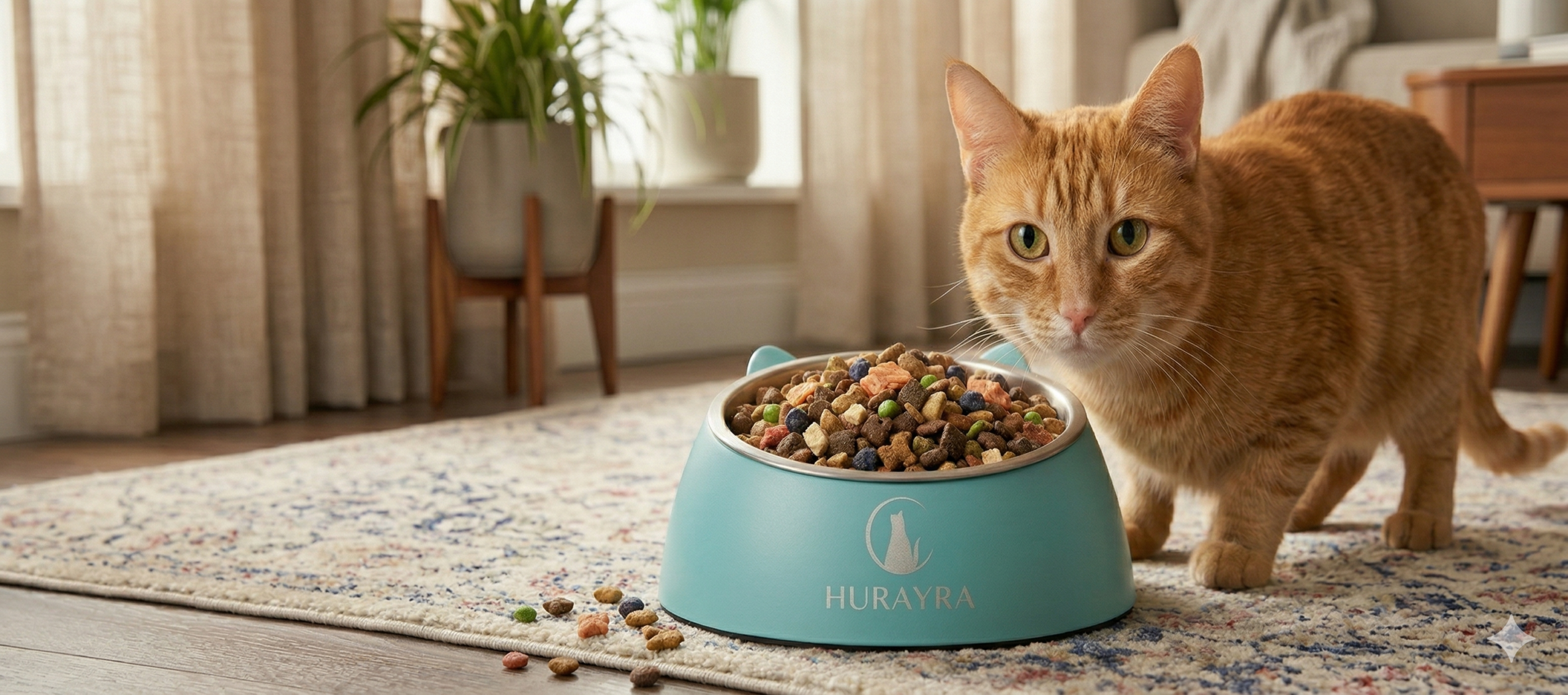
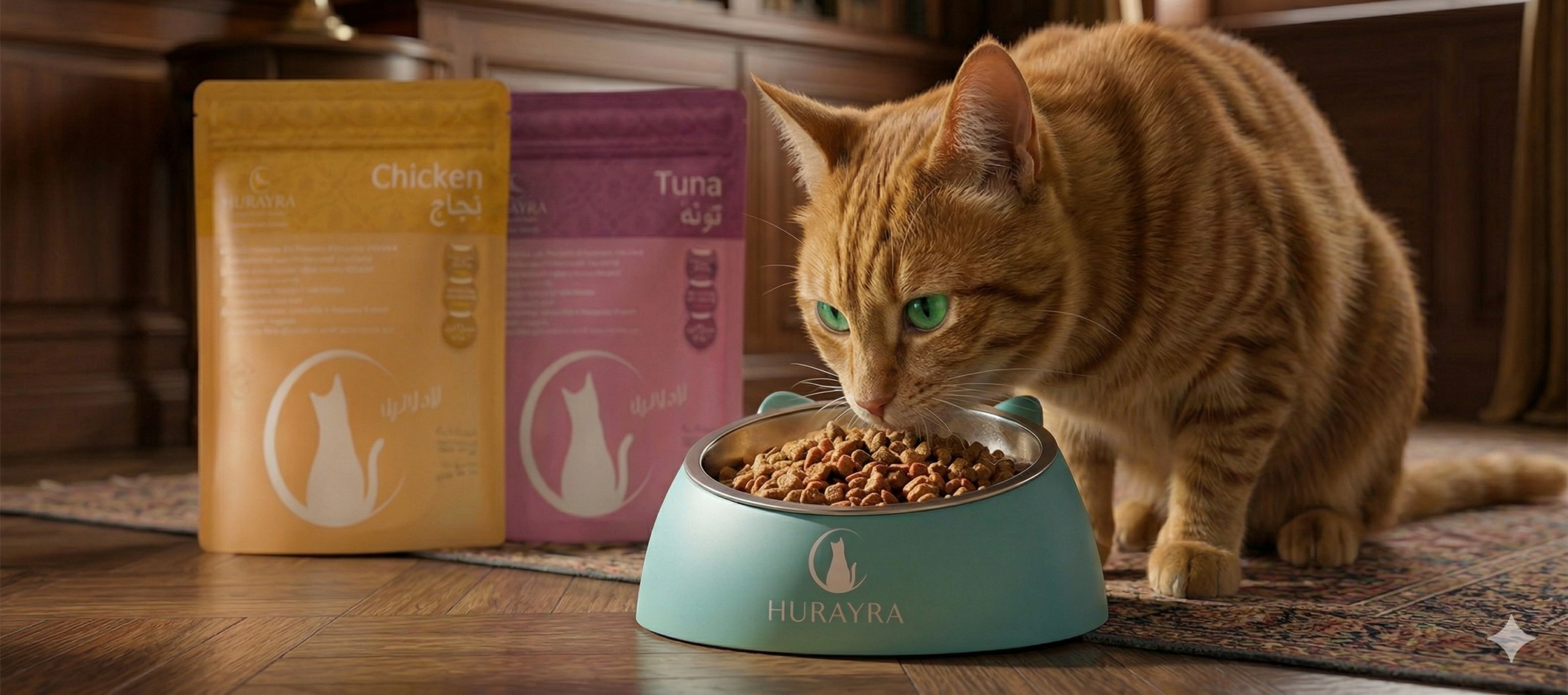
FEDIAF (the European Pet Food Industry Federation) guidelines recommend that adult cats receive a minimum of around 25g of crude protein per 100g of dry matter. A well-formulated premium food will comfortably exceed this. Hurayra’s recipes deliver 35% protein, sourced from named animal proteins, chicken and tuna, not anonymous “meat derivatives.” That distinction matters when traceability is a priority.
Chicken Cat Food
Subscribe & Save 25%
Named protein sources also allow for more consistent formulation. When the first ingredient on a label is “chicken” rather than “poultry meal” or “meat and animal derivatives,” the manufacturer is committing to a specific protein identity.
This makes it easier to monitor how a cat responds and to identify any sensitivity issues. If you want to understand the difference between protein quality in various food formats, the comparison in Hurayra’s dry versus wet protein guide.
A practical rule: check the first three ingredients on any food you are considering. If animal protein does not appear in the first two, it is worth looking more closely at what proportion of the food it actually represents.
Vitamin A and Immune Defence
Vitamin A has a specific and well-documented role in feline immunity. It supports the structural integrity of epithelial cells, which line the respiratory tract, gut, and urinary system. These linings are not passive barriers. They actively produce mucus and antimicrobial compounds that prevent pathogens from gaining a foothold.
Cats cannot convert beta-carotene from plants into usable Vitamin A. They require preformed retinol, which is found in animal liver, fish, and egg yolk. This is one of several metabolic reasons why a primarily plant-based diet creates real nutritional gaps for cats, regardless of how it is marketed.
Deficiency in Vitamin A is associated with increased susceptibility to respiratory infections, poor wound healing, and reduced reproductive health. Excess is also worth monitoring. Vitamin A is fat-soluble and accumulates in the liver, which is why therapeutic supplementation should only be pursued under veterinary guidance.
A food that includes appropriate, measured levels of Vitamin A as part of a balanced formula is the more reliable approach. This deeper guide on Vitamin A for cats covers the dietary sources and the signs of deficiency in more detail.
Vitamin D and the Immune Signalling System
Vitamin D receptors are present on most immune cells. This is not incidental. Vitamin D plays an active role in regulating immune responses, helping to modulate inflammation so the body responds proportionately to threats rather than overreacting to them.
Chronic low-grade inflammation is increasingly understood as a driver of long-term health problems in cats, and adequate Vitamin D status appears to be one factor in keeping it in check.
Like Vitamin A, cats cannot synthesise Vitamin D effectively from sunlight; their skin is less efficient at this than human skin. They need dietary sources. Fish, liver, and egg yolks contain Vitamin D, and well-formulated cat foods include it as a specific addition to account for what whole ingredients alone may not provide.
Vitamin E as an Antioxidant Protector
Vitamin E is an antioxidant, which means it neutralises free radicals, reactive molecules that cause cellular damage during normal metabolic processes and during immune activity.
When the immune system mounts a response to infection or injury, it generates oxidative stress as a byproduct. Vitamin E limits the collateral damage from that process.
In practical terms, adequate Vitamin E is associated with better antibody production and improved immune cell function in cats. It also supports skin and coat health, which are secondary indicators of overall nutritional adequacy.
Omega Fatty Acids and Inflammatory Regulation
Omega-3 and Omega-6 fatty acids are not interchangeable. The ratio between them influences whether the body tends toward pro-inflammatory or anti-inflammatory states. Western diets, for pets and humans alike, often skew toward excess Omega-6, which can tip the balance toward chronic, low-level inflammation.
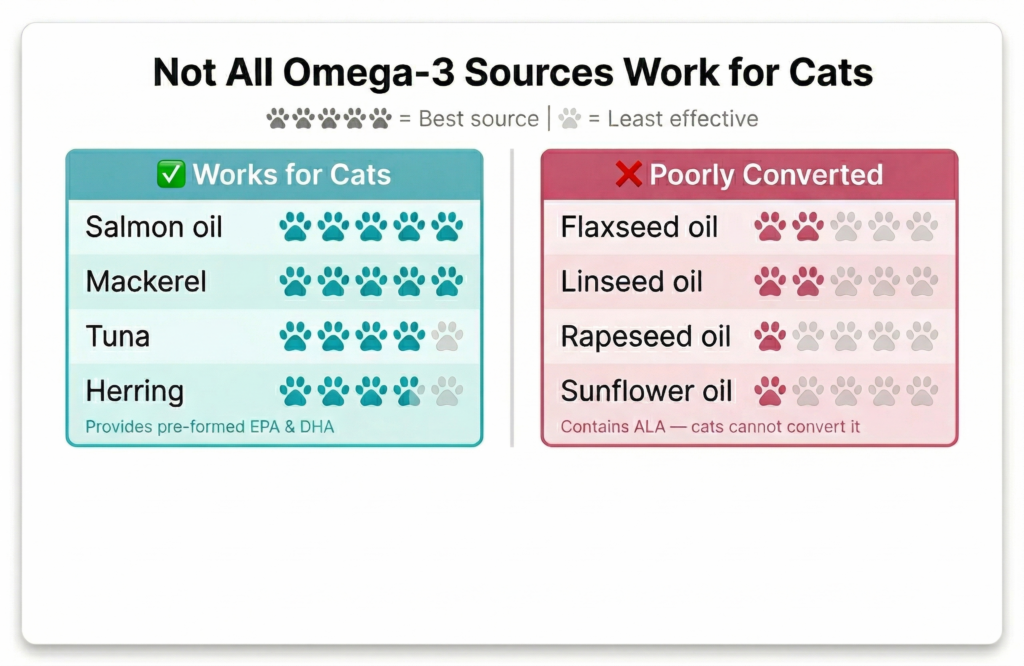
Omega-3 fatty acids, particularly EPA and DHA found in fish, work against this. They are precursors to anti-inflammatory signalling molecules and are involved in the regulation of immune cell activity. Omega-9 rounds out the profile, contributing to cell membrane integrity and fat metabolism.
For cats, fish is the most reliable and bioavailable source of Omega-3. Plant-based Omega-3 sources like flaxseed require conversion to EPA and DHA in the body, a process cats perform poorly. This is another area where the origin of ingredients matters, not just their presence on a label.
If you are weighing up whether your cat needs additional Omega-3 supplementation, the practical answer depends heavily on what their current diet already provides. This breakdown on fish oil for cats covers when food alone is sufficient and when a supplement adds genuine value.
What “Immune Support” Actually Looks Like Day to Day
The immune system does not announce when it is working well. What you observe are the secondary signals: coat condition, energy, body weight stability, resistance to minor illness, and recovery speed when illness does occur.
Body condition scoring offers a useful proxy here. On the standard 1–9 scale, where 1 is severely underweight and 9 is severely obese, cats in the 4–5 range are considered ideal.
A cat consistently at this score, with a clean coat, clear eyes, and normal energy levels, is likely receiving adequate nutrition. Significant drift from that range, changes in coat texture, or repeated minor infections all warrant closer attention to diet as a potential variable.
Feeding Consistency and Why It Matters More Than Occasional Upgrades
One aspect of cat immunity diet planning that gets less attention than it deserves is consistency. A cat’s gut microbiome which is closely linked to immune function adapts to what it regularly receives.
Frequent food changes, even between high-quality options, can disrupt microbial balance and create periods of reduced digestive efficiency. Stable nutrition, delivered reliably, allows the immune system to operate from a settled baseline.
This is partly why a subscription model is worth considering beyond the obvious convenience. When food arrives on a fixed schedule, feeding gaps are avoided, the diet stays consistent, and there is no default to a different product when stocks run low.
Hurayra’s Subscribe & Save model is designed around this logic: regular delivery at 25% off the standard price, cancellable at any time.
Conclusion
A cat’s immune system is only as capable as the nutrients that sustain it. Protein quality, Vitamins A, D and E, Omega fatty acids these are not supplementary concerns. They are the biological infrastructure on which daily health depends.
The difference between a cat that recovers quickly from a minor illness and one that struggles is, more often than people realise, a question of what has been in the bowl consistently over months, not just days.
Reading labels carefully, prioritising named protein sources, and maintaining feeding consistency are the three most practical steps any cat owner can take. For those looking for a complete food that addresses these requirements directly, Hurayra is available in Morrisons stores and online with subscription delivery.
Tuna and Chicken Combo
Subscribe & Save 25%
Frequently Asked Questions
1 Does halal certification affect nutritional quality?
Not directly, and it is worth being precise about this. HMC (Halal Monitoring Committee) certification is about sourcing transparency, animal welfare standards, and supply chain integrity, not nutritional composition. It means you know exactly where the protein came from and how it was processed. For cat owners who want full traceability, that is meaningful. For those who do not, the food still performs on nutritional terms. You can read more about what the HMC certification process actually involves if traceability matters to you.
2 Is grain-free food always better for immunity?
No. Grain-free is a formulation choice that suits cats with grain sensitivities or intolerances, and there are valid reasons to prefer it, including reduced unnecessary carbohydrates. But a grain-free food can still be nutritionally poor, and a grain-containing food can be nutritionally sound. The question is what replaces the grain. A well-designed grain-free formula uses additional animal protein or digestible alternative carbohydrates rather than simply removing one filler and adding another. This article on what replaces grains in grain-free cat food explains what to look for on the label.
3 Can I mix wet and dry food and still support immunity?
Yes, and for most cats, a mixed feeding approach is practical. The key is ensuring the combined diet adds up to complete and balanced nutrition. Check that whichever dry food you use is formulated as a complete food, not a complementary one. If you are introducing Hurayra, a gradual transition guide is available to help minimise digestive disruption during the switch.
4 Does coat quality indicate immune health?
Not perfectly, but it is a useful indicator. A dull, thin, or dry coat often suggests deficiency in protein, essential fatty acids, or specific vitamins, all of which also influence immunity. The connection between coat quality and diet is explored in this guide on what causes a dull cat coat.
5 What if my cat is eating but not thriving?
This is where protein quality becomes relevant rather than protein quantity. Cats can meet their caloric needs from a low-quality diet while still being protein-deficient in functional terms, because not all protein sources are equally bioavailable. The signs of protein deficiency in cats go beyond weight loss and are worth knowing.
Recent Post

Subscribe & Save 25% Every Month
Never run out of your pet’s favourite dry cat food again. Enjoy scheduled deliveries right to your door & save 25% on every order. A win for you and your furry friend!
More Articles
- uzma
- /
- 06/04/2026
- uzma
- /
- 06/04/2026
- uzma
- /
- 03/04/2026
- uzma
- /
- 02/04/2026
- uzma
- /
- 01/04/2026