
- Cat Nutrition, Pet Food Guides
Is Chicken Good for Cats? Benefits, Risks, & Safe Feeding Guide
- uzma
Table of Contents
TL;DR
Chicken is one of the best proteins for cats when it is properly sourced and correctly formulated. Look for named chicken as the first ingredient, avoid seasoned or cooked bones, and prioritise a complete, grain-free recipe with verified sourcing over generic claims on the label.
Is Chicken Good for Cats? Benefits, Risks and How Much to Feed
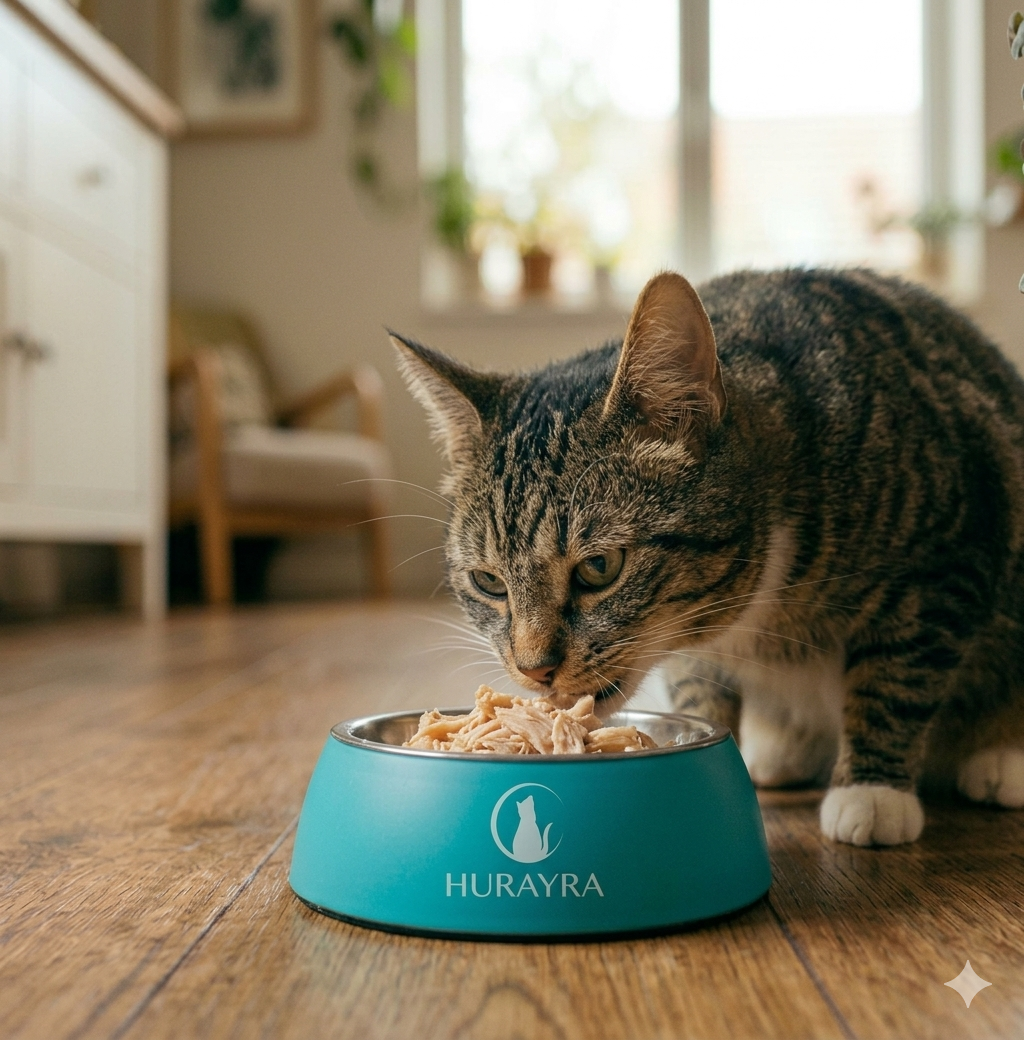
Chicken is the most common protein in cat food. That alone should prompt a question: is it actually good for cats, or has it simply become the industry default?
The answer is more considered than most pet food marketing suggests. Chicken can be an excellent protein source for cats when it is properly sourced, correctly prepared, and appropriately portioned. Understanding why requires a brief look at feline biology, and a clear-eyed view of what “chicken” on a label actually means.
This article explains the nutritional role of chicken in a cat’s diet, how to evaluate chicken-based cat food, the distinction between raw and cooked chicken, and how to feed it safely. Whether you are a first-time cat owner or reconsidering your cat’s current diet, the information here will help you make a more informed decision.
Why Protein Is Essential for Cats?
Cats are obligate carnivores. Unlike dogs or humans, they cannot synthesise certain amino acids from plant sources and must obtain them directly from animal tissue. Taurine, arginine, and arachidonic acid are among the nutrients cats require from meat, and deficiency in any of these causes serious, often irreversible, health consequences.
A nutritionally complete cat food formulated to FEDIAF (the European Pet Food Industry Federation) guidelines should derive its primary nutrition from named animal protein. The operative word is “named.” Chicken, as a defined single-source protein, is not the same as “meat and animal derivatives,” which is a catch-all category used across lower-tier pet food.
For a cat food to qualify as genuinely chicken-based, chicken should appear as the first ingredient by weight, ideally contributing a minimum of 30 to 40 percent crude protein in dry matter terms. Many grain-heavy formulas dilute protein content significantly. Checking the guaranteed analysis on any label is a straightforward habit worth developing.
Nutritional Evidence for Feeding Chicken to Cats
Chicken is well-suited to feline physiology for several reasons.
Amino acid profile.
Chicken is rich in taurine, which supports cardiac function, vision, and immune health. It also provides arginine, an amino acid cats cannot synthesise and cannot safely go without. A diet deficient in arginine can lead to hyperammonaemia within hours.
Digestibility.
Poultry protein is highly digestible for cats. Studies examining digestibility coefficients in domestic cats consistently place chicken among the most efficiently absorbed protein sources, which means more nutritional value per gram consumed compared to lower-quality protein fillers.
Lean macronutrient ratio.
Chicken, particularly breast meat, offers a high protein-to-fat ratio. For cats maintaining a healthy body condition score, typically assessed on a 1 to 9 scale where 4 to 5 is optimal, this balance supports muscle retention without excessive caloric loading.
Palatability.
Cats are notoriously selective feeders. Chicken is widely accepted across different breeds and life stages, which makes it a practical choice for consistent nutrition, particularly relevant in multi-cat households or for cats with previously limited dietary variety.
These are not marketing claims. They are the reasons chicken has remained the dominant protein in premium cat food formulation for decades.
Can Cats Eat Chicken Every Day?
For most cats, yes. Provided the chicken is part of a nutritionally complete and balanced formulation, there is no clinical reason to rotate proteins unless a specific sensitivity or allergy has been identified.
Consistency in diet has its own value. Frequent food changes can cause digestive disruption in cats, which are physiologically adapted to repetitive dietary patterns in the wild. A stable, high-quality chicken-based diet consistently supports gut microbiome balance and reduces the risk of loose stools, vomiting, or food aversion.
Where owners do wish to introduce variety, doing so gradually over seven to ten days, and ensuring any new food meets the same nutritional standards, is the responsible approach.
Raw VS Cooked Chicken for Cats.
This is one of the more debated areas in feline nutrition, and it deserves a measured response rather than a categorical answer.
Cooked chicken is safe when plain, boneless, and unseasoned. It eliminates bacterial risks and can be offered as a supplement or topper, not a replacement for complete cat food.
Raw chicken can offer benefits like higher enzyme activity and digestibility but carries bacterial risks. If considering raw feeding, consult a veterinary nutritionist and ensure diets are complete and safely handled.
Avoid:
- Cooked chicken bones
- Seasoned chicken (garlic, onion, salt)
- Processed chicken products with preservatives
How to Evaluate Chicken Protein Content in Cat Food?
Not all chicken-based cat food is equivalent. The following criteria help distinguish genuinely high-quality formulations.
First ingredient check. The ingredient list is organised by pre-processing weight. If chicken or chicken meal appears first, the food is primarily protein-driven. If grains, starches, or derivatives appear before named meat, the formulation is built around filler.
Named versus generic protein. “Chicken” is a defined ingredient. “Poultry” is not. “Meat and animal derivatives” can include almost anything. Single-source named protein provides transparency; generic categories do not.
Protein percentage. For wet food, look for a minimum of 8 percent crude protein on an as-fed basis, which translates to approximately 35 to 45 percent on a dry matter basis. For dry food, 30 percent crude protein as-fed is a reasonable threshold for a protein-led formula.
Certification and sourcing. For Muslim households, or for any owner who values supply chain transparency, HMC (Halal Monitoring Committee) certification provides verified traceability of the protein source from slaughter through to processing. This is not a health claim. It is a provenance standard that ensures the chicken in the product is what it is stated to be, from a supplier that has been independently audited. That level of supply chain accountability has value beyond its religious context.
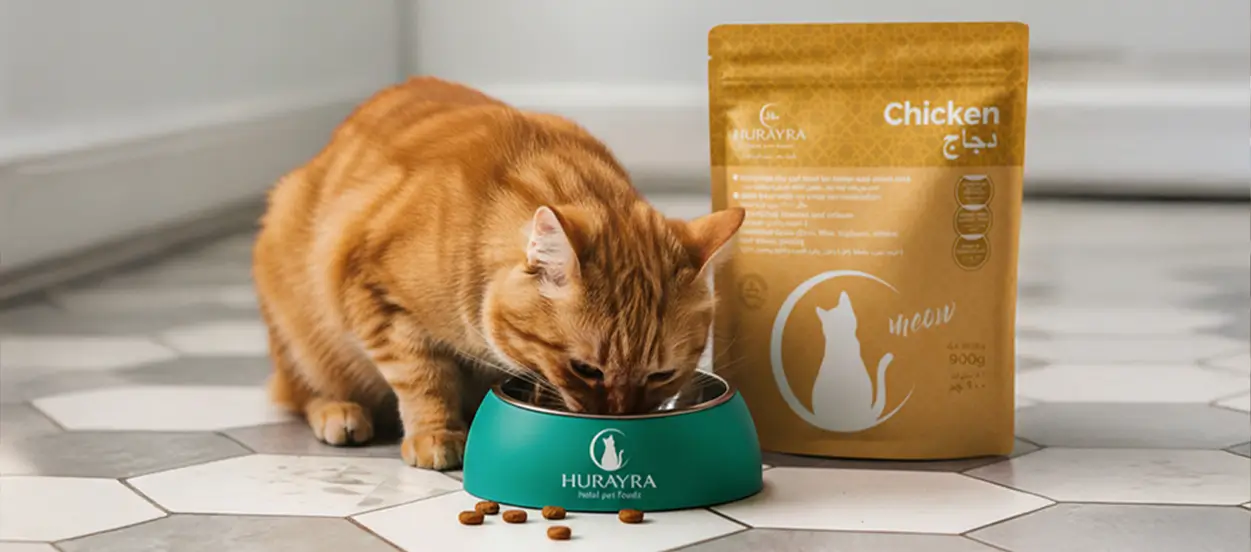
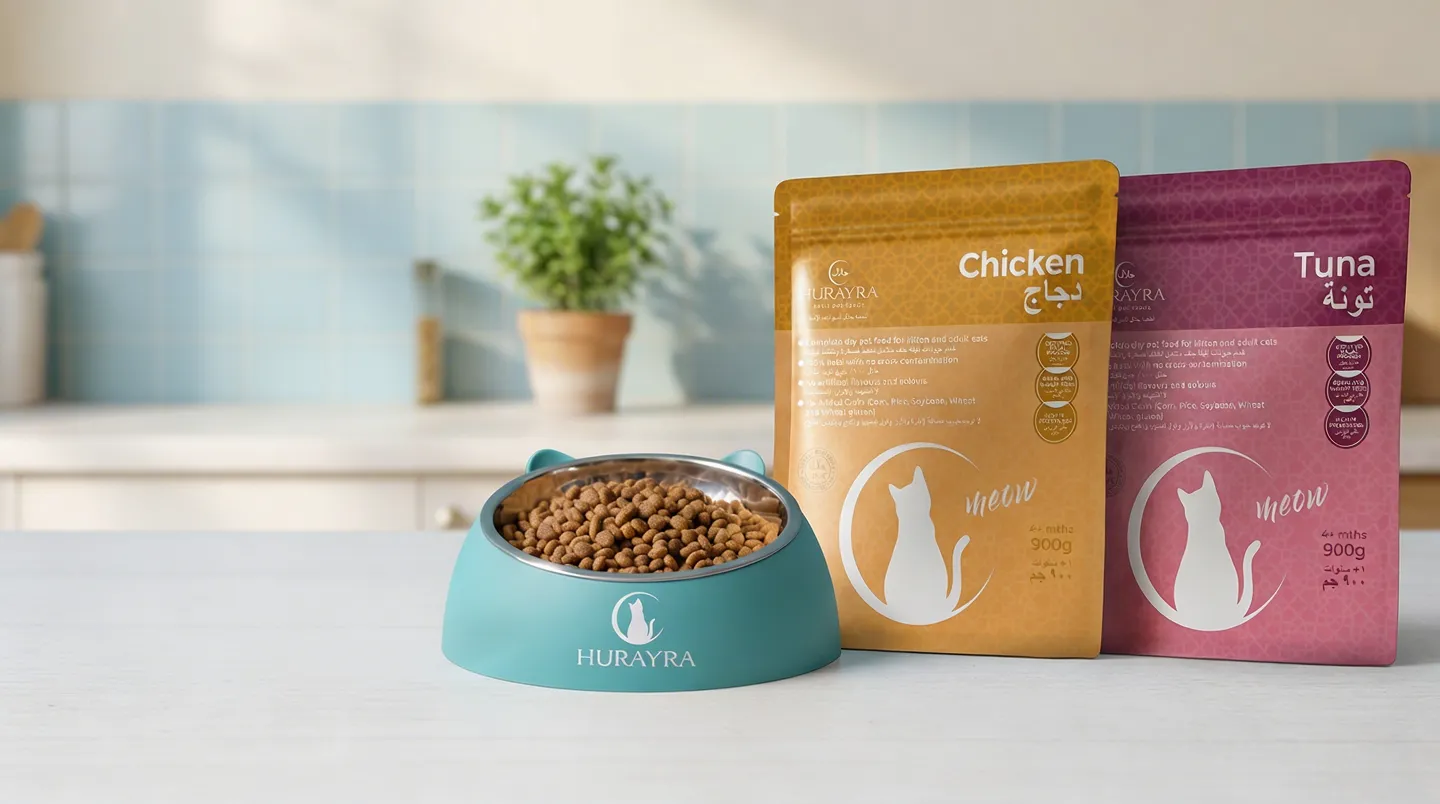
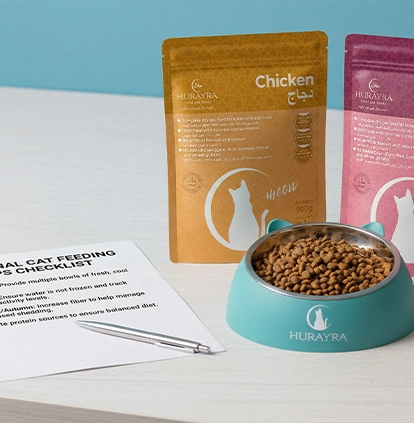
Hurayra Pet Foods uses premium ingredients in its formulations including chicken protein with HMC-certified traceability and a grain-free formulation designed for cats with sensitivities to common starchy fillers. It is formulated to meet FEDIAF nutritional guidelines for complete adult cat nutrition.
Chicken Cat Food
Subscribe & Save 25%
How Much Chicken Should a Cat Eat
For cats fed a complete chicken-based cat food, feeding quantities should follow the manufacturer’s guidelines adjusted for your cat’s body weight, life stage, and activity level.
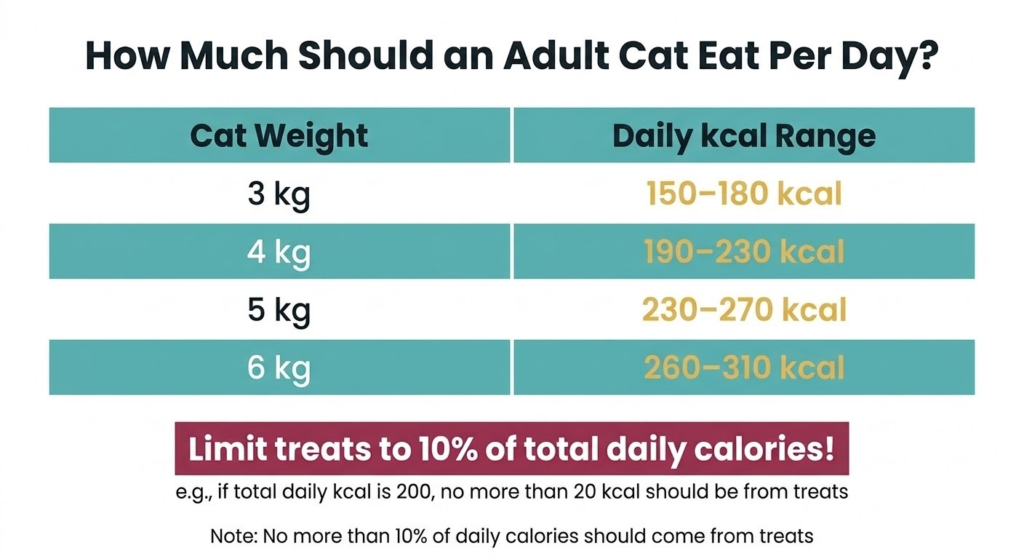
As a general orientation point: most adult cats require between 200 and 300 kilocalories per day, depending on size. A cat hovering above a body condition score of 6 on the 1 to 9 scale may benefit from portion reduction or a move to a lower-calorie formulation. A cat consistently scoring below 4 warrants a veterinary assessment before dietary changes.
Plain cooked chicken as a supplement or treat should not exceed 10 percent of total daily caloric intake. At higher volumes, it disrupts the nutritional balance of the primary diet.
A Final Note
Chicken is a genuinely excellent protein for cats when sourced transparently, formulated correctly, and fed consistently. The questions worth asking are not “is chicken good for cats” but rather: what quality of chicken, from what source, in what formulation, and at what inclusion level?
Those are the questions that distinguish a food that feeds a cat from one that nourishes it.
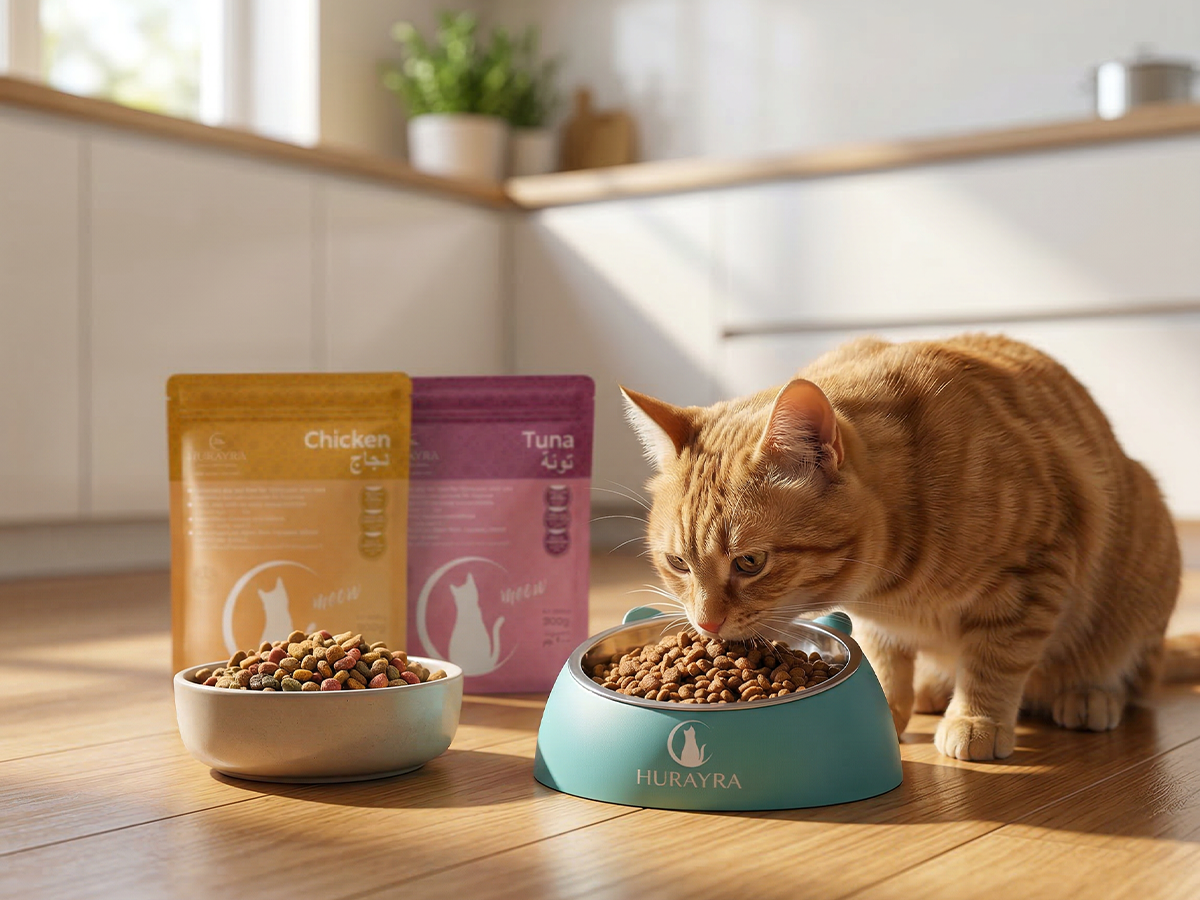
Hurayra is available from Morrisons and online with a subscription option for owners who want to maintain feeding consistency without interruption. If you are reconsidering what goes into your cat’s bowl, starting with the ingredient list is the right place to begin.
Tuna and Chicken Combo
Subscribe & Save 25%
Frequently Asked Questions
1 Is it safe to give cats raw chicken?
Raw chicken carries bacterial risks including Salmonella and Campylobacter. It can be fed as part of a properly formulated raw diet under veterinary guidance, but it should not be offered casually or as a substitute for complete cat food.
2 Can kittens eat chicken?
Yes, but kittens have distinct nutritional requirements including higher protein, calcium, and phosphorus levels. Any chicken-based food for a kitten should be specifically formulated for growth or labelled “all life stages.
3 Why does my cat only want to eat chicken-flavoured food?
Cats develop strong flavour preferences early. If your cat consistently refuses non-chicken options, it may reflect a learned preference rather than a medical need. Gradual transitions are more effective than abrupt changes.
4 Does halal certification make tuna cat food safer?
Not automatically. What it provides is supply chain transparency. A certified product has been independently audited, with a documented record of ingredient sourcing and processing. HMC certification is among the more thorough available in the UK market.
5 Is chicken better for cats than fish?
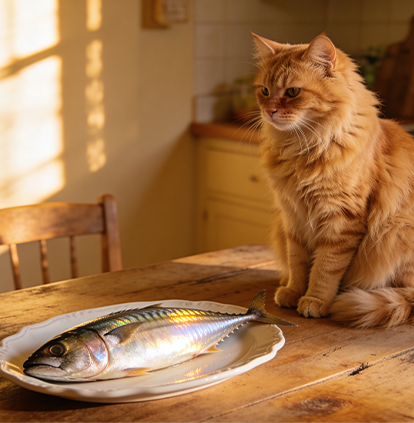
Both are animal proteins with strong nutritional profiles. Chicken provides a leaner macronutrient balance; fish offers omega-3 fatty acids particularly beneficial for coat and skin health. Neither is universally superior. Single-source formulations of either, when complete and balanced, are appropriate for long-term feeding.
6 Can chicken cause urinary problems in cats?
Chicken itself does not cause urinary problems. However, dry food-heavy diets regardless of protein source can contribute to concentrated urine. Combining any dry food with wet food or a water fountain improves hydration and reduces urinary tract risk.
7 What is the difference between chicken and chicken meal in cat food?
Chicken meal is dehydrated chicken with moisture removed, which means it is a more concentrated protein source by weight than fresh chicken. Both are legitimate ingredients. Chicken meal appearing first on a label can indicate a higher protein density than fresh chicken listed first, though the overall formulation context matters.
Recent Post
Subscribe & Save 25% Every Month
Never run out of your pet’s favourite dry cat food again. Enjoy scheduled deliveries right to your door & save 25% on every order. A win for you and your furry friend!
More Articles
- Saniya Ahmed
- /
- 14/03/2026
- Saniya Ahmed
- /
- 13/03/2026
- Saniya Ahmed
- /
- 13/03/2026
- Saniya Ahmed
- /
- 12/03/2026
- Saniya Ahmed
- /
- 10/03/2026
- Saniya Ahmed
- /
- 09/03/2026