TL;DR
Cats are obligate carnivores with no biological need for grains and limited ability to digest starch. The real question isn’t whether a food is grain-free, it’s what replaced the grain. Always check the first three ingredients for a named animal protein source.
Why Cats Don’t Need Grains: The Science of Feline Digestion
Most cats eat grains every day. Most owners have never questioned it. That gap is worth closing.
The question is not a wellness trend. It is a question of biology. Understanding feline digestion changes how you read a label and how you choose what goes in the bowl.
This article explains the science clearly. It does not argue that grains are universally harmful. It gives you what you need to make a genuinely informed decision.
What Obligate Carnivore Actually Means
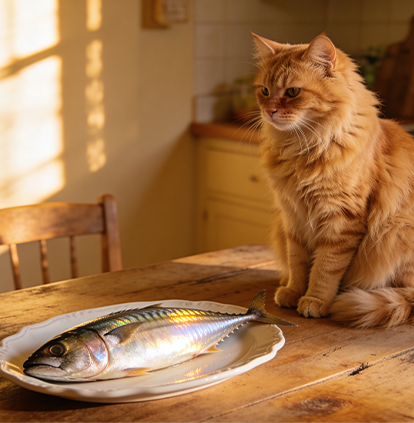
Cats are obligate carnivores. This is not a preference. It is a metabolic classification with real consequences.
Obligate carnivores cannot synthesise certain nutrients from plant-based sources. For cats, this includes taurine, arachidonic acid, and retinol. These must come from animal tissue, not from grains, not from plant fats.
Cats also produce almost no salivary amylase. Amylase is the enzyme that breaks down starch. Humans produce it in abundance. Dogs produce moderate amounts. Cats produce almost none.
Their pancreatic amylase output is also significantly lower than omnivores. High-starch diets do not match their digestive architecture. The biology is consistent on this point.
This is why brands like Hurayra build their formulas around single-source animal protein from the start. It is not a marketing angle. It reflects what cats are actually built to use.
Do Cats Need Grains
No. Cats have no dietary requirement for grains. There is no established minimum for cereal carbohydrates in feline nutrition.
FEDIAF nutritional guidelines set no grain requirement for cats. They do set minimum protein thresholds. Animal protein is the biological priority, not carbohydrate, not starch, not cereal filler.
Check the first three ingredients on any cat food label. Grains in positions one or two mean the formula is built around bulk, not nutrition. Hurayra clearly lists all the ingredients in the cat food formula. That is the baseline worth looking for.
What Cats Actually Need From Their Diet
Cats need animal protein, and they need it at meaningful levels. FEDIAF guidelines set a minimum of around 26% crude protein on a dry matter basis for adult cats. Hurayra’s formulas deliver 35% protein packed in the kibble. That gap matters for muscle maintenance, energy, and long-term health.
Named protein sources matter too. “Chicken” is more transparent than “poultry derivatives.” Specificity in the ingredient list reflects quality in the supply chain. If the label cannot tell you what animal the protein came from, that is worth noting.
Cats also need taurine, arachidonic acid, and active vitamin A. None of these come from grains. All three require animal tissue. A formula without verified animal protein at its core cannot reliably deliver them.
Grain-Free Does Not Mean Better for Every Cat
Grain-free describes what a food lacks, not what it contains. A product that replaces wheat with potato starch may carry a similar glycaemic load. The label still needs scrutiny even after the grain-free claim.
Some cats show genuine sensitivity to specific grains, particularly wheat gluten. Symptoms can include digestive upset or skin irritation. But this is sensitivity, not a universal rule.
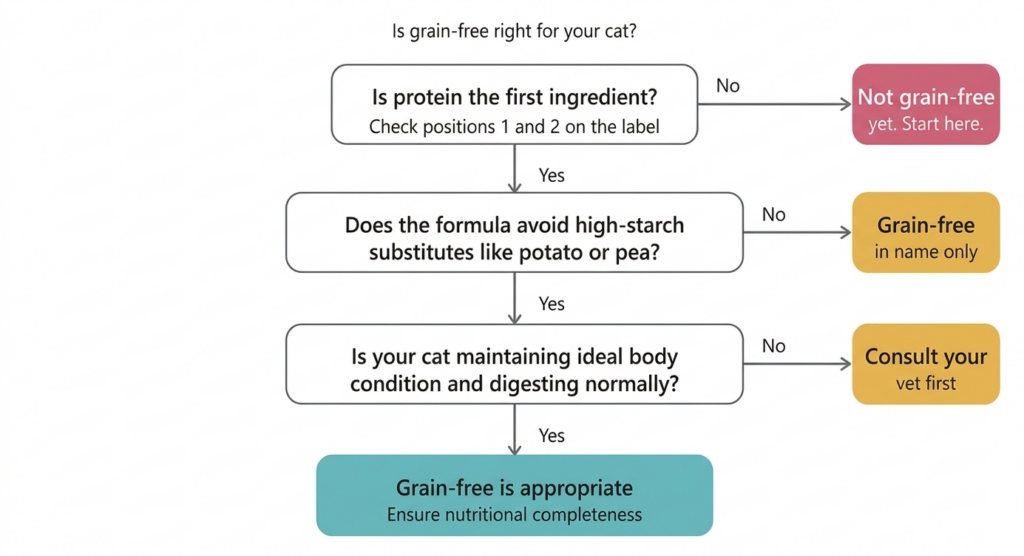
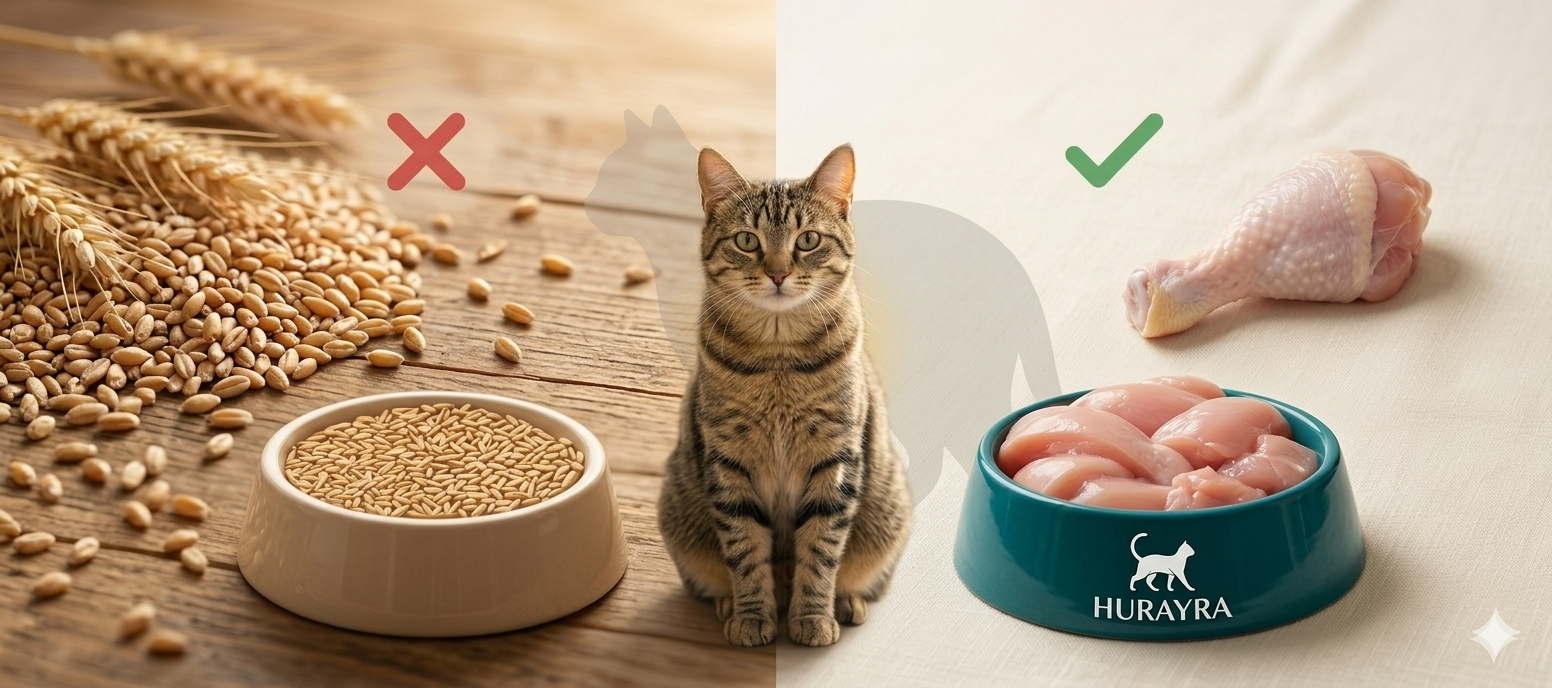
The more useful question is what replaced the grain. Hurayra removes grain entirely and does not substitute high-starch alternatives in its place. The formula stays protein-led throughout. That distinction separates genuine grain-free from grain-free in name only.
Reading Ingredients with Confidence
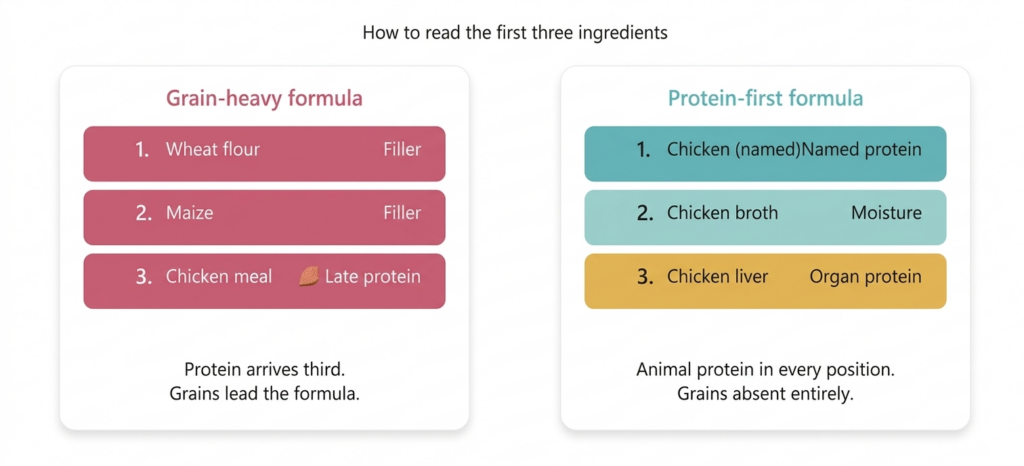
Start with the first three ingredients. These are the largest components by weight before cooking. Named animal proteins in positions one and two are a clear positive signal.
Look for specificity. “Salmon” is more traceable than “fish meal.” “Chicken” is more verifiable than “poultry.” Named ingredients tell you exactly what you are feeding. Generic categories do not.
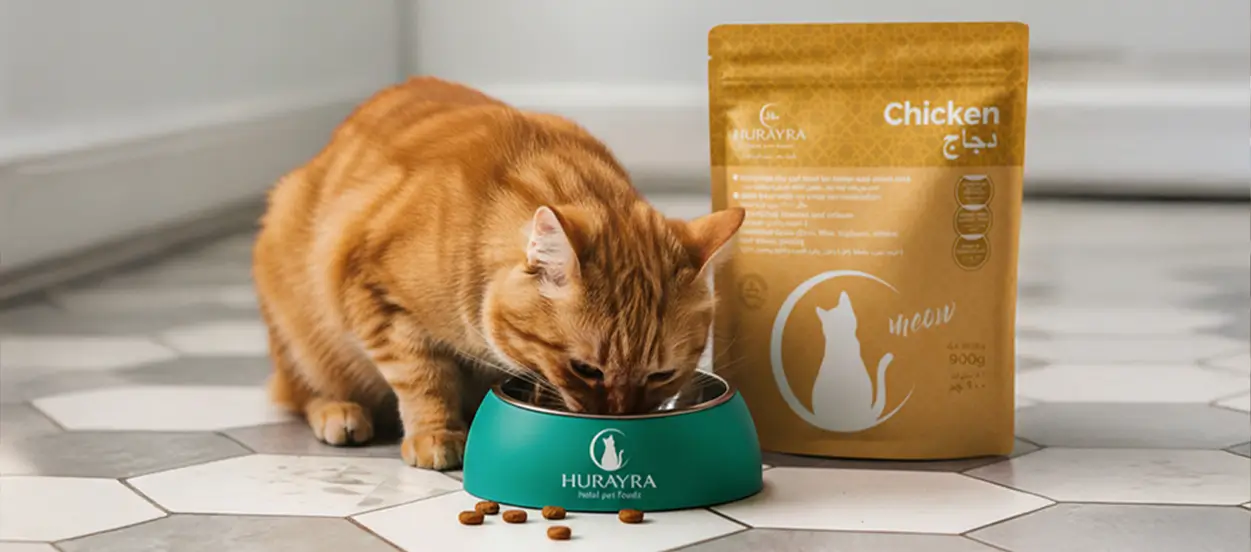
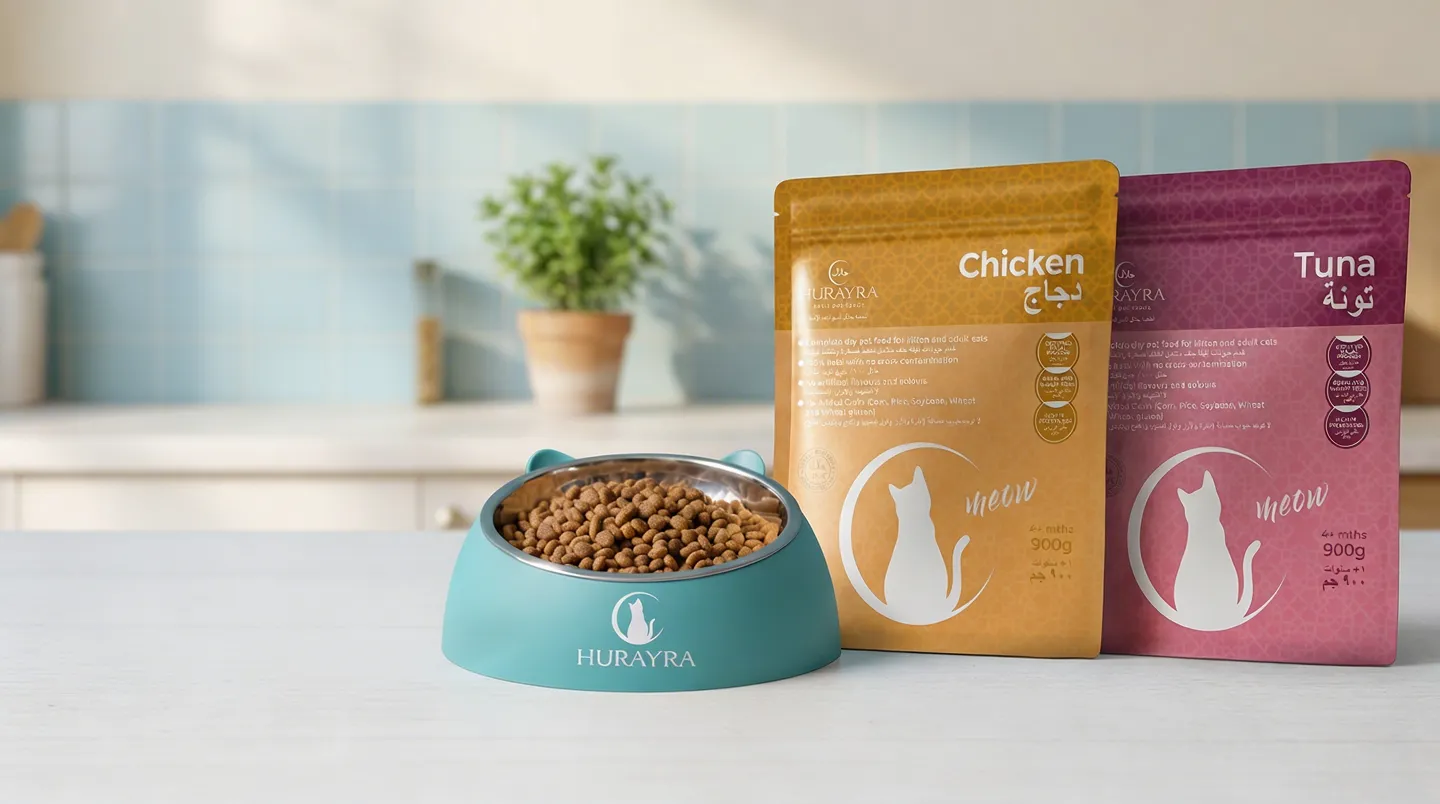
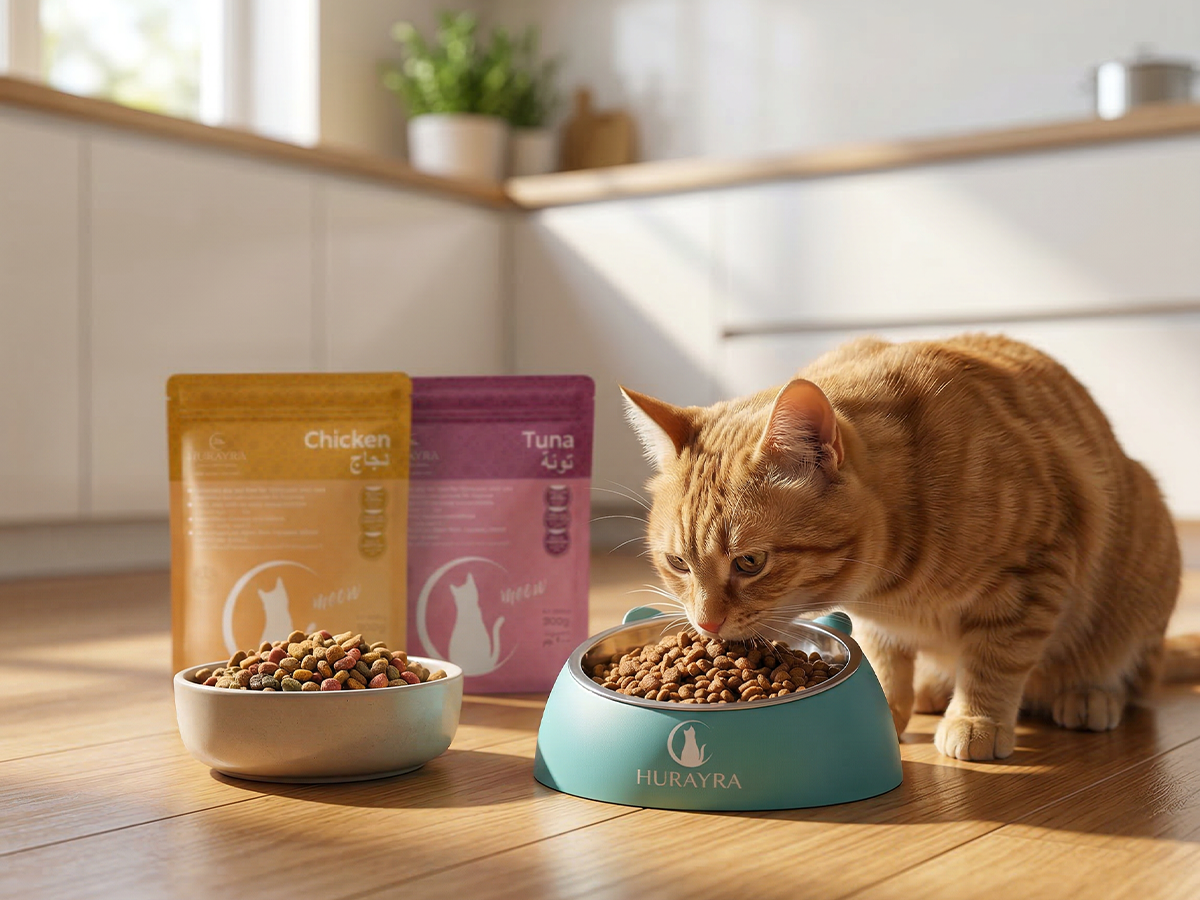
Assess moisture content too. Cats evolved with a low thirst drive. Wet or mixed feeding supports kidney health, particularly as cats age. Dry food formulated with quality protein, as Hurayra’s Chicken Dry Cat Food, can form a sound nutritional base when water is always available alongside it.
Dry Chicken Cat Food
Pack of 2
View Product
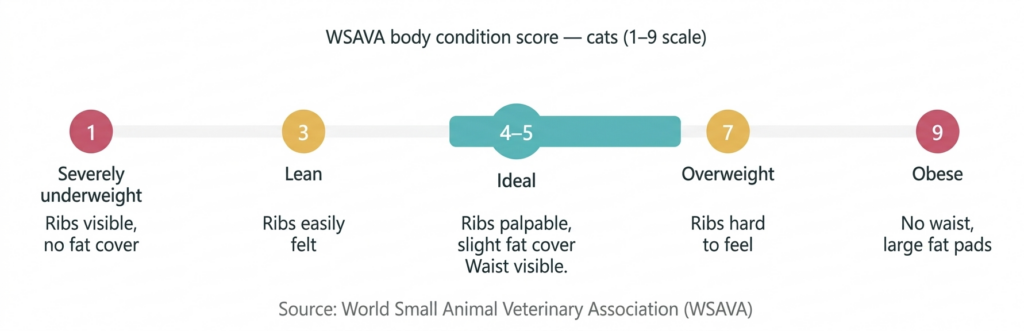
Use body condition scoring as an objective measure. The WSAVA scale runs from 1 to 9. Scores of 4 to 5 indicate ideal conditions. If your cat maintains that range on its current diet with no digestive irregularity, that data is worth keeping in mind before making changes.
A Note on Halal Certification and Ingredient Transparency
HMC certification is a traceability standard. It verifies supply chain integrity and slaughter compliance from farm to finished product. It does not automatically indicate nutritional superiority.
Hurayra holds full HMC certification. For Muslim households, that resolves a genuine question of religious compliance. For all cat owners, it represents a verified supply chain, something most mainstream pet food brands cannot offer.
A halal-certified product with grain as its primary ingredient is still grain-primary. Certification and formula quality are separate considerations. Hurayra addresses both: HMC-certified sourcing and a protein-first formula with no grain, wheat, or soy. The two do not have to be a trade-off.
Maintaining Consistency in Your Cat’s Diet
Cats are more sensitive to dietary change than dogs. Abrupt transitions cause digestive upset and stress. A gradual seven to ten day cat transition is standard practice, introducing new food in small proportions and increasing incrementally.
Once a working diet is established, consistency matters. Frequent rotation disrupts digestion in many cats. Stability is a nutritional benefit in itself, not just a convenience.
Hurayra’s subscription model supports that stability directly. The same grain-free, single-source formula arrives on a regular schedule. Stock availability stops being a variable. The feeding routine stays consistent, which is precisely what cats respond well to.
What to Take From This
Cats are built for animal protein. They have no need for grains. The biology supports this without ambiguity.
Grain-free is worth considering when the formula is nutritionally complete and protein-first. Named animal protein in the first ingredient position is the baseline to look for. That single check tells you more than any front-of-pack claim.
Hurayra is formulated with clean sourced animal protein, grain-free and HMC-certified, with 35% protein per formula. Our Dry Cat Food available in Morrisons and online with subscription delivery. If you are reviewing your cat’s diet, the label is the right place to start.
Tuna and Chicken Combo
Pack of 2
Subscribe & Save 25%
Frequently Asked Questions
1 Do cats need grains in their diet?
No. Cats have no biological requirement for grains. Their systems are designed for animal protein and fat, not starch.
2 Can cats digest grains at all?
In small quantities, yes. Their capacity for starch digestion is significantly lower than omnivores. High-grain diets place load on systems not designed for them.
3 Are grains bad for cats?
Not universally. Some cats tolerate grains without issue. The more useful question is whether grains serve a nutritional purpose, and for cats, they do not.
4 Is grain-free cat food always better?
No. Grain-free cat food is a starting point, not a quality guarantee. A formula substituting high-starch alternatives like pea starch may not represent a meaningful improvement. Check what replaced the grain.
No. Cats have no biological requirement for grains. Their systems are designed for animal protein and fat, not starch.
In small quantities, yes. Their capacity for starch digestion is significantly lower than omnivores. High-grain diets place load on systems not designed for them.
Not universally. Some cats tolerate grains without issue. The more useful question is whether grains serve a nutritional purpose, and for cats, they do not.
No. Grain-free cat food is a starting point, not a quality guarantee. A formula substituting high-starch alternatives like pea starch may not represent a meaningful improvement. Check what replaced the grain.
No. Grain-free cat food is a starting point, not a quality guarantee. A formula substituting high-starch alternatives like pea starch may not represent a meaningful improvement. Check what replaced the grain.