
- Uncategorized
Does My Cat Need Fish Oil Supplements? Or Can Food Provide Enough?
- uzma
Table of Contents
TL;DR
Most healthy cats eating a named marine protein diet already get enough EPA and DHA without supplements. Only add fish oil if the food contains no marine source, or your vet has identified a specific condition that warrants it.
Does My Cat Need Fish Oil Supplements? Or Can Food Provide Enough?
Most cat owners who ask this question are already doing something right. They are paying attention.
The trouble is, “fish oil supplement cats” is a search that returns a lot of noise: affiliate-heavy roundups, supplement brands with a commercial interest in the answer, and general pet wellness content that applies equally to dogs, humans, and theoretically hamsters. Very little of it is written specifically around feline biology, and even less of it accounts for what is already in the food.
This article addresses the question properly. By the end, you will understand what omega-3 fatty acids actually do in a cat’s body, why the source of those fatty acids matters more than most labels make clear, and how to assess which is better marine source tuna vs salmon is best for your cat.
Why Cats Cannot Make EPA And DHA On Their Own
This is the biology that changes the conversation.
Cats are obligate carnivores. That classification is not marketing. It describes a genuine metabolic reality: cats lack sufficient activity of the enzyme delta-6-desaturase to convert plant-based omega-3s (called ALA, or alpha-linolenic acid) into the forms the body actually uses. Those usable forms are EPA(eicosapentaenoic acid) and DHA (docosahexaenoic acid).
In practical terms: a cat fed a food listing “linseed oil” or “flaxseed oil” as its omega-3 source is receiving omega-3s it can barely process. Research in feline nutrition suggests the conversion rate from ALA to EPA/DHA in cats is under 1%. That is not a rounding error. It means plant-sourced omega-3s are, for cats, close to useless.
EPAand DHA from marine sources, by contrast, are used directly. No conversion required. This is why the source of omega-3s in cat food matters, not just whether omega-3s appear somewhere on the label.
What EPA And DHA Actually Do In A Cat’s Body?
EPAand DHA are involved in several biological processes that are worth knowing about, not because every cat will show problems without them, but because the effects of sustained deficiency are slow to appear and easy to miss.
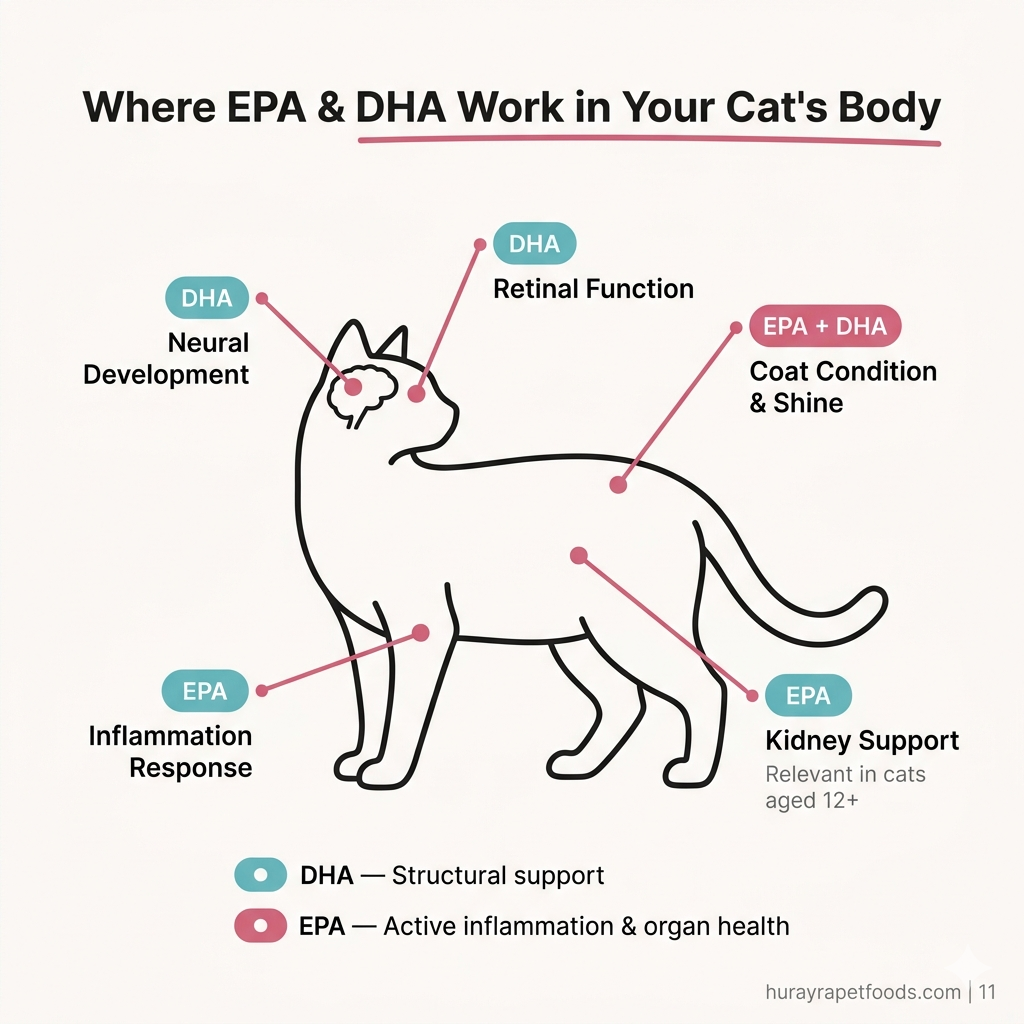
DHA is a structural component of the brain and retina. Kittens with inadequate DHA during development show measurable differences in visual acuity and cognitive response in controlled studies. In adults, it is associated with healthy neurological function.
EPAhas a more active role in inflammation management. Cats with joint stiffness, chronic skin conditions, or kidney disease are often prescribed veterinary diets specifically formulated with higher EPAlevels. The European Society of Feline Medicine has noted marine-sourced omega-3s as relevant to chronic kidney disease management in cats, which affects an estimated 30-40% of cats over age 12.
DHA also appears in sperm membranes, which is why breeding cats are sometimes given supplementation, though this is a narrower clinical consideration.
For the average healthy adult cat, the question is not whether these fatty acids matter. They do. The question is whether the food already provides enough of them.
Can Cat Food Provide Enough Omega-3s Without A Supplement?
This depends entirely on what is in the food.
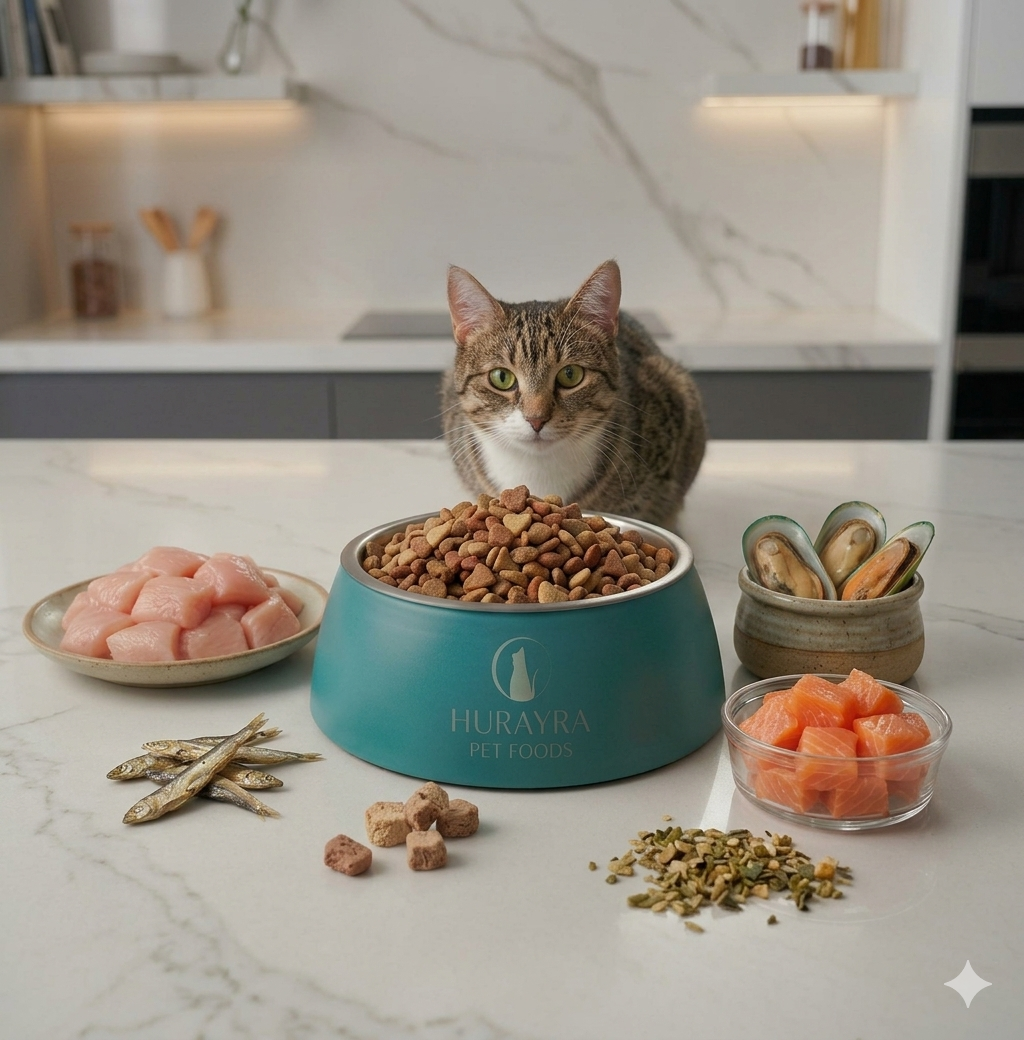
A diet where the first named ingredient is a marine protein, salmon, mackerel, sardine, or herring, will deliver EPAand DHA directly. These fish are naturally high in omega-3 fatty acids, and a well-formulated wet food based on one of them can meet a cat’s requirements without any additional supplementation.
The FEDIAF (European Pet Food Industry Federation) guidelines, which are the recognised nutritional framework used by responsible manufacturers across Europe, specify minimum nutrient targets for complete cat foods. A product formulated to meet FEDIAF requirements for adult maintenance will include omega-3s, but the standard itself does not mandate marine sourcing. This is why two products can both claim to be “complete and balanced” while differing considerably in how their omega-3s are delivered and absorbed.
The practical check is simple. Look at the first three ingredients. If a named marine protein or a named marine oil appears there, the food is likely doing meaningful omega-3 work. If the protein source is a land animal and omega-3s only appear as flaxseed or rapeseed oil in the additives list, the omega-3 content is present on paper but largely unavailable to the cat’s body.
Hurayra’s cat food uses named-source marine protein as the lead ingredient, which means the omega-3 contribution comes from the protein itself rather than an added plant oil. The formulation is grain-free, which for cats with sensitivities removes a source of dietary interference, though grain-free is a suitability question rather than a universal nutritional requirement.
When A Fish Oil Supplement For Cats Is Worth Considering?
A supplement makes sense in specific circumstances, not as a default.
The clearest cases are cats on a diet where the protein base is poultry or red meat with no marine component. If a cat is eating chicken-only wet food or a dry kibble where fish appears low in the ingredient list, the diet may not be delivering sufficient EPAand DHA. Adding a fish oil supplement here is a reasonable correction.
Cats with diagnosed inflammatory conditions, including skin allergies, arthritis, or early-stage chronic kidney disease, may benefit from higher therapeutic doses. In these situations the supplement is not a wellness add-on but a clinical intervention, and the dose should be discussed with a vet. Commercially available fish oil capsules sold for humans are sometimes used, but the dose needs adjusting for body weight: most recommendations sit between 20 and 55mg of combined EPA/DHA per kilogram of body weight per day, though your vet should confirm the appropriate level for your cat’s specific condition.
Body condition scoring is a useful monitoring tool here. The WSAVA 9-point body condition scale, widely used by vets, assesses weight and muscle condition, but coat quality, coat shine, and skin condition are separate observations that can indicate nutritional gaps over time. A cat losing coat quality on an otherwise adequate diet may have an omega-3 deficiency worth investigating.
One thing worth stating plainly: a fish oil supplement cannot compensate for a poor-quality diet overall. If a cat’s food is low in named protein, high in filler carbohydrates, or relies on anonymous “meat derivatives” rather than traceable protein sources, omega-3 supplementation is a minor adjustment on top of a more significant problem.
What To Look For In An Omega Supplement For Cats?
If you decide a supplement is appropriate, a few things are worth checking.
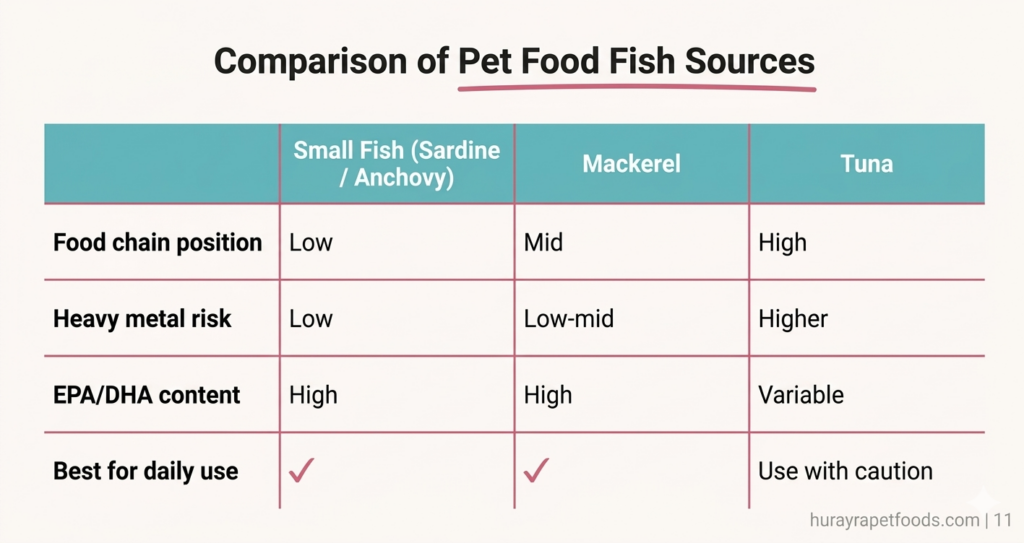
The oil should be sourced from small, short-lived fish: anchovies, sardines, or mackerel. These accumulate fewer heavy metals than larger species. Tuna oil, which appears in some cat supplements, is not inherently harmful, but tuna is a longer-lived fish and sits higher in the food chain. For consistent daily use, sardine or anchovy-based oil is a more considered choice.
Check whether the product specifies the EPAand DHA content separately. A product listing only “omega-3” without breaking down EPAand DHA levels is not giving you the information you need to assess whether the dose is meaningful. This is an industry transparency gap worth being aware of.
Oxidisation is a genuine concern with fish oil. Oil that has gone rancid smells strongly off and delivers less nutritional value while potentially causing digestive upset. Buy in smaller quantities, store in a cool dark place, and check for a production date rather than relying on a distant best-before.
Halal-certified fish oils are available. For owners for whom halal sourcing matters, it is worth noting that HMC (Halal Monitoring Committee) certification in the context of pet food is about traceability and supply chain integrity, confirming the source and handling of ingredients rather than making a health claim. Hurayra’s formulations carry HMC certification for this reason: it answers a sourcing question, not a nutritional one. A halal fish oil is not more bioavailable than a non-halal one. The certification is a transparency mechanism.
Cat Food Vs Fish Oil: The Honest Comparison?
The framing of “food vs supplement” assumes these are competing approaches. For most cats, they are not.
A well-formulated food with a named marine protein source is delivering EPAand DHA continuously, at every meal, in the correct ratio relative to the rest of the diet. A supplement added to a poor-quality food is an isolated intervention without the nutritional context that makes it work effectively.
The better question is: what is already in the food, and does it meet the cat’s needs at this life stage?
For a healthy adult cat eating a complete food with marine protein as the primary ingredient, the answer is often yes. A supplement is not necessary. For a cat eating a land-animal-based diet, a cat with a diagnosed condition, or an older cat where kidney function and coat health are worth monitoring more closely, the case for supplementation becomes more concrete.
If you are using Hurayra’s food as a daily base, the marine protein formulation means your cat is receiving EPA and DHA with every meal. Feeding consistency matters here. Rotating between multiple protein sources weekly, or mixing products with inconsistent omega-3 profiles, introduces variability that makes it harder to assess whether nutritional needs are being met. Subscribing to a consistent formulation and monitoring coat quality, activity level, and weight over a 12-week period gives you a far more useful baseline than switching foods frequently.
Conclusion
The question of whether your cat needs a fish oil supplement is genuinely answerable. It just requires looking at the food first.
Check the first three ingredients. If a named marine protein or marine oil appears there, and the food meets FEDIAF standards for complete nutrition, supplementation is unlikely to be necessary for a healthy adult cat. If the protein base is poultry or red meat with no marine component, or if your cat has a diagnosed condition where omega-3s are clinically relevant, a targeted supplement is a reasonable addition.
What the question really asks is whether the daily diet is doing its job. That is a question worth taking seriously, and it starts with what is in the bowl. Shop with Hurayra. Also available at Morrisons.
Tuna and Chicken Combo
Subscribe & Save 25%
Frequently Asked Questions
1 Should I give my cat fish oil every day?
For most healthy cats eating a diet based on named marine protein, daily supplementation is not necessary. If your cat’s food contains no marine protein source, a daily fish oil supplement may help fill the gap. If you are unsure, your vet can advise based on your cat’s specific diet and health status.
2 Can I give my cat the same fish oil capsules I take?
Human fish oil capsules can be used for cats, but the dose needs adjusting. Most recommendations for cats fall between 20 and 55mg of combined EPAand DHA per kilogram of bodyweight per day. Human capsules are typically formulated for a 70kg adult, so the volume used for a 4-5kg cat is much smaller. Check with your vet before starting.
3 Is tuna oil safe for cats?
Tuna oil for cats is not harmful in moderate amounts, but tuna is a large predatory fish that accumulates higher levels of heavy metals over its longer lifespan. For daily use, sardine or anchovy-based oils from smaller fish are generally considered a more appropriate choice.
4 What is the difference between omega-3 and fish oil for cats?
Omega-3 is the category. Fish oil is one source of omega-3s, specifically EPAand DHA. Cats cannot convert plant-based omega-3s (ALA, found in flaxseed and rapeseed oils) into EPAand DHA efficiently. Marine-sourced omega-3s are directly usable by the cat’s body without conversion, which is why the source matters.
5 Does grain-free cat food contain more omega-3s?
Not automatically. Grain-free refers to the absence of grains as carbohydrate fillers, not to a higher omega-3 content. A grain-free food based on chicken with no marine protein may have lower EPAand DHA than a grain-inclusive food with salmon as the primary ingredient. Check the protein source, not just the grain-free label.
6 How do I know if my cat has an omega-3 deficiency?
There is no single obvious sign, but over time a cat with insufficient EPAand DHA may show changes in coat quality (dullness, increased shedding), dry or flaky skin, or reduced mobility in older cats with joint issues. These signs overlap with other conditions, so a vet check is the right first step rather than self-supplementing.
Recent Post
Subscribe & Save 25% Every Month
Never run out of your pet’s favourite dry cat food again. Enjoy scheduled deliveries right to your door & save 25% on every order. A win for you and your furry friend!
More Articles
- uzma
- /
- 02/04/2026
- uzma
- /
- 01/04/2026

- uzma
- /
- 31/03/2026

- uzma
- /
- 30/03/2026
- uzma
- /
- 29/03/2026

- uzma
- /
- 29/03/2026