
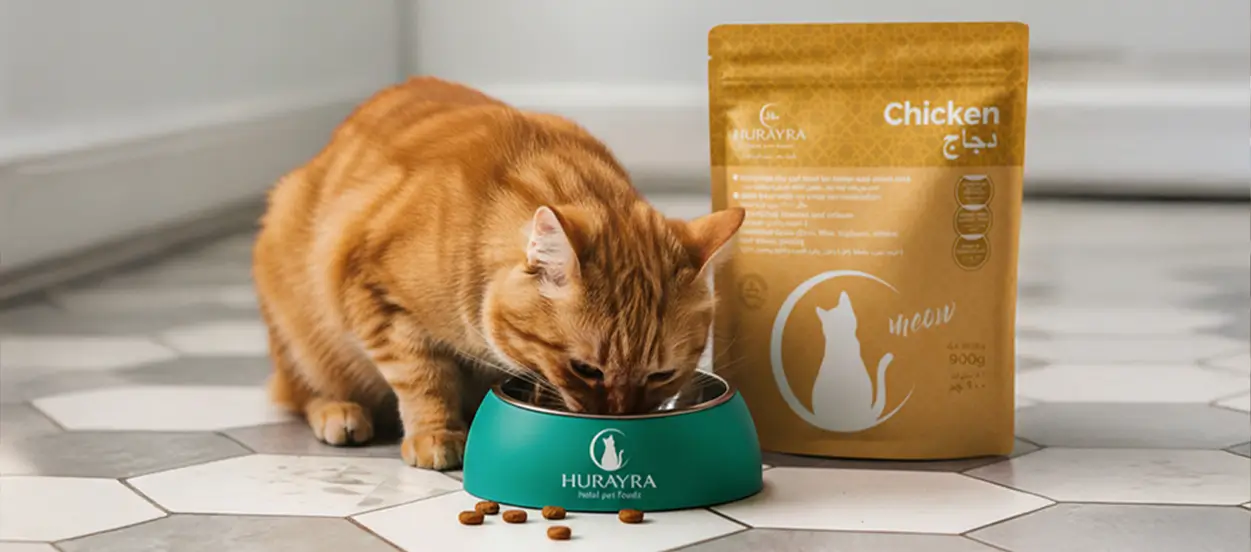
- Grain-Free Diets, Halal Products
Halal vs. Grain-Free Cat Food
- Saniya Ahmed
Table of Contents
TL;DR
Your cat doesn’t need buzzwords. They need clean, traceable protein and proper nutrition. Halal and grain-free cat food are not competing choices but separate standards that address different concerns. Halal focuses on transparent, pork-free sourcing and controlled processing, while grain-free targets digestive suitability by removing cereals some cats struggle with. A cat food can be both halal and grain-free, combining traceable protein with easier digestion. The real indicator of quality is clear ingredients, named proteins, and proper nutritional balance, not marketing labels alone.
When you see “halal” and “grain-free” on cat food packaging, it’s easy to assume you need to choose between them. You don’t. These terms address entirely different concerns, and understanding the distinction helps you make better decisions for your cat’s diet.
Halal certified cat food ensures transparent, pork-free sourcing with no cross-contamination during processing. It’s about where ingredients come from and how they’re handled. Grain-free formulation removes cereals (wheat, corn, rice, soy) that some cats struggle to digest. It’s about what goes into the recipe.
A growing number of UK cat owners want both: clean, traceable sourcing and recipes that suit sensitive digestion. The confusion arises because these standards are rarely explained clearly, leaving pet owners unsure what each actually delivers.
What UK Cat Owners Actually Want to Know
You’re reading this because you’ve seen both terms and want to understand what they mean for your cat’s health, not just marketing claims.
Here is the fact: halal and grain-free address different priorities. One focuses on sourcing integrity (where meat comes from, how it’s processed, whether there’s cross-contamination). The other focuses on digestive suitability (removing ingredients some cats can’t tolerate).
Most cat owners care about both. You want to know your cat’s food contains quality protein from traceable sources. You also want to avoid ingredients that trigger vomiting, loose stools, or skin irritation.
The good news is these aren’t competing standards. Food can be halal and grain-free simultaneously. What matters is understanding what each term guarantees, so you can assess whether a product meets your cat’s specific needs.
Is Halal Cat Food Grain-Free?
Not automatically, but it can be. Halal certification governs sourcing and processing standards. Grain-free governs what ingredients are included in the recipe. These are independent criteria, which means a product can meet both, either, or neither. What you’re looking for is a formula that satisfies both standards deliberately, not by coincidence.
Understanding Halal Certified Cat Food
Halal certification matters because it enforces supply chain transparency. Certified facilities must trace every ingredient back to its source and document handling procedures. For cat food, this typically means protein from certified suppliers, not anonymous “meat derivatives” from unknown animals.
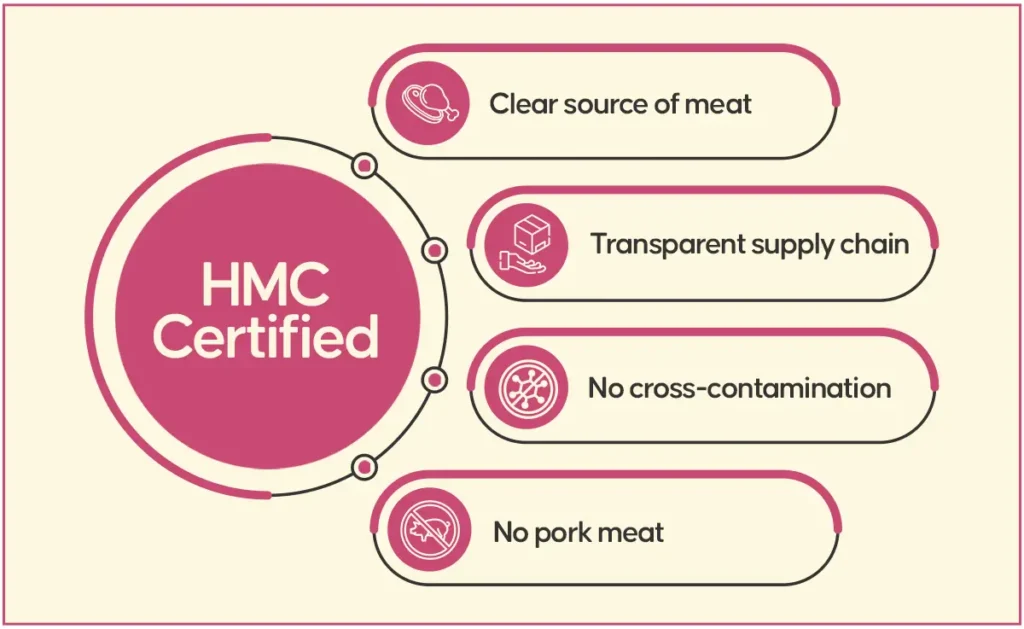
The slaughter process follows ethical guidelines requiring sharp tools, swift handling, and full drainage of blood. This isn’t just religious observance. It reduces bacterial contamination and stress hormones in the meat.
When blood is fully drained from an animal, it leads to:
- Cleaner meat
- Lower bacterial risk
- Better taste and smell
- Longer shelf life
- Less waste/toxins (including uric acid) in the meat
Blood is a breeding ground for bacteria and carries metabolic waste. Removing it results in safer, fresher, and higher-quality food – for both humans and pets.
Halal isn’t just ethical – it’s better food science too.
While halal certification originated in Islamic dietary law, non-Muslim pet owners increasingly choose halal cat food for straightforward reasons: clear ingredient lists, no pork (a common allergen for cats), and verifiable sourcing. Muslim cat owners appreciate the peace of mind, but the practical benefits (transparency, traceability, cleanliness) matter to anyone feeding a pet.
What Grain-Free Really Means for Your Cat
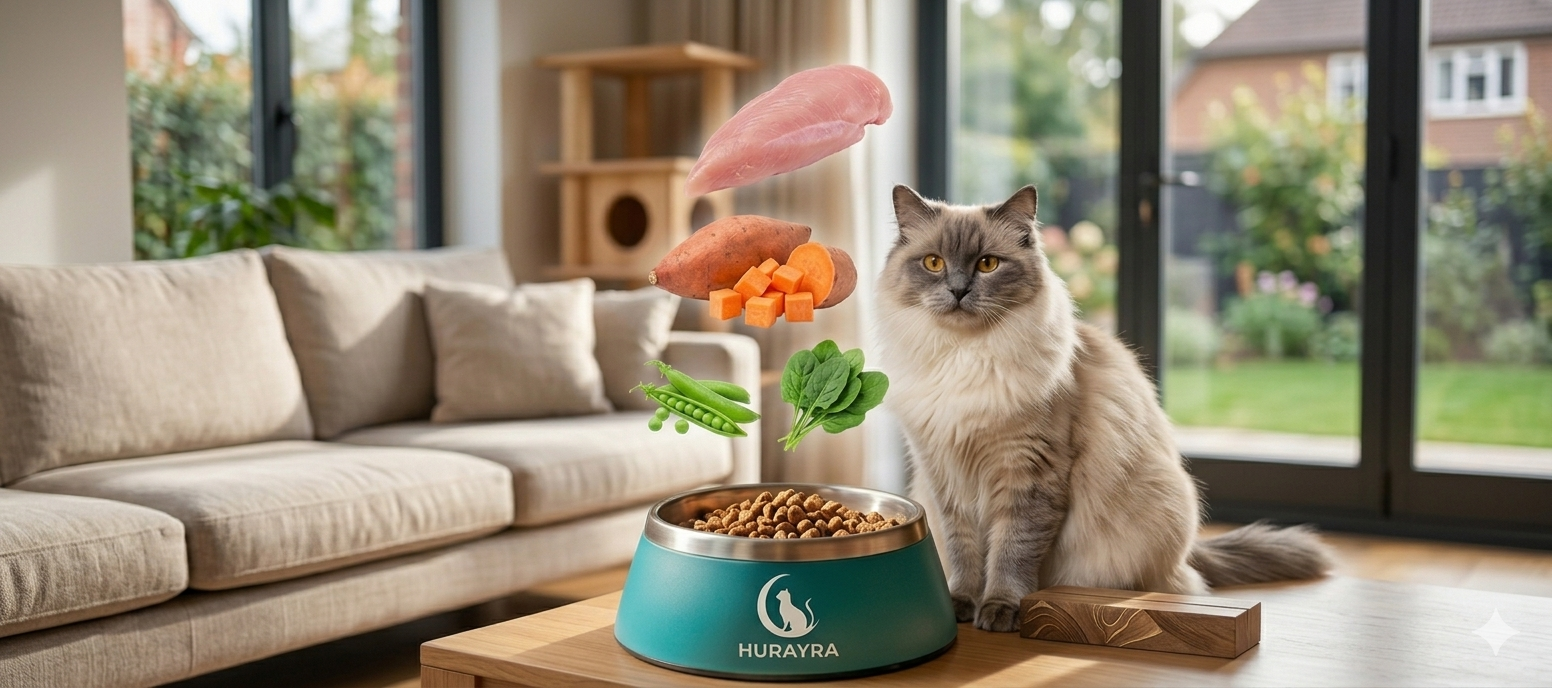
Grain-free cat food removes all cereal ingredients: wheat, corn, rice, barley, oats, and soy. These are replaced with higher protein content, vegetables like peas or sweet potato, and sometimes legumes.
Cats are obligate carnivores. Their digestive systems evolved over millennia to process animal protein, not plant-based carbohydrates. Unlike omnivores, cats lack the salivary enzymes to begin breaking down starch, and their livers are not optimised to process large amounts of carbohydrate. While many cats tolerate small amounts of cereals without obvious issue, some develop sensitivities including vomiting after meals, chronic soft stools, dull coats, or persistent scratching.
Grain-free formulations benefit cats with diagnosed food intolerances, inflammatory bowel conditions, or chronic digestive upset that doesn’t respond to standard diets. They also suit cats whose owners prefer recipes closer to ancestral feeding patterns.
What grain-free doesn't mean: automatically healthier for every cat.
If your cat thrives on food containing rice, there’s no reason to switch. The benefit is digestive suitability for cats that need it, not a blanket improvement for all felines.
When assessing grain-free claims, check what replaces the grains. Quality recipes use named proteins (chicken, turkey, salmon) as the first ingredient. Lower-quality versions substitute grains with cheap fillers like potato starch, delivering empty calories instead of nutrition.
A Note on Mixing Dry and Wet Food
Many cat owners feed a combination of dry and wet food, which is a perfectly reasonable approach, but ingredient quality across the full diet matters. Mixing a premium dry food with a wet food that relies on unnamed meat derivatives or hidden fillers can dilute the nutritional benefits you’re paying for. If transparency and sourcing matter in one part of your cat’s diet, it’s worth applying the same standards to the other. The goal is consistency, not perfection.
Can Cat Food Be Both Halal and Grain-Free?
Yes. These standards regulate different aspects of production.
A food can be halal-certified (traceable chicken, ethical slaughter, no pork, no alcohol preservatives) and grain-free (no wheat, corn, rice, soy). These requirements don’t contradict. They layer.
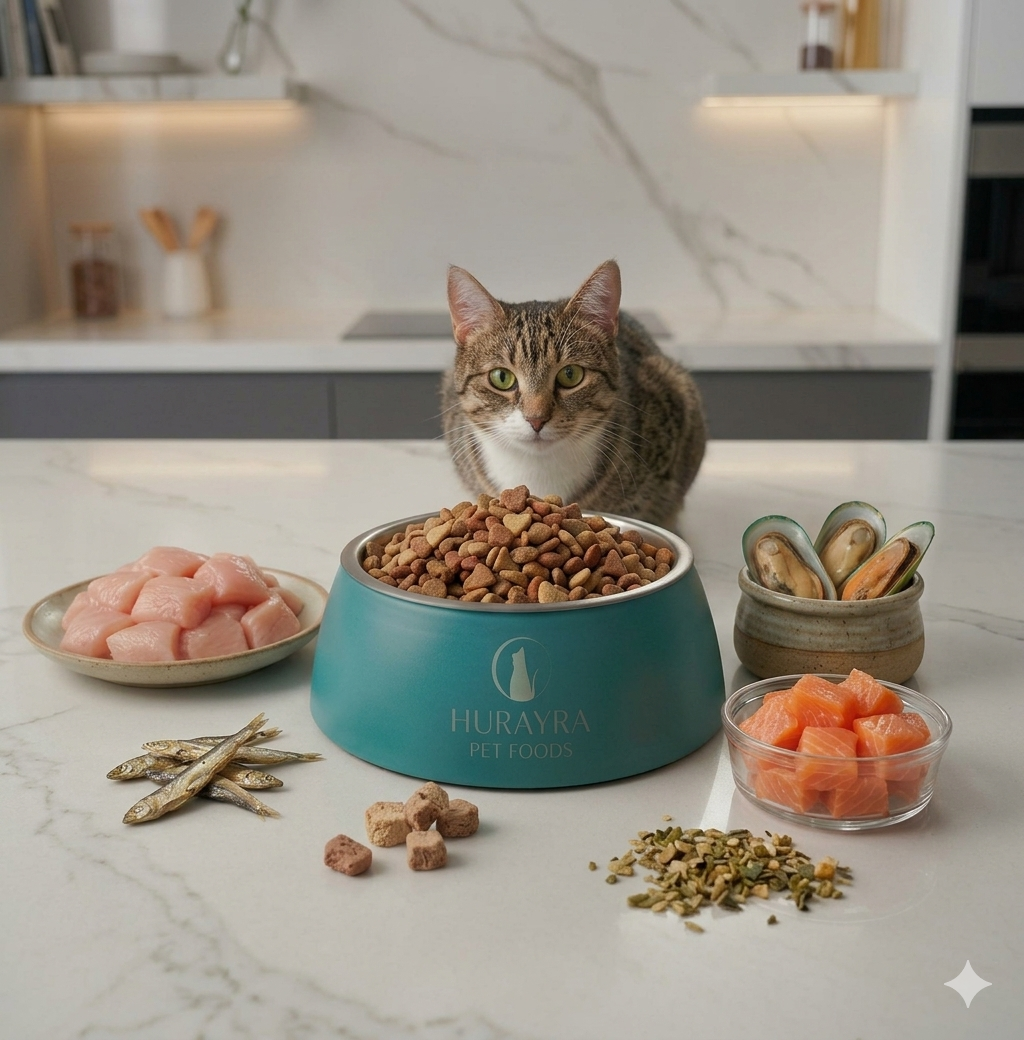
Hurayra’s formulation demonstrates this: single-source protein meeting halal standards, grain-free recipe for digestive suitability, nutritionally complete for adult cats. The sourcing ensures transparency. The formulation ensures digestibility.
This combination answers two separate questions cat owners ask: “Where does this food come from?” and “Will my cat’s stomach tolerate it?” Both matter. Both can be addressed simultaneously.
What Makes Transparent Sourcing Matter
Vague ingredient lists (“meat and animal derivatives,” “cereals,” “oils and fats”) hide what’s actually in the tin. You don’t know if the protein is chicken, beef, pork, or a mixture. You don’t know if cereal means rice or cheap wheat filler. You can’t assess quality or identify potential allergens.
Single-source protein removes this guesswork. If the label says “chicken,” the meat comes from chickens, not a rotating mix of whatever’s cheapest this month. This consistency matters for cats with sensitivities. You can identify triggers instead of guessing.
Transparent sourcing also enables accountability. If a batch causes illness, traceable supply chains allow manufacturers to identify the source and issue targeted recalls. Opaque supply chains don’t.
Third-party validation adds credibility. When a major retailer like Morrisons stocks a product, they’ve conducted their own safety and quality assessments. Retailers don’t risk their reputation on unvetted brands. Shelf space confirms that someone independent verified the claims.
For Hurayra, Morrisons approval validated both halal certification and nutritional standards. That’s not brand storytelling. It’s external verification that the product meets retail-grade safety and quality benchmarks.
Reading Ingredient Lists Properly
The first ingredient listed is the primary component by weight. If the label says “chicken, peas, sweet potato,” chicken is the largest single ingredient. If it says “cereals, meat derivatives, oils,” cereals dominate. The meat is secondary.
Named proteins (chicken, turkey, salmon) confirm what you’re feeding. “Meat derivatives” or “animal by-products” obscure the source. You don’t know if it’s beef, pork, chicken, or mixed scraps.
Hidden grains appear as wheat gluten, corn meal, rice flour, or cereal derivatives. If you’re seeking grain-free food, these terms indicate grains are present despite marketing claims.
Vague preservatives like “antioxidants” or “permitted additives” hide what’s actually used. Specific names (tocopherols, vitamin E, ascorbic acid, vitamin C) confirm natural preservation without alcohol-based chemicals.
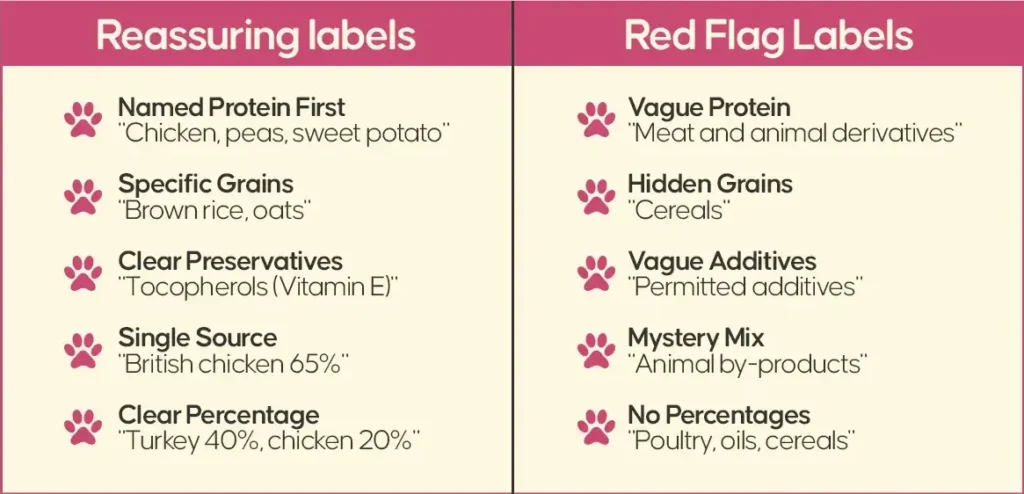
Reading labels this way applies to any brand. Ingredient transparency isn’t exclusive to halal or grain-free products. It’s a standard worth demanding across the board.
What Happens Next for Halal Cat Food in the UK
Demand for transparent sourcing in pet food is rising across the UK, not just among Muslim pet owners. Cat owners increasingly question where ingredients originate, how they’re processed, and whether labels reflect reality.
Hurayra’s expansion follows this trend. The brand launched in Manchester, expanded to London, and is now rolling out city by city based on demand. Subscription services make regular purchasing easier, removing the friction of remembering to reorder.
Mainstream retailers stocking halal cat food normalises these standards. When Morrisons (a national supermarket chain) carries halal-certified cat food, it signals that sourcing transparency isn’t niche. It’s an expectation more customers hold.
For Hurayra, the roadmap includes:
- Further retail partnerships in cities with high demand
- Expanded product range addressing different life stages (kitten, senior)
- Subscription growth to support regular customers
- Educational content helping cat owners understand sourcing standards
The goal isn’t conversion to halal principles. It’s raising the standard for ingredient transparency across UK pet food. When more brands must prove where their ingredients come from, all cat owners benefit.
Conclusion
Halal certification and grain-free formulation aren’t competing standards. They address different concerns. Halal cat food ensures transparent, pork-free sourcing with no cross-contamination. Grain-free removes cereals that some cats struggle to digest. Both can coexist in the same product.
Your priority depends on your cat’s needs. Digestive sensitivity points toward grain-free. Sourcing transparency points toward halal certification. Many UK cat owners want both, and products delivering both are now available.
Hurayra offers clean, pork-free cat food, grain-free, nutritionally complete cat food, now stocked in Morrisons. Whether you prioritise digestive suitability, sourcing transparency, or both, understanding what these standards actually guarantee helps you choose food that suits your cat.
Find us in your local Morrisons.
Frequently Asked Questions
1 Is halal cat food healthier?
Halal cat food isn’t automatically healthier, but it often emphasises clean sourcing, clear ingredient lists, and pork-free cat food production, which many owners prefer for transparency and quality.
2 Is grain-free cat food halal?
Grain-free cat food can be halal only if all its animal ingredients and processing comply with halal standards. The absence of grains doesn’t automatically make it halal.
3 Should cats eat halal?
Cats don’t require halal cat food, but some owners choose it because it focuses on ethical sourcing, traceability, and avoiding unnecessary or controversial ingredients.
4 Why do vets not recommend grain-free?
Some vets are cautious because certain grain-free formulas rely heavily on legumes, which may affect nutrient balance if not properly formulated.
5 What is the number one healthiest cat food?
There’s no single “best” cat food, but high-quality options are typically high in animal protein, clearly labelled, and nutritionally complete for a cat’s life stage.
5 Is grain-free food bad for cats’ hearts?
Grain-free itself isn’t the issue, but poorly formulated diets lacking adequate taurine or balanced nutrients may raise concerns, which is why formulation quality matters most.
Recent Post
Subscribe & Save 25% Every Month
Never run out of your pet’s favourite dry cat food again. Enjoy scheduled deliveries right to your door & save 25% on every order. A win for you and your furry friend!
More Articles
- uzma
- /
- 03/04/2026
- uzma
- /
- 02/04/2026
- uzma
- /
- 01/04/2026
- uzma
- /
- 31/03/2026
- uzma
- /
- 30/03/2026
- uzma
- /
- 29/03/2026