
- Cat Nutrition, Pet Food Guides
Is Tuna Safe for Cats? What the Science Says
- Saniya Ahmed
Table of Contents
TL;DR
Tuna is safe for cats in the right context. The real risks (mercury accumulation, steatitis, thiamine deficiency) apply mainly to cats fed unprocessed or human-grade tuna as a daily staple. In a properly formulated, FEDIAF-compliant cat food, tuna is a legitimate high-protein ingredient. Check that it is named on the label, that the food is complete rather than complementary, and that the brand has clear sourcing transparency. If you want a tuna-based dry food with high protein and audited traceability, Hurayra is worth looking at.
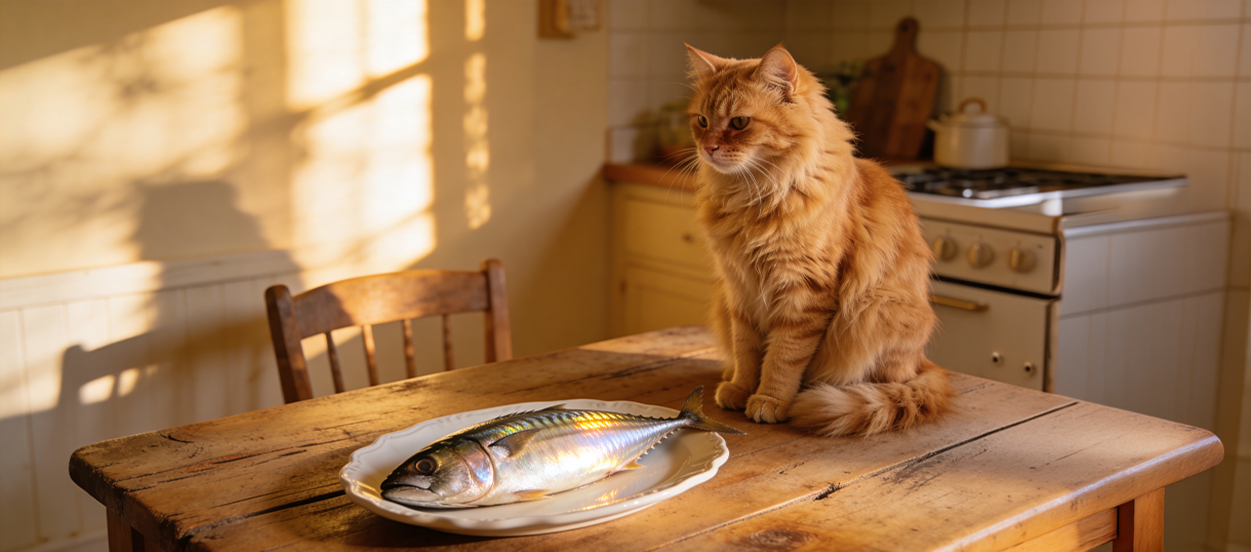
Tuna is probably the most recognised image in cat food marketing. It is also one of the most misunderstood ingredients in feline nutrition. The gap between those two facts matters.
For cat owners trying to make informed decisions, the question of whether tuna is safe for cats does not have a clean yes or no answer. It depends on the form, the frequency, and what else the cat is eating.
This article covers those factors in plain terms, so you can read an ingredient label and know what you are looking at.
Why Are Cats Drawn to Tuna in the First Place?
Cats are obligate carnivores. Their digestive systems are built around protein metabolism, and they have a limited ability to derive energy from carbohydrates. Unlike dogs or humans, cats cannot synthesise certain essential amino acids (including taurine and arginine) in sufficient quantities on their own.
These must come from animal protein.Tuna delivers both. It is also high in a compound called hypoxanthine, which activates specific taste receptors in cats that other proteins do not. This is why a cat that has eaten tuna regularly will often refuse other foods. It is not a preference in the way humans experience preference. It is a physiological response to a very specific flavour signal.
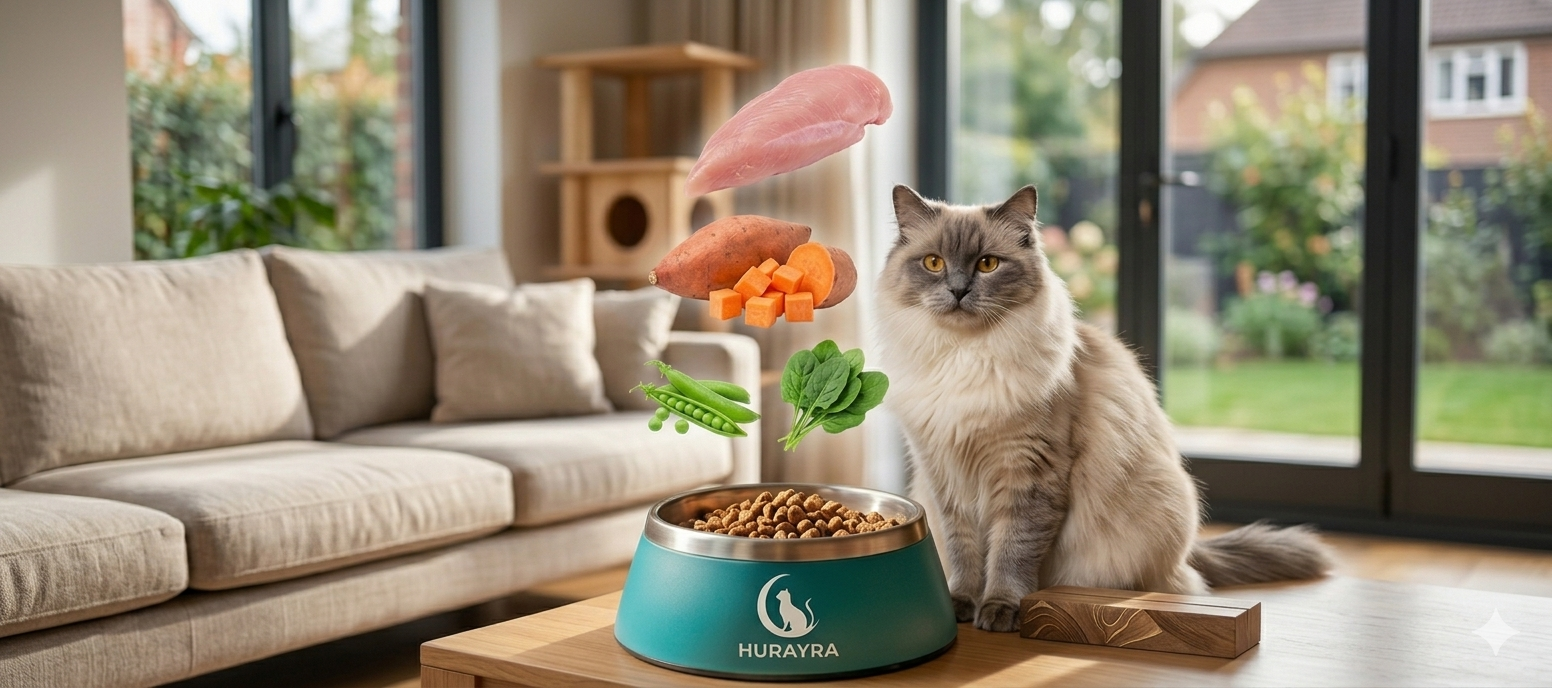
That palatability is one reason tuna features as a named, high protein in Hurayra’s dry food range. The goal is to work with that response rather than mask it with derivatives or mixed protein blends.
That same palatability is also part of what makes tuna complicated.
Can Cats Eat Tuna and Is It Actually Good for Them?
In small amounts, plain cooked tuna is not toxic to cats. It provides protein and omega-3 fatty acids, and many cats find it highly digestible. The problem is not tuna itself. The problem is what happens when tuna becomes a primary or exclusive food source.
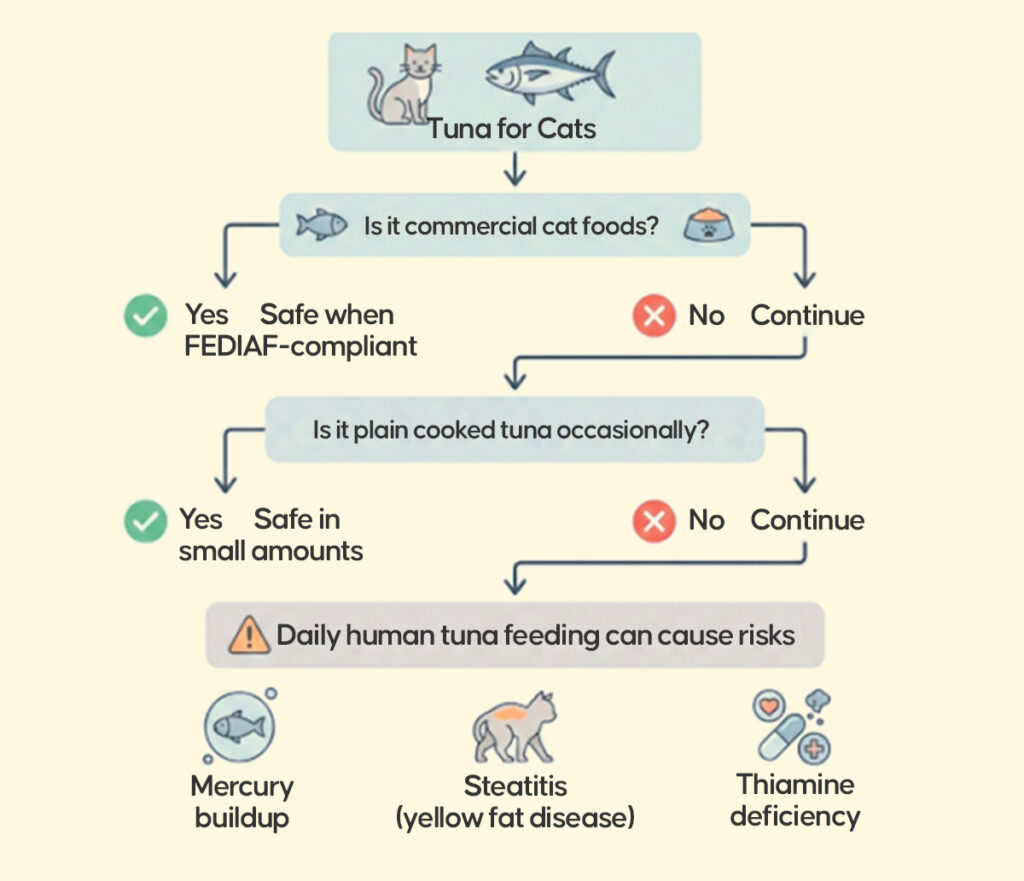
Three specific concerns are documented in feline veterinary nutrition:
Mercury accumulation.
Tuna is a large, predatory fish that occupies a high position in the marine food chain, which means it accumulates mercury through bioaccumulation. Because cats are small mammals, the threshold at which mercury causes harm is proportionally lower than for humans.
Steatitis (yellow fat disease).
Tuna is rich in polyunsaturated fatty acids, which are broadly beneficial. However, when fed in large quantities over time, these fatty acids can oxidise within the cat’s body and deplete vitamin E stores.
The result is a painful inflammatory condition affecting adipose tissue, most commonly seen in cats fed exclusively on canned tuna in brine or oil.
Thiaminase activity.
Raw tuna contains thiaminase, an enzyme that breaks down thiamine (vitamin B1). Prolonged thiamine deficiency causes neurological symptoms including loss of coordination and seizures.
Cooking inactivates thiaminase, which is why raw tuna carries a risk that cooked or commercially processed tuna does not.
None of this means tuna should be avoided entirely. It means tuna needs to be understood in context.
How Much Tuna is Too Much Tuna For Cats?
The phrase “too much tuna” appears frequently in pet care content without any quantification. That vagueness is not useful.
What the nutritional evidence suggests is this: tuna can be a component of a nutritionally complete diet, but it should not be the dominant protein source fed daily. A cat food that lists tuna as a named ingredient within a balanced formulation is a different proposition to feeding a cat a daily portion of canned supermarket tuna intended for human consumption.
A well-formulated tuna-based cat food meeting FEDIAF standards will have undergone testing to ensure mercury and heavy metal content sits within acceptable limits. A tin of human tuna in springwater has not.
What to Look for in the Tuna in Cat Food Label?
Not all tuna in cat food is equivalent. “Tuna” listed by name as the first ingredient indicates it is the predominant component by weight before processing. “Fish derivatives” or “ocean fish” are broader terms that may include tuna but offer no transparency about species, sourcing, or proportion.
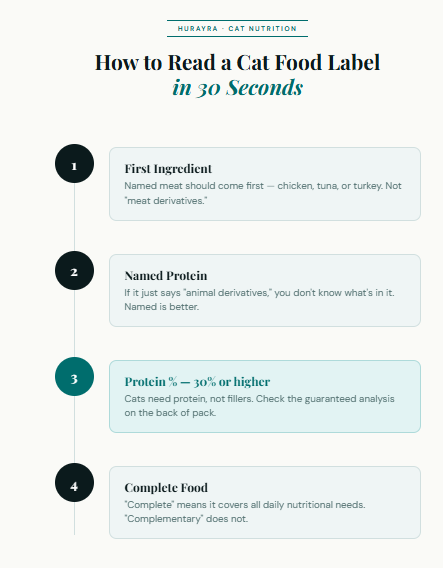
For owners who want to understand what their cat is eating, the most useful habit is checking the first three ingredients. In a high-quality dry food, the first ingredient should be a named animal protein (not “meat derivatives” or “animal by-products”), the declared protein percentage should be visible on the pack, and the formulation should state whether it is a complete food or a complementary one.
This last point matters. Complementary foods are designed to be fed alongside a balanced complete food. Feeding them as the sole diet creates nutritional gaps over time.
How Commercial Cat Food Manages the Risk of Mercury in Tuna?
Reputable cat food manufacturers account for mercury in tuna-based formulations. Suppliers are required to test raw ingredients, and finished products are assessed against regulatory limits for heavy metals under EU feed legislation.
The practical safeguard for cat owners is ensuring the brand operates with supply chain transparency. Vague sourcing language is a reasonable concern. Clear declarations about protein origin, processing standards, and quality controls indicate a manufacturer that has nothing to hide.
Hurayra’s pet food ingredients include high protein, essential Omegas and vitamins. The tuna is named, traceable, and the product is HMC-certified, meaning the entire supply chain from ingredient sourcing to finished product has been audited for integrity.
Dry Tuna Cat Food
Subscribe & Save 25%
HMC (Halal Monitoring Committee) certification is sometimes understood only in relation to religious requirements, but its practical value is broader. It is a supply chain audit, not just a slaughter verification. That level of traceability is relevant to any cat owner who wants to know where their cat’s food actually comes from.
What HMC Certification Actually Means?
Halal certification does not mean a cat food is nutritionally superior to a non-halal alternative. It means the sourcing, handling, and processing of ingredients have been independently verified against defined standards. For a tuna-based product, this means the fish species, sourcing method, and production process are documented and audited.
Non-Muslim cat owners sometimes find that certified products suit their preferences too, because the traceability requirements that underpin certification often align with the ingredient transparency they are already looking for. The reasons differ. The outcome, a product with clearer provenance, is the same.
Grain-free Cat Food Suitability?
Grain-free cat food is sometimes discussed as though it is categorically better than grain-inclusive food. That framing is not accurate.
Cats have a limited capacity to digest large quantities of starch and do not require grains in their diet. A grain-free formulation is appropriate for cats with known sensitivities or digestive issues. It is not automatically the right choice for every cat.
Where grain-free formulations tend to offer a genuine advantage is in the protein-to-carbohydrate ratio. When grains are excluded, the caloric contribution from protein and fat increases, which is closer to a cat’s natural dietary profile.
The Body Condition Score (BCS) scale, running from 1 (emaciated) to 9 (severely obese), with 4 to 5 as ideal, is a practical tool for assessing whether a diet is working. Your vet can demonstrate how to use it.
What Does This Mean in Practice?
The science around tuna and cats is not alarming. It is more specific than the marketing imagery suggests.
Tuna is a legitimate protein source for cats when sourced responsibly, processed appropriately, and included within a balanced diet. The associated risks are largely risks of excess and poor formulation, not of tuna itself.
For cat owners reading labels: look for named protein first, check whether the food is complete or complementary, and if tuna features regularly in your cat’s diet, ensure it comes from a product where sourcing is transparent and the formulation meets FEDIAF or equivalent standards.
Hurayra’s tuna dry food is available in Morrisons and via subscription. high protein, grain-free, HMC-certified. If you are looking for a tuna-based option with clear ingredient provenance, it is worth a look.
The best cat food is the one that consistently meets your cat’s nutritional needs. That consistency matters as much as the formula itself.
Tuna and Chicken Combo
Subscribe & Save 25%
Frequently Asked Questions
1 My cat will only eat tuna. What should I do?
This is a common outcome of feeding tuna frequently from an early age. The practical approach is a gradual transition: introduce a new protein alongside tuna and slowly reduce the tuna proportion over two to three weeks. Abrupt changes typically cause digestive upset. Patience is more effective than switching cold.
2 Can I add tuna to my cat's food occasionally?
Plain cooked tuna in small quantities, once or twice a week at most, is generally not harmful for healthy adult cats. Human canned tuna in springwater is the safest option. Tuna in brine adds excessive sodium. Tuna in oil introduces unnecessary fat.
3 Is mixed feeding (dry and wet) acceptable?
Mixed feeding is broadly supported by nutritionists, provided both foods are nutritionally complete. The main consideration is caloric management, as wet and dry food have different energy densities. Adjust portion sizes accordingly.
4 Does halal certification make tuna cat food safer?
Not automatically. What it provides is supply chain transparency. A certified product has been independently audited, with a documented record of ingredient sourcing and processing. HMC certification is among the more thorough available in the UK market.
5 Can kittens eat tuna-based cat food?
Kittens have higher demands for protein, calcium, and certain fatty acids during development. Tuna-based food formulated for kittens or labelled as suitable for all life stages meets these requirements. Adult formulations should not be fed to kittens as a sole diet.
6 Is tuna in cat food safe long term?
In a balanced, complete formulation where heavy metal testing is part of the manufacturing process, yes. The concerns around mercury and steatitis apply most strongly to cats fed unprocessed or human-grade tuna daily, not to cats eating a properly formulated commercial food.
Recent Post
Subscribe & Save 25% Every Month
Never run out of your pet’s favourite dry cat food again. Enjoy scheduled deliveries right to your door & save 25% on every order. A win for you and your furry friend!
More Articles
- uzma
- /
- 03/04/2026
- uzma
- /
- 02/04/2026
- uzma
- /
- 01/04/2026
- uzma
- /
- 31/03/2026
- uzma
- /
- 30/03/2026
- uzma
- /
- 29/03/2026