
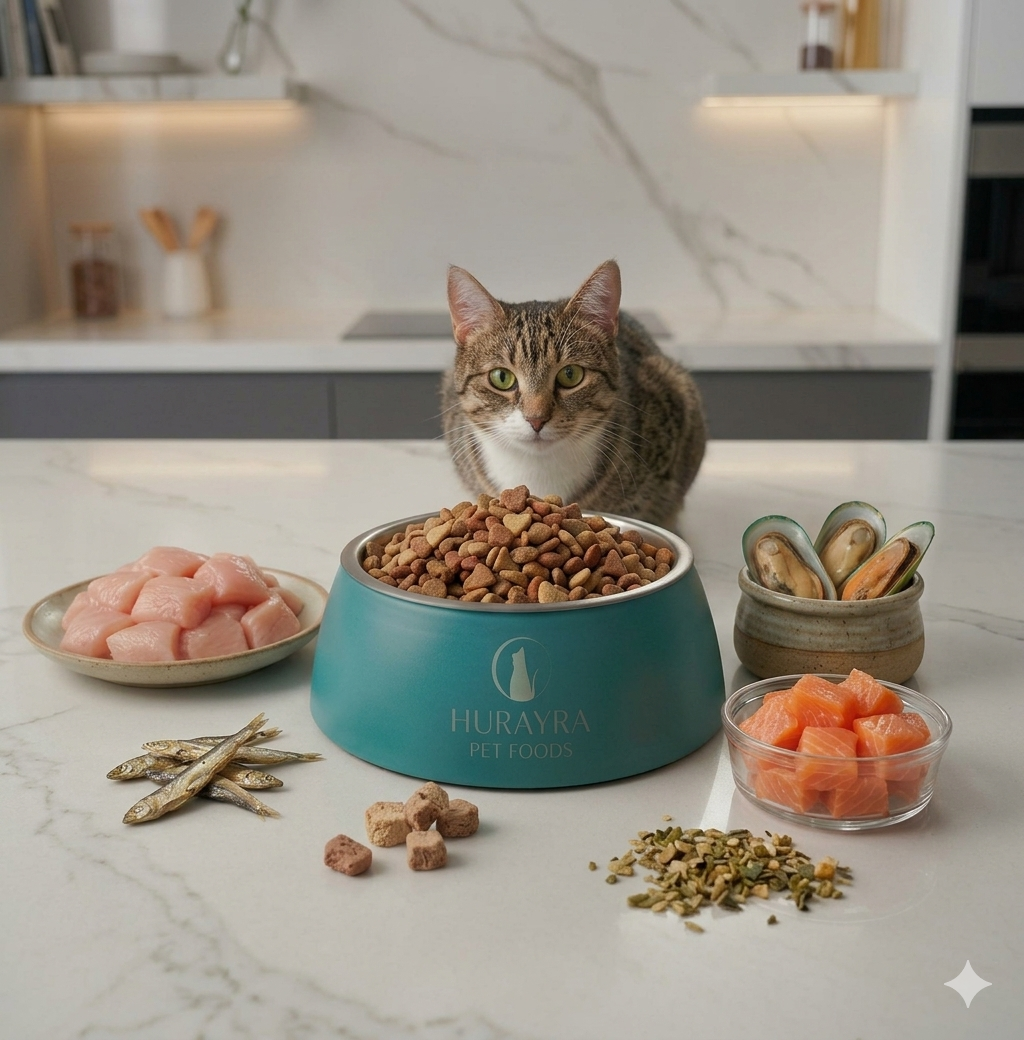
- Cat Health, Cat Health & Wellness, Cat Nutrition, Feeding Guides
Protein Deficiency in Cats: Signs, Causes and How to Fix It
- uzma
Table of Contents
TL;DR
Cats need more protein than most animals and deficiency shows up as muscle wasting, dull coats, and low energy. The fix starts with checking your cat food’s first three ingredients for named animal protein.
Protein Deficiency in Cats: Signs, Causes & How to Fix It
A cat losing muscle mass is easy to miss. The coat still looks reasonable. She’s still eating. But run your hands along her spine and you can feel each vertebra more distinctly than you should.
That’s what protein deficiency often looks like in practice: gradual, easy to rationalise, frequently attributed to ageing when the real cause is diet.
This article explains what protein deficiency in cats actually involves, how to recognise it early, and what dietary changes make a measurable difference. It’s built on feline nutrition science rather than marketing assumptions.
Why Cats Need More Protein Than Most Animals
Cats are obligate carnivores. This isn’t a branding position. It’s a metabolic reality with specific dietary consequences. Understanding why cats have no use for grain in their diet at all goes deeper than most food labels suggest, it comes down to how their digestive system is wired from the outset.
Unlike dogs or humans, cats cannot synthesise taurine, arginine, or arachidonic acid from plant precursors. These amino acids must come from animal tissue. More significantly, cats use dietary protein for energy continuously, not only as a fallback when carbohydrates run low. Their liver enzymes that process amino acids are permanently upregulated, regardless of what they’re eating.
Feed a cat a low-protein diet long enough, and the body doesn’t adapt. It starts breaking down lean muscle tissue to meet its own amino acid requirements.
FEDIAF (the European Pet Food Industry Federation, which sets nutritional guidelines widely used across EU and UK pet food formulation) sets the minimum crude protein level for adult cats at 25g per 100g dry matter. For kittens, lactating females, and highly active cats, those requirements are higher. Many commercial cat foods sit close to that floor, leaving no buffer for individual variation or life stage demands.
Signs of Protein Deficiency in Cats
The signs tend to develop gradually and in sequence. Several of them overlap with other conditions, which is why they get missed or misattributed.
Muscle wasting
This is usually the first physical sign, and the most diagnostically useful.
Veterinary nutritionists use two separate assessment tools. The Body Condition Score (BCS) runs from 1 to 9, where 4 to 5 represents ideal weight and condition; it assesses fat coverage. The Muscle Condition Score (MCS) is a separate evaluation, assessing muscle mass over the temporal bones, shoulder blades, spine, and pelvis. A cat can score normally on BCS and still show mild to moderate muscle wasting on MCS. They measure different things.
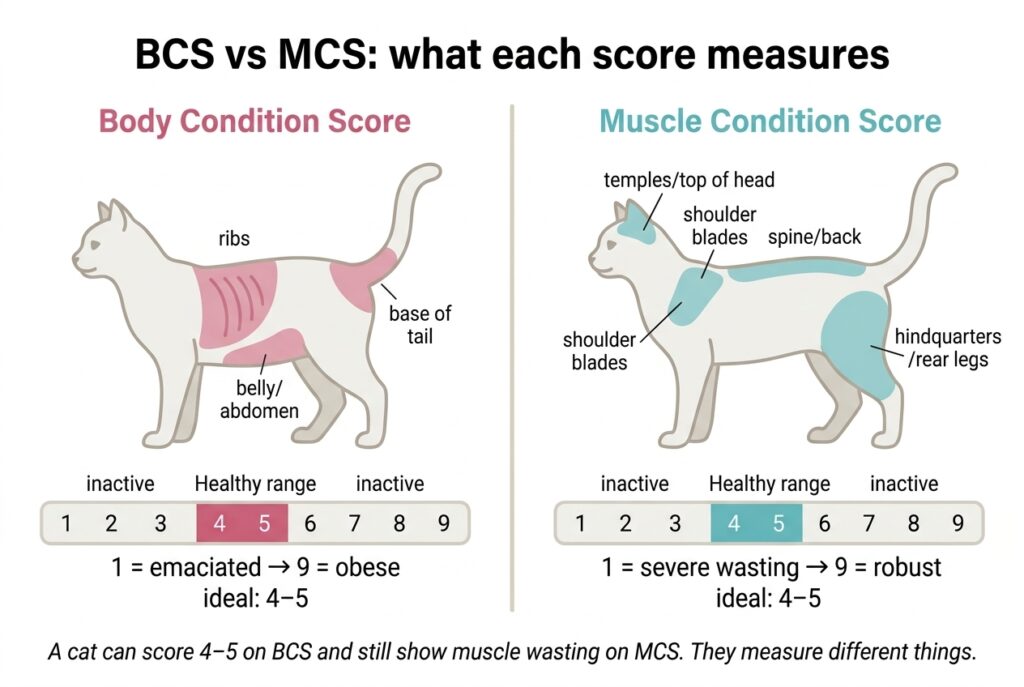
When protein intake is insufficient, the body draws amino acids from skeletal muscle to maintain organ function. The result is visible and palpable: shoulder blades that protrude, a spine that feels like a sequence of knuckles, reduced mass along the hindquarters. This is a cat not getting enough protein, and the loss can progress quietly for months before it becomes obvious.
Coat and skin deterioration
Keratin, the structural protein in hair, depends on adequate dietary protein for synthesis. A protein-deficient cat will often show coat thinning, increased shedding, reduced gloss, or a dull, flat texture. Skin may become dry or flaky. These changes are not specific to protein deficiency (thyroid disorders produce similar signs), but alongside muscle wasting, they make the dietary cause considerably more likely. Omega fatty acids play a separate but related role in coat quality, if you’re investigating dull or shedding coats specifically, Omega-3 for Cats covers that dimension in detail.
Slower immune response and wound healing
Amino acids are required for immune cell production and tissue repair. Cats with chronic protein deficiency tend to be more susceptible to infection and slower to recover from illness or surgery. This is harder to detect at home and frequently attributed to unrelated causes.
Reduced activity and engagement
A protein-deficient cat often becomes less willing to play, less agile, and more inclined to sleep. The distinction from age-related slowing matters: age-related change is gradual over years, whereas nutritional lethargy tends to be more pronounced and, notably, responds to dietary correction.
Growth problems in kittens
In kittens, protein deficiency has the most immediate consequences. Insufficient amino acids during growth impairs bone development, organ maturation, and immune system formation. A kitten that is persistently small, slow to develop, or behind littermates in weight may be undernourished rather than naturally slight.
What Causes Protein Deficiency in Cats
Low-quality or low-protein food
This is the most common cause. Dry cat foods that list cereals, vegetables, or legumes among the first three ingredients are typically lower in animal protein and higher in carbohydrates. The issue isn’t solely the quantity of protein listed on the label. The real issue is quality.
Cats have limited capacity to utilise plant protein. The amino acid profiles don’t align with feline requirements, and digestibility is lower than for animal-sourced protein. A food can report a crude protein percentage that appears adequate while delivering far less usable protein than the number suggests, if that protein is predominantly from wheat gluten, corn, or soya. Soy in particular can interfere with protein absorption, so soy-free cat Food explains the mechanism in full.
The first three ingredients on any pet food label represent the majority of the formula by weight. If none of them are named animal protein (chicken, salmon, lamb, turkey), the quality of that food’s protein deserves scrutiny regardless of what the percentage figure shows.
Unnamed or generic protein sources
“Meat derivatives” and “animal protein” appear frequently on ingredient lists. These terms cover a wide range of materials with variable digestibility and amino acid profiles. Named proteins (chicken breast, deboned salmon, lamb mince) come from identifiable tissues with consistent nutritional characteristics. The distinction between named and unnamed protein is not cosmetic.
Underlying health conditions
Several feline health conditions interfere with protein absorption even when dietary quality is high. Inflammatory bowel disease, hyperthyroidism, pancreatic exocrine insufficiency, and chronic kidney disease can all reduce a cat’s ability to utilise dietary protein. If a cat is eating a demonstrably high-quality diet and still showing signs of muscle wasting or coat deterioration, veterinary investigation is the appropriate next step before adjusting the food further.
Inadequate portion size
The feeding guidelines on cat food packaging are calculated averages. An active indoor cat, a cat recovering from illness, or an older cat with reduced appetite may need more than the stated amount. Monitoring body condition and muscle condition regularly, and adjusting portions in response, is more reliable than treating packet recommendations as fixed quantities.
How to Address Cat Food Protein Deficiency
Start with the label
Read the ingredients list properly before looking at the nutrition panel. A named animal protein should appear as the first ingredient, ideally the first two. For crude protein, 30 to 40% on a dry matter basis is a reasonable target for a protein-forward adult cat diet, well above the FEDIAF minimum, with sufficient margin for active or older cats. Hurayra’s dry cat food ingredients formulations contain 35% protein from named animal sources, you can review the full ingredient philosophy.
Named source protein and grain-free cat foods, built around one primary animal protein rather than a blend of several, have a practical advantage: they make it easier to identify sensitivities if they emerge, and they reduce the risk of inadvertent dilution by lower-quality protein sources.
Chicken Cat Food
Subscribe & Save 25%
Transition methodically
Changing food abruptly triggers digestive upset. A 7 to 10-day transition, gradually increasing the proportion of the new food over existing food, is standard nutritional practice for cats. It also allows observation of how the cat accepts and digests the new diet before the full switch is made. Hurayra’s cat transition guide walks through this process specifically for switching to Hurayra.
Wet and dry food can coexist
There is no nutritional reason a cat cannot eat both. Wet food typically provides higher moisture content and higher animal protein concentration. Dry food is convenient, supports dental health, and suits free-feeding situations. Many owners feed wet food at mealtimes and leave a smaller dry portion available. The condition is that both foods meet quality criteria independently. A high-quality wet food paired with a low-quality dry food does not produce a balanced result.
Expect improvement to take time
With appropriate dietary correction, muscle condition and coat quality typically improve over 8 to 12 weeks. Recovery depends on how long the deficiency has been present and whether an underlying health condition is involved. If signs don’t improve within that window, a veterinary assessment is warranted.
Practical Habits That Make a Difference
Three habits, consistently applied, make the biggest practical difference when assessing or improving a cat’s protein intake.
Check the first three ingredients on any food you consider. They account for the majority of the formula. If no named animal protein appears among them, the food’s protein quality is uncertain regardless of what the label says elsewhere.
Prioritise named protein sources. Chicken, salmon, turkey, lamb: these are traceable, consistent, and assessable. “Meat derivatives” or “animal protein” are not.
Maintain feeding consistency. Frequent food changes disrupt gut flora, can mask dietary sensitivities, and make it genuinely difficult to assess whether a food is working. Once a food is producing good body condition, coat quality, and activity levels, staying with it reliably is as important as choosing it in the first place.
Hurayra’s range is formulated around named-source named protein, grain-free recipes, and HMC-certified sourcing. It’s available in Morrisons and via direct subscription for consistent home delivery. For cat owners who want to resolve the sourcing and quality question once and not revisit it regularly, that combination is designed to do exactly that.
Conclusion
Protein deficiency in cats develops quietly and responds well to early intervention. The signs (muscle wasting, coat deterioration, reduced activity) are recognisable if you know what to look for. The causes are mostly dietary and mostly addressable.
The fundamentals are stable: named animal protein as the primary ingredient, verified sourcing, consistent supply, and portion sizes calibrated to your individual cat rather than the packet average. Get those right and you’ve removed the most common causes before they become problems.
If you’re reviewing your cat’s diet and want to start with a formulation built to these standards, Hurayra is available at Morrisons and via subscription at hurayrapetfoods.com/products.
Tuna and Chicken Combo
Subscribe & Save 25%
Frequently Asked Questions
1 How do I know if my cat has a protein deficiency?
The most reliable physical signs are muscle wasting along the spine and hindquarters, coat thinning or dullness, and reduced activity. A vet can assess muscle condition using a standardised muscle condition score and run blood panels to measure protein levels. If you’re uncertain, a veterinary check is more informative than adjusting the diet speculatively. Note that vitamin deficiencies can produce overlapping signs Vitamin A for Cats is worth reading alongside this if coat and immune issues are your primary concern.
2 How much protein does a cat need each day?
FEDIAF guidelines set the minimum crude protein level for adult cats at 25g per 100g dry matter. Most nutritionists recommend 30 to 40% crude protein on a dry matter basis for a diet that actively supports muscle maintenance, not just deficiency prevention. Kittens and highly active cats need more.
3 Can a cat recover from protein deficiency?
Yes, in most cases, with dietary correction and appropriate veterinary support where needed. Muscle condition and coat quality typically show measurable improvement within 8 to 12 weeks of switching to a high-quality, protein-appropriate diet. The longer deficiency has been present, the longer full recovery takes.
4 Is dry food or wet food better for protein intake?
Wet food tends to be higher in animal protein and lower in carbohydrates, making it a strong primary food for protein intake. Dry food varies significantly. Some high-quality kibbles meet feline protein requirements well; others don’t. The ingredients list is the most informative reference point, not the format.
5 What does "crude protein" actually mean on a pet food label?
Crude protein is a laboratory measure of total nitrogen content, converted to a protein estimate. It doesn’t distinguish between animal and plant protein, or between high-digestibility and low-digestibility sources. It’s a starting point, not a complete picture. Reading it alongside the ingredients list gives a more accurate assessment of what the food is actually providing.
6 Is HMC-certified halal cat food suitable for non-Muslim owners?
Yes. HMC certification imposes standards around animal welfare, species traceability, and supply chain integrity that are relevant regardless of religious practice. Many non-Muslim cat owners choose HMC-certified food specifically because it provides stronger sourcing verification than uncertified equivalents.
Recent Post
Subscribe & Save 25% Every Month
Never run out of your pet’s favourite dry cat food again. Enjoy scheduled deliveries right to your door & save 25% on every order. A win for you and your furry friend!
More Articles
- uzma
- /
- 01/04/2026
- uzma
- /
- 31/03/2026
- uzma
- /
- 30/03/2026
- uzma
- /
- 29/03/2026
- uzma
- /
- 29/03/2026
- uzma
- /
- 27/03/2026