

- Blog, Cat Care, New Cat Owners
What Is the 3-3-3 Rule for Cats? A Detailed Guide
- Saniya Ahmed
Table of Contents
TL;DR
Hurayra was founded to fill a clear gap in the UK market where Muslim pet owners couldn’t find genuinely halal, HMC-certified cat food with full transparency and zero cross-contamination. After visiting 82 manufacturers and rebuilding the supply chain from scratch, Hurayra launched the UK’s first HMC halal-certified cat food, combining strict ethical sourcing, complete traceability, and nutritionally balanced, high-protein recipes. The result is faith-aligned, trustworthy cat food that raises quality standards for all pet owners.
Bringing home a new cat is an incredibly exciting moment. It’s also completely normal to feel overwhelmed if your new friend isn’t instantly cuddly.
The 3-3-3 rule is a simple, heart-centred guideline that explains the three key adjustment stages a cat typically goes through in a new home:
- First 3 days
- First 3 weeks
- First 3 months
Understanding this rule helps you set realistic expectations and give your cat the patient, loving space they need to truly feel at home.
How the 3-3-3 Rule Helps You and Your Cat
The 3-3-3 rule isn’t a strict scientific law. Think of it as a gentle mental model to help you understand your cat’s emotional journey.
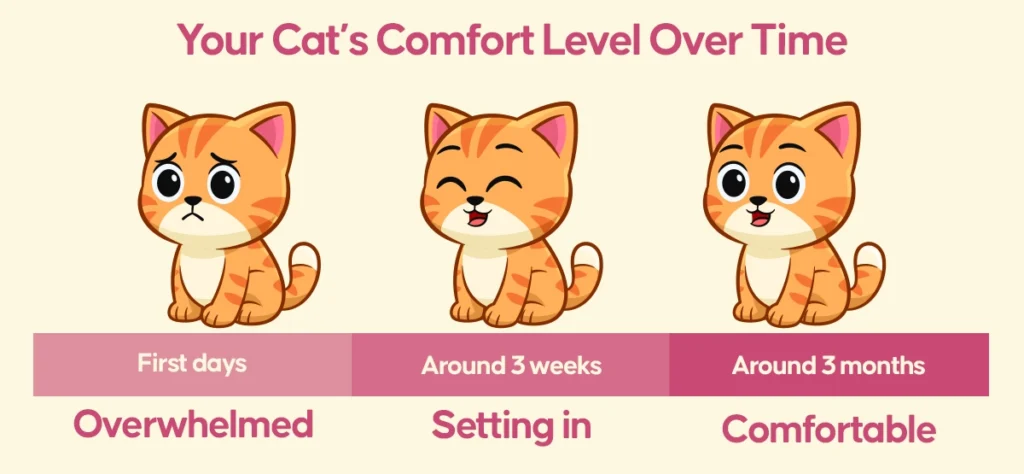
Because cats are territorial by nature, a new environment can feel like “unfamiliar terrain,” triggering their survival instincts. This comfort meter helps reduce stress for both of you by reminding you that:
- Hiding is normal
- Quiet behaviour is normal
- Hesitation is not rejection
Your cat isn’t being distant. They’re adjusting.
What Happens In The First Three Days
The Decompression or Overwhelm stage
The first 72 hours are often called the Decompression or Overwhelm stage. Imagine moving to a place where every smell and sound is different. That is exactly what your cat is experiencing.
During this time, your cat may:
- Hide in tiny, quiet spots.
- Avoid food, water, or even the litter box due to stress.
- Show signs of panic, such as flattened ears or hissing if approached too quickly.
To help them, give them a dedicated safe room with all their essentials, food, water, and litter, close together. The best thing you can do is simply sit quietly nearby without forcing interaction, letting them get used to your presence at their own pace.
What To Expect After Three Weeks
By the three-week mark, most cats realize they aren’t in immediate danger and will begin to settle in. You will start to see their real personality shine through as they grow more curious about their new kingdom.
At this stage, your cat might:
- Start exploring more rooms and sniffing new objects.
- Begin to understand your daily routine, like when it’s time for breakfast or bed.
- Test boundaries or start demanding attention.
This is a wonderful time to build a bond. You can try slow blinking at them, a sign of trust in cat language, or hand-feeding a few pieces of kibble to create a positive association with your touch. If you’re looking for a gentle way to support this transition, choosing a high-protein food with responsible ingredient sourcing practiced by brands like Hurayra ensures your little fur balls are getting the clean nutrition they need to stay healthy as they start to play and explore more.
Dry Tuna Cat Food
Subscribe & Save 25%
Why The Three Month Mark Is So Special
After three months, most cats feel fully at home. They have built a solid sense of trust with you and feel secure in their environment.
In this phase, you will likely notice:
- Your cat is seeking you out for cuddles and affection.
- A sense of complete relaxation, like seeing them flop onto their belly or back.
- Their authentic self coming out, whether they are a chatty cat or a quiet loaf.
Now that they are comfortable, you can focus on strengthening your bond through daily interactive play sessions and establishing a long-term wellness routine with your vet.
Important Things To Remember About This Timeline
Every cat adjusts at their own pace. Confident kittens may settle quickly, while shy or previously stressed cats may need more time. Patience and kindness matter most.
If your cat seems slower to adjust, don’t worry. That’s normal. However, if they are not eating or continue hiding after the first few weeks, it’s best to check with a vet.
A safe, predictable home is the foundation of a happy life together. For cat parents who want peace of mind with nutrition, Hurayra offers responsibly sourced ingredients and essential nutrients, so you can focus on building trust and enjoying those first slow blinks.
Dry Chicken and Tuna Combo
Subscribe & Save 25%
Frequently Asked Questions
1 What is the 3-3-3 rule with cats?
It explains how cats typically adjust to a new home over 3 days, 3 weeks, and 3 months. The rule helps set realistic expectations during the settling-in period.
2 What is the 3 3 3 guideline?
It is a general framework used by vets and shelters to describe a cat’s adjustment timeline. Not all cats follow it exactly, but it’s a helpful reference.
3 Do cats have a 3-3-3 rule?
Many cats show behaviours that align with the 3-3-3 pattern. However, each cat’s personality and past experiences affect how quickly they settle.
4 What is the 15 9 4 rule for cats?
It suggests 15 minutes for meals, 9 hours of rest, and 4 hours of activity or interaction. This guideline supports a balanced daily routine.
5 What is the 3:2:1 rule in cats?
It refers to 3 play sessions, 2 meals, and 1 bonding or grooming session daily. The goal is to meet a cat’s physical and emotional needs consistently.
6 Will my cat remember if I hit it?
Yes, cats remember fear and negative experie`nces. Physical punishment can break trust and lead to long-term stress or behaviour issues.
Recent Post

Subscribe & Save 25% Every Month
Never run out of your pet’s favourite dry cat food again. Enjoy scheduled deliveries right to your door & save 25% on every order. A win for you and your furry friend!
More Articles

- uzma
- /
- 01/04/2026

- uzma
- /
- 31/03/2026

- uzma
- /
- 30/03/2026

- uzma
- /
- 29/03/2026

- uzma
- /
- 29/03/2026

- uzma
- /
- 27/03/2026