
- Brand Story, Cat Care, Cat Nutrition, Halal Living, Pet Owner Guides
Hurayra’s Journey to Creating the UK’s First Halal Cat Food
- Saniya Ahmed
Table of Contents
TL;DR
Hurayra was founded to fill a clear gap in the UK market where Muslim pet owners couldn’t find genuinely halal, HMC-certified cat food with full transparency and zero cross-contamination. After visiting 82 manufacturers and rebuilding the supply chain from scratch, Hurayra launched the UK’s first HMC halal-certified cat food, combining strict ethical sourcing, complete traceability, and nutritionally balanced, high-protein recipes. The result is faith-aligned, trustworthy cat food that raises quality standards for all pet owners.
Finding cat food that aligns with your values isn’t always easy. For Muslim pet owners in the UK, that search got even harder when you wanted something genuinely halal or halal-quality, not just labelled that way, but actually certified and trustworthy.
That gap in the market is exactly what led to the idea behind halal cat food. It wasn’t about jumping on a trend. It was about filling a real need for families who care deeply about their faith, what their cats eat and want their pet care choices to reflect their faith.
This is the story of how that happened, the challenges along the way, and why it matters more than you might think.
Why Halal Cat Food Wasn't Already a Thing
You’d think in a country with millions of Muslim households, halal pet food would already exist. But it didn’t. Not really.
The pet food industry runs on scale and efficiency. Most brands source ingredients from wherever’s cheapest, with little transparency about how animals are raised or processed. For someone who follows halal dietary laws, that’s a problem and highlights the demand for halal pet food in the UK that had long gone unmet.
Halal isn’t just about avoiding pork. It’s about ethical sourcing, humane treatment of animals, and following specific practices during processing. Most commercial pet food brands couldn’t guarantee any of that, even if they wanted to, which exposed the real challenges creating halal pet food within an industry not designed for it. All of these challenges meant, in the end the entire transaction of buying was not aligned with the teaching of Islam.
Muslim pet owners were stuck choosing between compromising their values or second-guessing every bag of food they bought. That’s an uncomfortable position when you just want to feed your cat something clean and good.
The Problem That Started Everything
Aihtsham, the founder of Hurayra, isn’t a scientist or industry insider. He is a regular pet owner like a thousand others who hit the same wall everyone else did. After speaking with scholars, he realised that bringing non-halal products into his home wasn’t permissible, which meant he needed halal options for what his cats were eating too.
The search didn’t go well. Some brands used vague language about ethical sourcing, but none had actual halal certification. Two problems kept surfacing: no brand could guarantee zero cross-contamination with pork or non-halal products, and none were HMC certified.
Aihtsham visited 82 pet food companies, asking about contamination controls and certification. Not one could guarantee what Ivy and Coco needed.
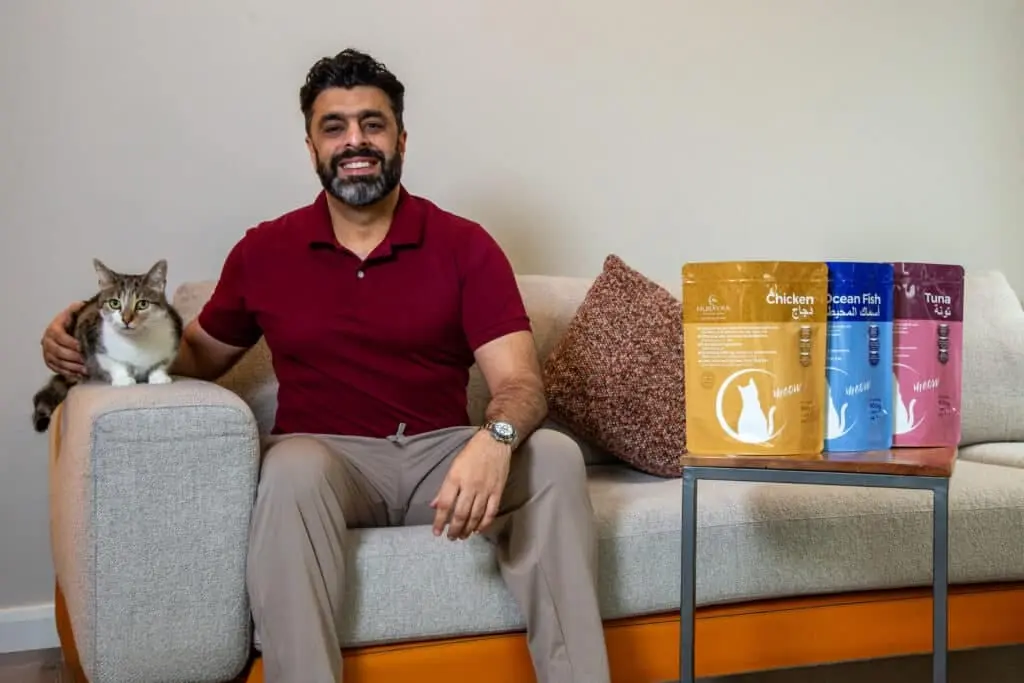
So he decided to create what didn’t exist. He flew to East Asia to work with experts in halal certification and pet nutrition, beginning the long process of developing a new cat food formula. He spent months with an in-house nutritionist and vet to formulate a recipe that met HMC standards while being nutritionally complete and protein-rich. The goal was zero grey areas: human-grade quality, clean sourcing, and packed with what cats actually need.
Getting HMC Certification Wasn't Simple
Creating HMC certified pet food turned out to be way harder than expected. The Halal Monitoring Committee doesn’t hand out certifications lightly, and that’s a good thing.
Every ingredient had to be traced back to its source. Not just the chicken or beef, but every single component: where it came from, how the animals were raised, how they were processed, what else was produced in the same facility. This level of scrutiny is central to the halal certification process.
Most suppliers couldn’t provide that level of transparency. They weren’t set up for it. Finding partners who could meet HMC standards meant starting from scratch with sourcing.
Then there was the manufacturing side. The facilities had to be inspected and approved. Cross-contamination had to be impossible. The entire supply chain needed to maintain halal integrity from farm to finished product.
It took months of dead ends, rejected suppliers, and reformulated recipes. But cutting corners wasn’t an option. If it was going to be not only the UK’s first HMC halal-certified cat food but the world’s first too so it had to actually be halal, not halal-adjacent.
What Makes Halal Pet Food Different
The practical differences go deeper than you might expect. Animals must be healthy at the time of slaughter. That automatically rules out sick or diseased livestock, which sometimes ends up in low-grade pet food.
The method of slaughter is specific and designed to minimise suffering. Stunning methods that might cause pain or death before slaughter aren’t allowed.
Pork and pork by-products are completely off the table, which eliminates a common filler in cheaper pet foods.
There’s also stricter oversight on what else is produced in the same facilities. Cross-contamination with non-halal products can’t happen.
The result is a product that’s not just halal. It’s cleaner, more traceable, and held to higher standards across the board. This is exactly why halal pet food matters, not just religiously, but nutritionally and ethically as well.
Dry Tuna Cat Food
Subscribe & Save 25%
The Pushback Nobody Talks About
Launching the UK’s first HMC – halal cat food didn’t come without skepticism.
Some people questioned whether cats even need halal food. “They’re animals, does it really matter?” Yes, it matters to the people feeding them. Your values don’t stop at the pet food aisle.
Others worried it would be overpriced or lower quality because of the certification requirements. The opposite is usually true. Higher standards often mean better ingredients.
There were also logistical challenges. Retailers weren’t sure there was demand. Distributors didn’t understand the market. Everything had to be proven from the ground up.
But the response from Muslim pet owners was immediate and overwhelming. Finally, something that didn’t force them to choose between faith and their cats’ nutrition.
Why This Matters Beyond the Muslim Community
Here’s what’s interesting: the standards that make halal pet food possible benefit all cats.
Stricter sourcing requirements mean better ingredient quality. Transparency in the supply chain means fewer mystery ingredients. Ethical treatment of animals means you’re supporting more humane practices.
Non-Muslim pet owners have started choosing halal options for exactly these reasons. They want to know where their cat’s food comes from and trust that animals were treated well.
The UK’s first HMC halal cat food ended up raising the bar for everyone, not just for Muslim households.
Moving Forward
The launch of the UK’s first halal cat food is just the beginning. There’s still work to do: expanding availability, educating retailers, customers, reaching more families who don’t even know this option exists.
But the foundation is there. The certification is real. The product works.
If you’ve been looking for cat food that aligns with your values without compromising on nutrition, Hurayra offers exactly that. Clean sourcing, HMC certification, and the kind of quality you can trust without second-guessing. Sometimes the best choices are the ones that let you stop worrying and just take care of your cat.
Dry Chicken and Tuna Combo
Subscribe & Save 25%
Frequently Asked Questions
1 Why was halal cat food needed in the UK?
Most UK pet foods use non-halal meat and unclear sourcing, leaving Muslim cat owners without faith-aligned options that meet both religious and nutritional standards.
2 What makes cat food halal?
Halal cat food uses halal-certified ingredients with verified sourcing and production, ensuring no haram meat, by-products, or prohibited additives are included.
3 How do you get halal certification for pet food?
Halal certification is achieved through audits of ingredients, suppliers, and manufacturing processes, confirming full compliance with recognised halal standards.
4 Are grain-free foods halal?
Grain-free only refers to the absence of grains and does not mean halal, as halal status depends entirely on ingredient sourcing and proper certification.
5 Why do Muslim cat owners struggle to find suitable food?
Most pet food brands lack transparency around sourcing and certification, making it difficult for Muslim cat owners to find trusted halal-compliant options.
Recent Post
Subscribe & Save 25% Every Month
Never run out of your pet’s favourite dry cat food again. Enjoy scheduled deliveries right to your door & save 25% on every order. A win for you and your furry friend!
More Articles
- uzma
- /
- 01/04/2026
- uzma
- /
- 31/03/2026
- uzma
- /
- 30/03/2026
- uzma
- /
- 29/03/2026
- uzma
- /
- 29/03/2026
- uzma
- /
- 27/03/2026