

- Cat Health & Wellness, Cat Nutrition
Omega 3 for Cats: 7 Proven Health Benefits You Didn’t Know
- uzma
Table of Contents
TL;DR
Cats can’t convert plant-based omega 3 into the EPA and DHA their bodies need, only marine sources deliver that. These fatty acids support seven key systems: skin, inflammation, heart, brain, joints, kidneys, and immunity. Source quality on the label determines whether your cat actually benefits.
Omega 3 for Cats: 7 Proven Health Benefits You Didn’t Know
Most cat owners spend a lot of time thinking about protein. Fewer stop to consider fat, specifically whether their cat is getting the right kind.
Omega 3 fatty acids are among the most well-researched nutrients in feline health. The science behind them is not new. What is new, for many owners, is understanding exactly what these fatty acids do inside a cat’s body, which forms matter most, and why the source of omega 3 in your cat’s food changes everything.
This article covers the seven most clinically supported benefits of omega 3 for cats, what the research actually shows, and how to make practical feeding decisions based on that knowledge.
Why Omega 3 Matters Differently for Cats Than for Humans
Cats are obligate carnivores. That biological classification is not just a label, it carries specific nutritional consequences that shape every feeding decision you make.
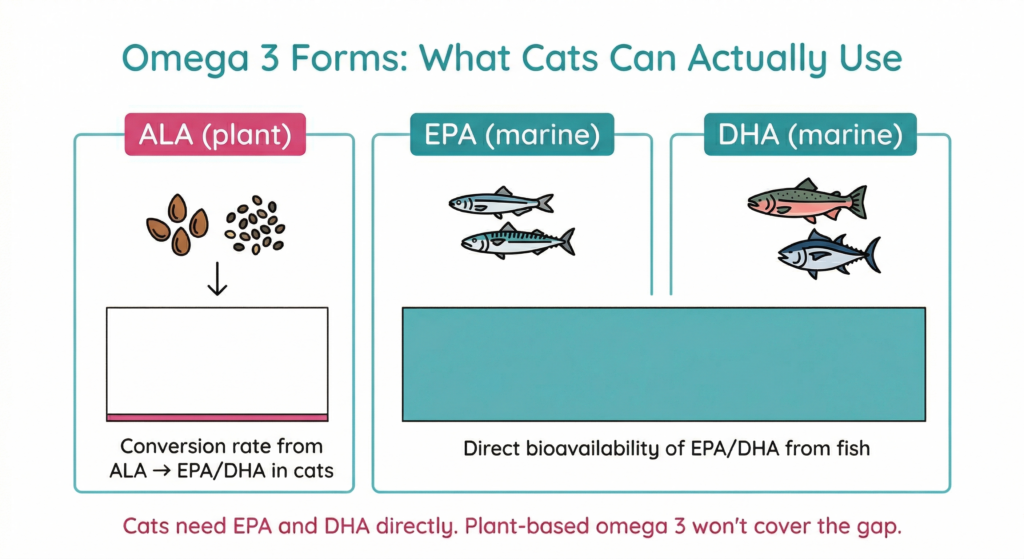
One of those consequences relates directly to omega 3. In humans and dogs, the body can convert ALA (alpha-linolenic acid, found in plant sources like flaxseed) into the more biologically active forms, EPA (eicosapentaenoic acid) and DHA (docosahexaenoic acid). Cats do this conversion extremely poorly. Their metabolic pathway for it is almost negligible.
This means that when you see “omega 3” listed on a cat food label, the source matters enormously. Plant-derived omega 3 provides very little of what a cat’s body can actually use. The forms cats need, EPA and DHA, come from marine sources: oily fish, fish meal, and marine oils.
Benefit 1: Healthier Skin and a Visibly Better Coat
This is where omega 3 benefits show up first, and most visibly.
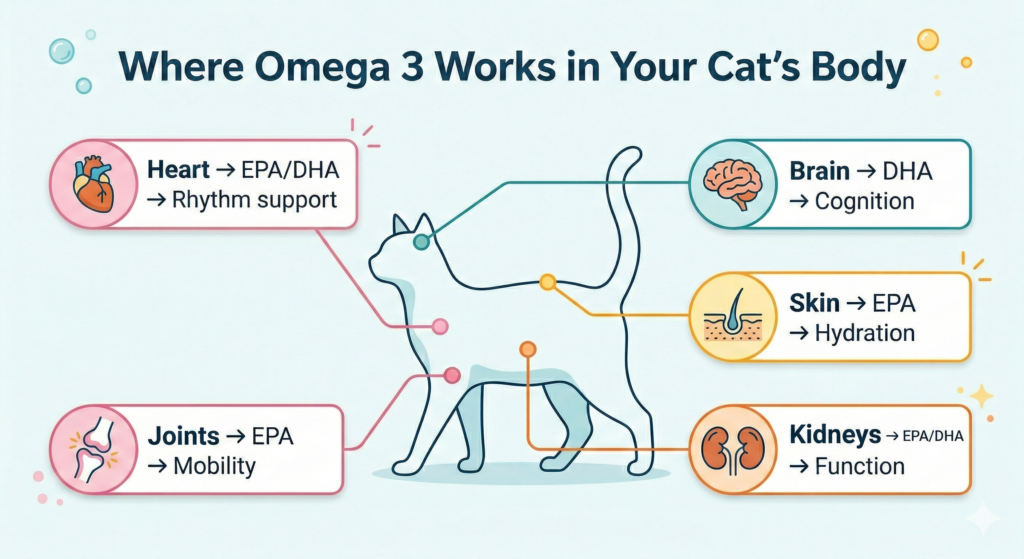
EPA and DHA play a structural role in skin cell membranes. When a cat’s diet is low in these fatty acids, the skin barrier becomes less effective at retaining moisture. The result is dry, flaky skin, increased shedding, and a dull, brittle coat, not because something is wrong with the cat per se, but because the building materials for skin tissue are in short supply.
Studies in veterinary dermatology have consistently shown that dietary supplementation with EPA and DHA reduces transepidermal water loss and improves coat quality scores in cats. The improvement is typically visible within 6 to 8 weeks of consistent intake.
If your cat is shedding more than usual, or their coat looks dull despite regular grooming, the food, not the brush, is usually the first place to look. Checking whether the first source of omega 3 in your cat’s food comes from a named marine ingredient is a good starting point.
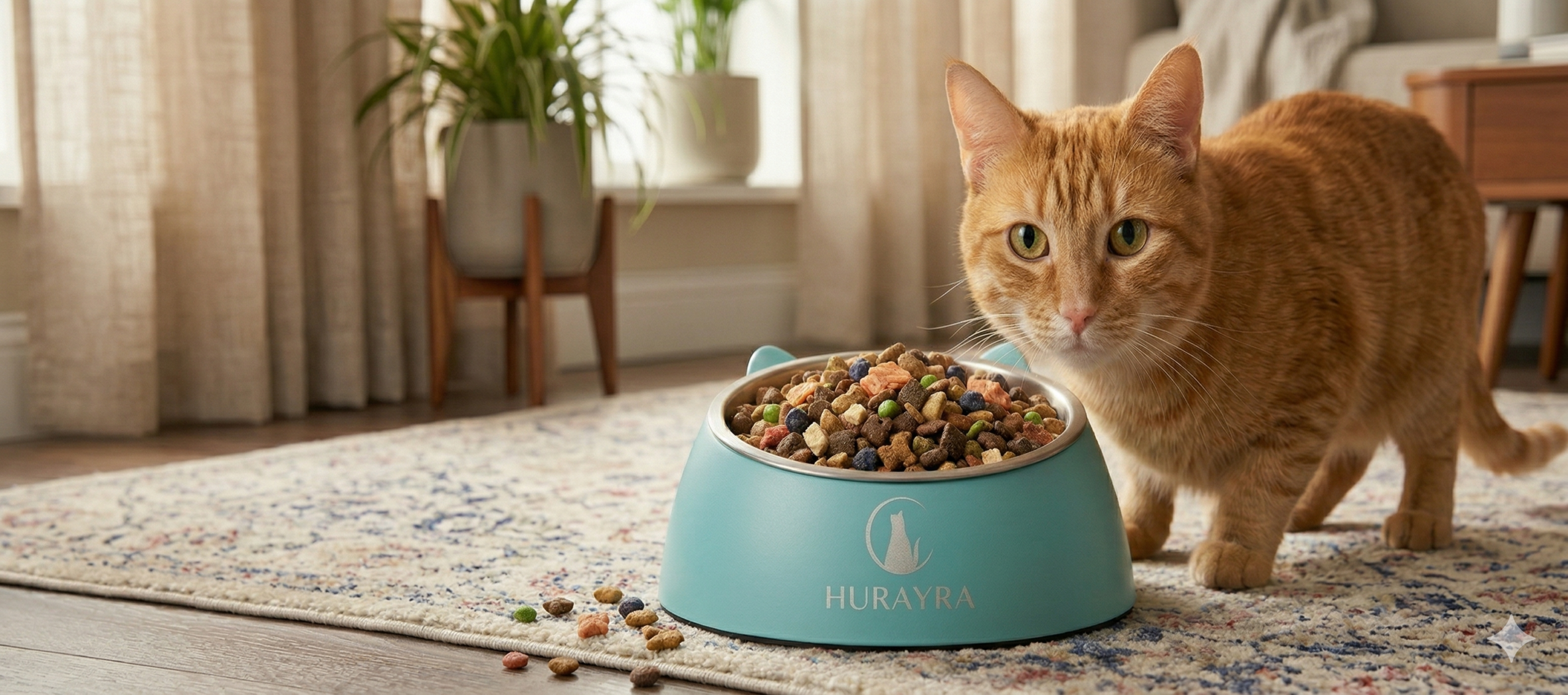
Hurayra’s recipes include essential fatty acids from premium marine sources, with named protein and full ingredient transparency rather than vague “fish derivatives.”
Dry Tuna Cat Food
Subscribe & Save 25%
Benefit 2: Reduced Inflammation and Allergy Response
Inflammation in cats is not always dramatic. It often shows up quietly, as itchy skin, recurring digestive upset, or a coat that never quite settles.
EPA, in particular, works through the body’s eicosanoid pathway to reduce the production of pro-inflammatory compounds. This is not a supplement-industry claim, it is established biochemistry. The mechanism is why omega 3 appears in clinical veterinary protocols for feline inflammatory bowel disease, atopic dermatitis, and chronic skin conditions.
For cats with food sensitivities, which are more common than many owners realise, an omega-3-rich diet can reduce the severity and frequency of reactions. This is not the same as eliminating the allergen, which requires identifying and removing it, but it supports the body’s inflammatory regulation between flare-ups.
This benefit is why grain-free, single-source protein formulas make a meaningful difference for sensitive cats. Removing common triggers, grain, wheat, soy, while increasing high-quality marine-derived omega 3 addresses two sides of the same problem.
Benefit 3: Stronger Heart Function
The heart is a muscle. Like all muscles in a cat, it depends on consistent nutritional support to function well over time.
DHA has a structural role in cardiac cell membranes. EPA supports healthy blood flow by moderating platelet aggregation. Both fatty acids have been studied in relation to feline hypertrophic cardiomyopathy (HCM), a relatively common heart condition in cats, where they appear to support normal cardiac rhythm and reduce the severity of secondary complications.
The FEDIAF (European Pet Food Industry Federation) nutritional guidelines, the recognised standard for complete and balanced pet food formulation in Europe, include omega 3 fatty acids as part of the required nutrient profile for feline diets. Meeting those standards is a baseline. The quality of the omega 3 source determines whether the actual benefit reaches the cat.
Benefit 4: Cognitive Health and Brain Development
DHA is the dominant structural fatty acid in brain tissue. It is especially important during the developmental window, kittens aged four months and above, when neural connections are forming rapidly.
For adult and senior cats, DHA supports cognitive maintenance. Feline cognitive dysfunction, sometimes compared loosely to dementia in humans, is associated with decline in the brain’s fatty acid composition over time. While diet alone cannot prevent cognitive aging, adequate DHA intake throughout a cat’s life is associated with better cognitive scores in later years.
If you have a kitten, this benefit is worth taking seriously early. The dietary habits established in the first year of a cat’s life tend to persist, and the nutritional infrastructure laid down during growth affects long-term health in ways that are difficult to reverse later.
Benefit 5: Joint Health and Mobility
Joint degeneration in cats is often underdiagnosed, partly because cats are good at masking discomfort, and partly because reduced activity is easily attributed to laziness rather than pain.
EPA reduces the production of prostaglandins and leukotrienes, compounds that accelerate cartilage breakdown and drive joint inflammation. In cats with early-stage osteoarthritis, diets with higher EPA levels are associated with improved mobility scores and reduced reliance on anti-inflammatory medication.
You do not need a diagnosed joint condition to benefit from this. Preventive nutrition, feeding a diet that supports joint tissue before problems emerge, is considerably more effective than attempting to reverse damage already done.
Benefit 6: Kidney and Urinary Tract Support
Kidney disease is the leading cause of death in cats over ten years old. It is not something that appears suddenly, it develops over years, often silently, influenced heavily by the cumulative quality of the diet.
EPA and DHA reduce renal inflammation and glomerular hypertension (elevated pressure within the kidney’s filtering units). Studies in cats with chronic kidney disease (CKD) have shown that omega-3-enriched diets slow the rate of disease progression compared to standard formulas.
This does not mean omega 3 cures kidney disease. It means that a diet consistently rich in EPA and DHA from marine sources gives the kidneys less inflammatory load to manage over the long term. For a cat living 15 to 18 years, that cumulative difference matters.
Benefit 7: Immune System Regulation
Omega 3 fatty acids influence immune function at a cellular level. EPA and DHA are incorporated into the membranes of immune cells, where they modulate how those cells respond to pathogens and internal signals.
The practical result is a more measured immune response, one that activates when needed and does not persist at low-grade elevated levels indefinitely. Chronic low-grade inflammation is associated with accelerated ageing, increased cancer risk, and poorer responses to infection. A diet consistently rich in EPA and DHA supports the regulatory side of immune function.
For cats that seem to pick up recurring minor infections, or for owners managing a cat with an autoimmune condition, omega 3 intake is worth discussing with a veterinarian as part of a broader nutritional plan.
Hurayra’s formulas include Omegas 3, 6, and 9 alongside a 35% protein content from named, human-grade halal sources, meeting the nutritional demands of an obligate carnivore without fillers that dilute the nutrient density.
A Note on Grain-Free Formulas and Omega 3
Grain-free formulations are not inherently higher in omega 3. The two are separate considerations. What grain-free does do, for cats that carry wheat or grain sensitivities, is reduce the inflammatory background noise in the gut, which allows omega 3’s anti-inflammatory effects to work more cleanly.
Not every cat needs grain-free. But for cats with recurring skin problems, loose stools, or inconsistent coat quality, grain-free alongside a high omega 3 intake from named marine sources addresses both the trigger (grain sensitivity) and the response (inflammation). Hurayra’s grain-free, wheat-free, and soy-free formula was built around exactly this logic, you can explore the full ingredient philosophy here.
What This Means for Your Cat’s Next Bowl
Omega 3 is not a supplement category. It is a fundamental part of how a cat’s body maintains itself; skin, coat, joints, heart, brain, kidneys, immune function. The difference between a diet that delivers meaningful EPA and DHA and one that lists omega 3 as an afterthought is not subtle over a cat’s lifetime.
The questions worth asking are simple: Does the food name its protein source? Is the omega 3 coming from a marine ingredient, not a plant one? Is the formula consistent enough to deliver benefits over time?
If you want to go further, browse Hurayra’s product range, single-source named protein, HMC-certified halal traceability, grain-free, and available on subscription for feeding consistency.
The bowl in front of your cat is not just food. It is nutrition. The distinction is worth taking seriously.
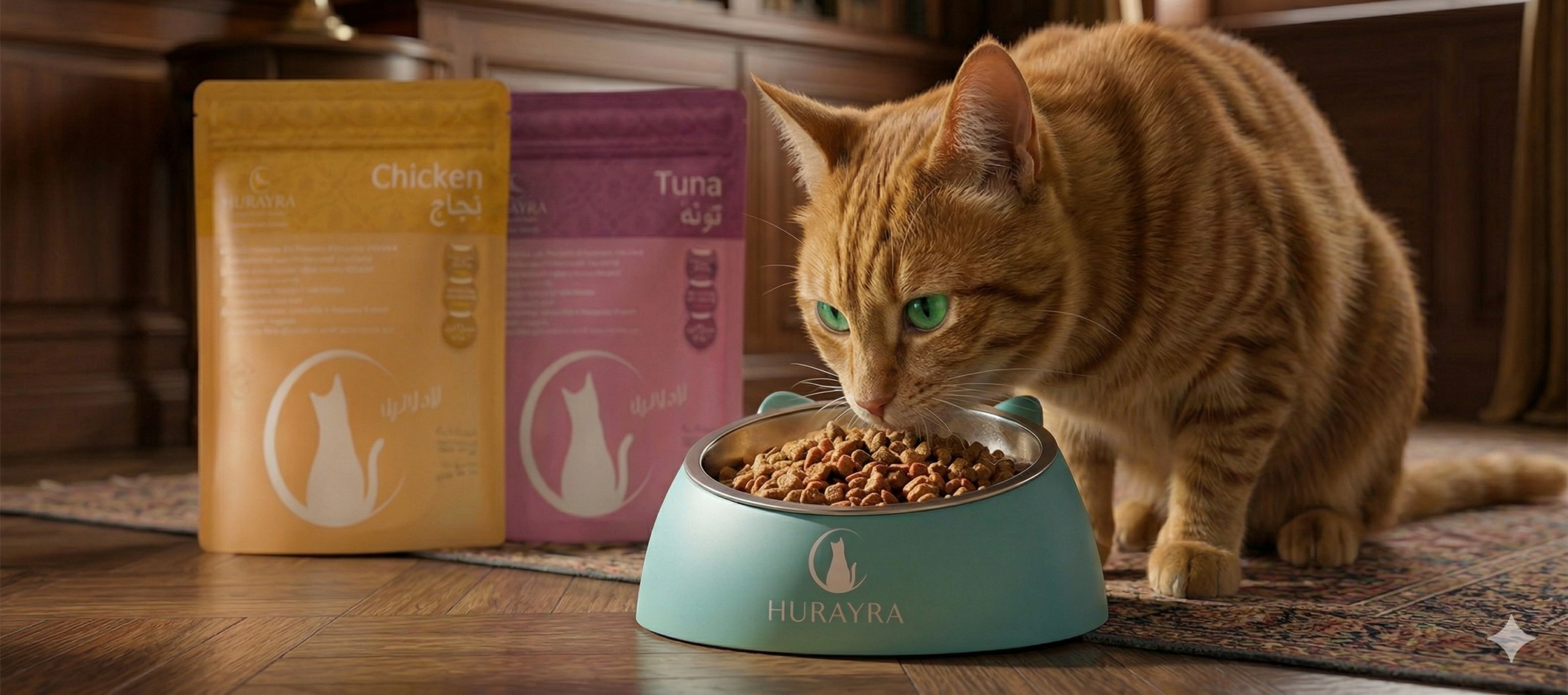
Tuna and Chicken Combo
Pack of 2
Frequently Asked Questions
1 Does omega 3 automatically make cat food better?
No. Omega 3 is one component of a complete nutritional profile. A food can contain omega 3 and still be nutritionally poor if the protein source is low quality, if the bioavailability of the fatty acids is undermined by rancidity, or if the ratio of omega 3 to omega 6 is imbalanced. Named marine ingredients, fish meal, salmon oil, tuna, are a more reliable indicator of usable omega 3 than a general “omega 3” claim on the packaging.
2 Is fish oil the same as omega 3?
Fish oil is one delivery vehicle for EPA and DHA. It works well when fresh and properly stored, and it degrades quickly once oxidised. Some cats do well with fish oil added to food. Others do better when the omega 3 is built into the food formula from a quality marine protein source rather than added as a separate oil.
3 Can I feed too much omega 3?
In very high doses, omega 3 can inhibit platelet function and potentially affect fat-soluble vitamin absorption. For most cats eating a commercially formulated diet, this is not a risk. The concern is relevant mainly to owners adding large doses of fish oil supplements on top of a diet already rich in marine protein. If you are considering supplementation, a brief conversation with your vet about dosage is worthwhile.
4 Does halal certification affect the omega 3 content?
HMC (Halal Monitoring Committee) certification speaks to sourcing, traceability, and slaughter standards — not to nutrient content. A well-formulated halal cat food can deliver the same omega 3 levels as any other complete cat food. The certification ensures you know exactly what protein went into the recipe and how it was handled, which matters for transparency regardless of whether you are choosing halal for faith-based or welfare-based reasons. You can read more about what that traceability looks like in practice on Hurayra’s about page.
Recent Post
Subscribe & Save 25% Every Month
Never run out of your pet’s favourite dry cat food again. Enjoy scheduled deliveries right to your door & save 25% on every order. A win for you and your furry friend!
More Articles
- uzma
- /
- 08/04/2026
- uzma
- /
- 07/04/2026
- uzma
- /
- 06/04/2026
- uzma
- /
- 06/04/2026
- uzma
- /
- 03/04/2026