
- Pet Nutrition
Tuna vs Salmon Cat Food: Which Fish Is Actually Better for Your Cat?
- uzma
Table of Contents
TL;DR
Tuna makes an excellent daily protein for most cats…high in protein, highly palatable, and safe when part of a complete, balanced food. Salmon is ideal for rotation, offering higher omega-3s that support skin, coat, and joints. Formulated tuna cat food is safe; it’s not the same as raw supermarket tuna.
You’re standing in the pet food aisle and your cat is at home, doing that thing where they stare at the bowl and then stare at you as if you’ve personally offended them. Tuna or salmon? Both are fish. Both smell like something your cat would wrestle you for. So does it even matter which one you pick?
It does. More than most pet food labels let on.
This guide tells you what’s actually in each fish, why cats respond to them so differently, and which one deserves the starring role in your cat’s bowl. We’ve also looked at what the UK premium cat food market is doing with these proteins, so you can cut through the label claims and make an informed call.
Why Cats Go Crazy for Fish in the First Place
Cats are obligate carnivores. Their bodies run on animal protein. They can’t produce essential nutrients like taurine on their own, so those have to come from what they eat.
Fish ticks a lot of boxes for cats:
- High-quality protein that’s easy to digest and gets absorbed properly by the body
- Taurine, an amino acid cats must get from food to protect their heart and eyesight
- Omega-3 fatty acids that support coat condition, joint health and brain function
- High moisture content, which supports kidney health since most cats drink far less water than they should
- A smell powerful enough to convert cats who’ve refused everything else on the shelf
Both tuna and salmon tick these boxes. But they do it differently, and the differences matter when you’re choosing what your cat eats every day.
What Tuna Actually Delivers
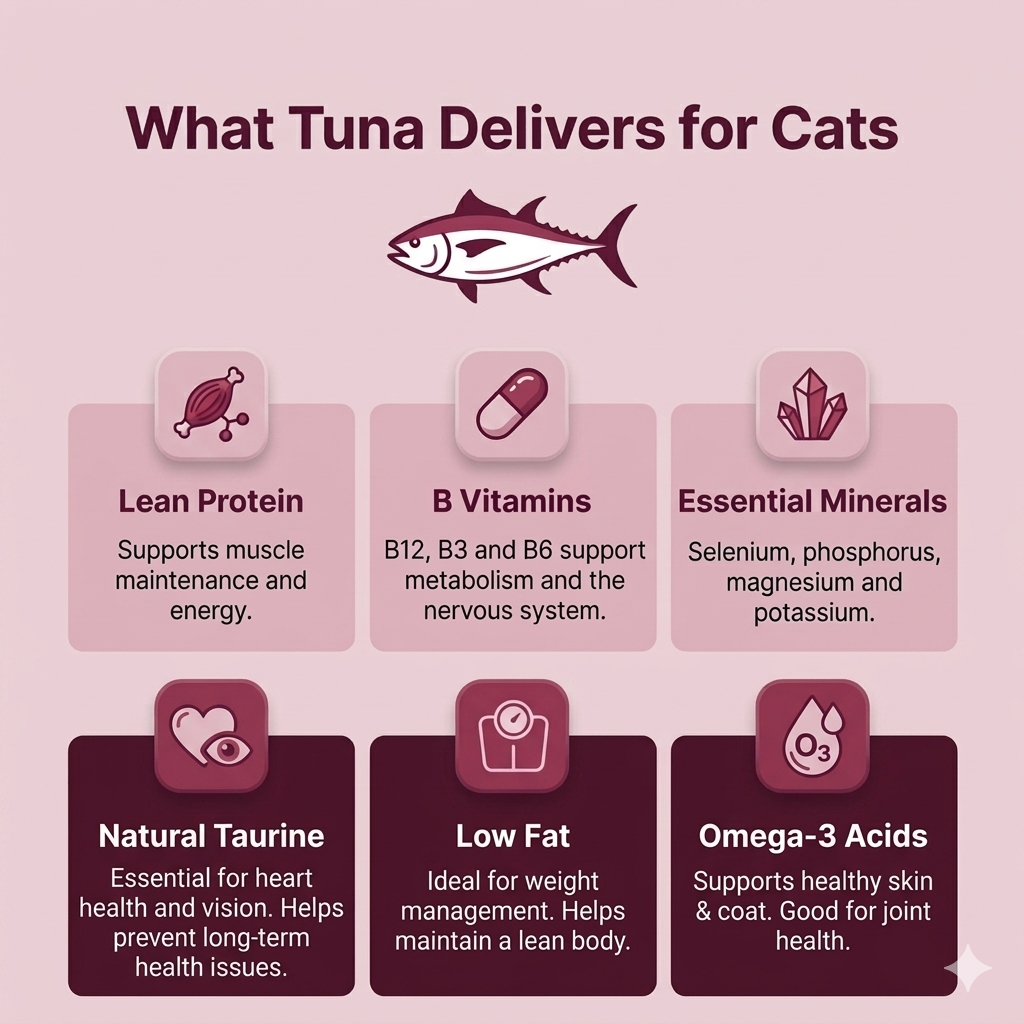
Tuna is one of the most protein-dense fish you can put in a cat’s bowl. It’s lean, it’s complete, and cats are genuinely obsessed with it in a way they’re not with most other proteins. That strong, punchy smell triggers something primal. Even the most stubborn, plate-turning cat will often eat tuna when nothing else has worked.
What About Mercury? Here’s the Context Most Articles Skip
Tuna and mercury. You’ve probably read the warnings. Here’s what those warnings usually leave out.
The mercury concern applies primarily to raw or plain canned tuna fed as a standalone food, day after day, with nothing else. That’s a very different situation from a properly formulated tuna cat food where the recipe has been developed by nutritionists, blended with other ingredients, and produced to meet FEDIAF standards for complete feline nutrition.
Reputable cat food brands that use tuna as a primary protein manage this in a few ways: they blend tuna with complementary proteins, they control the quality and source of the fish they use, and they formulate the recipe so no single ingredient creates a nutritional imbalance. A tuna-based complete cat food is not the same as spooning a tin of Princes tuna into a bowl every day.
The real risk comes from cats who eat only plain tuna with nothing else, no added vitamins, no minerals, no taurine supplementation. That’s an unbalanced diet, and the mercury concern sits within that broader problem.
What the UK Premium Market Is Doing
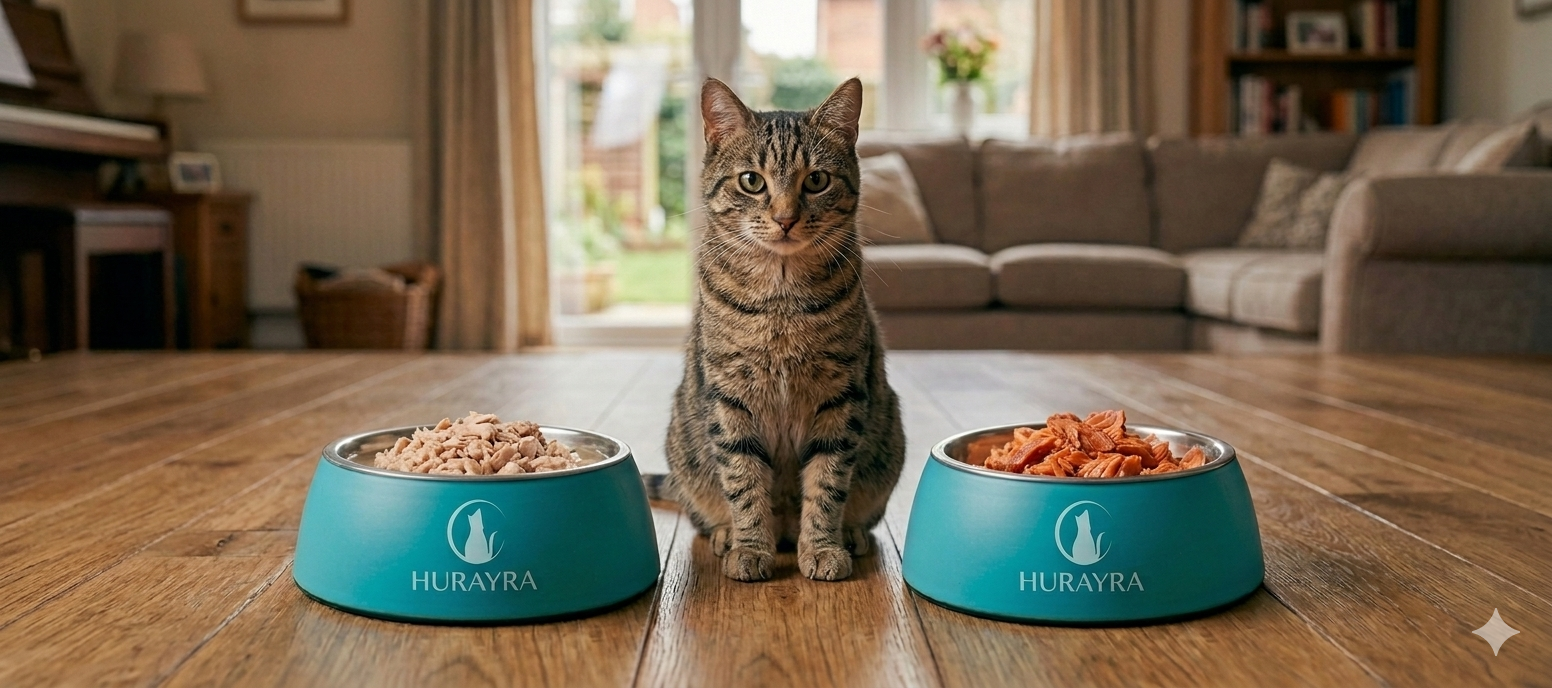
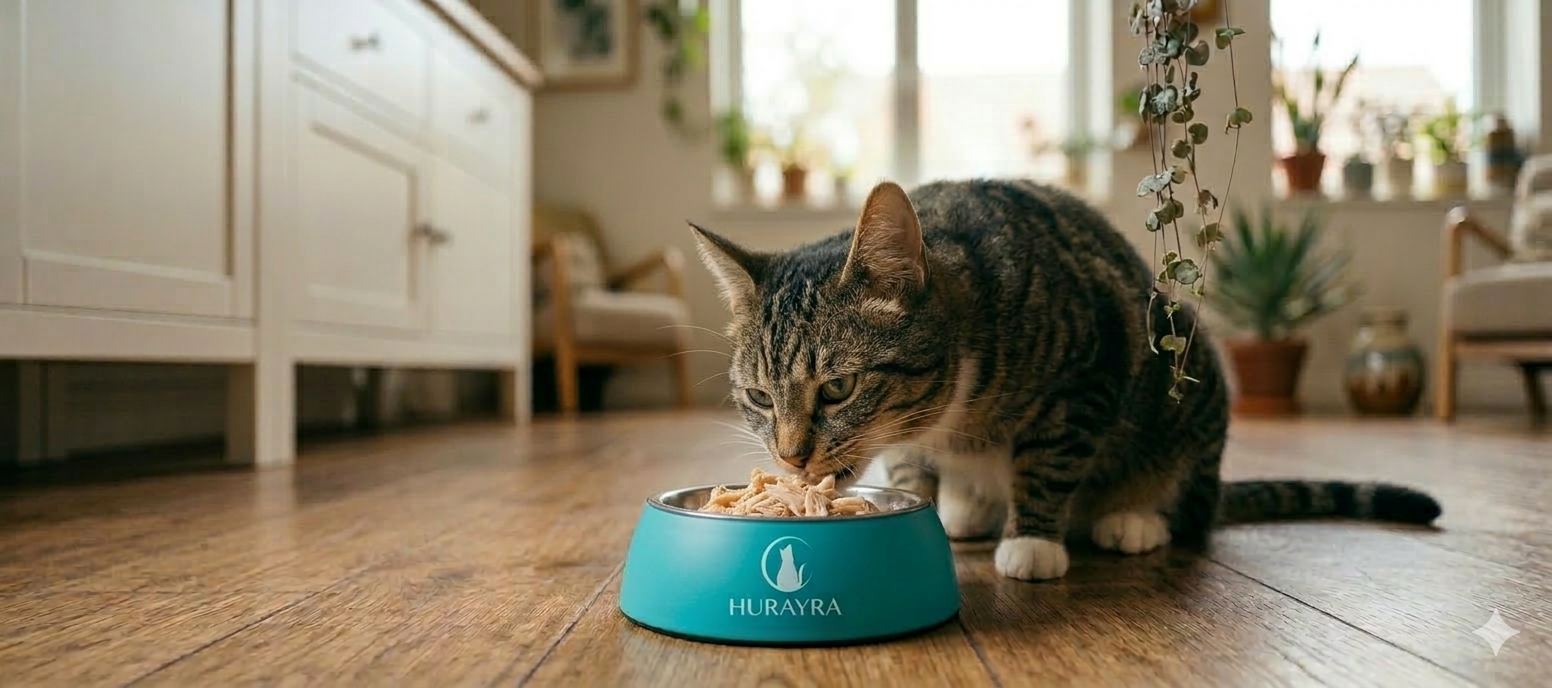
Brands like Hurayra has emerged as one of the first UK brands addressing both named whole tuna and nutrition rich ingredients in cat food recipe, while following HMC standard supply chain.
What the better brands have in common: named whole meat tuna as the first ingredient, minimal fillers, and proper complete formulation with taurine added back after cooking.
The market has validated what cat owners already knew from experience. Tuna gets eaten. And a food that actually gets eaten does more for a cat’s health than a nutritionally perfect recipe that sits in the bowl untouched.
Dry Tuna Cat Food
Subscribe & Save 25%
Where Salmon Stands Out
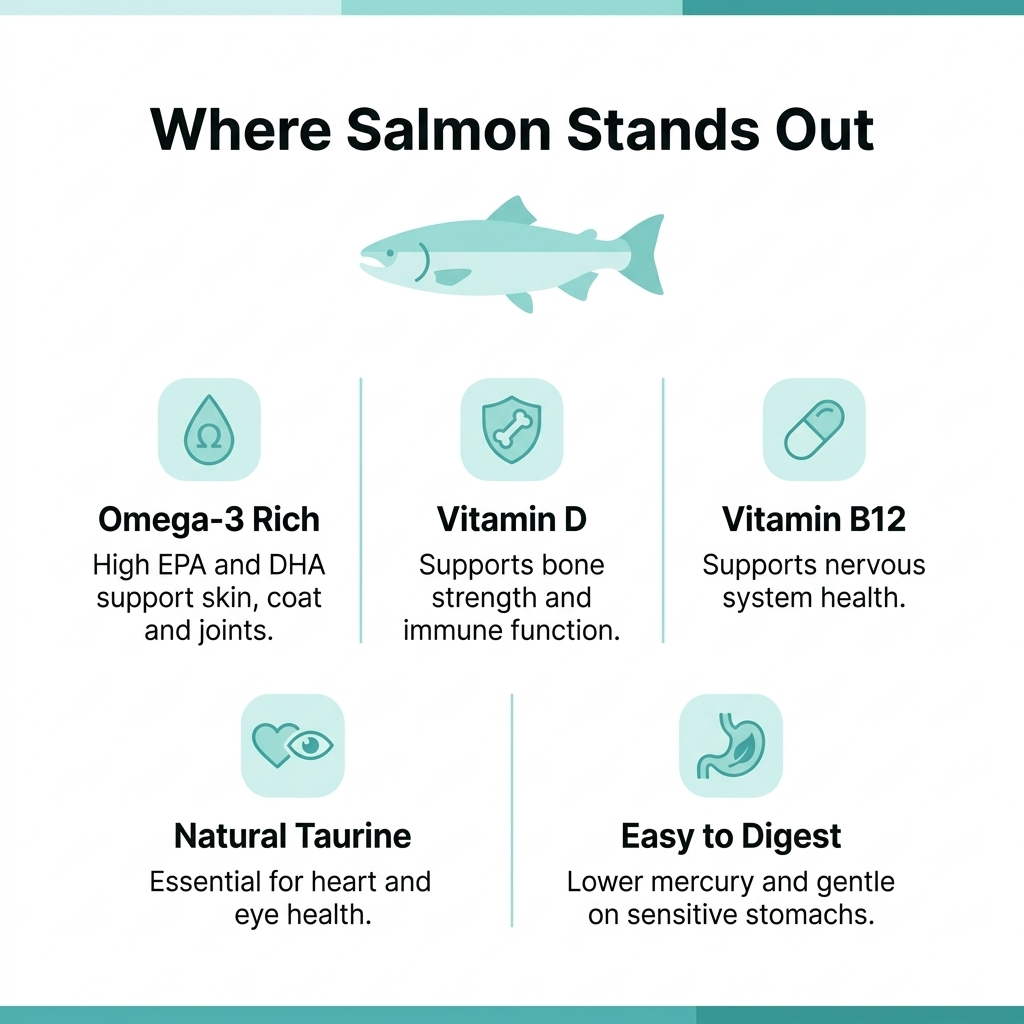
Salmon is excellent cat food. It’s not trying to compete with tuna on palatability, because it doesn’t need to. What it brings is a different nutritional profile that complements tuna well.
The biggest difference is omega-3 fatty acids. Salmon delivers substantially more EPA and DHA per serving than tuna does. These long-chain omega-3s do visible things over time: shinier coats, less dry or flaky skin, better mobility in older cats, stronger immune response. Cats fed a salmon-rich diet often show improvements that owners notice before they figure out what changed.
Tuna vs Salmon. How They Compare Side by Side
Factor | Tuna | Salmon |
Protein content | Very high, extremely lean | High, complete amino acid profile |
Palatability | Exceptional — cats go wild for it | High — strong, consistent appeal |
Omega-3 fatty acids | Present, lower per serving | Very high (EPA and DHA) |
Mercury in pet food | Managed by formulation and blending | Lower naturally |
Vitamin D | Moderate | High |
Natural taurine | Good source | Good source |
Digestibility | Excellent | Excellent |
Best role in diet | Daily staple — high protein, high appeal | Powerful complement for omega-3 boost |
Figures based on general nutritional profiles for quality formulated cat food. Values vary by species and processing method.
So Which One Should You Actually Feed Your Cat?
Tuna is the better daily protein for most cats. The palatability is unmatched, the protein content is excellent, and when it’s in a properly formulated complete food, it’s a nutritionally solid choice. Cats eat it. They finish the bowl. They come back for more. For cat owners who’ve struggled with fussy eaters, that consistency is genuinely valuable.
Salmon is the better complement. Its omega-3 profile does things tuna can’t match, and rotating salmon into the mix alongside tuna gives cats a broader nutritional base. A cat eating high-quality tuna food most days with salmon a couple of times a week is getting the best of both.
That’s the approach worth building toward: tuna as the anchor protein your cat reliably eats, salmon as the rotation that rounds out the nutrition.
What to Look For on the Label
Whether you’re buying tuna or salmon cat food, the ingredient list tells you more than the front of the pack. Here’s what to check:
- Named protein listed first. ‘Tuna’ or ‘salmon’ as the first ingredient, not ‘fish’, ‘ocean fish’, or ‘fish derivatives’. Vague terms often signal lower-quality sources.
- Meat percentage above 40%. Below 30% usually means a lot of filler. Budget brands bulk out recipes cheaply with grains and starch.
- The word ‘complete’ on the label. A complete food meets all your cat’s nutritional needs on its own. Complementary foods do not.
- Taurine listed. Heat processing depletes natural taurine, so quality brands add it back. If it’s not on the label anywhere, that’s a problem.
- No added sugars. Some brands add sugar to improve palatability. Your cat doesn’t need it, and it creates a preference for that food over better options.
- No animal derivatives. A legal catch-all for low-quality animal parts. Not outright dangerous, but not what a cat’s digestive system was built for.
- Halal certification if you’re looking for reliable sourcing and transparent supply chain. Most mainstream brands, including many premium ones, don’t carry this even when the underlying ingredients could qualify. It’s a genuine gap that we have addressed at Hurayra holding HMC halal certification without compromising on ingredient quality.
How Chicken Fits Into the Picture
It’s worth addressing chicken briefly, since it dominates so many cat food ranges.
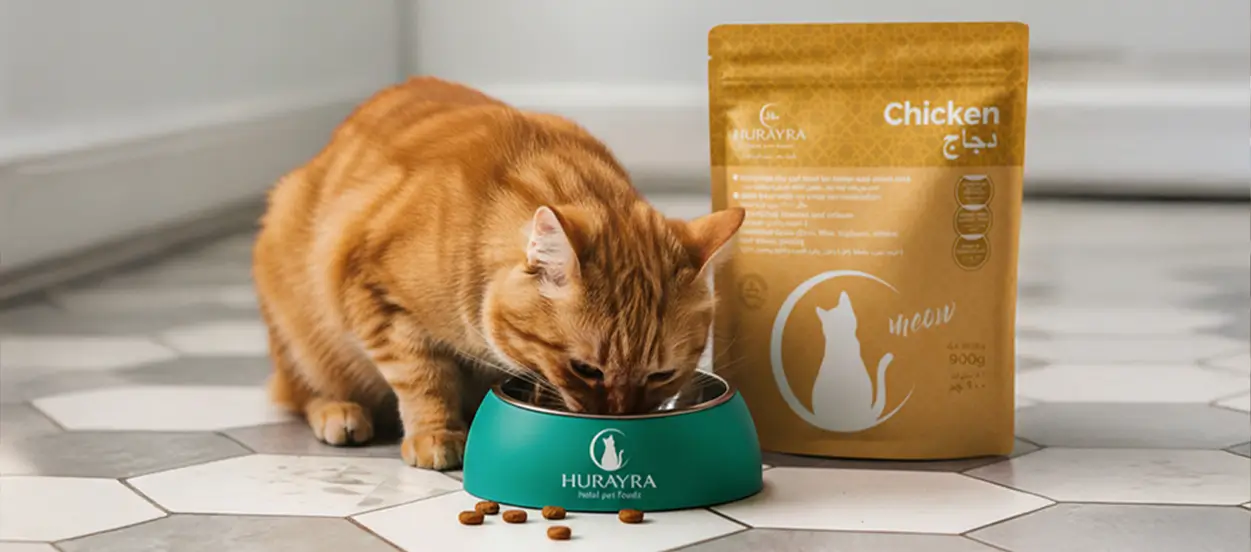
Chicken is lean, very digestible, and carries no mercury concern. It’s widely tolerated by cats that react to fish proteins. For cats that genuinely can’t eat fish, it’s a solid fallback. But it doesn’t bring the palatability of tuna or the omega-3 profile of salmon. It’s the safe, reliable middle option.
A rotation across tuna, salmon and chicken across the week gives cats the broadest nutritional base and reduces the chance of developing a sensitivity to any single protein over time. Tuna leads, salmon adds omega-3s, chicken rounds out the variety.
- Tuna: highest palatability of any protein, excellent lean protein, great as the daily staple in a complete formulated food
- Salmon: best omega-3 profile of any common cat food fish, strong coat and skin benefits, ideal rotation alongside tuna
- Chicken: lean, zero mercury risk, widely tolerated, good for variety and for cats that don’t do well on fish
Chicken Cat Food
Pack of 2
Five Questions Worth Asking Before You Buy
Before picking a fish-based cat food, run through these:
- Is a named fish the first ingredient on the label?
- Is it labelled as a complete food, or is it complementary?
- What’s the actual meat percentage? Is it over 30%?
- Is taurine listed as an additive? It should be.
- Does it carry halal certification if your household needs it?
Conclusion
Tuna for daily nutrition, salmon for omega-3s, and a label that backs up what the front of the pack promises. That’s the formula. Everything else is marketing.
If you’d rather skip the label-checking and just buy something you can trust, Hurayra does the work for you, premium tuna cat food, HMC halal certified, properly formulated with named whole fish and taurine added. Now available at Morrisons.
And if you want to know exactly what goes into your cat’s bowl — ingredient sourcing, nutrition breakdowns, new recipes before they hit shelves, subscribe and join the Hurayra community below. No noise, just the stuff that actually matters for your cat.
Tuna and Chicken Combo
Pack of 2
Frequently Asked Questions
1 Is tuna safe for cats to eat every day?
In a properly formulated complete cat food, yes. The mercury concern that gets attached to tuna is largely about plain, unfortified canned tuna fed as a cat’s only food. A complete tuna cat food is a different product: it’s formulated by nutritionists, blended to meet feline nutritional standards, and includes the vitamins and minerals that plain tuna lacks. Always check for ‘complete’ on the label.
2 What does salmon add that tuna doesn't?
Omega-3 fatty acids, primarily. Salmon delivers significantly more EPA and DHA per serving than tuna does. These support coat condition, skin health, joint mobility and immune function. If your cat eats tuna regularly and you want to add the omega-3 benefits of salmon, rotating one or two salmon meals per week into the mix is a practical approach.
3 Which fish is better for cats with sensitive stomachs?
Both tuna and salmon are highly digestible proteins. For cats with genuine sensitivities, the more useful factor is usually single-protein recipes rather than which fish specifically. A single-protein tuna or salmon recipe is easier to troubleshoot than a multi-protein blend, because you can actually tell what the cat is reacting to.
4 Can I find halal tuna cat food in the UK?
It’s rare. Most mainstream brands, including premium ones, don’t carry halal certification even when the underlying ingredients could qualify. Specialist halal pet food brands do exist in the UK and specifically address this gap, but you won’t find them in most high street pet shops. Online and selected supermarkets are the main routes.
5 What should I look for on a tuna cat food label?
Tuna as the first ingredient, a meat percentage of 40% or above, the word ‘complete’ on the label, taurine listed as an additive, and no animal derivatives or added sugars. Those five things together give you a strong indication that the food is worth buying.
Recent Post

Subscribe & Save 25% Every Month
Never run out of your pet’s favourite dry cat food again. Enjoy scheduled deliveries right to your door & save 25% on every order. A win for you and your furry friend!
More Articles

- uzma
- /
- 19/03/2026
- uzma
- /
- 18/03/2026
- uzma
- /
- 17/03/2026
- uzma
- /
- 16/03/2026
- Saniya Ahmed
- /
- 14/03/2026
- Saniya Ahmed
- /
- 13/03/2026