
- Blog, Cat Health & Wellness, Cat Nutrition, Feeding Guides
What’s the Difference Between Grain-Free and Soy-Free Cat Food?
- Saniya Ahmed
Table of Contents
TL;DR
Hurayra was founded to fill a clear gap in the UK market where Muslim pet owners couldn’t find genuinely halal, HMC-certified cat food with full transparency and zero cross-contamination. After visiting 82 manufacturers and rebuilding the supply chain from scratch, Hurayra launched the UK’s first HMC halal-certified cat food, combining strict ethical sourcing, complete traceability, and nutritionally balanced, high-protein recipes. The result is faith-aligned, trustworthy cat food that raises quality standards for all pet owners.
If you’ve been spending too long staring at cat food labels lately, you’re not alone. Terms like “grain-free” and “soy-free” seem to be everywhere, yet it’s hard to know which one actually suits your cat. Here’s the simple truth: grain-free cat food eliminates grains like wheat, corn, and rice, while soy-free cat food removes soy-based ingredients. They address completely different dietary concerns, and understanding the difference between grain-free and soy-free cat food helps you make the right choice for your furry baby’s needs.
Why Some Cat Foods Skip the Grains
Grain-free cat food has become incredibly popular, but it’s not just a trend. Cats are obligate carnivores, which means their bodies are designed to get nutrition primarily from meat. Grain-free formulas remove all cereal grains and replace them with alternatives like sweet potatoes, peas, or simply more meat-based protein.
Common grains removed in grain-free formulas:
- Wheat and wheat gluten
- Corn and corn meal
- Rice (white and brown)
- Oats and barley
When a cat has trouble with grains, you might notice digestive upset, skin issues, or excessive scratching. Some cats develop sensitivities over time, while others seem bothered from the start. That said, grains aren’t inherently bad for all cats. Many do perfectly well with them.
The Soy Question Nobody Talks About Enough
Now let’s talk about soy in cat food, because it doesn’t get nearly as much attention. Soy appears in many commercial cat foods as a protein filler or binder. It’s cheap, bulks up the formula, and technically adds protein to the nutrition label.
But here’s the thing: is soy bad for cats? Not for all cats, but it can be problematic. Soy is a plant-based protein, and your cat’s system is built to break down animal proteins far more efficiently. If you’ve noticed ongoing tummy troubles or unexplained skin irritation, cat food without soy might be worth trying.
The Key Differences Between the Two
Here’s where things get clear. The difference between grain-free and soy-free cat food comes down to what they eliminate and why:
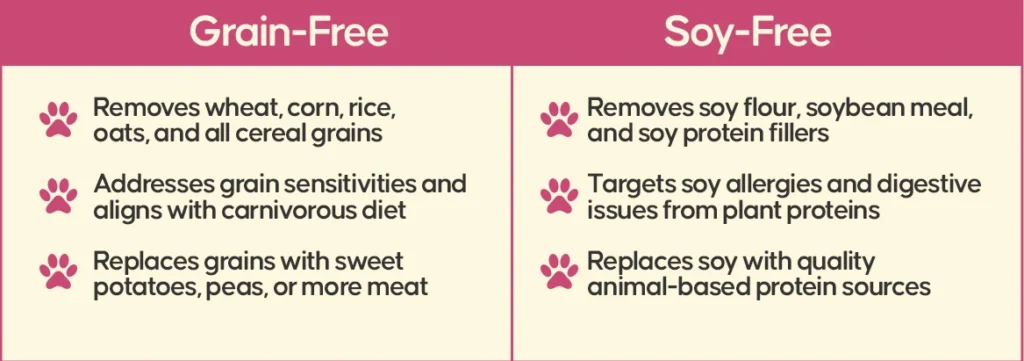
Think of it this way: is grain-free cat food better than soy-free? Neither is universally “better” because they solve different problems. A cat sensitive to grains needs grain-free. A cat reacting to soy needs soy-free. Some cats need both, and some cats do fine with either.
When Food Sensitivities Start Showing Up
Food intolerances in cats can be sneaky. Unlike dramatic allergic reactions, intolerances often show up as chronic low-grade issues like persistent soft stools, occasional vomiting, or constant ear scratching that never quite goes away.
Watch for these signs of food sensitivities:
- Chronic itching or excessive grooming
- Recurring digestive issues or soft stools
- Dull, flaky coat or skin irritation
- Low energy or behavioral changes
Both grains and soy can trigger these responses, but they do it differently. Cat food allergies, soy being one of the common culprits, often show up as digestive discomfort, gas, or loose stools. Grain sensitivities tend to manifest more as skin problems, though digestive upset happens too.
If you’re noticing these signs, switching to a cleaner formula can help. Brands like Hurayra offer both grain-free and soy-free options with quality protein sources like chicken, making it easier to eliminate potential triggers while ensuring your cat gets the nutrition they need from responsibly sourced ingredients.
Dry Chicken Cat Food
Subscribe & Save 25%
Pay Attention to The Labels
When you’re comparing cat foods, flip that bag over and actually read the ingredient list. Look for what’s there and what isn’t. Quality formulas put named meat sources at the top like chicken, turkey, salmon, not vague terms like “meat meal” or “animal by-products.”
Check for soy in its various disguises: soy flour, soybean meal, textured vegetable protein, or soy protein concentrate. For grains, watch for wheat, corn, rice, oats, barley, and any other cereal grains. Remember that ingredients are listed by weight, so what’s at the top makes up most of the food.
Also pay attention to what’s replacing grains in grain-free formulas. Some use legumes like peas and lentils, others use potatoes or sweet potatoes. If your cat has sensitivities, these alternatives matter too. The goal is finding a formula that works for your specific cat, not just checking boxes on a trend list.
Making the Right Choice for Your Cat
Look at your cat’s symptoms first. Chronic skin issues like excessive itching or hot spots might point toward grains. Chronic stomach upset or bloating might suggest soy is the issue. If you’re not sure, a formula that’s both grain-free and soy-free gives you a clean slate.
Brands like Hurayra focus on responsible sourcing and clean ingredient recipes that avoid common feline problems while prioritizing most nutrition in every bowl. When you’re trying to identify what works for your cat, starting with a simplified formula can eliminate risk to allergic reactions.
Dry Chicken and Tuna Combo
Subscribe & Save 25%
Frequently Asked Questions
1 Why do vets not like grain-free cat food?
Some vets express concerns about grain-free diets due to potential links to heart issues in dogs, though this connection is less established in cats. However, many vets do recommend grain-free options for cats with specific grain sensitivities or allergies.
2 Is grain-free cat food better for cats?
Grain-free isn’t universally better for all cats. It’s beneficial for cats with grain sensitivities, but healthy cats without these issues can thrive on quality foods with or without grains.
3 Do vets recommend grain or grain-free?
Most vets recommend based on your individual cat’s needs rather than making blanket statements. They typically suggest grain-free only when a cat shows signs of grain sensitivity or intolerance.
4 Is grain-free better for pets?
Grain-free isn’t inherently better or worse. It’s about matching the diet to your pet’s specific digestive system and any sensitivities they may have.
5 What are the symptoms of grain intolerance?
Common symptoms include chronic itching, skin irritation, digestive upset like vomiting or diarrhea, and excessive scratching or licking. You might also notice a dull coat, low energy, or recurring ear infections.
Recent Post
Subscribe & Save 25% Every Month
Never run out of your pet’s favourite dry cat food again. Enjoy scheduled deliveries right to your door & save 25% on every order. A win for you and your furry friend!
More Articles
- uzma
- /
- 30/03/2026
- uzma
- /
- 29/03/2026

- uzma
- /
- 29/03/2026
- uzma
- /
- 27/03/2026
- uzma
- /
- 27/03/2026
- uzma
- /
- 26/03/2026