Written by Uzma Aslam
TL;DR
Hurayra and Tiana are both halal cat foods, but they are different formats; dry kibble vs freeze-dried. Hurayra holds verified HMC certification and suits daily dry feeding. Tiana suits wet-texture preferences. Choose based on format, not just protein numbers.
Hurayra vs Tiana Cat Food UK: An Honest Comparison
Two halal cat food brands. One decision. And a comparison that most buyers are trying to make without the full picture.
Hurayra and Tiana are the two most visible halal-certified cat food options available to UK buyers in 2026. Both are positioned for Muslim cat owners. Both claim high-quality, permissible ingredients. But they are not the same kind of product, and comparing them directly without understanding that difference leads to conclusions that do not serve your cat.
This article compares both brands factually: certification, ingredients, nutrition, format, practical cost, and suitability. It is written from Hurayra’s perspective, so you should read it with that in mind. Every claim made about Tiana is drawn from their publicly available product pages and FAQ. No figures have been altered or misrepresented.
Why This Comparison Needs Context First
Before looking at protein percentages or ingredient lists, there is something more fundamental to establish: Hurayra and Tiana are not the same format of cat food.
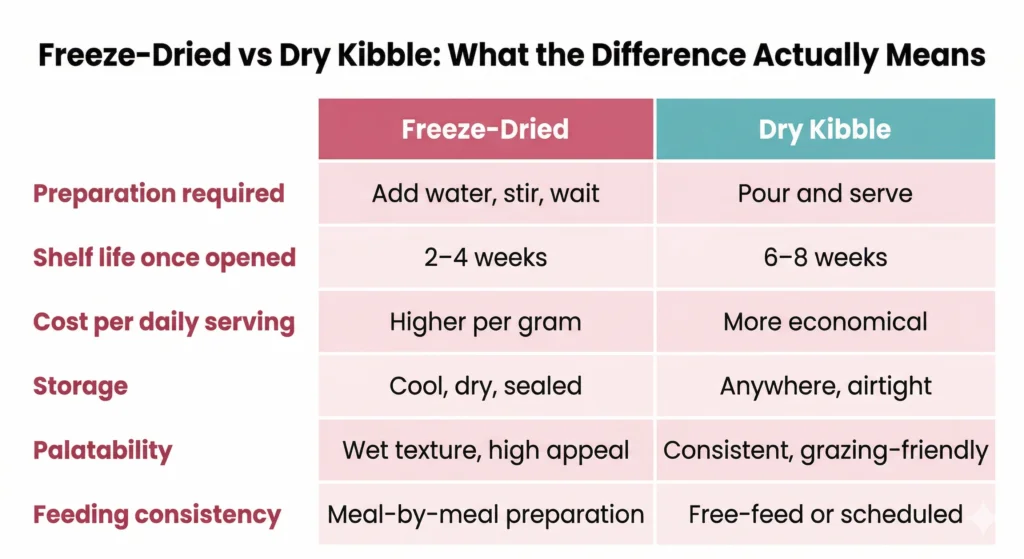
Hurayra produces dry kibble. Tiana produces freeze-dried cat food, which is rehydrated with water before serving. These are structurally different products, manufactured using different processes, stored differently, priced differently, and fed differently. Comparing their headline nutritional figures without accounting for that difference produces numbers that look meaningful but are not directly equivalent.
This matters most when you see Tiana’s crude protein listed at 43% and Hurayra’s at 35%. Those figures are real, but they are not measuring the same thing in the same state. More on that shortly.
Halal Certification: What Each Brand Carries
Both brands use the word halal, and both appear to be genuinely committed to permissible sourcing. The difference lies in the verification structure behind the claim.
Hurayra holds full HMC certification. The Halal Monitoring Committee is the most rigorous independent halal certification body operating in the UK. HMC verification requires regular unannounced site inspections, full ingredient traceability from farm to finished product, and documented confirmation that no cross-contamination with haram substances occurs at any production stage. Scholars across the UK recognise HMC as the most reliable standard available. The certification is not self-declared, it is externally audited and repeatable. The principles behind why that standard matters for Muslim households go beyond ingredients alone and extend to the entire supply chain.
Tiana’s website states their products are halal certified and produced to the same standards used in halal food for humans. However, their publicly available pages do not name a specific third-party certification body. This does not mean their product is not halal. It means that, based on the information they have published, the certification framework behind their claim is not independently verifiable in the same way that Hurayra’s HMC status is.
For a Muslim buyer who takes the question of verification seriously, that distinction is worth weighing.
Ingredients: What Goes Into Each Formula
Tiana’s formulas use five ingredients: halal meat, broccoli, carrots, spinach, and herbs. The simplicity is deliberate. Their FAQ states they avoid grains, cereals, artificial colours, flavourings, and preservatives. The meat sources include chicken, fish, and goat across their range. Freeze-drying preserves the nutritional content of those raw ingredients by removing moisture at low temperature without applying the heat that conventional dehydration uses.
Hurayra’s formulas also exclude grains, wheat, soy, artificial colours, additives, and preservatives. The primary ingredients are named protein sources, chicken or tuna, supported by a formulated nutritional profile that includes Omega 3, 6, and 9 fatty acids and vitamins A, D, and E. The full ingredient composition is documented on Hurayra’s website with each component’s function explained.
The key ingredient difference is the supporting nutritional profile. Tiana’s five-ingredient list is clean and minimal. Hurayra’s formula is more developed, with explicitly included fatty acids and vitamins at defined quantities. Tiana lists Omega 3 at 0.1% on their published nutritional panel. Hurayra includes Omega 3, 6, and 9 as named components of their formulation.
Neither approach is categorically wrong. A five-ingredient freeze-dried product can still provide complete nutrition if the base protein is high quality and the mineral supplementation is adequate. A more formulated dry food can provide broader nutritional coverage daily, including fatty acids that support coat condition and joint health over time.
Protein and Nutrition: Reading the Numbers Correctly
This is where most comparisons of these two brands go wrong.
Tiana’s published crude protein figure is 43% with a moisture content of 6%. This is the nutritional profile of the product in its freeze-dried state, before water is added. Once rehydrated to the recommended consistency, the protein content on an as-fed basis drops considerably, to approximately 10 to 12%, because the added water significantly increases the overall mass of the food without adding protein.
Hurayra’s crude protein is 35% in dry kibble form, which is the as-fed figure. Dry kibble is consumed without rehydration, so the 35% represents what your cat is actually eating per gram of food.
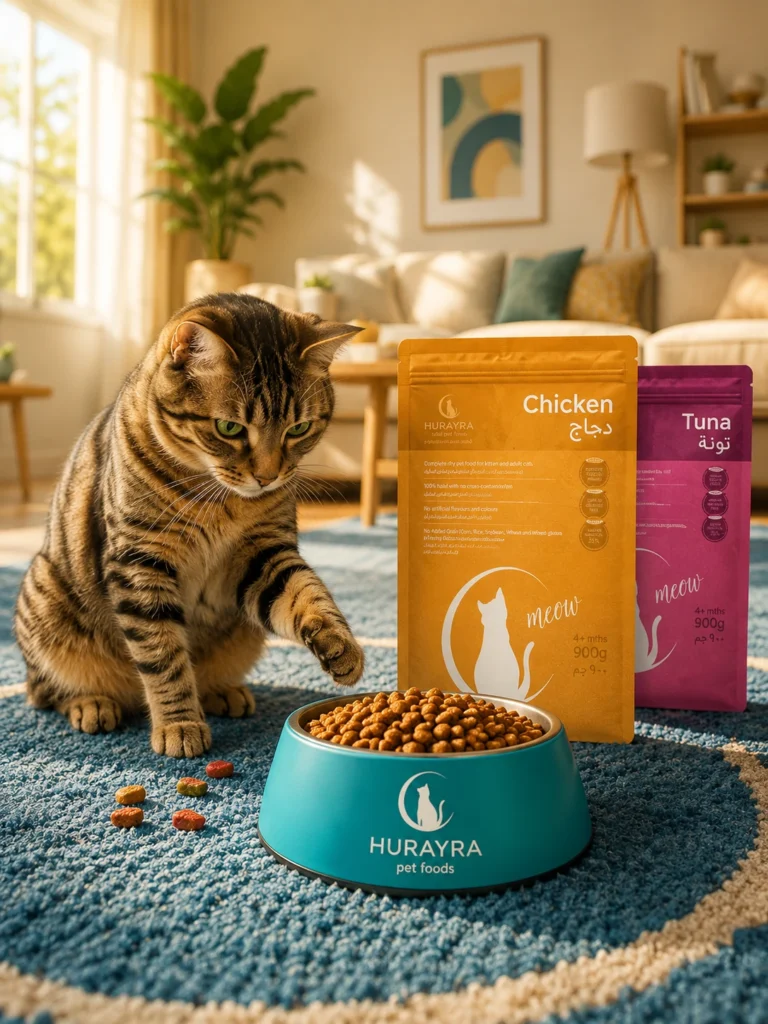
Chicken Cat Food
Subscribe & Save 25%
These two numbers are not directly comparable. A 43% freeze-dried figure and a 35% dry kibble figure sit in different measurement contexts. FEDIAF, the European body that sets nutritional standards for pet food, recommends comparing protein on a dry matter basis. On that basis, both products are protein-led and above the adult cat minimum recommendation of 25%.
The relevant question is not which headline number is higher. It is whether the format you choose delivers consistent, adequate protein as part of a complete daily feeding routine.
Practical Feeding: Format, Convenience, and Cost
Freeze-dried food requires preparation. The standard instruction is to add warm water, stir, and allow to rehydrate before serving. For an owner with time to prepare meals and a cat that prefers a wet food consistency, this is a reasonable routine. For a household with multiple cats, irregular schedules, or a cat that free-feeds throughout the day, the preparation requirement adds friction.
Dry kibble can be measured and left in a bowl without preparation. It stores easily, travels well, and does not require refrigeration after opening. For cats that graze rather than eat at set mealtimes, it is more practical.
Cost is also not directly comparable on a per-bag basis. Freeze-dried food is inherently more expensive to produce than dry kibble, which is why Tiana’s price per gram of food as sold is higher than Hurayra’s. Hurayra is available from £19.80 per pack on subscription, which works out to roughly one box every two weeks for a single cat. The subscription model also removes the need to remember reorders, which matters practically for dietary consistency.
Cats benefit from feeding consistency. Switching food frequently, even between high-quality options, disrupts gut flora and can cause temporary digestive upset. Settling on one format and one formula and maintaining it over time is nutritionally sound regardless of which product you choose. If you are moving your cat from their current food to either of these options, a gradual transition over 7 to 10 days is worth following.
Availability: Where Each Brand Can Be Found
Tiana is available online through their own website. Hurayra is available online and in Morrisons stores across the UK.
The retail presence matters for two reasons. For buyers who want to inspect a product in person before committing, Morrisons provides that option. For households that occasionally run out unexpectedly, a physical store removes the wait for delivery. The reviews from Hurayra customers mention this specifically as a practical benefit, particularly for owners of multiple cats who go through food quickly.
Online-only availability is not a negative indicator of quality. Tiana has built their brand without retail distribution, as many specialist pet food companies do. But for a buyer weighing convenience as a factor, it is a genuine difference.
Who Each Product Suits
Both products are grain-free, both use named animal protein, and both are positioned for Muslim cat owners who want a verified permissible option. The decision between them is less about which is “better” in absolute terms and more about which fits your cat’s needs and your feeding routine.
Tiana suits cats that accept preparation time, prefer a wet food texture, and whose owners prioritise a minimal ingredient list. The freeze-dried format can be useful for cats recovering from illness or those who are reluctant to eat dry food. If you want to understand what nutritional alternatives replace grains in these kinds of formulas and how they function in a cat’s digestion, this breakdown of grain-free cat food ingredients covers the relevant details.
Hurayra suits cats from four months upward who are on a dry feeding routine, particularly those in multi-cat households or homes where free-feeding is practical. The HMC certification provides a verifiable, auditable halal standard. The Omega 3, 6, and 9 profile supports coat and joint health over a daily feeding cycle. The story behind how the formula was developed and the 82-manufacturer selection process reflects a level of sourcing rigour that is relevant to buyers who care about how a product reaches them.
If your cat currently shows signs of low energy, poor coat condition, or reduced muscle tone, the signs of protein deficiency in cats are worth understanding before switching to either option, because food quality alone does not always explain those symptoms.
Conclusion
Tiana is a legitimate halal cat food with a clean ingredient list and a freeze-dried format that suits specific feeding situations. For owners who want a wet-texture option from a halal brand, it is a considered choice.
Hurayra is the only dry halal cat food in the UK with full, publicly verifiable HMC certification, mainstream retail availability, and a nutritional profile that includes specified Omega fatty acids alongside named animal protein. For a Muslim household that wants a daily dry feeding routine backed by the most rigorous certification standard available in the UK, that combination is not replicated elsewhere in the market.
The comparison is not one of good versus bad. It is one of format and context. Both brands exist because the UK halal pet food category needed options. For buyers choosing between them, the decision should come down to what your cat actually eats, how you practically feed, and how important third-party certification verification is to your household.
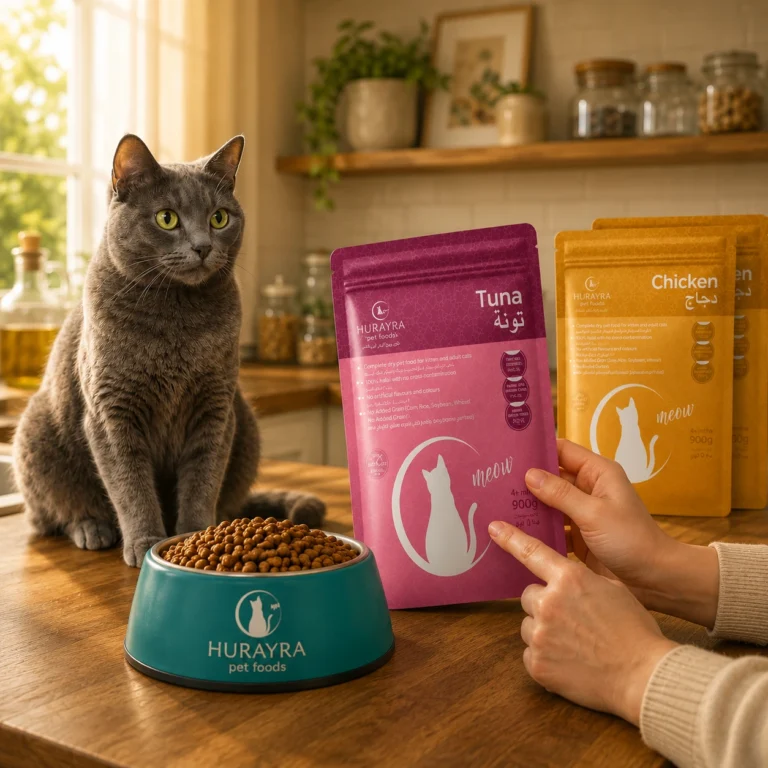
If you want to try Hurayra, the current range covers chicken, tuna, and a combination pack. Subscription pricing makes long-term feeding more economical without locking you into any fixed commitment.
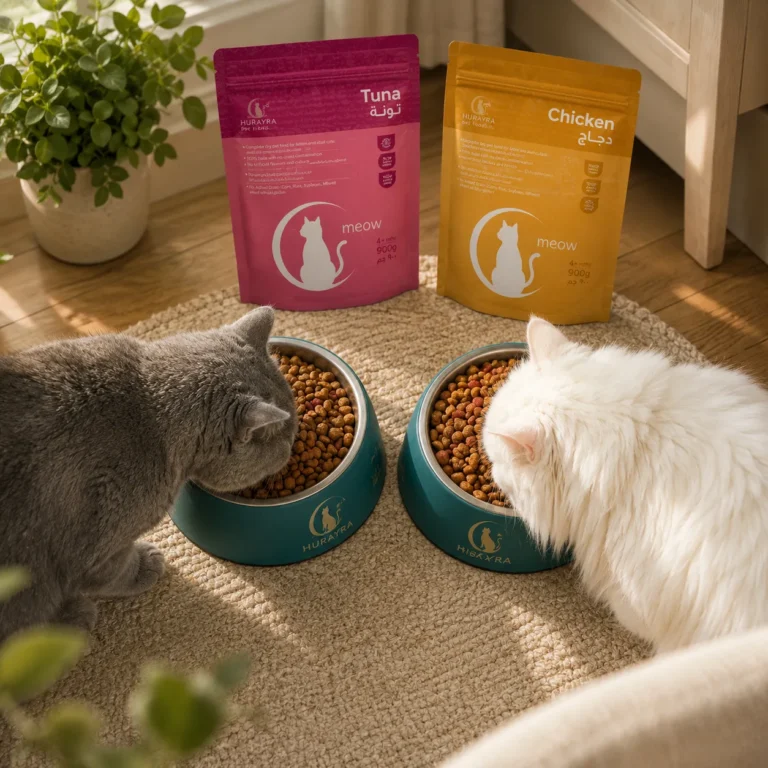
Tuna and Chicken Combo
Subscribe & Save 25%
Frequently Asked Questions
1 Is Hurayra or Tiana better for cats?
Neither is categorically better. They are different formats. Tiana is freeze-dried and requires rehydration. Hurayra is dry kibble, ready to serve. The right choice depends on your cat’s texture preference and your feeding routine.
2 Which halal cat food has higher protein, Hurayra or Tiana?
Tiana states 43% crude protein in freeze-dried form, before water is added. Hurayra states 35% in dry kibble form, which is the as-fed figure. These are not directly comparable. After rehydration, Tiana’s as-fed protein drops significantly. Both are above the FEDIAF minimum recommendation for adult cats.
3 Is Tiana HMC certified?
Tiana’s website states they are halal certified but does not name a specific third-party certification body on their publicly available pages. Hurayra holds full HMC certification, which is independently audited and publicly verifiable.
4 Can I feed my cat both Hurayra and Tiana?
Mixing different food formats is possible, but frequent changes between formulas can disrupt a cat’s digestive system. If you want to combine formats, do so gradually and consistently rather than alternating without a pattern.
5 Where can I buy Hurayra cat food in the UK?
Hurayra is available online at hurayrapetfoods.com with subscription delivery across the UK, and in selected Morrisons stores nationwide.
6 Which halal cat food is cheaper, Hurayra or Tiana?
Dry kibble is generally more economical per daily serving than freeze-dried food. Hurayra starts from £19.80 per pack on subscription. Freeze-dried food carries a higher cost per gram due to the production process involved.
Neither is categorically better. They are different formats. Tiana is freeze-dried and requires rehydration. Hurayra is dry kibble, ready to serve. The right choice depends on your cat’s texture preference and your feeding routine.
Tiana states 43% crude protein in freeze-dried form, before water is added. Hurayra states 35% in dry kibble form, which is the as-fed figure. These are not directly comparable. After rehydration, Tiana’s as-fed protein drops significantly. Both are above the FEDIAF minimum recommendation for adult cats.
Tiana’s website states they are halal certified but does not name a specific third-party certification body on their publicly available pages. Hurayra holds full HMC certification, which is independently audited and publicly verifiable.
Mixing different food formats is possible, but frequent changes between formulas can disrupt a cat’s digestive system. If you want to combine formats, do so gradually and consistently rather than alternating without a pattern.
Hurayra is available online at hurayrapetfoods.com with subscription delivery across the UK, and in selected Morrisons stores nationwide.
Dry kibble is generally more economical per daily serving than freeze-dried food. Hurayra starts from £19.80 per pack on subscription. Freeze-dried food carries a higher cost per gram due to the production process involved.