
 Written by Uzma Aslam
Vitamin A for Cats: Why It’s Essential and the Best Natural Food Sources
Vitamin A is one of the few nutrients your cat simply cannot do without. It supports their eyesight, keeps their immune system working, and plays a role in healthy skin and coat. This article explains what vitamin A actually does, where it comes from naturally, and how to make sure your cat is getting enough of it every day.
Why Cats Need Preformed Vitamin A
Most animals can convert beta-carotene from plant sources into vitamin A. Cats cannot.
As obligate carnivores, they lack the enzyme needed to make that conversion. That means they rely entirely on animal-based food to get their vitamin A as retinol, the form the body can use directly.
This is one reason a well-formulated diet built on real animal protein matters so much. A food that leans on plant fillers and synthetic substitutes to meet nutritional needs will always struggle to deliver what a cat’s body was designed to absorb.
If you’re curious about what goes into a properly structured cat diet, the Hurayra ingredients page breaks down how real meat sources support this kind of nutrition.
What Vitamin A Does for Your Cat
Vitamin A does several things inside your cat’s body, and none of them are minor.
Vision. It is essential for producing the pigments that allow the eye to function in low light. Cats are crepuscular animals. Their eyes are built for dim conditions. Without enough vitamin A, that ability deteriorates.
Immune function. Vitamin A helps maintain the mucous membranes that line the respiratory tract, gut, and eyes. These membranes are your cat’s first defence against bacteria and viruses. When vitamin A is low, that barrier weakens.
Skin and coat. It supports normal cell turnover in the skin. A cat not getting enough tends to develop a dry, dull coat over time.
Growth and reproduction. In kittens and pregnant cats, vitamin A is involved in normal development. Deficiency during pregnancy can cause serious problems for developing kittens.
Signs Your Cat May Not Be Getting Enough
Vitamin A deficiency in cats is not always obvious at first. The signs build gradually.
Common ones to watch for include poor night vision or bumping into things in low light, dry or flaky skin, a coat that looks dull or feels rough to the touch, recurring eye discharge, and a general drop in energy or increased susceptibility to illness.
Kittens may show stunted growth or have more infections than expected.
None of these signs on their own point directly to vitamin A. But if your cat’s diet is low in quality animal protein, it is worth considering. A vet can confirm deficiency with a blood test.
Natural Food Sources of Vitamin A For Cats
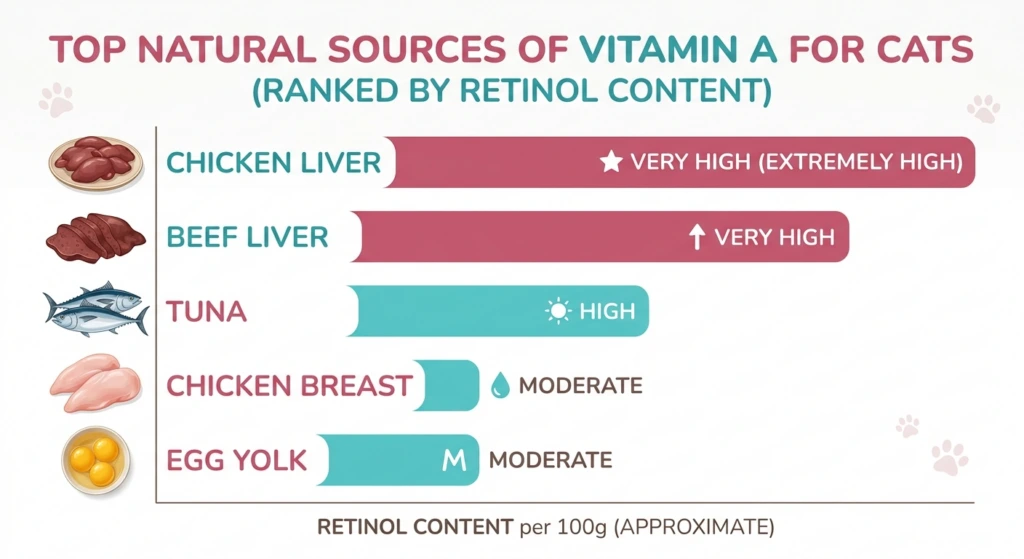
The richest natural source by far is liver, particularly chicken or beef liver. A small amount goes a very long way.
Chicken meat itself contains useful levels of vitamin A. So does tuna and other oily fish. Egg yolk is another natural source, though typically used in smaller quantities in cat diets.
These are all animal-based foods. That matters, because, as covered above, cats cannot extract usable vitamin A from vegetables or plant matter.
Hurayra’s halal chicken cat food uses real chicken as the base, which is a natural source of retinol rather than relying on synthetic supplementation alone.
How Much Vitamin A Does a Cat Need
Cats need vitamin A in relatively small but consistent amounts. According to the Association of American Feed Control Officials (AAFCO), adult cats need a minimum of 3,333 IU per kilogram of dry food. Kittens need more to support development.
In practical terms, a diet built around real chicken or fish, properly formulated, should meet this without difficulty. The issue is usually not the target but the source: a food that uses low-quality meat derivatives or excessive plant material may technically list vitamin A without delivering it in a form the cat absorbs well.
This is why the source of protein in your cat’s food matters as much as the nutrient list on the back of the bag. You can read more about how Hurayra approaches ingredient quality on the grain, wheat and filler-free cat food page.
Can a Cat Have Too Much Vitamin A
Yes. Vitamin A is fat-soluble, which means it accumulates in the body rather than being flushed out. Over time, chronically high levels cause hypervitaminosis A, a condition that affects the bones and joints.
It is most commonly seen in cats fed excessive raw liver over a long period. Cooked liver occasionally as part of a varied diet is not typically a problem. Daily feeding of large amounts is.
A complete, commercially prepared cat food that meets AAFCO standards is formulated to stay within safe ranges. If you feed fresh food alongside dry food, keep liver portions small and infrequent.
What to Take Away
Vitamin A is not optional for cats. It keeps their eyes, immune system, and skin working properly, and it has to come from animal protein because their bodies cannot produce it any other way.
The good news is that a well-made cat food built on real meat handles most of this naturally. You do not need to add liver to every meal or obsess over supplement labels. You just need food that is honest about what is actually in it.
If you want to explore what a properly formulated, meat-first cat food looks like, the Hurayra product range is a good place to start. Every recipe is built around real protein, free from grains and artificial additives, and includes vitamins A, D, and E as part of a complete daily diet.
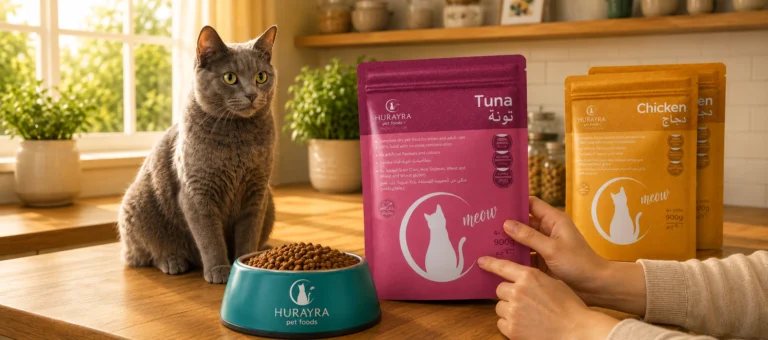
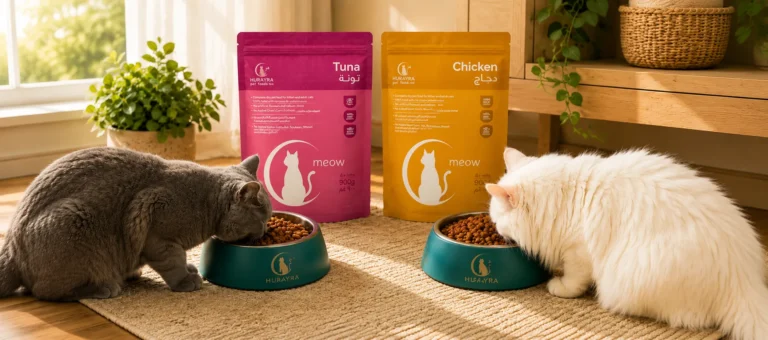
Tuna and Chicken Combo
Subscribe & Save 25%
Frequently Asked Questions
Most cats on a complete, meat-based diet do not need one. Supplementing without a vet’s advice risks toxicity, since vitamin A accumulates in the body over time.
Yes, chicken is a natural source of retinol, the form of vitamin A cats can actually absorb. It is one of the most practical ways to meet their daily needs through food.
Check that the food meets AAFCO nutritional standards and lists real animal protein as the main ingredient. Foods built on meat rather than plant fillers are far more likely to deliver usable vitamin A.
Not necessarily, though indoor cats can’t supplement their diet through hunting, so they rely entirely on what’s in the bowl. This makes the nutritional completeness of their food more important, not the addition of extra supplements on top.
Feeding large amounts of raw liver daily over a long period can lead to vitamin A toxicity, which affects the joints and bones. Offering it occasionally as part of a varied diet is fine, but it should not be a daily staple.

One comment
Comments are closed.