
 Written by Uzma Aslam
Vitamins for Cats: A to Z Guide – What Your Cat Actually Needs in 2026
Most cat owners think about protein first. Vitamins rarely get the same attention, yet deficiencies are one of the most common and quietly damaging nutritional problems in domestic cats.
This guide covers what vitamins cats actually need, what each one does, the signs that something is missing, and how diet fits into the picture.
Why Vitamins Matter More Than Most Owners Think
Vitamins don’t build muscle or provide energy directly. They regulate the processes that do. Without the right balance, a cat can eat plenty of food and still develop health problems over time.
The challenge is that cats can’t manufacture most vitamins themselves. Unlike humans, they can’t convert beta-carotene into Vitamin A, for instance. They rely entirely on what’s already present in their food. This is why the quality of a cat’s diet has a more direct impact on vitamin status than it does in many other animals.
It’s also why cheap, filler-heavy foods often fall short. Bulking out a recipe with grain and starch doesn’t just reduce protein. It dilutes the micronutrient profile too. What looks like a generous portion can still leave a cat nutritionally underfed.
The Vitamins Cats Genuinely Need
Vitamin A is non-negotiable for cats. It supports vision, immune function, skin health, and cell growth. Cats need preformed Vitamin A from animal sources, specifically liver and fish. Plant-based sources don’t work for them. A diet built around named animal protein naturally delivers this. One that leans on plant fillers often doesn’t.
Vitamin D works differently in cats than in humans. Cats can’t synthesise it through sun exposure the way we can. They need it from food. It regulates calcium and phosphorus absorption, which means it directly affects bone density, muscle function, and teeth. Deficiency is slow to show up but significant when it does.
Vitamin E is the body’s main fat-soluble antioxidant. It protects cell membranes from oxidative damage and supports immune response. Cats eating high-fat diets, including fish-heavy recipes, need enough Vitamin E to counterbalance the oxidative load. The two need to be in proportion. Hurayra’s recipes include Vitamins A, D, and E alongside named animal protein, which is the combination most cat nutritionists recommend as a baseline.
B vitamins cover a large group. B1 (thiamine) is critical for nerve function. B3 (niacin) must come from animal tissue. B12 supports the nervous system and red blood cell production. Cats have higher requirements for most B vitamins than dogs or humans, partly because they excrete them faster. Cooked and processed foods can degrade B vitamins significantly, which is one reason why raw or lightly processed diets tend to preserve them better.
Vitamin K is required for blood clotting and bone metabolism. Cats typically produce enough through gut bacteria and dietary intake from meat. It’s rarely deficient in cats on a meat-based diet.
Signs A Cat May Be Vitamin Deficient
Vitamin deficiencies rarely announce themselves immediately. They build over months.
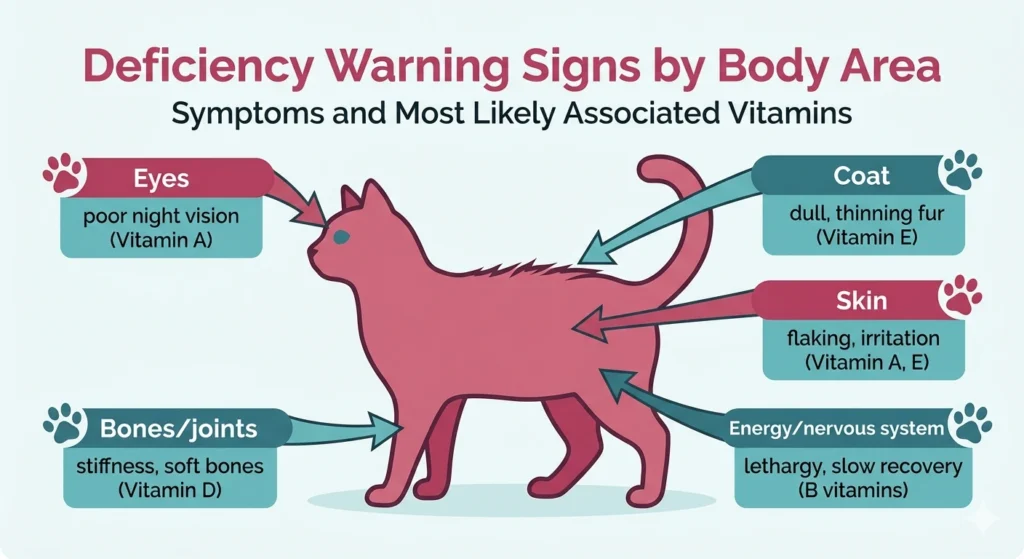
The most common signs worth paying attention to:
- Dull, dry, or thinning coat
- Flaky or irritated skin
- Poor night vision or sensitivity to light (often linked to Vitamin A)
- Lethargy and low energy
- Slow recovery from minor illness
- Dental issues or soft bones in younger cats
None of these are definitive on their own. But if several appear together, diet is worth examining before anything else. A vet can test for specific deficiencies if the pattern is unclear. The cat care section covers broader health signs across life stages, which can help owners spot patterns early.
Do Cats Need Vitamin Supplements?
For most cats eating a nutritionally complete diet, the answer is no.
Supplements are sometimes necessary after illness, surgery, or for cats with absorption issues. Pregnant or nursing cats may need specific support. Senior cats can also benefit from targeted supplementation as digestive efficiency declines.
Outside those situations, supplementing unnecessarily can cause harm. Vitamin A toxicity, for example, is a real risk. It accumulates in liver tissue and causes joint pain, bone spurs, and eventually organ damage. This is precisely why over-supplementing with liver or Vitamin A capsules on top of a complete diet is a bad idea, even with good intentions.
The most sensible baseline for any healthy adult cat is a complete, balanced diet that already includes the right vitamins at the right levels. Supplements should be a specific response to a specific shortfall, not a routine addition.
Where Cats Actually Get Their Vitamins From
The primary source should always be food. Cats evolved to extract vitamins from animal tissue, organ meat, and fat. This is why grain-free, meat-led recipes tend to deliver a more complete vitamin profile than grain-heavy alternatives.
Vitamin content in food depends on three things: what ingredients are used, how they’re sourced, and how they’re processed. High-heat manufacturing can degrade heat-sensitive vitamins like B1 and C. A well-formulated dry food will either use lower processing temperatures or add vitamins post-production to compensate.
Fat-soluble vitamins (A, D, E, K) are absorbed alongside dietary fat. This means cats need adequate fat in their diet not just for energy, but to absorb these vitamins properly. It’s one more reason why low-fat or fat-restricted diets can unintentionally create deficiencies even when vitamins are present on the label.
The relationship between fat and vitamin absorption is also why omega fatty acids matter beyond their direct benefits. Without the right fat profile in the diet, the fat-soluble vitamins a cat consumes may not be fully absorbed regardless.
What To Look For On A Cat Food Label
The label tells you more than most owners realise, if you know what to look for.
Named vitamins in the guaranteed analysis or additives section are a good sign. “Vitamin A (Retinol)”, “Vitamin D3 (Cholecalciferol)”, and “Vitamin E (Alpha-Tocopherol)” listed with specific amounts indicate the manufacturer has formulated deliberately, not just met a minimum threshold.
A named animal protein as the first ingredient is also relevant here. It indicates the recipe is built around the natural vitamin sources cats use most efficiently.
Vague terms like “nutritional additives” without specifics, or a long list of synthetic supplements compensating for a low-meat base, are worth questioning.
Final Thoughts
Vitamins for cats aren’t complicated in principle. Cats need specific vitamins from animal sources, in proportions suited to an obligate carnivore. A well-formulated, meat-led diet covers most of that without owners needing to think about it daily.
Where it breaks down is when food quality is poor, processing strips nutrients out, or owners supplement without knowing what’s already in the bowl. Getting the foundation right matters more than adding anything on top.
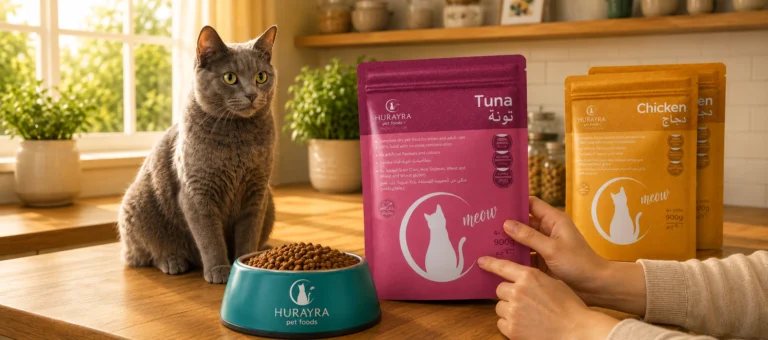
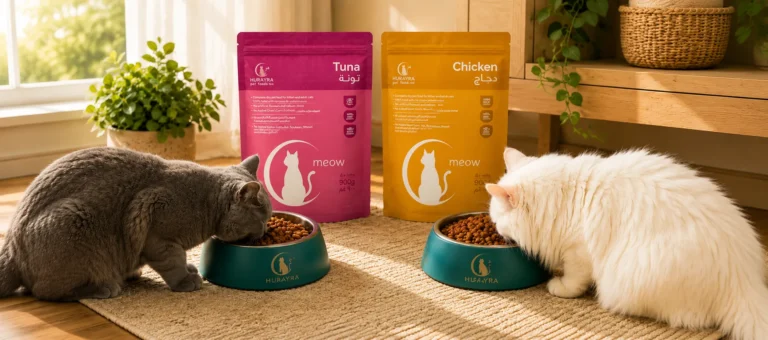
If you’re considering a food that already includes vitamins A, D, and E in a grain-free, high-protein recipe, Hurayra’s range is worth looking at as a practical starting point.
Tuna and Chicken Combo
Subscribe & Save 25%
Frequently Asked Questions
No. Human supplements are formulated for human body weight and metabolism, and some contain doses that are toxic to cats. Always use supplements specifically designed for cats, and only when a vet recommends them.
Check the ingredients list for named vitamins like Vitamin A (Retinol), Vitamin D3, and Vitamin E (Alpha-Tocopherol) listed with specific amounts. A complete, balanced food with a named meat as the first ingredient will typically cover your cat’s daily requirements.
Vitamin A and B1 (thiamine) deficiencies are among the most frequently seen, usually in cats eating poor-quality or heavily processed food. A meat-led diet naturally provides both, which is why food quality matters more than supplementation for most healthy cats.
Not necessarily, though indoor cats can’t supplement their diet through hunting, so they rely entirely on what’s in the bowl. This makes the nutritional completeness of their food more important, not the addition of extra supplements on top.
Yes, particularly fat-soluble vitamins like A and D, which accumulate in the body rather than being excreted. Over-supplementing with liver, fish oil, or Vitamin A capsules on top of a complete diet can cause toxicity over time. Water-soluble B vitamins carry less risk but excess is still unnecessary

2 comments
Comments are closed.