Written by Uzma Aslam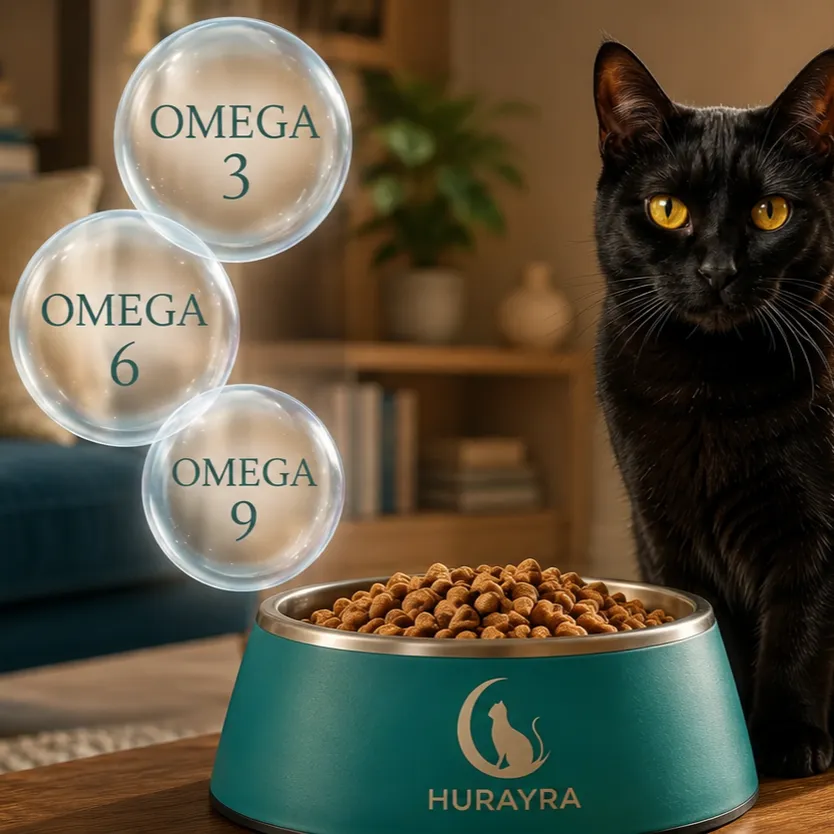
Most cat owners think about protein first. They should. But the second question, one fewer people ask, is where the fat comes from and whether it’s doing anything useful.
Omega fatty acids are listed on almost every premium cat food bag. They appear in the small print, sometimes in the guaranteed analysis, occasionally called out on the front panel as a selling point. What they rarely come with is a clear explanation of what each one actually does, how they work together, and why the source matters as much as the presence.
This article covers biology plainly. By the end, you’ll know exactly what omega 3, 6 and 9 fatty acids do inside your cat’s body, what to look for on a label, and which questions are worth asking of any food you’re considering, including your current one.
Why Cats Cannot Produce Essential Fatty Acids on Their Own
Cats are obligate carnivores. Their digestive systems evolved to extract everything they need from animal tissue, which means they have lost certain metabolic pathways that dogs and humans retain. One consequence of this is that cats cannot synthesise two critical fatty acids in meaningful quantities: linoleic acid (an omega 6) and alpha-linolenic acid (an omega 3). These must come from food.
There is a second, more specific gap. Cats have very limited ability to convert plant-derived omega 3 into the forms their bodies actually use: EPA (eicosapentaenoic acid) and DHA (docosahexaenoic acid). A human eating flaxseed oil can convert a proportion of it into EPA and DHA. A cat largely cannot. This is why the source of omega 3 in cat food is not a minor detail, and it informs how Hurayra selects and declares every fat source in its dry cat food formulations.
FEDIAF, the European industry body that sets nutritional guidelines for companion animal feed, specifies minimum requirements for both linoleic acid and arachidonic acid (a long-chain omega 6) in adult cat food. These are not optional considerations. They are established nutritional requirements with defined minimum levels, because the consequences of deficiency in cats are well-documented: poor coat condition, compromised skin barrier function, and impaired reproductive health.
Understanding this biology is why the conversation about omega fatty acids in cat food is worth having properly.
What Omega 3 Does in a Cat’s Body
Omega 3 fatty acids have a well-established role in reducing inflammation at the cellular level. In cats, EPA and DHA are the forms that matter. DHA in particular is concentrated in neural tissue and the retina, since brain and eye development in early life depend on it, which is why it appears in kitten formulations. EPA plays a role in managing inflammatory responses, which has practical relevance for cats with joint stiffness, skin sensitivities, or persistent coat problems.
The two most reliable dietary sources of EPA and DHA are marine fish and fish oil. Salmon, mackerel, anchovy and tuna are commonly used in commercial cat food. Tuna, in particular, delivers a meaningful omega 3 profile when used as a primary protein source rather than a flavouring agent.
A cat eating food where tuna appears as the first or second named ingredient is getting a meaningfully different omega 3 intake than one eating food where fish is listed mid-label as “fish meal” or “fish derivatives”, categories that offer no transparency about species, processing, or fat composition.
Omega 3 is also the fatty acid most affected by processing temperature. High-heat extrusion, used in most dry kibble production, can degrade omega 3 content if the formulation does not account for it. Foods that list omega 3 in their guaranteed analysis have typically either used lower-temperature processing, added omega 3 post-extrusion, or used stabilised fish oil to compensate for heat loss.
What Omega 6 Does in a Cat’s Body
Omega 6 is more abundant in most commercial cat foods than omega 3, partly because it is easier to source and more heat-stable. The key omega 6 fatty acids for cats are linoleic acid and arachidonic acid.
Linoleic acid supports skin barrier integrity and coat condition. A deficiency shows up visibly: dull fur, increased shedding, dry or flaky skin. Arachidonic acid, which cats cannot synthesise from linoleic acid the way other mammals can, must come directly from animal fat. This is another reason plant-heavy diets are nutritionally inappropriate for cats. They can provide linoleic acid, but not arachidonic acid.
Chicken fat and chicken liver are reliable sources of arachidonic acid. Tuna and other oily fish also contribute. Formulations that rely primarily on plant oils for their omega 6 content may meet linoleic acid requirements while falling short on arachidonic acid, which matters specifically in cats. Hurayra’s chicken and tuna dry food uses animal fat as the primary omega 6 source, not plant oil substitutes.
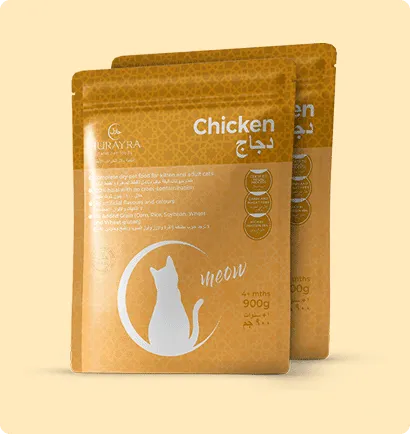
Chicken Cat Food
Subscribe & Save 25%
The frequently cited concern about omega 6 relates to balance rather than quantity. High omega 6 relative to omega 3 can promote a pro-inflammatory state. This is not a reason to avoid omega 6; it is a reason to ensure omega 3 intake is adequate alongside it.
What Omega 9 Does in a Cat’s Body
Omega 9 is classified as non-essential because cats can synthesise it in small amounts. It does not carry the same dietary urgency as omega 3 and omega 6. That said, it is not without function.
Oleic acid, the predominant omega 9, supports cell membrane health and has a mild role in managing inflammatory balance. It is found in chicken fat, some fish oils, and in olive oil, though olive oil is rarely used in commercial cat food at meaningful levels.
The practical reason omega 9 appears on cat food labels alongside omega 3 and omega 6 is partly marketing convention and partly because many natural fat sources contain all three in combination. A food listing “omega 3, 6 and 9” is telling you something about its fat profile, though the most nutritionally significant claims are the omega 3 and omega 6 content.
Omega 3, 6 and 9 in Balance: What the Ratio Actually Means
Balance is used loosely in pet nutrition marketing. What it actually refers to, in the context of fatty acids, is the ratio of omega 6 to omega 3.
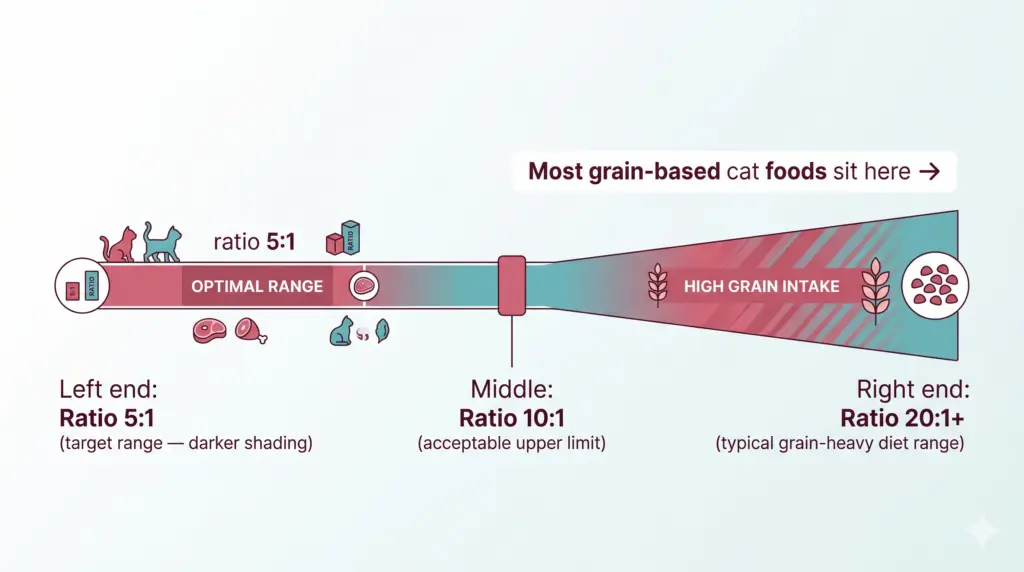
A ratio heavily weighted toward omega 6, as is common in grain-based diets that rely on vegetable oils, can over time contribute to a low-grade inflammatory state. The generally accepted target for cats is a ratio somewhere between 5:1 and 10:1 (omega 6 to omega 3). Most commercially available cat foods sit above this. Many sit considerably above it.
The fix is not to remove omega 6; it is to ensure omega 3 is present at a sufficient level, from a source that delivers EPA and DHA rather than plant-derived precursors that cats cannot efficiently convert.
This is where named protein sources become relevant. A food where salmon or tuna is the first ingredient, combined with a specific fish oil, will typically deliver a more favourable fatty acid ratio than a food where the fat profile is unspecified. It is also why Hurayra’s grain-free, filler-free formulation removes the cereal and plant ingredients that tend to skew the omega balance unfavourably.
How to Read a Cat Food Label for Omega Fatty Acids
The label tells you more than most people use it for. A few practical checks:
Check the first two ingredients. If a named animal protein such as chicken, tuna or salmon appears first, the food has a meaningful animal fat base. If cereals, grains, or plant meals appear in the first two positions, the omega profile is likely to be heavily weighted toward omega 6 from plant sources.
Look for a guaranteed analysis that specifies omega content. Some labels list crude fat only. Premium formulations will break out omega 3 and omega 6 percentages. When you see these stated, it is a sign the manufacturer has tested them and is confident enough to declare them.
Distinguish fish oil from fish meal. Fish meal contributes protein and some fat, but the omega 3 content is variable and often degraded by the rendering process. Specifically listed fish oil, such as salmon oil or anchovy oil, is a more reliable omega 3 source.
Treat “fish and fish derivatives” with appropriate caution. This is a catch-all category. It could mean anything from quality white fish to processed fish by-products with negligible omega content. Named species give you something to evaluate; generic categories do not.
Hurayra’s formulations include 35% protein from named sources, chicken and tuna, alongside specified omega 3, 6 and 9 content, with no grain, wheat, or soy. Every ingredient serves a function, which is why the full ingredient breakdown lists each component with its nutritional purpose.
Feeding Consistency and What It Has to Do with Omega Fatty Acids
Fatty acids accumulate and are depleted over weeks, not days. A cat eating a nutritionally balanced food for two weeks and then switching to something with a different fat profile for two weeks has, in effect, been on neither diet. The physiological benefits of a well-balanced omega intake only accrue with consistency.
This is one practical argument for subscription feeding. Monthly delivery of the same formulation removes the variation that comes from buying different products opportunistically, or switching based on availability. Hurayra’s Subscribe & Save option, available when ordering direct, gives 25% off regular deliveries and is built around exactly this logic: consistent nutrition at a lower ongoing cost.
What to Take Away from This
Omega 3, 6 and 9 fatty acids are not interchangeable, and the label claim alone tells you very little without the source. What matters is whether the omega 3 is marine-derived and present in a form cats can use, whether arachidonic acid is covered by named animal fat, and whether the overall ratio is reasonable.
The best indicator of a well-formulated food is named proteins, declared omega content in the guaranteed analysis, and a fat profile drawn from species-appropriate sources rather than plant oils filling out the fat percentage.
Cats that eat well at this level show it: in coat condition, in energy, in skin health, and in the absence of the chronic low-grade issues that often get attributed to age or genetics rather than diet.
Hurayra’s chicken and tuna recipes are formulated with this in mind: 35% named protein, specified omega 3, 6 and 9 content, grain-free and soy-free, with HMC-certified ingredient traceability. Available in Morrisons and direct online.
Tuna and Chicken Combo
Subscribe & Save 25%
Frequently Asked Questions
They are types of dietary fat that serve distinct functions. Omega 3 (primarily EPA and DHA from fish) supports skin, coat, eye health and inflammation management. Omega 6 (including arachidonic acid from animal fat) maintains skin barrier function and cell integrity. Omega 9 is non-essential but supports general cell health. All three are found in quality cat foods that use named animal protein and fish oil as primary fat sources.
Yes, when sourced appropriately. Omega 3 and omega 6 are essential: cats cannot produce adequate quantities and must obtain them from food. The source matters more than the label claim. Marine-derived omega 3 is usable by cats in a way that plant-derived omega 3 is not.
A ratio of omega 6 to omega 3 between 5:1 and 10:1 is generally considered appropriate for cats. Many commercial foods fall outside this range due to reliance on plant oils or cereal-based ingredients. Foods built around named fish and animal fat tend to deliver a more favourable ratio naturally.
Yes. Rotating between the two or mixing them is a reasonable approach. The Combo Pack is designed for owners who want to introduce both flavours or maintain variety. Nutritionally, the profiles are close enough that alternating does not disrupt balance.
Fish oil provides EPA and DHA directly, the omega 3 forms cats need. Plant oils such as flaxseed, canola and sunflower provide ALA, a precursor that cats cannot efficiently convert into EPA and DHA. For cats specifically, fish oil is a more reliable omega 3 source than any plant oil.
Not typically, if the food already specifies omega 3 and omega 6 content from named marine sources. Unnecessary supplementation on top of a balanced diet can disrupt the omega 3 to omega 6 ratio. If you’re considering supplementation for a specific health concern, check the food’s guaranteed analysis first and speak with a vet if needed.