Written by Uzma Aslam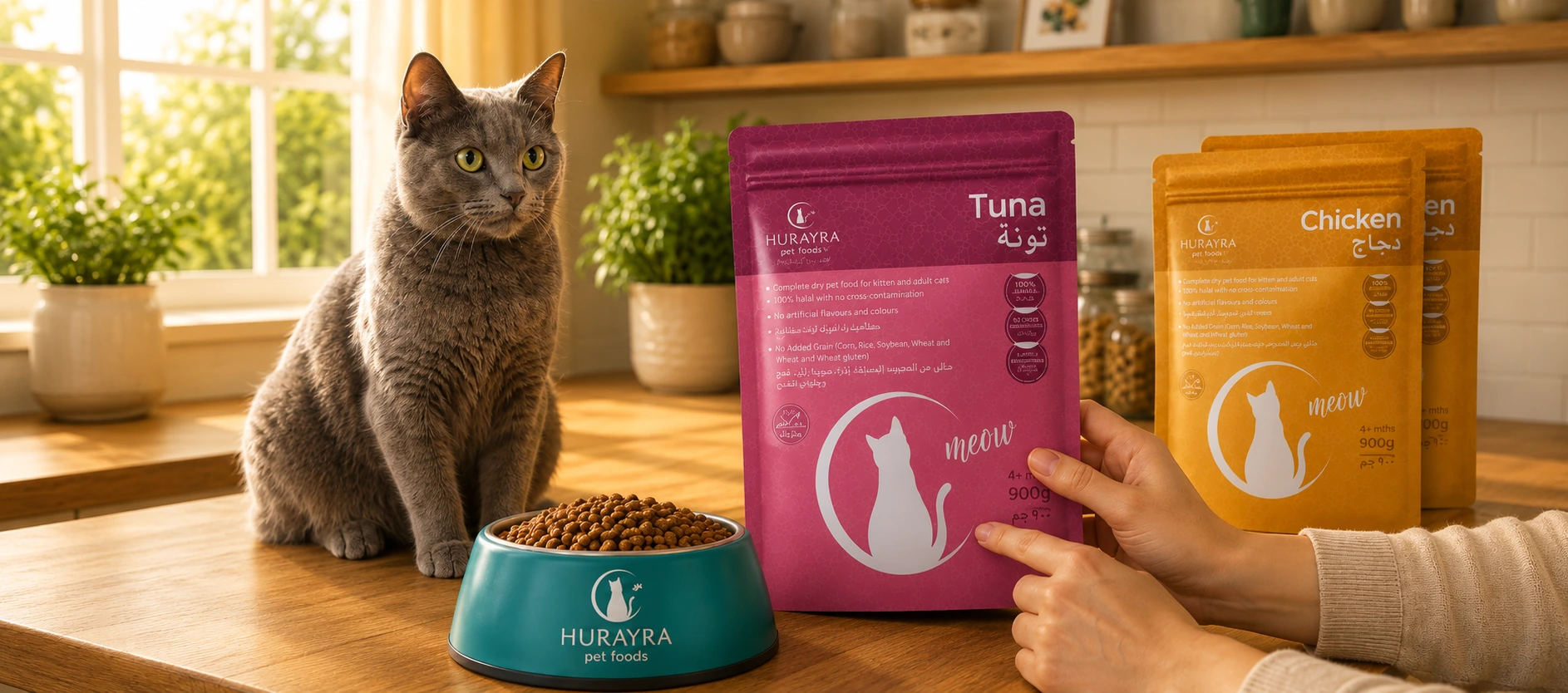
Vitamin E for Cats: The Antioxidant Superpower Already in Your Cat’s Bowl
Your cat’s food is doing a lot of quiet work you might not notice. Every meal delivers nutrients that keep their immune system running, their coat looking healthy, and their cells protected from daily wear.
Vitamin E is one of those nutrients. It rarely gets the attention it deserves, but it plays a bigger role in your cat’s health than most people realise.
Here’s what you actually need to know.
What Vitamin E Does In A Cat’s Body
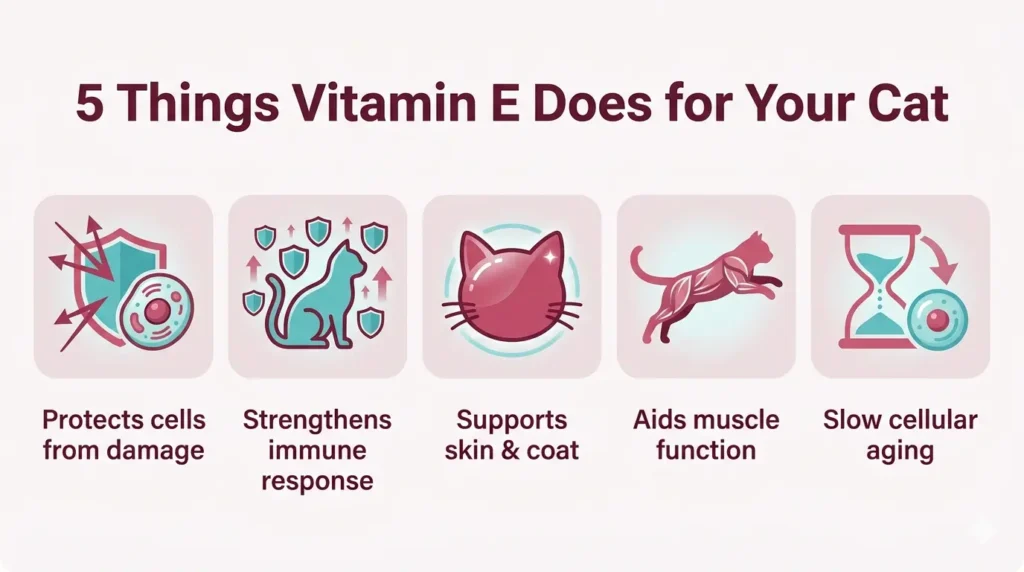
Vitamin E is a fat-soluble antioxidant. That means it dissolves in fat, gets stored in your cat’s tissues, and works to neutralise something called free radicals.
Free radicals are unstable molecules that form naturally during normal metabolism. Left unchecked, they damage cells, accelerate aging, and weaken the immune system. Vitamin E acts as a kind of cellular shield, catching and neutralising those molecules before they cause harm.
Beyond that, it plays a direct role in immune function. Cats with adequate vitamin E tend to have stronger responses to illness and recover more quickly. It also supports healthy skin cell turnover, which shows up in coat quality over time.
If you’re curious about how vitamin E fits alongside other nutrients, our complete vitamins guide for cats covers the full picture in plain language.
Signs Your Cat May Not Be Getting Enough
Vitamin E deficiency in cats is often subtle. It doesn’t show up suddenly or dramatically. It tends to build slowly, which is why it gets missed.
A few things to watch for:
Dull or dry coat. This is usually the first visible sign. If your cat’s fur has lost its shine and their skin seems flaky or irritated, nutrition is worth looking at.
Muscle weakness. Vitamin E supports healthy muscle tissue. Cats low in this nutrient may seem less active, less coordinated, or reluctant to jump and climb.
Slow recovery from illness. A weakened immune system means slower healing. If your cat keeps picking up minor infections or seems to take longer than expected to bounce back, it may point to a nutrient gap.
Eye and vision changes. In more severe or long-standing cases, vitamin E deficiency has been linked to retinal degeneration. This is rare, but worth knowing.
It’s also worth noting that vitamin E doesn’t work in isolation. Low levels of vitamin D can compound these symptoms, making it harder to identify the root cause.
Where Vitamin E Comes From In Cat Food
Cats can’t produce vitamin E on their own. They rely entirely on their diet to get it.
The best natural sources are animal-based, which aligns well with what cats actually need. Oily fish like tuna and salmon are particularly rich in vitamin E. Chicken and other poultry meals also contribute, especially when they include natural fats.
This is one reason why the quality and sourcing of ingredients matters. A food built around real animal protein will deliver feline vitamin E more reliably than one padded with fillers and plant-based substitutes.
Hurayra’s dry cat food uses real poultry meal and tuna, and includes added vitamin E as part of its formulated nutrition. It’s one of several reasons why grain-free, high-protein diets tend to support better nutrient absorption overall.
How Vitamin E Works With Other Nutrients
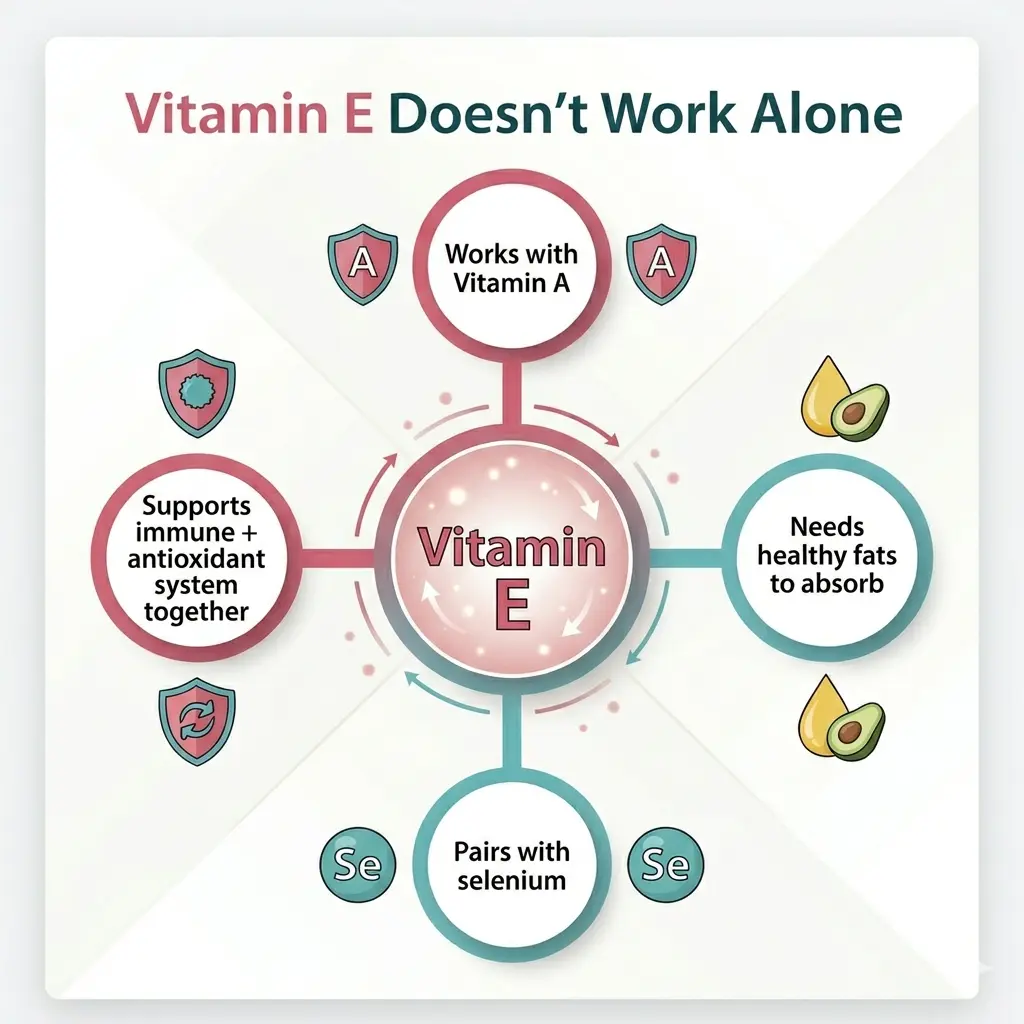
Vitamin E doesn’t work alone. It’s most effective when it’s part of a broader nutritional picture.
It works closely with vitamin A, which is another fat-soluble vitamin that supports vision, immune function, and skin health. The two complement each other, and deficiency in one can affect how the other performs.
Vitamin E also interacts with selenium, a trace mineral that supports antioxidant function. And because it’s fat-soluble, it absorbs better when your cat’s diet includes adequate healthy fats, like the omega-3 and omega-6 found in fish-based foods.
This is why looking at individual vitamins in isolation only tells part of the story. What cats need is a consistently balanced diet that delivers these nutrients together, in the right proportions.
What To Actually Look For On A Cat Food Label
You don’t need to become a nutritionist to check whether your cat’s food contains vitamin E. A few simple things to look for:
Look for “vitamin E supplement” or “alpha-tocopherol” in the ingredient list. Both indicate added vitamin E.
Check that the food is built around real animal protein, not predominantly plant matter or cereals. Vitamin E from animal sources is more bioavailable for cats.
Avoid foods with vague ingredient descriptions like “meat and animal derivatives.” These are catch-all terms that tell you very little about quality or nutritional content.
At Hurayra, every ingredient is traceable. The food is free from artificial additives, grain, wheat, and soy, and includes vitamins A, D, and E as part of its nutritional formulation. If you’d like to explore what goes into it, the product page has the full breakdown.
Conclusion
Vitamin E is not a supplement you need to add separately. For most cats on a quality diet, it’s already there, working quietly in the background to protect their cells, support their immune system, and keep their coat in good shape.
What matters is that the food delivering it is actually good. Real animal protein, clean ingredients, and a properly formulated recipe make the difference.
If you’re reviewing what your cat eats or thinking about making a switch, our cat food transition guide walks you through how to do it without disrupting their digestion.
Good nutrition doesn’t have to be complicated. It just has to be consistent.
Tuna and Chicken Combo
Subscribe & Save 25%
Frequently Asked Questions
Most adult cats need around 30 IU of vitamin E per kilogram of food, according to AAFCO guidelines. A complete, balanced cat food should already meet this without any extra supplementation.
It’s not recommended. Human supplements are dosed for people and can cause toxicity in cats if given incorrectly. If you suspect a deficiency, speak to your vet before adding anything to your cat’s diet.
Foods made with oily fish like tuna or salmon tend to be the richest natural sources. Poultry-based recipes with real animal fat also contribute meaningful amounts of feline vitamin E.
Yes. Vitamin E is fat-soluble, meaning it builds up in the body rather than being flushed out. Excess intake over time can interfere with other fat-soluble vitamins and cause health issues.
It is more common than most owners expect, particularly in cats fed low-quality or highly processed diets. Cats fed predominantly raw fish without balance are also at risk, as raw fish can deplete vitamin E levels.