Written by Uzma Aslam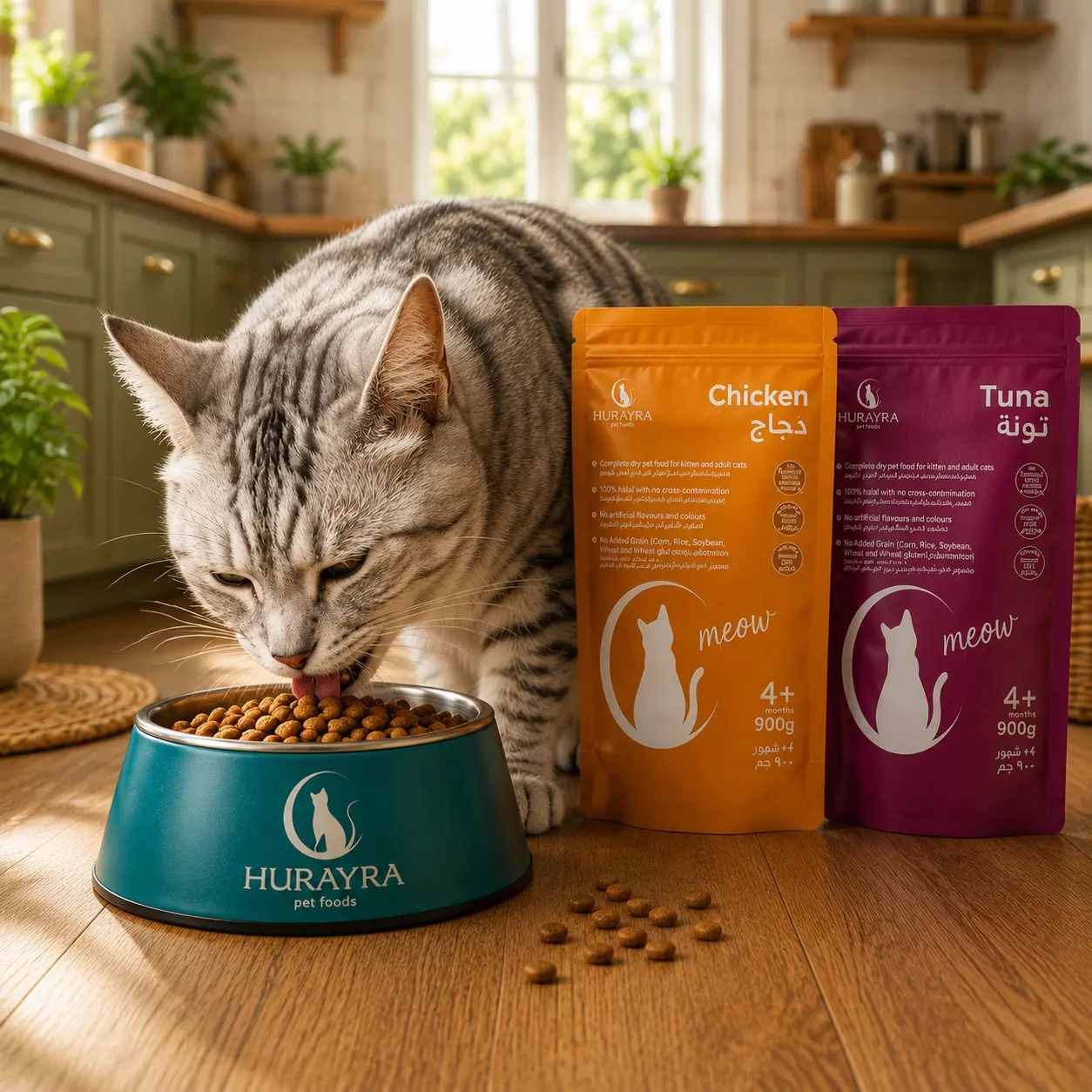
Is Grain-Free Cat Food Safe? Separating Fact from Fear in 2026
If you’ve ever Googled grain-free cat food, you’ve probably found some alarming headlines. Heart disease. FDA warnings. Nutritional deficiencies. It’s enough to make any cat owner second-guess the food in their pet’s bowl.
The truth is more nuanced than the headlines suggest. This article breaks down what the research actually shows, why cats are different from dogs in this debate, and what to look for when choosing a grain-free food your cat can thrive on.
Why Grain-Free Cat Food Sparked a Controversy
The alarm bells started in 2018, when the FDA began investigating a possible link between grain-free diets and dilated cardiomyopathy (DCM), a serious heart condition, in dogs. The report made headlines fast, and cat owners understandably panicked.
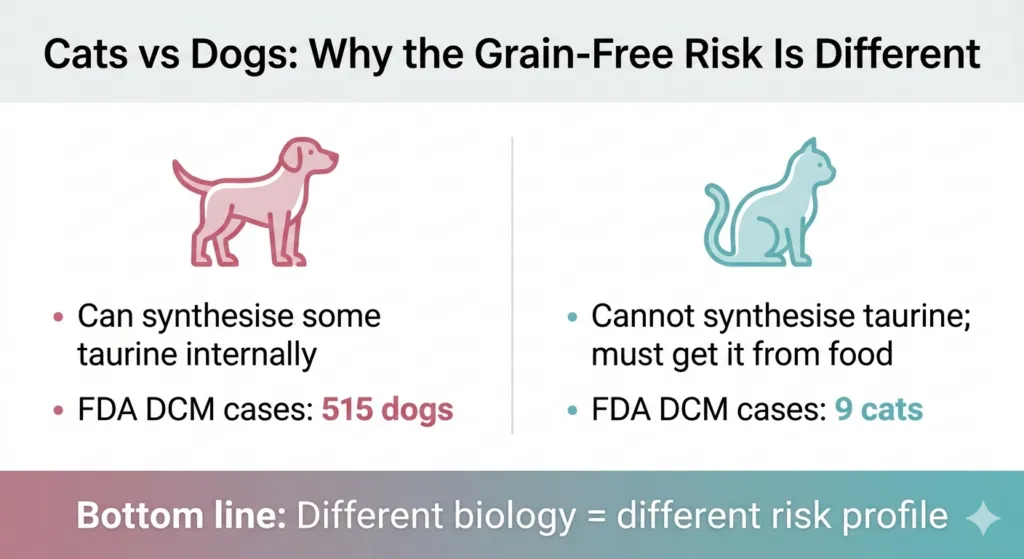
Here’s what often gets lost in the noise: the FDA’s investigation was overwhelmingly focused on dogs. Of the 524 reported cases in the original study, 515 were dogs. Only nine were cats. That distinction matters enormously, because cats and dogs are not nutritionally the same animal.
What the Research Actually Says About Cats
Cats are obligate carnivores. They evolved to run on animal protein, not carbohydrates. Grains aren’t toxic to cats, but they’re also not something a cat’s digestive system is built around. Unlike dogs or humans, cats struggle to extract much nutritional value from plant-based carbohydrates.
A 2025 review published in the journal Animals looked at grain-free pet foods across both cats and dogs. It found that grain-free formulas often delivered higher protein and fat content, which is generally closer to what cats actually need. The same review noted that concerns about legume-heavy formulas were more significant in dogs, not cats.
Current evidence doesn’t establish a link between grain-free diets and heart disease in healthy cats. What it does show is that poorly formulated food, grain-free or otherwise, can leave cats short on nutrients. The grain-free label itself isn’t the problem. The ingredients behind it can be.
The Taurine Question: What You Need to Know
Taurine is an amino acid that cats cannot produce on their own. They must get it directly from their food, every day. Without enough taurine, cats can develop heart problems and serious vision loss over time.
Before 1987, DCM was actually common in cats, and it was almost always traced back to taurine deficiency in commercial cat food. Once manufacturers were required to include taurine, the condition became rare.
The concern with some grain-free diets is that they replace grains with large amounts of legumes (peas, lentils, chickpeas) as a carbohydrate filler. These legumes may interfere with taurine absorption in dogs. In cats, the effect appears to be much smaller, partly because cat food is already required to supplement taurine directly. But the lesson holds: a grain-free food loaded with legumes instead of meat isn’t a step forward for your cat. It’s just trading one filler for another.
A grain-free food built around real animal protein (chicken, tuna, fish) is a very different thing to one padded with peas and lentils. Understanding what makes a grain-free formula actually grain-free (and not just grain-replaced) is worth the five minutes.
The Real Benefits of Grain-Free for Cats
When grain-free food is done right, there are real, practical reasons many cats do well on it.
Cats with sensitive stomachs often respond well to the removal of grains. Owners tend to notice firmer stools, less bloating, and fewer signs of gut discomfort. For cats with wheat or grain sensitivities specifically, going grain-free can make a visible difference to their coat and digestion within a few weeks.
Higher protein content is another benefit worth mentioning. Grain-free formulas tend to push more calories from protein and fat, which is closer to how cats are designed to eat. A cat eating food where the first ingredient is real chicken is getting nutrients in a form their body can actually use.
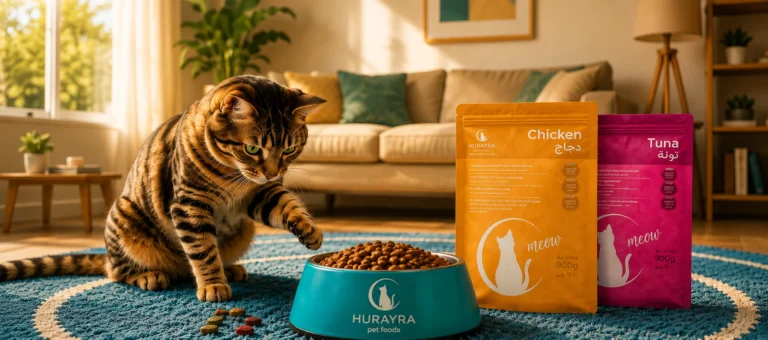
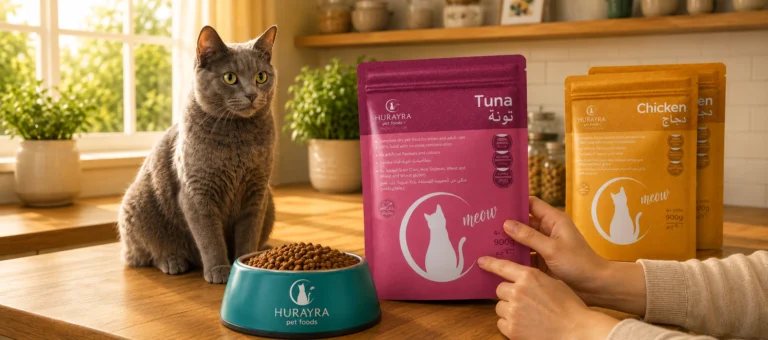
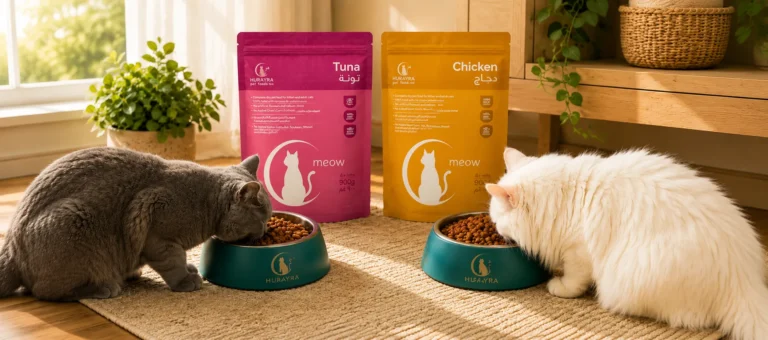
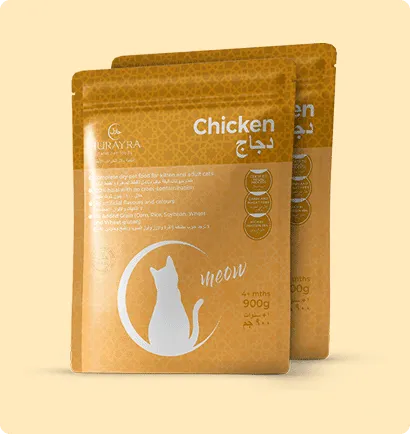
Hurayra’s range of grain-free dry cat food is formulated around 35% protein from real halal chicken and tuna, with no artificial additives, soy, or wheat. It’s a practical example of what grain-free looks like when built around a cat’s biology rather than marketing trends.
Chicken Cat Food
Subscribe & Save 25%
How to Spot a Well-Formulated Grain-Free Food
Not all grain-free foods are equal. Here’s what to look for on the label.
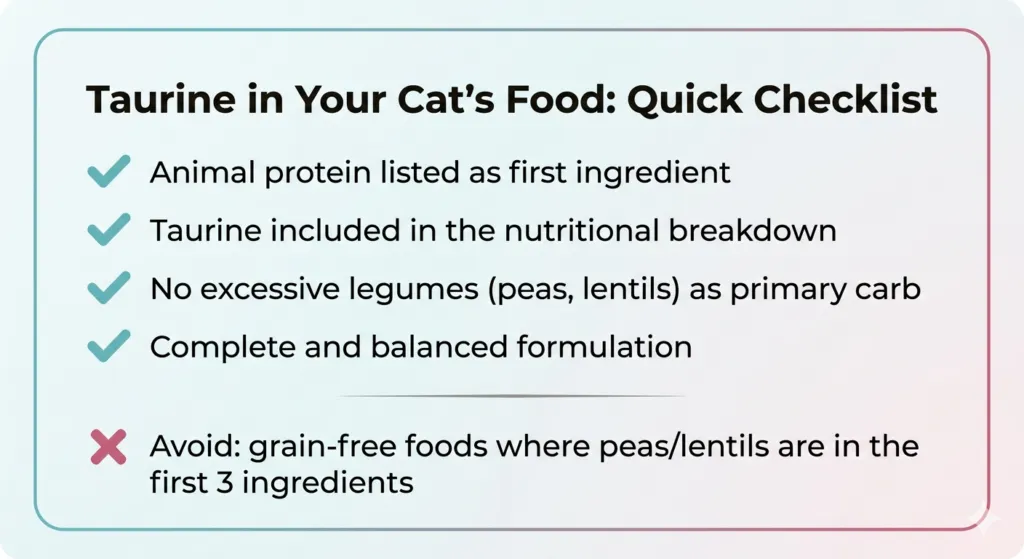
Meat first. The first ingredient should be an identifiable protein: chicken, tuna, or salmon. Not “meat derivatives” or “poultry meal” without any further detail.
Taurine on the label. It should appear in the guaranteed analysis or ingredients list. If you can’t find it, ask the brand directly.
Minimal legumes. Peas and lentils in small amounts are fine. If they appear in the first three ingredients, the food is likely using them as a main carbohydrate source rather than a minor addition.
No artificial fillers. Colours, preservatives, and synthetic additives have no business in a quality grain-free formula.
The Hurayra ingredients page covers exactly how their formulas are built. It’s a useful benchmark if you’re comparing products.
What Vets Say About Grain-Free Cat Diets in 2026
The short answer: most vets don’t have a blanket problem with grain-free food for cats. What they do emphasise is balance and formulation.
Veterinary nutritionists consistently stress that cats need taurine, high-quality animal protein, and a complete nutritional profile whether their food contains grains or not. The issue was never grains specifically. It was poorly balanced food wearing a grain-free label.
If your cat is healthy, eating well, and showing no signs of digestive or coat issues, the conversation with your vet doesn’t need to be urgent. If you’re considering switching, bring the label along and ask whether the formula meets AAFCO or FEDIAF standards for complete nutrition.
Conclusion
Grain-free cat food isn’t dangerous by definition. The science doesn’t support that conclusion especially for cats, who are biologically suited to a high-protein, low-carb diet anyway.
What matters is what replaces the grains. Real meat, adequate taurine, and a balanced formulation make the difference between food that genuinely supports your cat’s health and food that simply trades one shortcut for another.
If you’re looking for a grain-free option built around transparency and real ingredients, Hurayra’s halal cat food is worth a look with no fillers, no guesswork, and a clear ingredient list you can actually read.
Any questions about switching your cat’s diet? The team at Hurayra are happy to help.
Tuna and Chicken Combo
Subscribe & Save 25%
Frequently Asked Questions
For most healthy cats, yes. The key is formulation. A grain-free food built around real animal protein, with taurine listed in the ingredients, can be fed long-term without issue. Problems tend to arise with poorly balanced recipes that swap grains for large amounts of legumes rather than quality meat. If your cat is thriving on a grain-free diet, there’s no reason to switch.
Most vets don’t oppose grain-free diets outright. What they consistently emphasise is balance. A grain-free food that meets AAFCO or FEDIAF standards for complete nutrition is generally considered appropriate for healthy adult cats. If your cat has a specific health condition, it’s worth having a conversation with your vet before making any dietary changes.
The FDA’s investigation into heart disease (DCM) and grain-free diets was focused mainly on dogs. Of the hundreds of reported cases, only nine involved cats. Current research doesn’t establish a link between grain-free diets and DCM in healthy cats. Cats do need adequate taurine for heart health, which is why choosing a formula with named meat as the first ingredient matters.
Start with the ingredient list. Named animal protein (chicken, tuna, salmon) should come first. Taurine should appear in the nutritional breakdown. Avoid formulas where peas or lentils are listed in the top three ingredients, as this suggests they’re being used as a primary carbohydrate filler rather than a minor addition. No artificial colours, preservatives, or vague “meat derivatives” is a good sign too.
It can be. Cats with digestive sensitivities, or those who react to wheat or corn, often respond well to grain-free food. Owners commonly notice firmer stools, less bloating, and improved coat condition within a few weeks of switching. That said, not every cat needs a grain-free diet. If your cat is doing well on their current food, a change isn’t necessarily needed.