Written by Uzma Aslam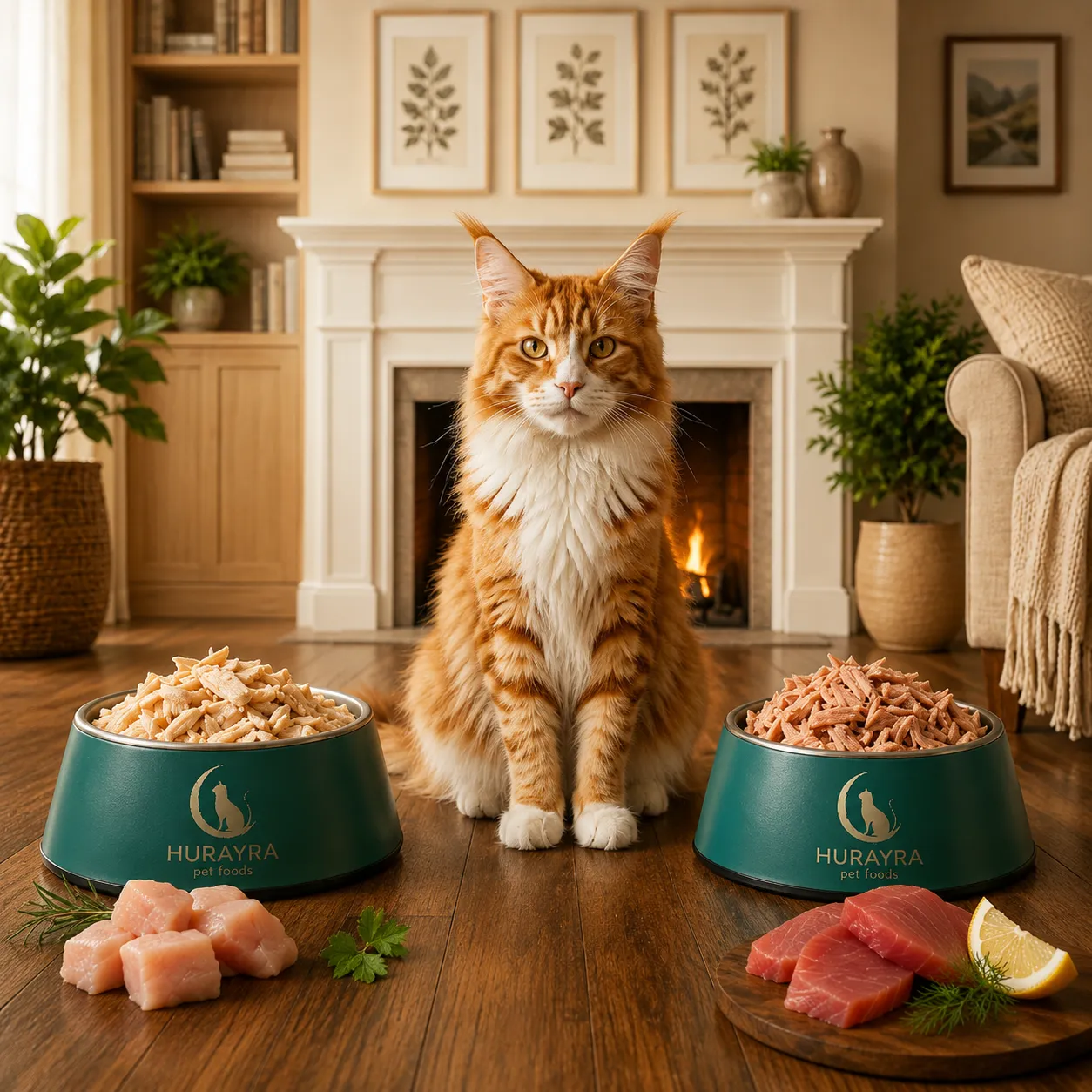
Chicken vs Tuna: Which Hurayra Flavour Is Right for Your Cat?
Most cats will eat what you put in front of them. The question is whether what you put in front of them is doing them any good.
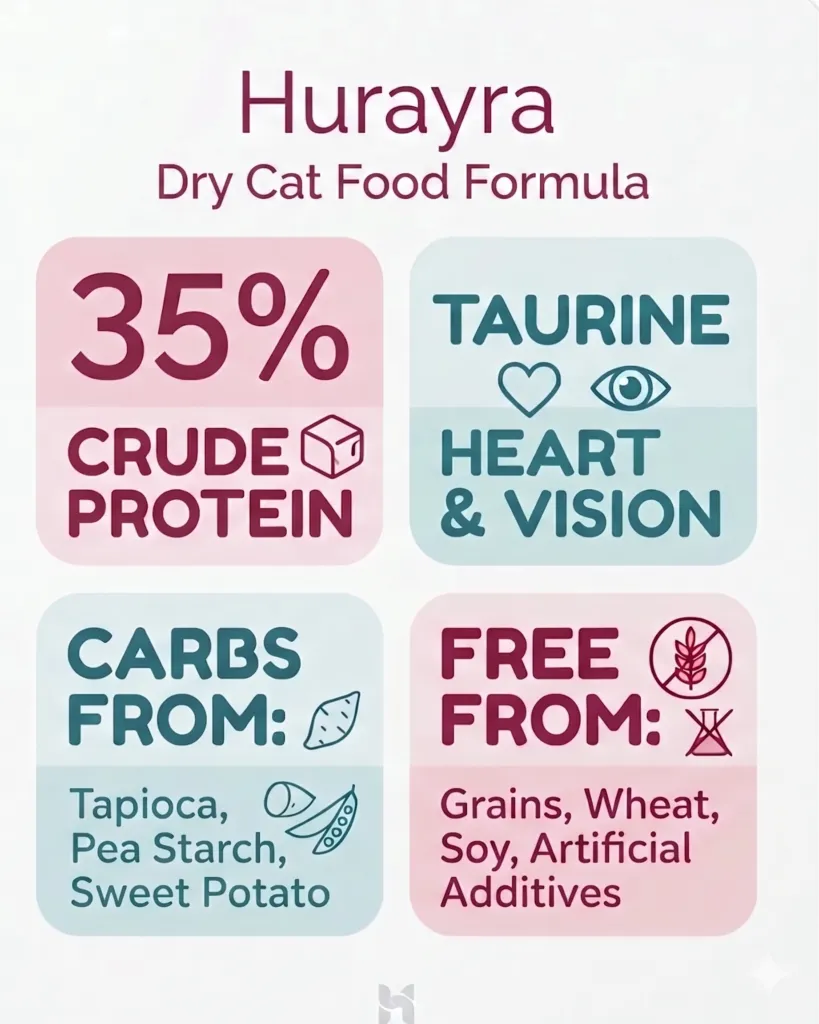
Choosing between Hurayra’s Chicken and Tuna recipes is not complicated, but it is worth doing thoughtfully. The two formulas share the same nutritional foundation: 35% crude protein, grain-free, wheat-free, soy-free, HMC-certified, and suitable for cats from four months. The differences are real, and they matter for specific cats in specific situations.
This guide explains what each flavour delivers, which cats each tends to suit, and how to make the decision without second-guessing yourself. Whether you’re feeding for the first time or considering a switch, understanding the Chicken vs Tuna Cat Food comparison gives you a clearer picture of what you’re choosing and why.
What Cats Actually Need From Their Food
Before comparing flavours, it helps to understand what makes a formula nutritionally sound in the first place.
Cats are obligate carnivores. They cannot synthesise certain amino acids from plant sources the way omnivores can. Taurine, for instance, is essential for cardiac function and healthy vision in cats, and it must come from animal tissue. This is not a nutritional preference. It is a physiological requirement.
FEDIAF, the European body that sets nutritional standards for pet food, recommends a minimum of 25% crude protein on a dry matter basis for adult cats. Both Hurayra formulas sit at 35%, comfortably above that threshold. That margin supports lean muscle maintenance, immune function, and sustained energy across life stages.
The other thing to check is the ingredient list. The first three ingredients tell you what a food is actually made of, because ingredients are listed in descending order by weight. If animal protein leads, chicken, tuna, fish, the formula is protein-led. If the first entries are “cereals,” “vegetable protein extracts,” or “meat and animal derivatives,” you are looking at a filler-heavy product regardless of what the packaging claims.
What Hurayra’s Chicken Recipe Delivers
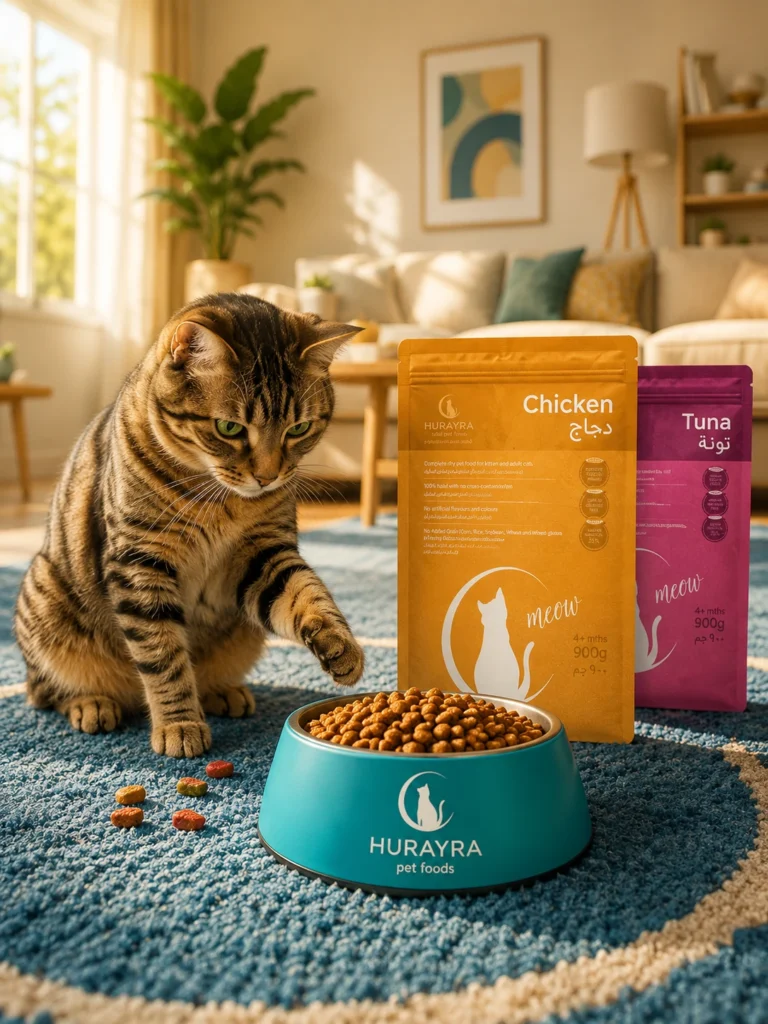
Chicken is the more commonly accepted protein among cats, including those with no prior history of fish-based feeding. For cats transitioning from a mainstream dry food, chicken is the lower-friction starting point.
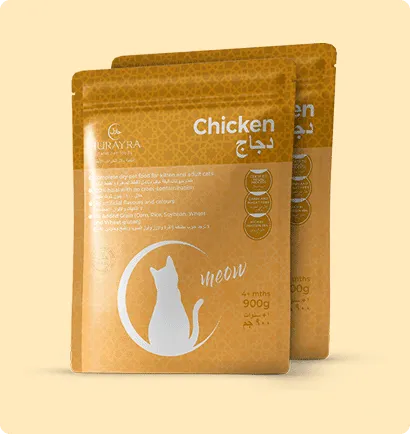
The Hurayra Chicken recipe uses chicken as the primary named protein source. It contains essential taurine, the amino acid cats cannot produce in sufficient quantities themselves, making it a complete daily feed in the truest sense. Carbohydrate sources are limited to tapioca, pea starch, and sweet potato powder, all of which provide sustained energy without the digestive disruption associated with wheat or corn.
The chicken formula tends to suit:
- Cats with no current protein preferences established
- Kittens (suitable from four months) being introduced to dry food for the first time
- Cats with a history of sensitivity to fish-based diets
- Owners who prefer land animal protein for personal or dietary reasons
One practical point worth knowing: chicken-based dry food tends to have a more neutral aroma than fish-based equivalents. For households where the smell of fish food is a daily inconvenience, this is a real consideration.
Chicken Cat Food
Subscribe & Save 25%
What Hurayra’s Tuna Recipe Delivers
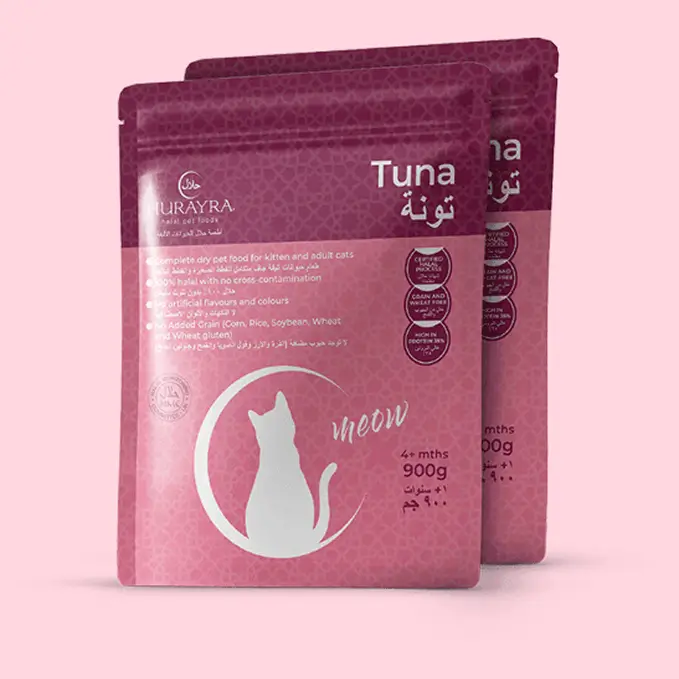
The Tuna cat food recipe uses tuna as the primary protein source, supplemented with salmon oil, a notable distinction from a nutritional standpoint. Salmon oil is one of the most bioavailable sources of Omega-3 fatty acids for cats. Omega-3 supports coat condition, skin health, joint mobility, and cognitive function. Combined with Omega-6, the formula covers the fatty acid profile that dry food alone often underdelivers.
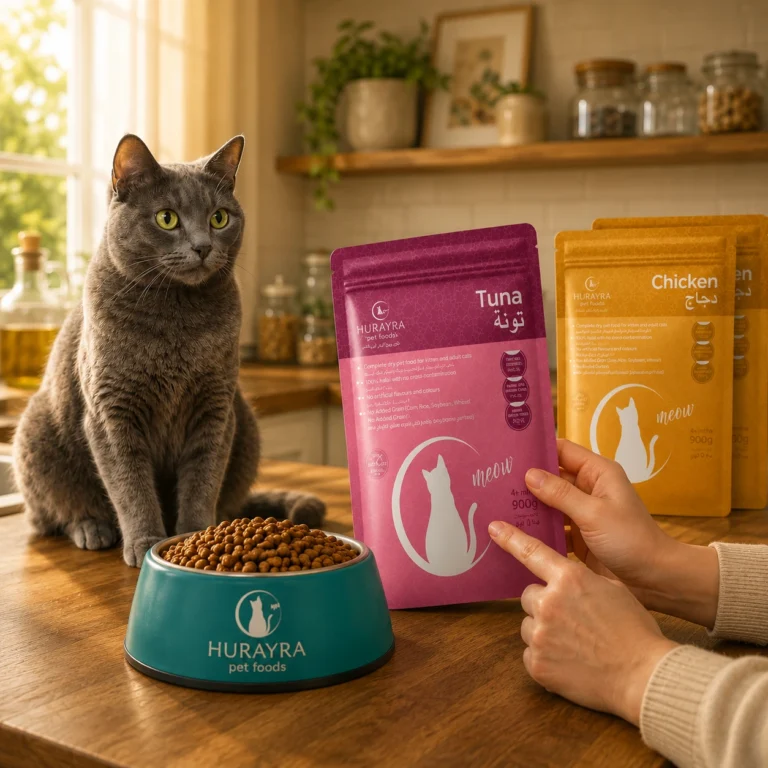
Fish-based diets also tend to be more palatable for cats with a strong protein preference. If you have a cat that has historically been uninterested in dry food, the tuna formula’s aroma and flavour intensity can be a useful advantage.
The tuna formula tends to suit:
- Cats that are already partial to fish-based foods
- Cats with dull or dry coats who may benefit from higher Omega-3 intake
- Multi-cat households where palatability needs to work across different temperaments
- Owners who want the additional fatty acid profile that salmon oil provides
Tuna Cat Food
Subscribe & Save 25%
Hurayra Chicken vs Tuna Cat Food; A Direct Comparison
Both formulas are built on the same nutritional framework. The differences are in protein source, fatty acid profile, and palatability characteristics. The table below maps the practical distinctions without overstating them.
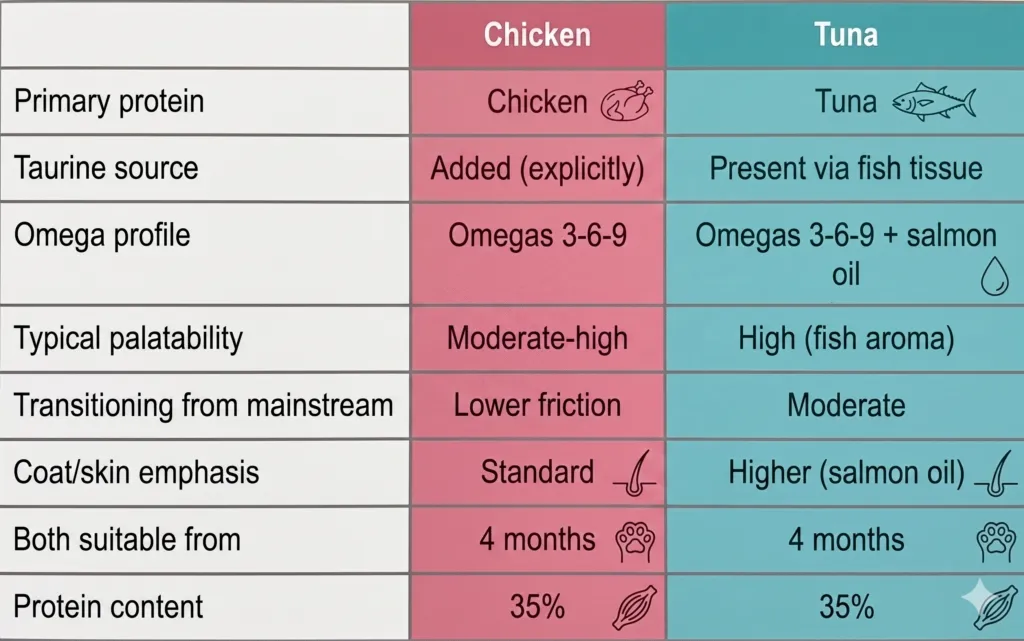
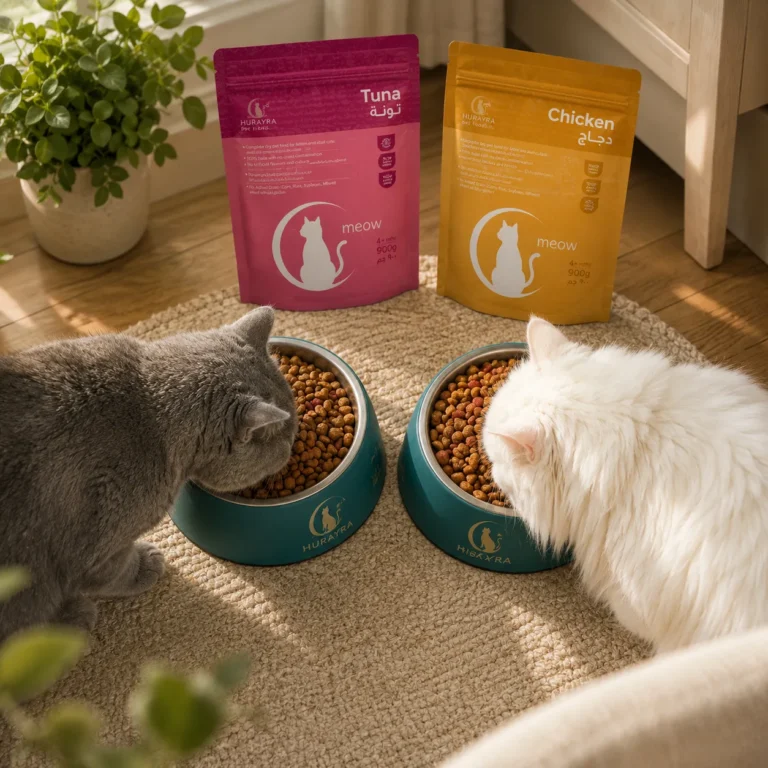
The honest answer for most owners is that either formula will meet your cat’s nutritional needs. The choice comes down to your cat’s established preferences and any specific health considerations. If you genuinely cannot decide, the Chicken and Tuna Combo Pack lets you run both simultaneously and observe which your cat favours.
What HMC Certification Actually Means
Both Hurayra recipes carry HMC certification, the Halal Monitoring Committee’s mark of verification. It is worth understanding what that certification represents and what it does not claim.
HMC certification is a traceability standard. It means the sourcing, slaughter method, processing, and production chain have been independently audited against Islamic guidelines. Every stage of production, from raw ingredient to finished pouch, is documented and verified. That is the specific value: not a general claim of quality, but a verifiable chain of custody.
It is also worth stating clearly what halal certification does not automatically guarantee. A product can be halal-certified and still be high in fillers, low in protein, or nutritionally incomplete. The two questions; is it halal, and is it nutritionally sound, are separate, and both deserve an answer. Hurayra is the first dry cat food in the UK to carry HMC certification at retail scale, and the formulas have been built to meet both standards independently.
For owners approaching this question for the first time, including those uncertain about the Islamic guidance on pet food specifically, the article Is Cat Food Haram? addresses the scholarly position directly and without sensationalism.
This matters for Muslim and non-Muslim owners alike. Traceability and production transparency are increasingly relevant to anyone who wants to understand what is actually in their cat’s food. The HMC certification provides that assurance. For a deeper read on why the certification was central to Hurayra’s founding, the Our Story page sets out the reasoning clearly.
Transitioning Your Cat Without Disrupting Their Digestion
Switching dry food abruptly is one of the most common causes of short-term digestive upset in cats, and it has nothing to do with the quality of the new food. The digestive system needs time to adjust to a different protein source and ingredient profile, regardless of whether the new formula is better.
The recommended approach is a 7 to 10 day transition. Begin with roughly 25% new food mixed into 75% of the current formula, and increase the proportion every two to three days. By day ten, most cats are fully transitioned without any disruption.
Feeding amounts for Hurayra formulas are approximately 70 to 118 grams per day per 1–2 kilograms of body weight, split across two meals. Adjust based on activity level. A less active indoor cat will sit toward the lower end of that range; a more active or younger cat toward the higher.
Making the Decision
Both Hurayra flavours are nutritionally complete, HMC-certified, and built without the fillers and unnamed derivatives that compromise the transparency of most mainstream dry foods. The protein content of 35% sits 10 percentage points above the FEDIAF minimum for adult cats. The ingredient sourcing is fully traceable. The formulas are available in Morrisons and online across the UK.
The flavour choice is secondary to the decision to feed well. If your cat has an established preference for fish, the Tuna recipe is the logical starting point. If you are introducing dry food for the first time, or transitioning from a non-fish mainstream brand, Chicken is the lower-friction option. If you want to let your cat decide, the Combo Pack is a practical way to do both.
The full product range, including subscription options, is available online. For anyone working through the question of halal certification and what it means in practice, the 2026 halal cat food guide covers the wider market context without the marketing language.
Feed with confidence. Your cat will do the rest.
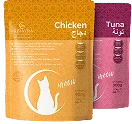
Tuna and Chicken Combo
Subscribe & Save 25%
Frequently Asked Questions
Both formulas contain 35% crude protein, are grain-free, wheat-free, soy-free, and HMC-certified. The Chicken recipe includes added taurine and uses chicken as the primary protein. The Tuna recipe uses tuna as its primary protein and is supplemented with salmon oil, providing a higher Omega-3 profile that supports coat and skin condition.
The Tuna recipe, which includes salmon oil as a named ingredient, delivers a higher concentration of Omega-3 fatty acids. These support skin health and coat condition more directly than the Chicken formula. That said, both formulas include Omega-3, -6, and -9, so the difference is one of degree rather than presence.
Both flavours are suitable for cats from four months of age. The high-protein, nutrient-complete formula supports healthy growth, energy, and immune development across the kitten stage.
Yes. Rotating between the two or mixing them is a reasonable approach. The Combo Pack is designed for owners who want to introduce both flavours or maintain variety. Nutritionally, the profiles are close enough that alternating does not disrupt balance.
Not automatically. Cats with no digestive sensitivities may not notice a dramatic difference switching from a high-quality conventional grain-inclusive formula. What grain-free removes is non-essential bulk, ingredients that add volume without nutritional contribution. For cats with wheat or soy sensitivities, the difference can be significant. For others, it is a neutral-to-positive change. Hurayra’s formulas exclude grains, wheat, and soy because they are not necessary, not because they are universally harmful. More on the formulation reasoning is on the grain-free and filler-free page.