Written by Uzma Aslam
Most cat owners who research fish oil for cats are doing it for the right reasons. They’ve noticed a dull coat, excessive shedding, stiff movement in an older cat, or recurring skin irritation. They’ve read that omega-3 fatty acids help. They want to do something useful.
That instinct is sound. The question worth asking is whether a daily supplement is the most reliable route, or whether the answer starts with what’s already in the bowl.
This article covers what fish oil actually does in a cat’s body, what the evidence says about dosage, what the safety concerns are, and why a tuna-based cat food with traceable, named protein may deliver omega-3 nutrition more consistently than a supplement taken in addition to poor-quality food.
What Fish Oil Does in a Cat’s Body
Fish oil is relevant to cats because of two specific fatty acids: EPA (eicosapentaenoic acid) and DHA (docosahexaenoic acid). These are long-chain omega-3s, and cats cannot produce them in adequate quantities on their own.
This matters more for cats than it does for some other species. Cats are obligate carnivores. Their metabolism is built around animal-sourced nutrition, and they lack the enzymatic pathway that converts plant-based ALA (found in flaxseed, for example) into usable EPA and DHA at meaningful levels. A fish oil supplement derived from actual fish, or food that contains named fish protein, provides these fatty acids in a form cats can absorb and use directly.
EPA and DHA are involved in several processes: regulation of inflammation, maintenance of cell membrane integrity, neurological function (DHA in particular), and the structural health of skin and coat. When dietary intake is low, the effects show over weeks and months, not overnight.
The Documented Benefits of Fish Oil for Cats
The research on omega-3 supplementation in cats is not as extensive as it is in dogs or humans, but the evidence that exists points in a consistent direction.
Skin and coat condition. Cats with adequate EPA and DHA intake tend to have a denser, shinier coat. The fatty acids support the skin’s lipid barrier, which affects how well moisture is retained and how the coat sits. When that barrier is compromised (by low-quality diet, age, or environmental stress), shedding increases and the coat becomes dry or brittle.
Shedding reduction. Excessive shedding is rarely caused by a single factor, but omega-3 deficiency is one of the more common dietary contributors. Supplementation or dietary correction won’t stop normal seasonal shedding, but it can reduce the excessive, ongoing type linked to poor coat condition.
Joint health and mobility. EPA has anti-inflammatory properties. In cats with early-stage osteoarthritis or joint stiffness (more common in cats over eight years old), adequate omega-3 intake may support more comfortable movement. This is an area where consistency matters more than dose: the effect is gradual and cumulative.
Allergy-related skin responses. Some cats experience chronic skin irritation or over-grooming with no clear external cause. Dietary omega-3s don’t eliminate allergies, but they can reduce the inflammatory response in the skin, which lessens the severity of reactions in some cases.
Cardiovascular and neurological support. DHA supports heart muscle function and neurological health. In kittens, adequate DHA during development is considered important for normal brain and retinal function.
Fish Oil Dosage for Cats: What You Need to Know
There is no single universally agreed dose for fish oil in cats. Most veterinary nutritionists work from guidelines that suggest somewhere between 30–40 mg of combined EPA and DHA per kilogram of body weight per day as a starting point for general health maintenance. For cats with specific conditions (joint disease, inflammatory skin conditions), the therapeutic range may be higher, and that decision is best made with a vet.

A few practical points worth knowing:
The concentration of EPA and DHA varies considerably between products. A capsule labelled as 1,000 mg of fish oil may contain anywhere from 180 mg to 600 mg of combined EPA and DHA, depending on how it’s processed. The label on the front of the bottle rarely tells you this; you need to check the detailed nutritional panel.
More is not automatically better. At very high doses, omega-3s can interfere with blood clotting and may interact with certain medications. Cats on anticoagulants or with a bleeding disorder should not be given fish oil supplements without veterinary oversight.
For the average healthy adult cat in the 4–5 kg range, a starting dose in the region of 150–200 mg of combined EPA and DHA per day is reasonable for general coat and skin support. Whether you reach that through a supplement, through the cat’s daily food, or both, depends on what you’re feeding.
Is Fish Oil Safe for Cats? Considerations That Matter
Fish oil is generally considered safe for cats when used appropriately. But several quality-related issues affect whether a given product is actually beneficial.
Oxidation. Fish oil degrades when exposed to heat, light, or air. Rancid fish oil doesn’t just lose its nutritional value. It may introduce harmful compounds. If a fish oil supplement smells strongly unpleasant (beyond the expected fishy smell), it may have oxidised. Capsule form generally fares better than liquid, and smaller containers that are used up quickly are preferable to large bottles left open for months.
Mercury and contaminants. Fish accumulate mercury, and the concentration is generally higher in larger, longer-lived species. Supplements derived from small, short-lived fish (sardine, anchovy, mackerel) carry lower contamination risk than those from larger species. Quality manufacturers publish third-party testing results; if a brand doesn’t, that’s worth noting.
Source transparency. This applies to both supplements and food. Knowing which species the oil comes from, and where that fish was sourced, is relevant. Not only for ethical reasons, but because it determines the fatty acid profile and contamination risk.
If you’re already feeding your cat high-quality tuna-based food with named fish protein and documented omega-3 content, the case for an additional supplement is weaker than if you’re feeding a diet with vague “fish derivatives” as the protein source.
Tuna Cat Food vs Fish Oil Supplements: A Nutritional Comparison
This is where the conversation becomes more practical.
Fish oil supplements deliver isolated EPA and DHA. They don’t deliver protein, amino acids, taurine, or any of the other nutrients cats require. They are a single-nutrient intervention added on top of whatever the cat is already eating.
Tuna cat food, when formulated with named, identifiable fish protein, delivers omega-3 fatty acids as part of a nutritional matrix that includes protein, amino acids, and other co-factors that support absorption and utilisation. This is how cats have obtained these nutrients from whole-prey diets throughout their evolutionary history: not from isolated compounds, but from complete animal tissue.
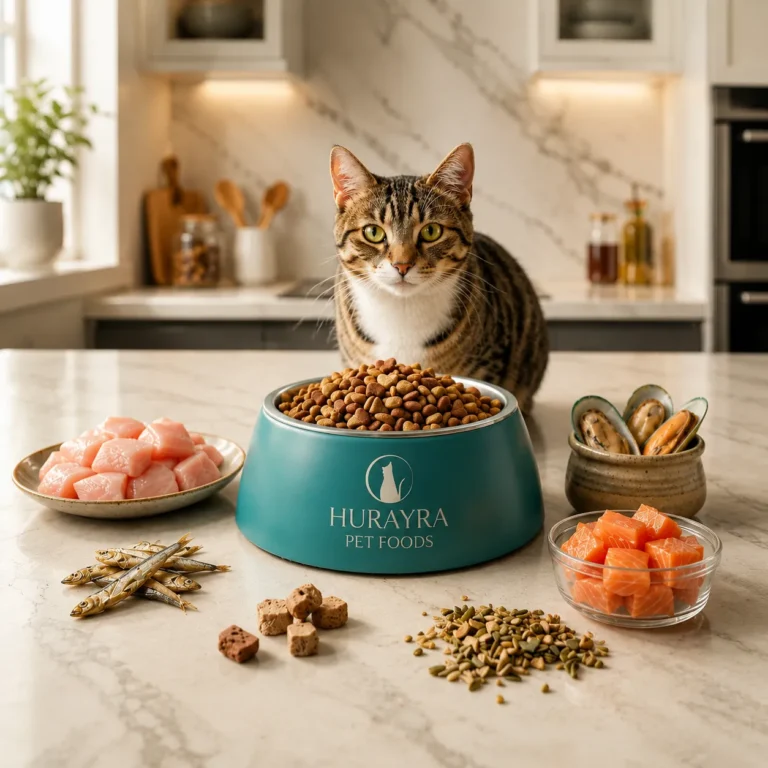
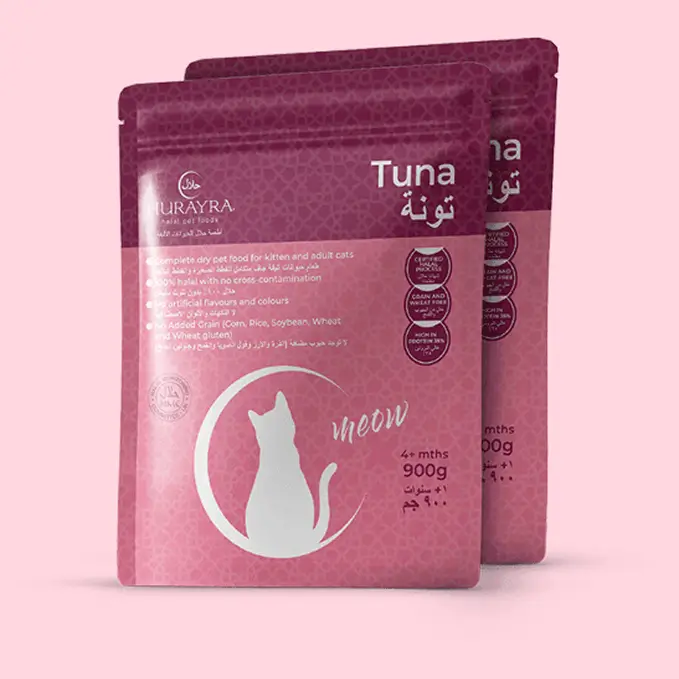
Hurayra’s Tuna dry cat food recipe uses fish meal (30%) and tuna meal (10%) as the primary protein sources; named, identifiable, and present in quantities that make a measurable difference to the nutritional profile. The recipe contains 35% protein overall and includes omega-3, omega-6, and omega-9 fatty acids from these fish-derived sources. This isn’t a product that mentions fish somewhere on the label; fish is the recipe.
Tuna Cat Food
Subscribe & Save 25%
The distinction between premium and supermarket cat food brands matters because many products marketed as tuna cat food contain fish derivatives, a catch-all term that can include any part of any fish species, in any ratio, processed to any standard. A product where the first ingredient is a grain or starch, with “tuna flavour” added further down the list, is a different product nutritionally, even if it smells similar.
What to Look for in Cat Food With Omega 3
If you’re selecting a cat food specifically to support omega-3 intake, whether for coat health, joint support, or general nutrition, three things are worth checking before you commit to a product.
The first three ingredients. In dry cat food, ingredients are listed in descending order by weight before moisture is removed. If the first ingredient is a named animal protein (tuna meal, chicken meal, salmon meal), you’re looking at a protein-forward formula. If the first ingredient is a grain, starch, or vague by-product, the formula is built around something else, and the protein content reflects that.
The named omega source. “Contains omega-3” on the packaging tells you very little. A product that names fish meal, salmon oil, or tuna meal as the source of omega-3s is making a more specific and verifiable claim than one that lists “added omega-3 fatty acids” without attribution.
The protein percentage. FEDIAF (the European Pet Food Industry Federation) guidelines establish minimum nutrient standards for cat food. For adult cats at maintenance, the minimum crude protein requirement is 25g per 100g dry matter. Foods formulated above this level provide a stronger nutritional base. Hurayra’s 35% protein recipes sit well above that minimum, which supports the cat’s ability to absorb and use fat-soluble nutrients including omega-3 fatty acids effectively.
The Smarter Approach to Omega 3 for Your Cat
Fish oil supplements are a useful tool in specific situations — a vet-recommended addition for a cat with confirmed joint disease, or a short-term intervention for a cat recovering from a skin condition. For most healthy cats, the more reliable approach is building omega-3 intake into the diet through food that actually contains named fish protein in meaningful amounts.
A supplement added on top of a low-quality diet is a patch, not a solution. The foundation matters more than the addition.
If your cat’s coat condition, energy, or digestion has prompted you to start researching what you’re feeding, that instinct is worth following through. Start with the ingredient list. Check the protein source. Prioritise named protein over vague descriptors. And if consistency is a challenge, finding the same product, at the right time, every month, Hurayra’s monthly subscription removes that variable. Subscribers save 25% on every delivery, with no commitment and no disruption to the routine that cats depend on.
The goal isn’t to supplement your way around a diet that isn’t working. It’s to find food that’s worth feeding consistently, and then be consistent.
Tuna and Chicken Combo
Subscribe & Save 25%
Frequently Asked Questions
In some cases, yes, but you need to check the EPA and DHA content specifically, not just the total fish oil volume, and confirm the product contains no added flavourings or sweeteners (some human supplements include xylitol, which is toxic to cats). A vet’s input is useful if you’re unsure about dosage for your cat’s specific weight and health status.
Coat and skin improvements typically take 6–8 weeks to become visible, because new coat growth takes time. Anti-inflammatory effects on joints or skin may be noticed somewhat sooner. If you’re switching food rather than adding a supplement, the timeline is similar.
DHA (docosahexaenoic acid) is a long-chain omega-3 fatty acid found primarily in marine sources. It’s a structural component of brain tissue and the retina. For kittens, adequate DHA during development is considered important for normal neurological and visual development. For adult cats, it supports cognitive function and cell membrane health.
Tuna as an ingredient in formulated cat food, used alongside other protein sources and nutrients, is safe and nutritionally appropriate. Feeding cats large quantities of plain human-grade tinned tuna as their primary diet is not recommended, as it lacks taurine and other nutrients cats require, and carries higher mercury risk. Formulated tuna cat food is a different product, nutritionally.
Omega-3 fatty acids have an anti-inflammatory effect that can reduce the severity of skin reactions in allergic cats, but they don’t eliminate the underlying allergy. If your cat has persistent skin issues, the most useful first step is identifying whether the reaction is food-related (often protein-source specific) or environmental.