
- Cat Nutrition, Pet Food Guides
Vitamin E for Cats: Antioxidant Power and Why It’s in Your Cat’s Food
- uzma
Table of Contents
TL;DR
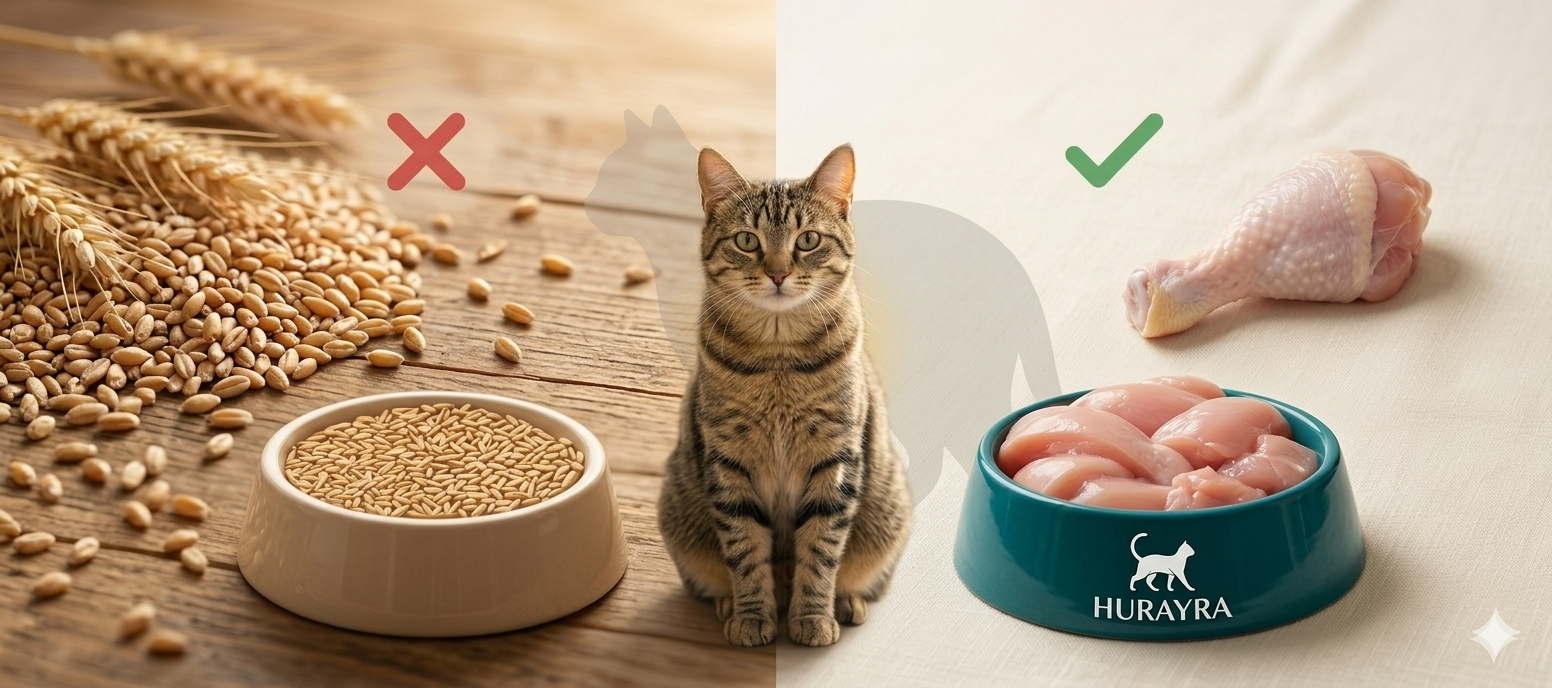
Cats with sensitive stomachs often benefit from grain-free diets built around single-source protein. Focus on high protein, low carbs, and clear ingredients. Transition gradually over 10 days and stay consistent. Hurayra offers HMC-certified, grain-free options designed for long-term digestive stability.
Vitamin E for Cats: Antioxidant Power and Why It’s in Your Cat’s Food
Most cat owners scan the back of a food bag, spot the word “vitamins,” and move on. It sounds reassuring. It rarely tells you much. Vitamin E is one nutrient worth pausing on because what it does, and what happens when it is absent, shapes your cat’s health in ways that are easy to miss until the damage is done.
This article explains what vitamin E for cats actually does at a cellular level, why cats are more dependent on dietary sources than most other mammals, and what separates a properly calibrated complete food from one that merely lists vitamins on the label. No supplements required for most cats but you do need to know what is in the bowl.
What Vitamin E Actually Does Inside a Cat’s Body
Vitamin E is a fat-soluble antioxidant. Rather than being flushed out daily, it is stored in the liver and fatty tissues, and it works by intercepting free radicals before they damage cell membranes and DNA.
Free radicals are a normal by-product of metabolism. The body produces them constantly. Under ordinary conditions, antioxidants keep them in check. When the antioxidant supply falls behind the oxidative load, cell membranes become compromised and that affects nearly every system: immune response, cardiovascular function, neurological health, vision.
Vitamin E sits at the front line of this cellular defence. It is one of the few antioxidants classified as essential for cats, meaning the body cannot synthesise it. It must come entirely from food.
In commercial cat food, it is added primarily as alpha-tocopherol, the most biologically active of the eight naturally occurring forms. FEDIAF, the European body governing pet food nutritional standards in the UK, establishes the minimum requirements that complete cat foods must meet.
In practical terms, that means a responsible manufacturer is not guessing at inclusion levels they are formulating against a published scientific standard. AAFCO, the equivalent North American authority, recommends a minimum of 30 IU per kilogram of dry matter for adult cats, a figure that is widely used as an industry reference point even in UK formulation.
The word “complete” on a UK cat food label is a legal claim, not a marketing one. It means the product has been formulated to meet minimum nutritional requirements for the stated life stage. If that word is absent, the food is classified as complementary and is not designed to be fed as the sole diet.
Why Cats Are Particularly Dependent on Getting This Right
This is the part most people are not aware of. Compared to dogs, cats are meaningfully more vulnerable to vitamin E shortfall, and the reason is directly tied to how many of them are fed.
Fish is a common protein source in cat food and rightly so. It suits cats well as obligate carnivores. The complication is that fish and fish by-products are rich in polyunsaturated fatty acids, or PUFAs. PUFAs are highly susceptible to oxidation. A diet high in PUFAs places a proportionally greater demand on the body’s vitamin E reserves, because the vitamin is consumed in the process of protecting those fatty acids from oxidative breakdown.
AAFCO guidance quantifies this directly: an additional 10 IU of vitamin E is recommended for every gram of fish oil per kilogram of diet. A fish-forward recipe that is not formulated with this uplift in mind places a cat at greater risk of deficiency even if vitamin E appears somewhere in the ingredients.
This is the distinction that matters when choosing a food. It is not whether vitamin E is listed. It is whether the level has been calibrated against the full fat and PUFA profile of the recipe. That kind of formulation transparency is exactly what separates a food worth buying from one that satisfies the label minimum and little else.
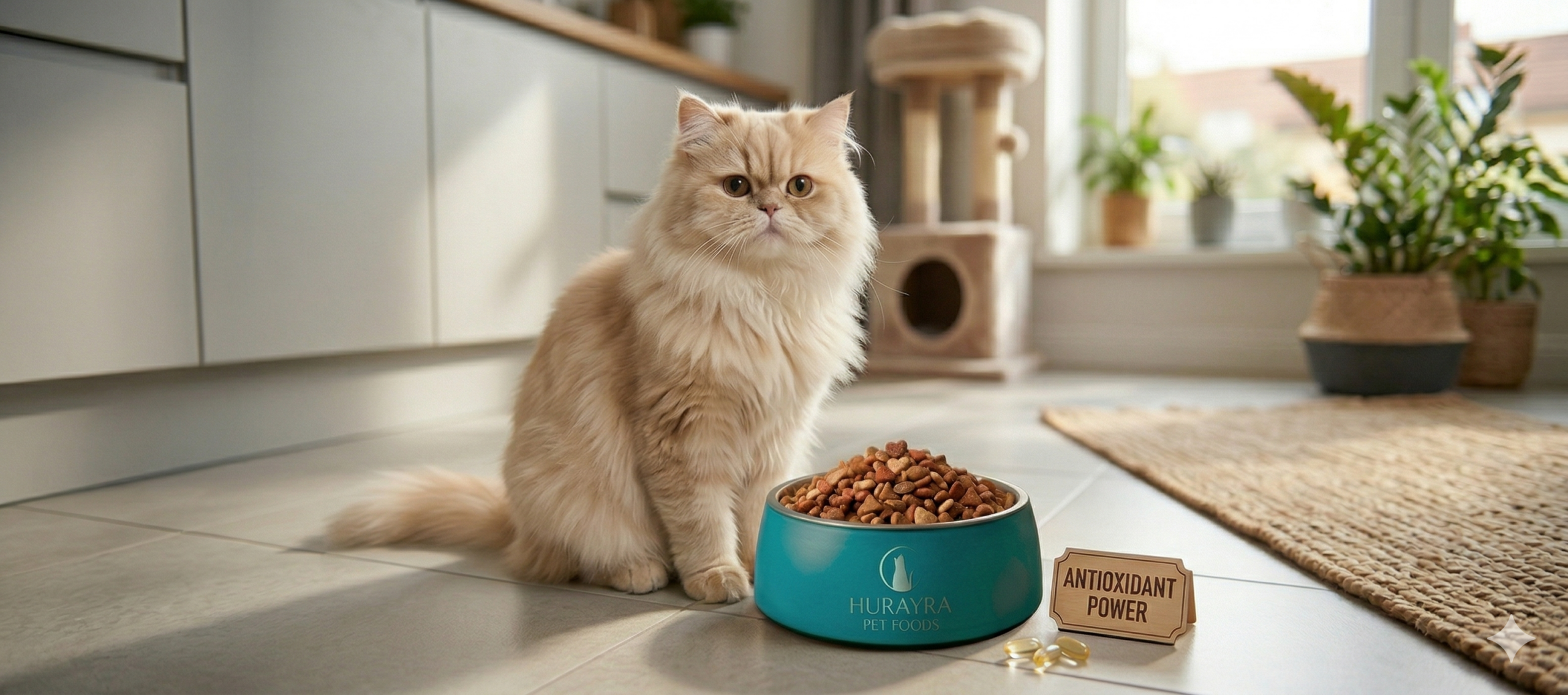
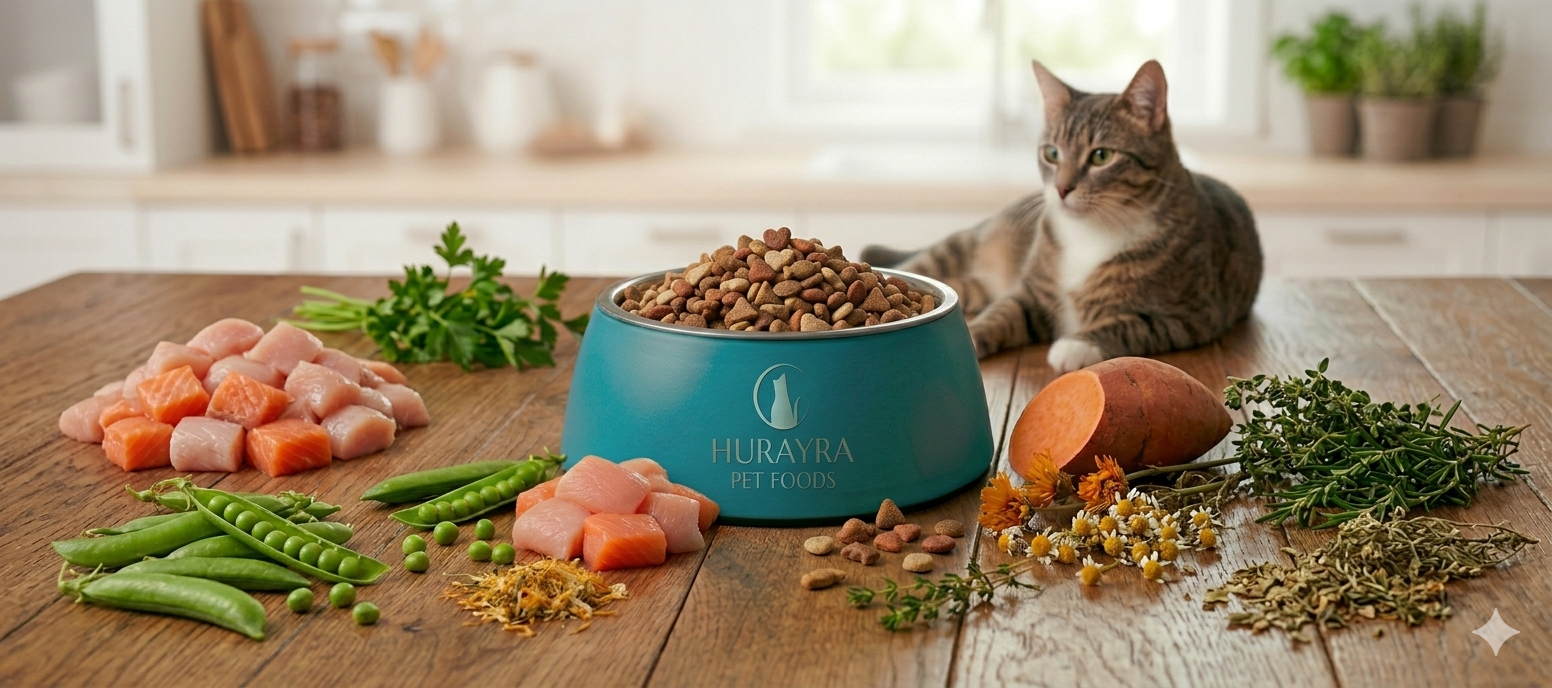
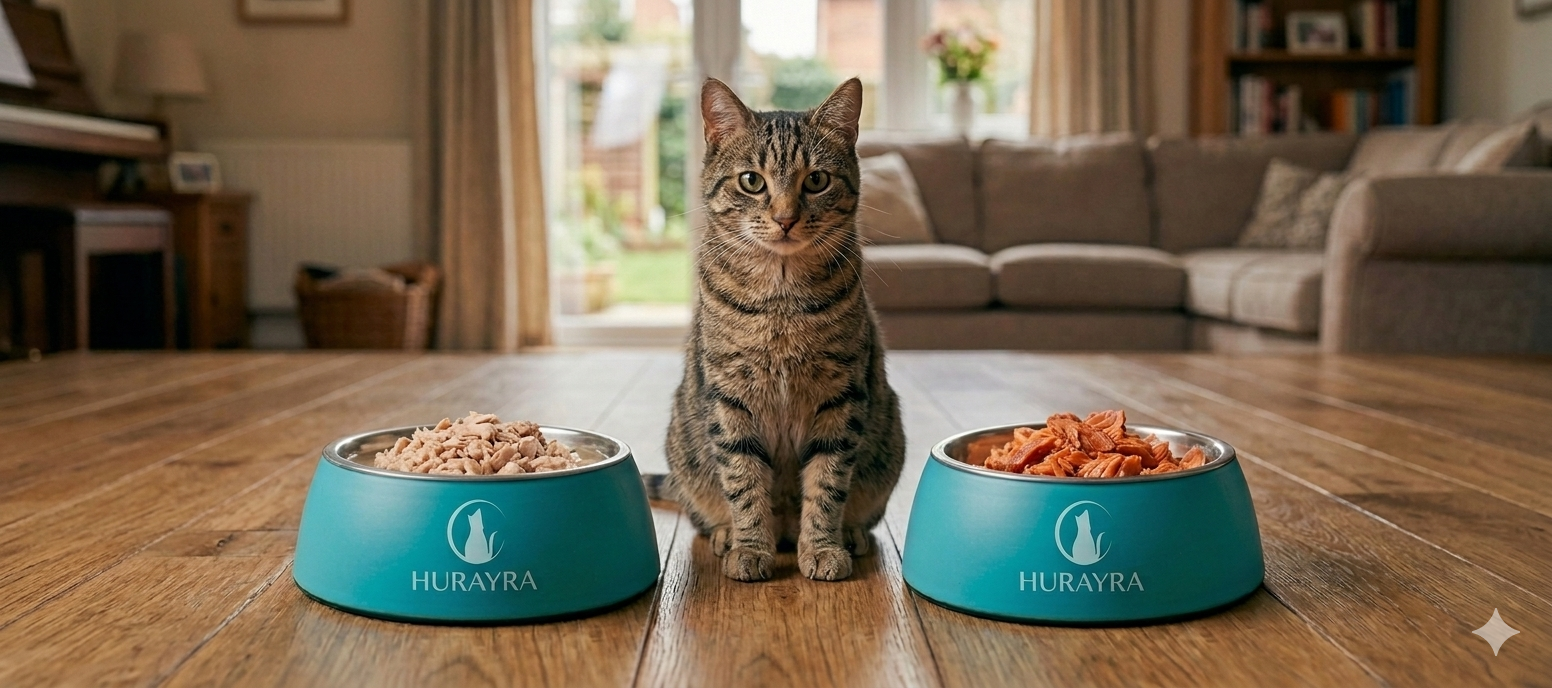
At Hurayra, the recipes include both chicken and tuna as named protein sources. Tuna introduces a meaningful PUFA load, which makes vitamin E calibration particularly relevant to their formulation. The fact that vitamins A, D, and E are individually named in the additive declaration rather than grouped under a catch-all like “permitted antioxidants” reflects that level of accountability. You can see what is in there. That matters.
What Deficiency Looks Like, and Why It Takes Time to Appear
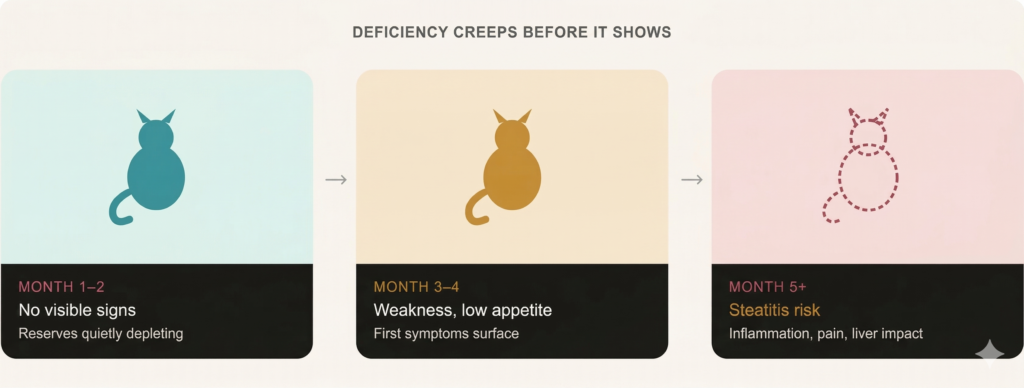
Vitamin E deficiency does not present quickly. The fat-soluble nature of the nutrient means reserves deplete gradually, and symptoms can take months to surface. When they do, they tend to include muscle weakness, reduced appetite, and in more progressed cases, liver dysfunction.
The condition most associated with severe vitamin E deficiency in cats is yellow fat disease steatitis, or pansteatitis. It develops when fatty tissue becomes inflamed, typically in cats eating a diet high in unsaturated fats without adequate vitamin E to counterbalance the oxidative demand. Affected cats are often visibly uncomfortable, and handling can cause distress.
Yellow fat disease was more commonly seen when cats were fed exclusively on canned oily fish designed for human consumption; tuna in brine, for instance; with no nutritional balancing. It is less prevalent now, but cases still arise in cats on home-prepared diets without professional nutritional input.
It is also worth knowing that grain content, or the absence of it, does not directly influence vitamin E status. A grain-free formulation removes plant-based fillers and reduces unnecessary carbohydrate load, but it does not automatically change the vitamin profile. What determines whether a grain-free food is nutritionally complete is still the formulation; specifically, whether the vitamins are present at appropriate levels relative to the fat content of the recipe.
How to Read a Cat Food Label for Vitamin E
Most cat owners never look beyond the front of the pack. That is where the branding lives. The nutritional substance is on the back, and it tells you considerably more.
Three things to check:
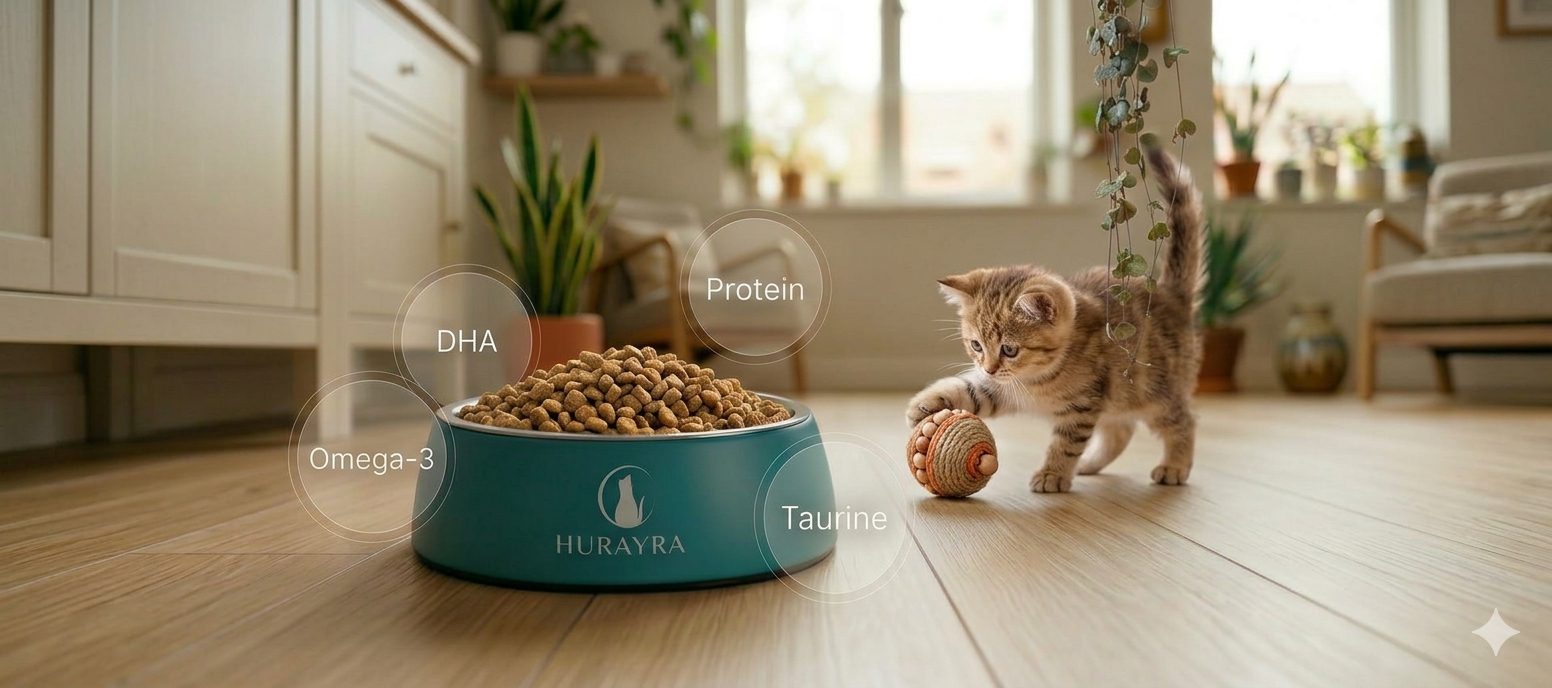
The typical analysis confirms whether the food is complete. For adult cats, a protein level of 30% or above on a dry matter basis is a useful indicator of a meat-forward formulation. Hurayra’s recipes sit at 35% protein, sourced from named animal proteins rather than plant-based alternatives.
The ingredient list should name the protein source specifically. “Chicken,” “tuna,” or “turkey” are named proteins. “Meat and animal derivatives” is not. The first ingredient by weight is your clearest signal of what the food is primarily built around. A named animal protein in that position is a reasonable minimum standard for a quality recipe.
The additive declaration is where vitamins appear with specific quantities, typically in IU or mg per kilogram. For an adult cat food, 30 IU/kg is the established minimum for a standard formulation. If the recipe contains significant fish content, that figure should be notably higher to account for the elevated PUFA load.
If a food lists vitamin E in this section with a specific quantity, it is accountable to that number. If it appears only as part of a vague “antioxidants” grouping, you have no visibility into whether the level is appropriate.
The Case for Named Proteins and Feeding Consistency
Vitamin E is only one part of the picture. What matters, from a nutritional standpoint, is whether the whole recipe has been built coherently where each ingredient and additive has a defined role and the levels have been calibrated against each other.
Single-source, named animal proteins are the most reliable foundation for this. When a recipe lists “chicken” or “tuna” rather than “animal derivatives,” you know what the protein base is. That transparency makes it possible to understand how the recipe has been constructed, rather than having to trust that the formulation is sound without any way to verify it.
Hurayra’s product range is built on this principle. Chicken and tuna are the two protein bases across the range, both grain-free, wheat-free, and soy-free. The absence of grain and wheat is not positioned as a universal superiority claim, some cats tolerate grains without issue. What grain-free formulation does is remove unnecessary carbohydrate bulk, ensuring that the protein percentage reflects actual animal content rather than being diluted by plant-based filler.
Consistency of feeding also matters more than most owners realise. Frequent switches between foods with different protein bases and formulations disrupt the gut microbiome and introduce variables that make it difficult to assess how well a cat is actually doing. Hurayra’s subscription option exists partly for this reason; a consistent, well-formulated diet fed over time is more informative and more stabilising than a rotating selection of foods, however individually good they might be.
For cat owners to whom sourcing transparency is important, Hurayra holds HMC certification, which means every ingredient’s halal status is independently verified through the supply chain by the Halal Monitoring Committee, not self-declared. That level of traceability has appeal beyond Muslim households. Independent supply chain verification is, by definition, a higher standard of accountability than brand assurance alone. It does not change the nutritional profile of the food. It does tell you something about how seriously the sourcing process is taken.
Conclusion
Vitamin E for cats is not a complicated subject once you understand what it is doing. It is a fat-soluble antioxidant that protects cells from oxidative damage, becomes more critical when the diet contains significant fish or unsaturated fat, and must come entirely from food. Getting the level right relative to the rest of the recipe is a formulation question, and formulation is where the real difference between cat foods lies.
The practical action is simple: choose a complete food with named protein sources, check that vitamins are specifically declared in the additive section, and feed consistently. The label tells you more than most people realise, when you know what to look for.
If you want to understand how these principles translate into a specific recipe, Hurayra’s ingredient philosophy is published in full. If you have questions about which recipe suits your cat’s age, weight, or specific sensitivities, the team is available directly.
Good nutrition is not about adding things. It is about getting the fundamentals right, consistently, over time.
Tuna and Chicken Combo
Pack of 2
Frequently Asked Questions
1 Does my cat need a vitamin E supplement if they are eating complete food?
In most cases, no. A properly formulated complete diet provides vitamin E at levels suited to the recipe’s fat content. Supplementing on top of a complete food can interfere with other fat-soluble vitamins, particularly vitamin K, which affects blood clotting. Supplementation should only happen under veterinary guidance.
2 Is grain-free cat food higher in vitamin E?
Not automatically. Grain-free formulation removes carbohydrate fillers and can benefit cats with sensitivities, but it does not inherently change the vitamin E content. A grain-free food built around fish still requires careful vitamin E calibration to account for the PUFA load. The formulation is what determines adequacy, not the absence of grain.
3 Can too much vitamin E cause harm?
Vitamin E does not have a clearly defined toxic threshold in cats in the way that vitamin A does. Doses significantly above recommended levels can interfere with vitamin K activity, which is primarily a concern with supplementation rather than commercial food, where levels are controlled within safe ranges.
4 How does halal certification affect the nutritional content of cat food?
It does not. Halal certification, including HMC certification, governs how animal proteins are sourced and processed through the supply chain. It has no direct bearing on the vitamin or mineral profile of the finished recipe. Nutritional quality is determined by formulation. The two things operate independently of each other, and it is worth being clear about that distinction.
5 My cat eats a lot of fish-based food. Should I be concerned about vitamin E?
It is a fair question. Fish-heavy diets raise the PUFA load, which increases the vitamin E requirement. If you are feeding a fish-based complete food formulated to FEDIAF standards, the manufacturer should have accounted for this in the recipe. If you are supplementing with canned fish intended for human consumption as a significant part of the diet, that nutritional balance is not guaranteed, and it is worth discussing with your vet.
Recent Post
Subscribe & Save 25% Every Month
Never run out of your pet’s favourite dry cat food again. Enjoy scheduled deliveries right to your door & save 25% on every order. A win for you and your furry friend!
More Articles
- uzma
- /
- 27/03/2026
- uzma
- /
- 26/03/2026
- uzma
- /
- 20/03/2026
- uzma
- /
- 19/03/2026
- uzma
- /
- 18/03/2026
- uzma
- /
- 17/03/2026