Written by Maria Manshad
The Quick Answer
Most adult cats do well on two meals a day. Kittens need smaller, more frequent meals.
- Kittens under six months: generally 3 to 4 meals a day
- Six to twelve months: usually two meals a day
- Senior cats: can often follow an adult schedule, though some do better with smaller portions
The right schedule depends on your cat’s age, health, activity, body condition and the type of food.
And consistency matters more than the exact hour.
Your cat is staring at you. The bowl is empty. You’re sure you fed them an hour ago.
Sounds familiar? Before you give in, it helps to know what a good feeding routine actually looks like. Here’s how often to feed your cat, at every life stage.
Why Cats Aren’t Built for One Big Meal
Cats naturally eat small amounts, not one large meal.
Their stomachs empty within a few hours. So a single meal a day can leave them hungry for long stretches.
It’s also a safety issue. Going without food for too long can become dangerous, especially for overweight cats. If they stop eating, they can be at greater risk of serious liver problems.
The Feeding Chart, by Age
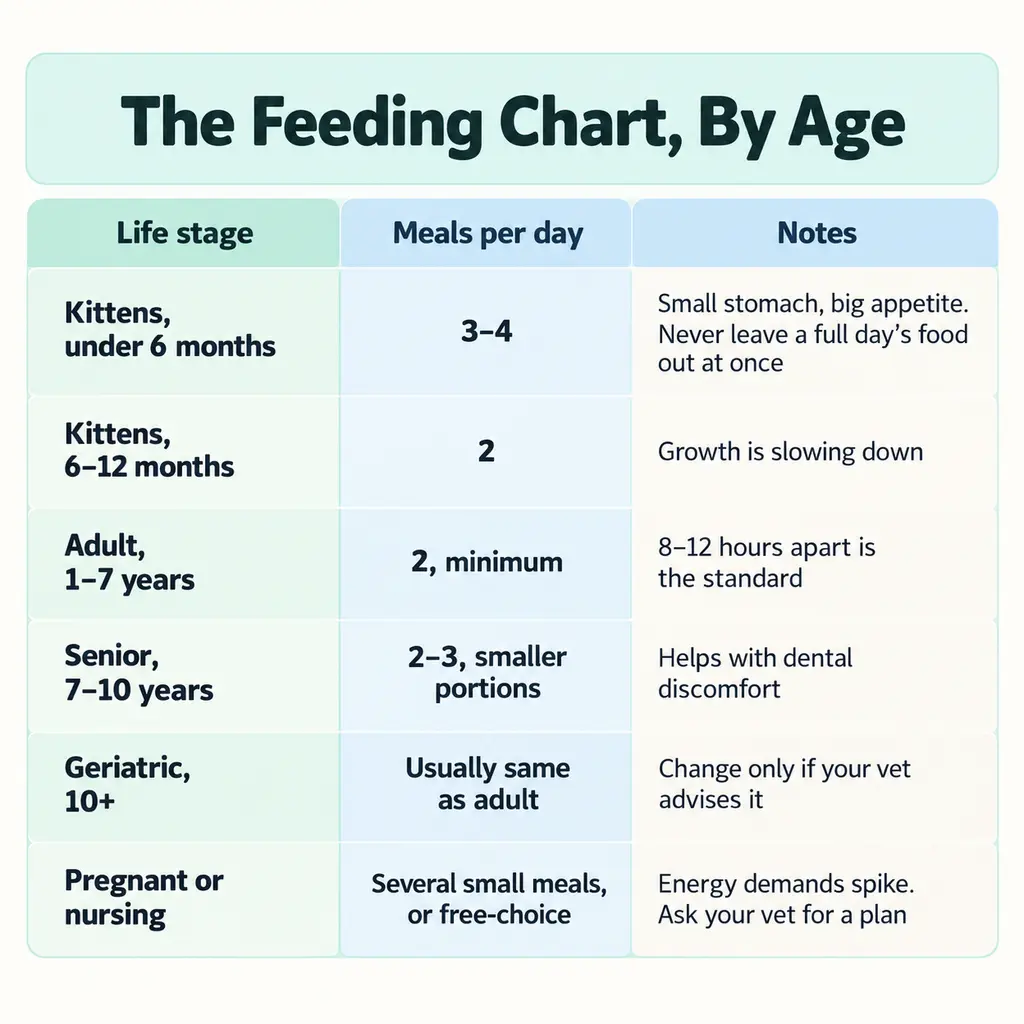
Treat these as general guidelines, not fixed rules. Your cat’s weight, activity level, health and food all matter when you decide on portions and frequency.
What This Looks Like in a Real Day
A routine is easier to keep when it fits your life. Here’s what it could look like:
- Adult cat: a morning meal around 7 a.m. and an evening meal around 6 to 7 p.m.
- Kitten on four meals: around 7 a.m., noon, 5 p.m. and 9 p.m.
If your schedule changes or you’re away from home, a portion-controlled automatic feeder can keep meal times consistent.

Products | Halal Cat Food
Free Feeding vs Scheduled Feeding: Which Is Better?
Free feeding means leaving dry food out so your cat can graze.
Some cats manage their intake well. Others overeat, which makes weight control harder. It also makes changes in appetite harder to spot.
Scheduled feeding means measured portions at set times. You get a clearer idea of how much your cat is eating, and sudden appetite changes are easier to notice.
One thing to remember: wet food shouldn’t be left out for long periods, because it can spoil.
Can you mix both? Yes. Some owners give measured wet-food meals alongside a controlled amount of dry food. Just make sure the total from both still fits your cat’s daily needs.
Meal Frequency vs Portion Size: What’s the Difference?
How often you feed your cat doesn’t change how much food they need in total.
The daily amount is simply split across the meals you offer. A cat on four meals gets smaller portions at each one than a cat on two.
Check the feeding guidance on your cat’s food, and think about their age, weight, activity and body condition. Not sure what the right amount is? Ask your vet.
Make every mealtime count
Looking for a nutritious option to build into your cat’s daily feeding routine? Explore Hurayra’s cat food, made with carefully selected ingredients and designed with your cat’s nutritional needs in mind.
Dry Food
What Time of Day Should You Feed Your Cat?
There’s no single perfect time.
Cats generally do best with a predictable routine, so pick times that suit both your cat and your day. For many adult cats, a morning meal and an evening meal are the most practical.
Signs Your Feeding Schedule Isn’t Working
Keep an eye out for:
- Persistent begging before meals
- Eating extremely quickly
- Repeated vomiting
- Gradual weight gain
- Unexplained weight loss
- Leaving meals untouched
- A sudden change in appetite
If your cat’s eating changes significantly or persistently, talk to your vet.
Feeding Time in a Multi-Cat Home
When feeding stations are too close together, cats can compete, or one cat can end up eating another’s food.
Where you can, give each cat a separate feeding area. Monitor individual portions too, especially if your cats have different dietary needs.
Automatic and Puzzle Feeders: Do They Help?
Automatic feeders help you keep regular, measured meals going when you’re not home.
Puzzle or slow feeders make meals more engaging and can help cats that eat too quickly.
Both are useful tools. But you still need to measure the daily amount.
How to Change Your Cat’s Feeding Schedule
Go gradually, not suddenly.
Moving from free feeding to scheduled meals? Start by measuring your cat’s normal daily amount. Then divide it between the new meal times.
Keep the total daily amount the same while your cat adjusts.
The Bottom Line
For most healthy adult cats, two measured meals a day is a good starting point.
Kittens need more frequent meals. Senior cats may need smaller portions, depending on their needs.
Build a routine that fits your cat’s age, health and food, and that you can stick to every day.
Frequently Asked Questions
Two meals a day is a more practical starting point for most healthy adult cats. Some cats may manage with one, but a single meal can leave them hungry for long periods.
Dry food is less perishable than wet food, but leaving it out overnight is still free feeding. A measured evening portion or a timed feeder gives you more control.
Most healthy adult cats can start with two meals a day. Kittens generally need three to four, while some older cats may benefit from smaller portions more often.
Kittens under six months generally do well on three to four small meals. Between six and twelve months, many can move to two meals a day.
Not necessarily. Many can stay on two meals a day, though smaller portions may be easier for some senior cats.
A cat that suddenly stops eating needs attention. If your cat refuses food for around 24 hours, particularly if they’re overweight or unwell, contact your vet.