Written by Uzma Aslam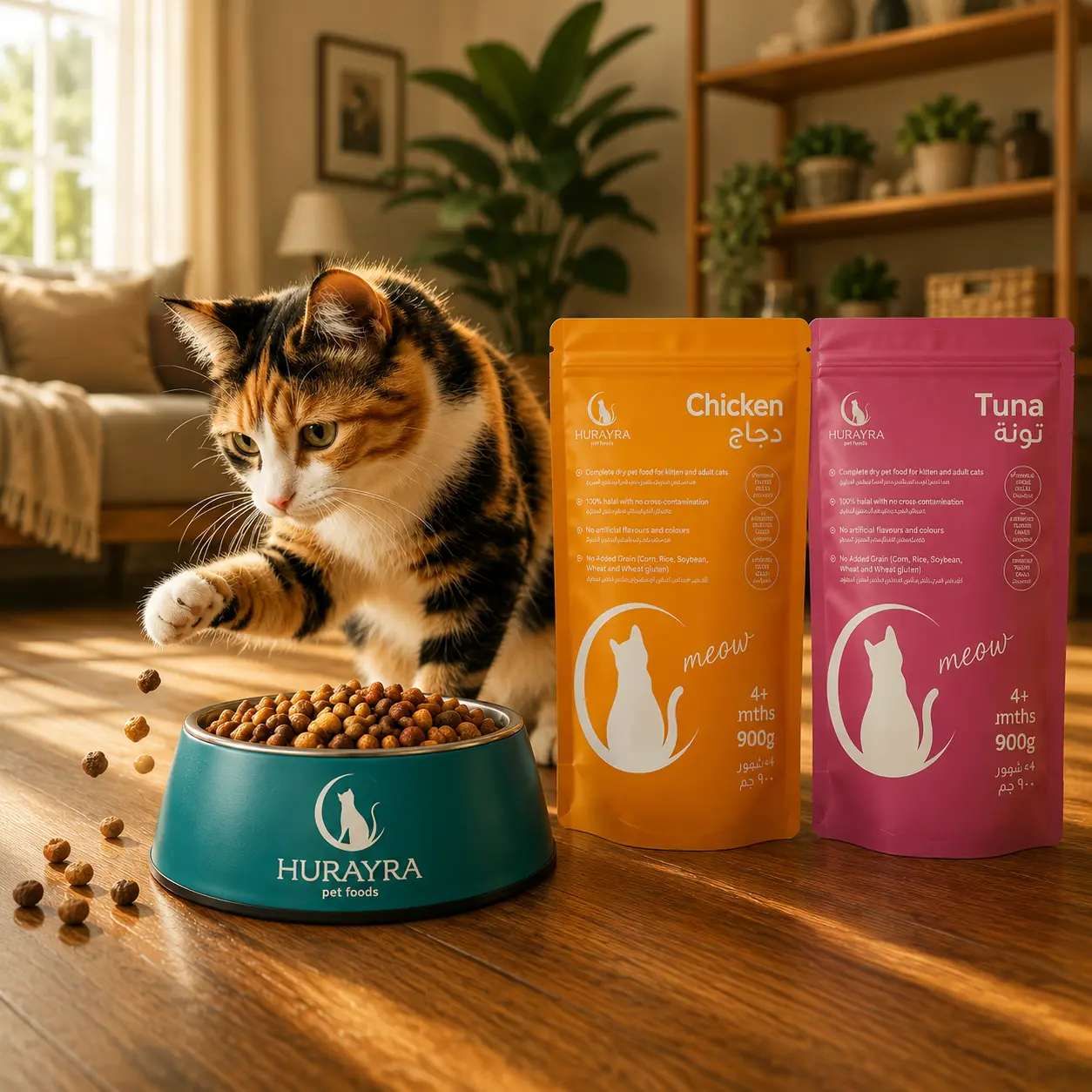
Best Grain-Free Cat Food for Sensitive Stomachs – What Vets Recommend
Some cats eat anything without a problem. Others bring it right back up ten minutes later. If you have a cat with a sensitive stomach, you are not alone, and the food you choose makes a real difference.
This guide covers what actually causes digestive upset in cats, why grain-free food often helps, and what to look for when choosing the right option.
Why Some Cats Struggle With Digestion
Cats are obligate carnivores. Their digestive systems are built for meat, not grains, fillers, or plant-based proteins.
Many mainstream cat foods include ingredients like wheat, corn, and soy. These are cheap bulking agents. They keep costs down, but they are hard for some cats to process.
The result? Vomiting, loose stools, bloating, or a cat that simply refuses to eat. It is not fussy. It is often a sign that something in the food is not agreeing with them.
Food sensitivities in cats can develop at any age. A cat that ate the same food for years can start reacting to it seemingly out of nowhere. If you have noticed a change in your cat’s digestion, the food is usually the first thing worth looking at.
What Does Grain-Free Cat Food Actually Mean
Grain-free means the recipe contains no wheat, corn, rice, oats, or similar grains. The carbohydrate content comes from other sources, usually vegetables or legumes, but the protein focus stays firmly on meat.
It does not automatically mean the food is low in carbohydrates. Some grain-free foods swap grains for other starches. So reading the ingredient list matters.
A good grain-free food for a sensitive stomach should be:
- High in animal protein
- Free from wheat and soy
- Low in artificial additives
- Made without unnecessary fillers
The simplest rule: the shorter and cleaner the ingredient list, the better.
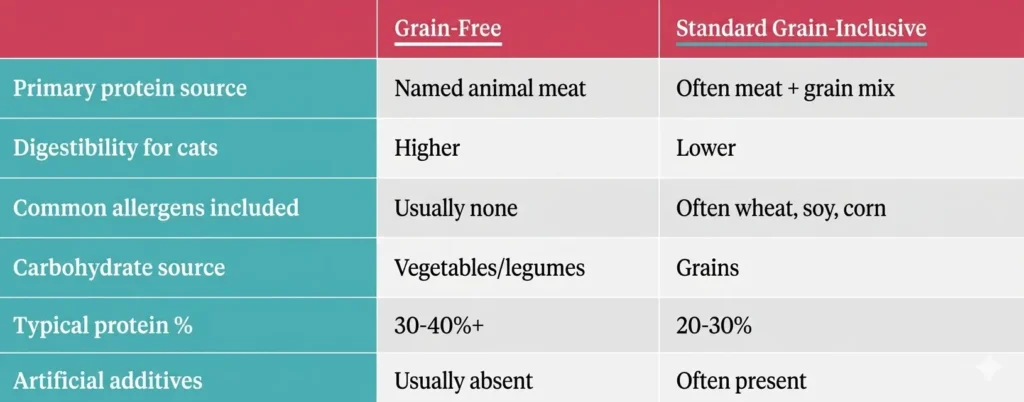
How Grain-Free Food Can Help a Sensitive Stomach
Removing grains often reduces the load on a cat’s digestive system. Cats do not produce much amylase, the enzyme that breaks down carbohydrates. So foods heavy in grains can pass through partially undigested, causing irritation.
When you switch to a high-protein, grain-free diet, a few things often change.
Digestion tends to become more regular. Stool quality usually improves within a couple of weeks. Some cats also show less bloating and less frequent vomiting.
Your cat’s coat health and skin can improve too. Many digestive-related food sensitivities also show up on the surface: dull fur, scratching, or flaky skin. A cleaner diet often helps with both.
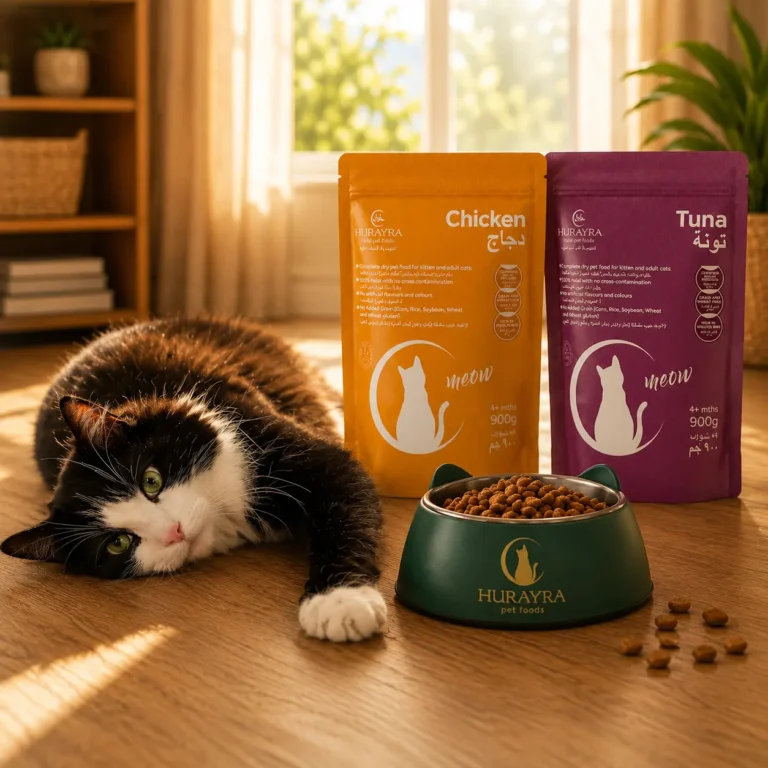
Hurayra’s recipes are completely grain, wheat, and filler-free, which means the protein content stays high and the digestive burden stays low. Both flavours, chicken and tuna, follow the same clean formula.
What to Look for When Choosing Grain-Free Cat Food
Not all grain-free cat foods are equal. Here is what actually matters when you are reading a label.
Protein content and source. Look for named animal proteins near the top of the ingredient list, such as chicken, tuna, or salmon. “Meat derivatives” and “animal by-products” are vague and tell you very little about quality.
Protein percentage. Cats need a high-protein diet. Look for at least 30% protein. Hurayra’s dry cat food recipes contain 35% protein from real, named meat sources.
No artificial additives. Artificial colours, preservatives, and flavour enhancers have no nutritional value. For sensitive cats, they can add unnecessary irritants.
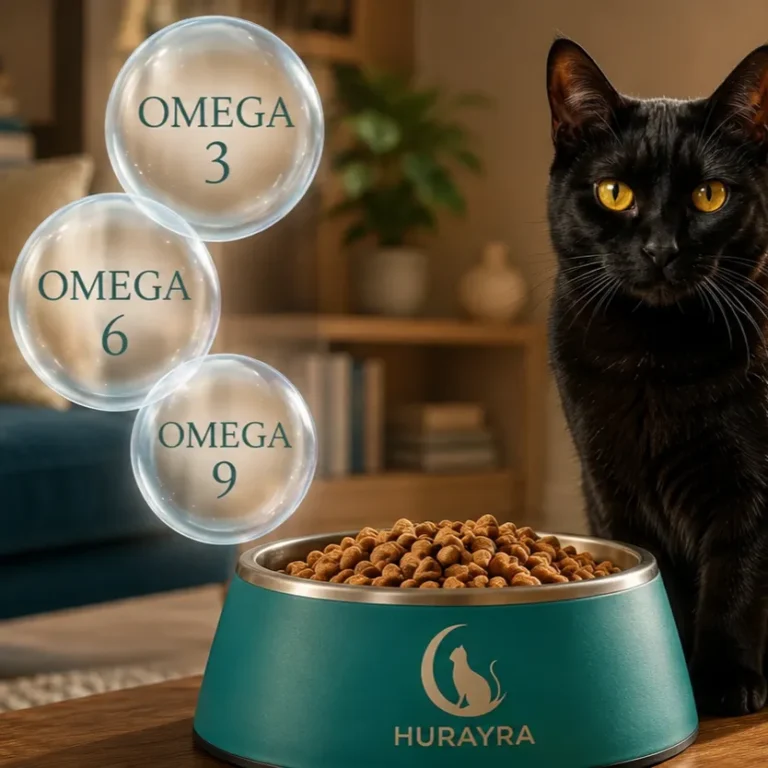
Omega fatty acids. Omegas 3, 6, and 9 support gut lining health, reduce inflammation, and improve coat condition. They are especially useful for cats with digestive issues.
No soy. Soy is a common allergen in cats and can interfere with protein absorption. It is worth avoiding, especially for cats with ongoing digestive problems.
How to Switch Your Cat to a New Food Without Upsetting Their Stomach
Ironically, switching to a better food can cause temporary stomach upset if you do it too quickly.
The safest approach is a gradual transition over seven to ten days. Start with 80% of their current food and 20% of the new food. Shift the ratio slowly every two to three days until you have fully made the switch.
This gives the gut microbiome time to adjust. Rushing the switch, even to a better quality food, can cause loose stools in the short term.
If your cat is particularly sensitive, go slower. Some vets recommend a two-week transition for cats with a history of digestive issues.
Hurayra’s halal chicken cat food is a good starting point for cats new to grain-free food. Chicken is generally easier to digest than richer proteins, making it a sensible first option for a sensitive stomach.
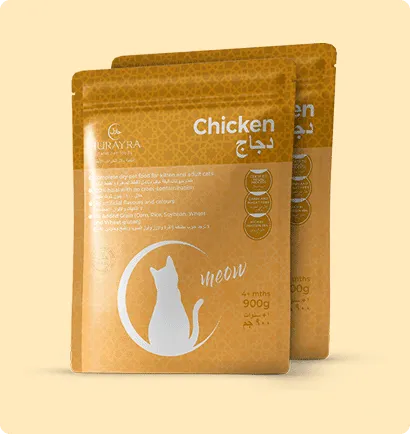
Chicken Cat Food
Subscribe & Save 25%
Signs the Food Is Actually Working
Most cats take two to four weeks to show a clear improvement. You are looking for a few specific changes.
Stools become firmer and more consistent. Vomiting becomes less frequent. Your cat finishes their meals more readily. Coat condition improves, with more shine and less shedding.
Some cats also become more active and alert once digestion improves. It is easy to attribute low energy to age or personality. Sometimes it is just the food.
If things are not improving after four weeks, it is worth speaking to your vet. Persistent digestive issues can occasionally point to conditions like IBD or parasites, which need a proper diagnosis.
For most cats with a food-related sensitive stomach, a clean grain-free diet makes a clear difference within the first month.
A Final Word on Choosing Cat Food You Can Trust
With so many options on the market, it is easy to feel overwhelmed. But the basics are simple: high-quality named protein, no grains or unnecessary fillers, no artificial additives, and a formula built for how cats actually digest food.
Hurayra’s journey to create halal cat food started specifically with that in mind. It is grain-free, wheat-free, and soy-free, with 35% protein from real chicken or tuna. It is also HMC-certified halal, making it one of the few cat foods in the UK that meets both high nutritional and ethical sourcing standards.
If your cat has been struggling with digestive issues, changing their food is often the simplest first step. Start with something clean, protein-led, and free from the usual suspects.
Your cat’s stomach will usually tell you within a few weeks whether you have made the right call.
If you want to know more or have questions about which recipe suits your cat, you can get in touch with the Hurayra team directly. They are happy to help you find the right fit.
Tuna and Chicken Combo
Tuna and Chicken Combo
Subscribe & Save 25%
Frequently Asked Questions
It often is. Removing grains reduces the digestive load on cats, who are not built to process carbohydrates efficiently. Many cats see improved digestion within a few weeks of switching.
Watch for recurring vomiting, loose stools, bloating, or a dull coat. If these symptoms improve when you change the food, the previous diet was likely the cause.
Most cats show clear improvement within two to four weeks. Stool quality and vomiting frequency are usually the first things to change.
Yes, provided the food is nutritionally complete and suitable for their age. Hurayra’s recipes are suitable for cats aged four months and above, supporting healthy growth without unnecessary fillers.
Avoid wheat, corn, soy, meat derivatives, and artificial additives. These are common triggers for digestive upset and offer little to no nutritional benefit for cats.