Written by Saniya Ahmed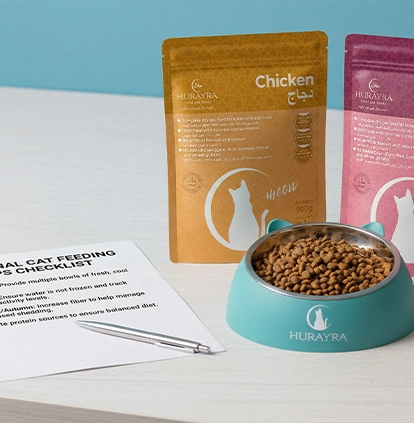
TL;DR
Cats eat more in winter, less in summer, and need more moisture than most owners realise all year. Outdoor cats show bigger seasonal swings than indoor cats. The foundation stays the same: clearly labelled, high-protein nutrition with consistent portions. Small seasonal adjustments make a measurable difference.
Most owners feed the same portions year-round. That feels logical. Cats thrive on routine. But feline biology is influenced by daylight and environmental signals. Cats are photoperiod sensitive. As daylight shortens in autumn and winter, hormonal rhythms shift. Appetite may increase slightly. Energy expenditure can rise, particularly in outdoor cats exposed to colder air.
As spring transitions into summer, many cats naturally eat less. Resting behaviour increases in warmer months. This is regulation, not fussiness.
Recent behavioural tracking research in 2024 confirmed that seasonal and weather changes influence how domestic cats divide their time between eating, resting, and moving.
Even in the UK’s moderate climate, February and July present different biological signals. Indoor cats are not immune. Light through windows still affects rhythm. Seasonal cat feeding tips are not about overreacting. They are about responding intelligently.
Adjusting Your Cat’s Diet In Winter
In colder months, outdoor cats may burn more energy maintaining body temperature. A modest portion increase can be appropriate if body condition begins to drop.
Indoor cats, however, often experience the opposite problem. Appetite may increase slightly while activity decreases. Winter weight gain is more common in fully indoor cats across the UK than underfeeding.
The most reliable guide is Body Condition Score (1–9 scale). A score of 4–5 represents ideal conditions. You should be able to feel ribs without pressing firmly, see a visible waist from above, and notice a gentle abdominal tuck from the side.
If your cat moves above a 5, reduce portions gradually rather than assuming seasonal appetite justifies extra food. Winter feeding is about monitoring, not automatic increases.
Feeding Your Cat Well Through Summer
During warmer months, reduced appetite is normal. Forcing winter-sized portions can lead to digestive upset or unnecessary weight gain. The central shift in summer is hydration.
Cats evolved to obtain most of their water from prey. Dry kibble contains roughly 8–12% moisture. Wet food typically contains 70–80%.
In summer, moisture-rich meals matter more than calorie increases. Serving food at room temperature can also improve intake, as scent plays a key role in feline appetite. Seasonal cat feeding tips for summer focus on water content, not volume.
Difference Seasonal Impact on Indoor & Outdoor Cats
Outdoor cats experience real temperature exposure and more variable energy expenditure. Their seasonal appetite shifts are often clearer.
Indoor cats are buffered from temperature but not from daylight. Because activity often drops during darker months, winter weight gain is more common among indoor cats.
Enrichment plays a protective role. Structured play, climbing spaces, and puzzle feeders help balance intake and expenditure when outdoor movement is limited. Matching intake to actual activity is more important than feeding by season alone.

Treats And Portion Control Across The Year
Healthy cat treats are fine as part of a balanced diet. The issue is usually volume, not the treats themselves. A common rule of thumb is that treats should account for no more than 10% of daily calories.
In practice, this is quite small. A 4kg cat needs around 200–250 calories per day. Ten percent of that is 20–25 calories, roughly three or four small treats. It’s easy to overshoot without realising.
Portion control matters more in winter for indoor cats, and more in summer for outdoor cats who may be less active. If you’re using a measuring scoop, check the guidance on your cat’s food packaging. But also check your cat. Body condition is a better guide than the packet.
Avoid rawhide or highly processed treat products with long ingredient lists. If you can’t identify what’s in it, your cat probably doesn’t need it.
How To Choose The Best Cat Food For UK Seasons
The best food for your cat isn’t necessarily the most expensive or the one with the most marketing behind it. It’s the one with a short, honest ingredient list: named protein source first, no unnecessary fillers, appropriate moisture content for your cat’s needs.
Single-source protein foods (one named meat rather than a blend of unnamed ‘meats’) are easier on digestion and clearer in terms of what you’re actually feeding.
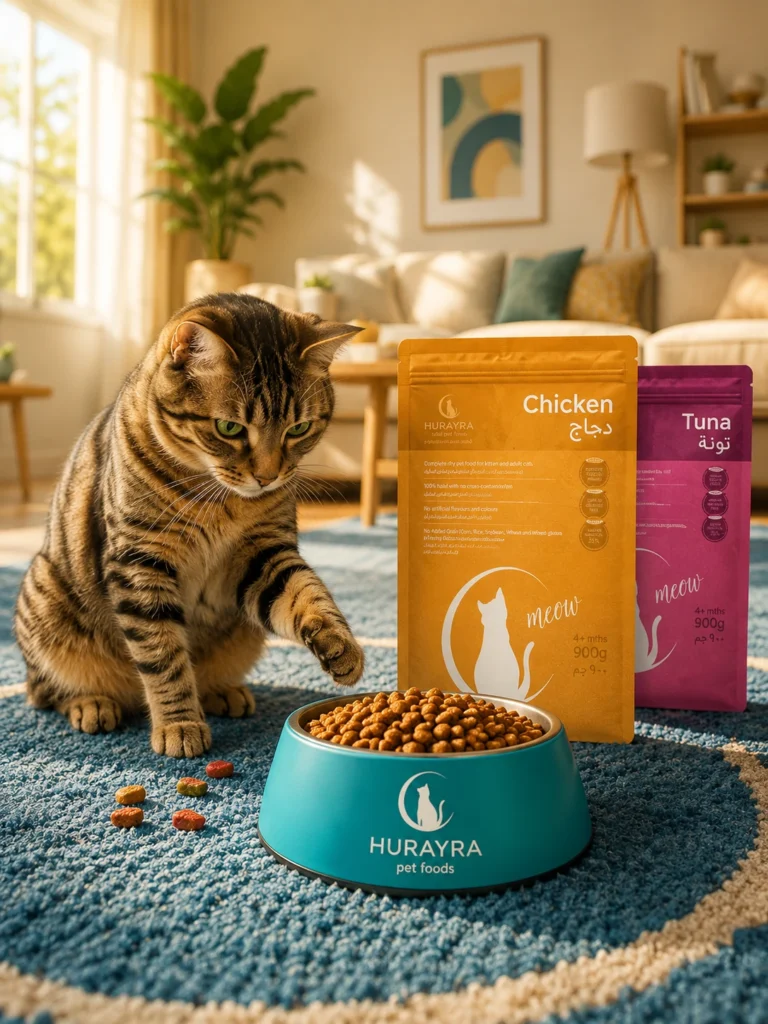
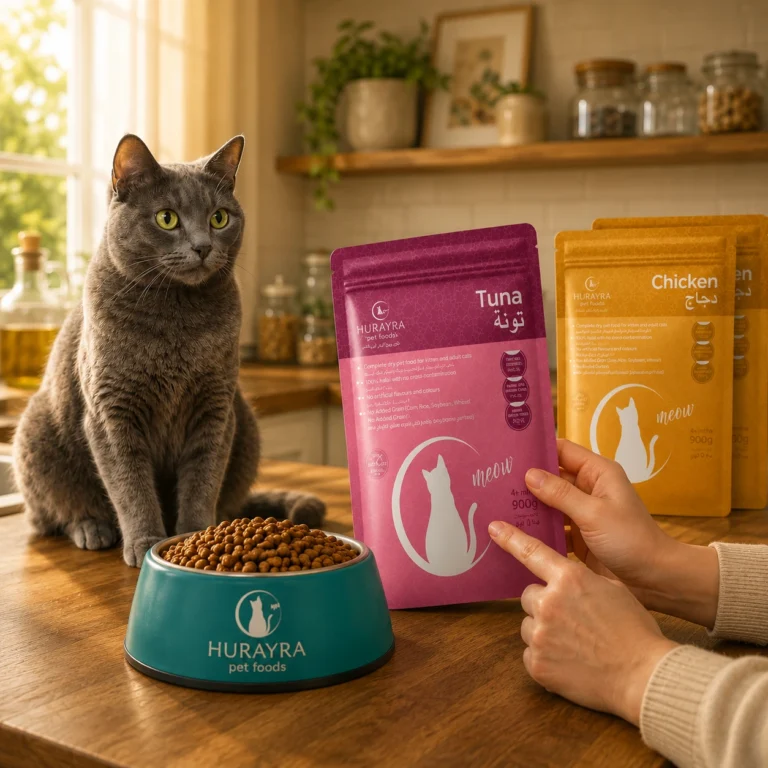
Hurayra is built on this very principle, using ethically and halal-sourced ingredients with no hidden fillers. Grain-free options suit cats well given their carnivore physiology, though grain-free alone isn’t a guarantee of quality. The full ingredient list still matters.
Dry Chicken Cat Food
Pack of 2
View Product
For UK owners who prefer structure, the Hurayra two-pouch box supports approximately four weeks of steady feeding. A subscription option allows you to maintain consistency without disruption. Consistency is the anchor. Seasonal adjustment is the refinement.
A Simple Seasonal Feeding Checklist
A seasonal cat diet guide is only useful if it translates into things you can actually do. Here’s a straightforward reference to return to as the year turns:
Feeding Your Cat With Confidence All Year Round
As the seasons shift, return to three simple checks: monitor body condition, support daily hydration, and adjust portions only if activity or weight genuinely changes. Seasonal feeding should be about refinement, not reinvention.
The foundation of your cat’s diet should remain consistent throughout the year. Choose clearly labelled, protein-rich nutrition with steady moisture and transparent ingredients so that any seasonal adjustment stays small and controlled.
For owners who value structure and simplicity, the Hurayra two-pouch box supports approximately four weeks of balanced feeding, with a subscription option available to help maintain routine without disruption.
Tuna and Chicken Combo
Pack of 2
View Product
Frequently Asked Questions
1 Is 2 pouches a day enough for a cat?
It depends on the cat’s weight, age, and activity level, but many average adult cats need around 2–3 standard pouches daily.
2 What is the 25 rule for cat food?
The 25% rule means a named ingredient must make up at least 25% of the product to be highlighted on the label.
3 Should you feed your cat more in winter?
Outdoor cats may need slightly more during cold weather, while indoor cats usually do not.
4 Do cats like being covered in blankets?
Some do if they feel secure and warm, but many prefer the option to move freely rather than being covered.
5 Do cats sleep more and eat less in the winter?
Cats often sleep more in colder months, but appetite changes vary depending on their environment and activity level.
It depends on the cat’s weight, age, and activity level, but many average adult cats need around 2–3 standard pouches daily.
The 25% rule means a named ingredient must make up at least 25% of the product to be highlighted on the label.
Outdoor cats may need slightly more during cold weather, while indoor cats usually do not.
Some do if they feel secure and warm, but many prefer the option to move freely rather than being covered.
Cats often sleep more in colder months, but appetite changes vary depending on their environment and activity level.