Written by Saniya Ahmed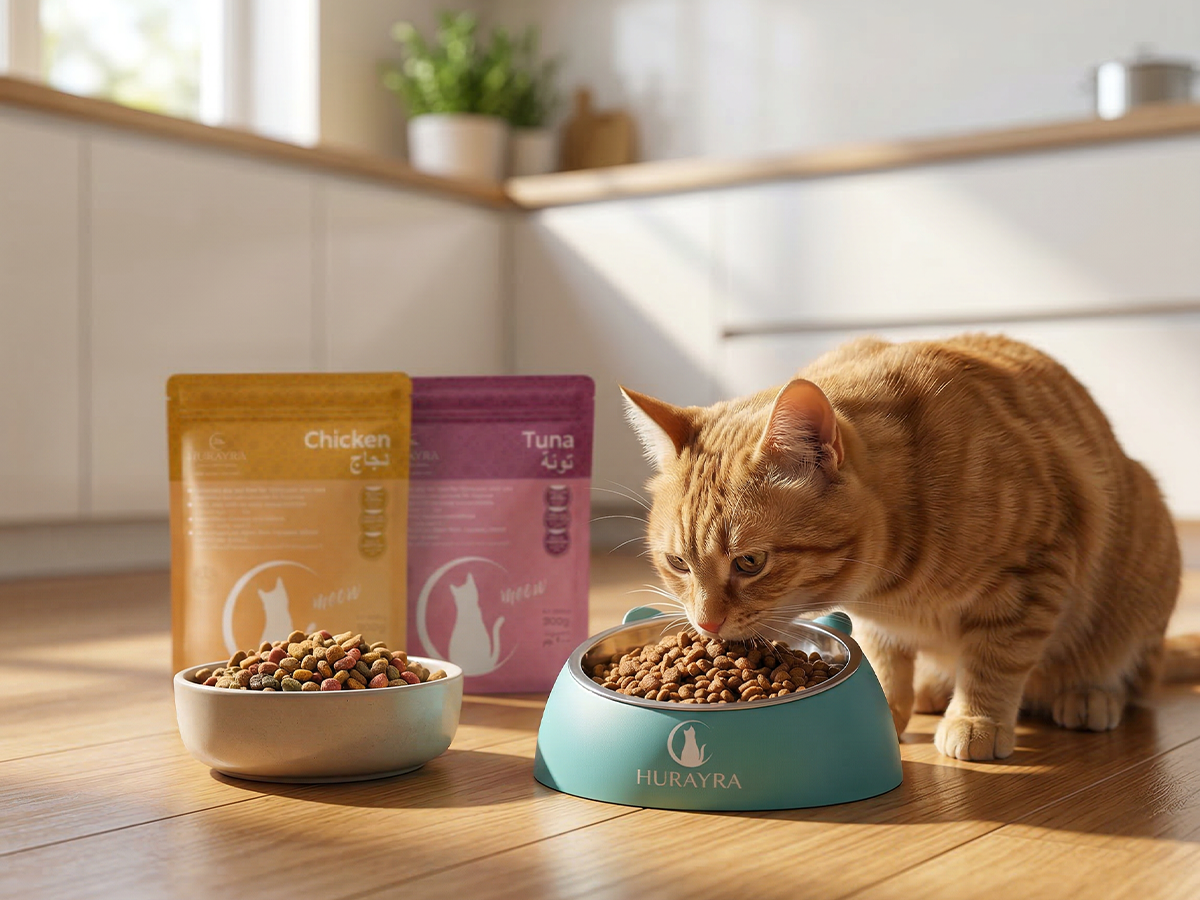
TL;DR
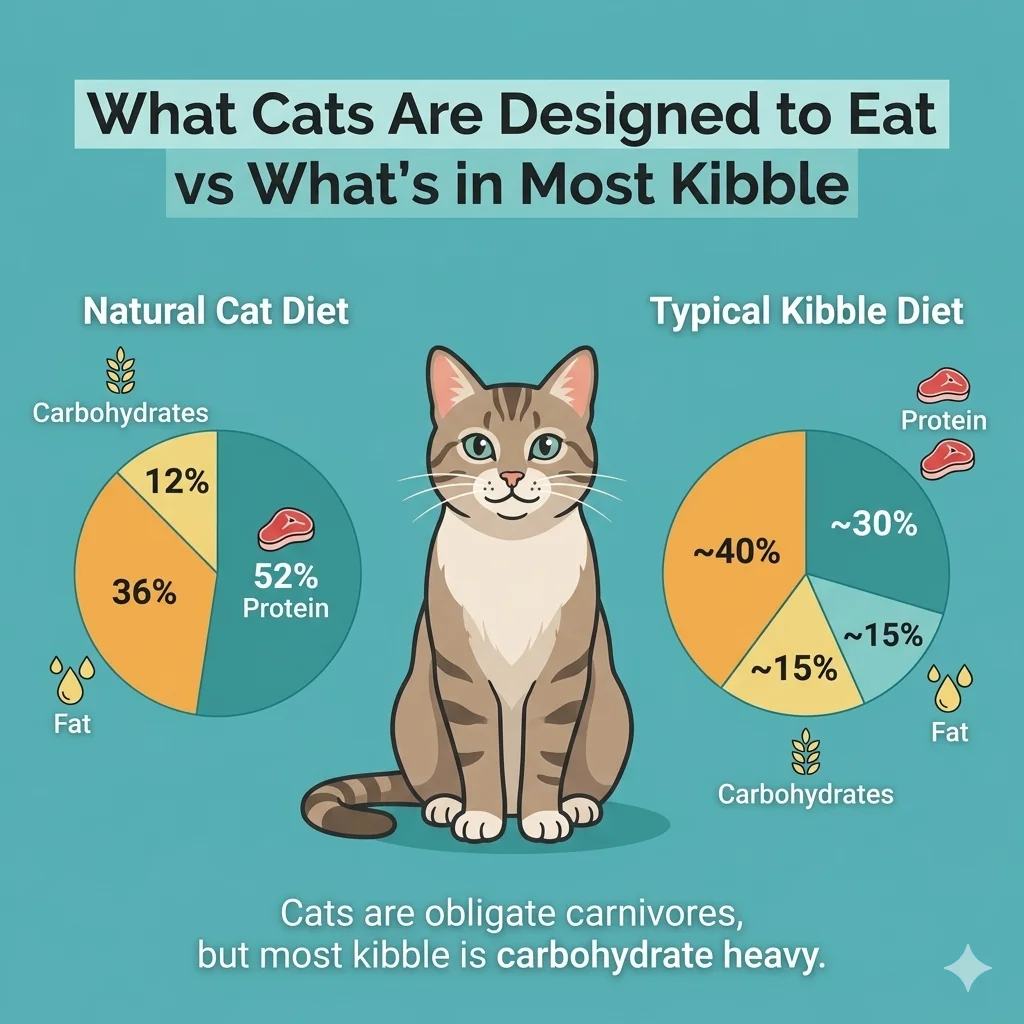
Cats are obligate carnivores built for protein and fat, not grain, but most standard kibble is 40% carbohydrate. Grain-free dry cat food replaces cereal fillers with named meat proteins, which better matches how cats are designed to eat and can reduce common issues like poor coat condition, weight gain, and digestive sensitivity. When choosing one, check that a named meat is the first ingredient, crude protein is 28% or above, and taurine is listed. For Muslim pet owners, halal certification matters too, and that means checking the full supply chain, not just the label.
Why Grain-Free Dry Cat Food Is Better Than Standard Kibble?
Most cat owners choose kibble because it is convenient, consistent, and competitively priced. What fewer consider is what fills the remaining space once the protein has been accounted for, and whether that filler is doing their cat any good at all.
Grain-free dry cat food has moved from niche health trend to mainstream consideration for a straightforward reason: it reflects how cats actually digest food.
This article covers the biological case for lower-grain and grain-free formulations, what “grain-free” cat food means and does not mean on a label, and how to evaluate whether any particular product (kibble or otherwise) is genuinely nutritious rather than simply well-marketed.
What Grain-Free Dry Cat Food Actually Means
Grain-free dry cat food is kibble made without cereal grains: no wheat, corn, rice, barley, or oats. Instead, the carbohydrate content (yes, dry food does need some to hold its shape) comes from ingredients like sweet potato, peas, or lentils.
That’s the plain definition. What it doesn’t mean is “carb-free,” “raw,” or anything particularly exotic. It’s dry food made with a different base. The reason this matters is straightforward: cats are obligate carnivores, and their digestive systems were never built around grain.
Why Cats Are Obligate Carnivores
This is worth understanding properly, because it shapes every other decision you’ll make about food.
Cats must eat animal protein to survive. They can’t synthesise certain amino acids (taurine and arginine in particular) on their own. They have to get them from meat. Unlike dogs, cats also struggle to use plant protein efficiently. Their digestive tracts are short and fast, designed for processing prey rather than plant matter.
The gap between what cats are built to eat and what ends up in the bowl is wider than most people realise.
What’s Actually In Standard Kibble
Standard kibble commonly uses grain as a cheap filler. Not because it’s ideal for cats, but because it’s inexpensive, shelf-stable, and helps the biscuit hold together. When you see “cereals” on an ingredients panel (often listed without specifying which ones), that’s usually wheat or maize.
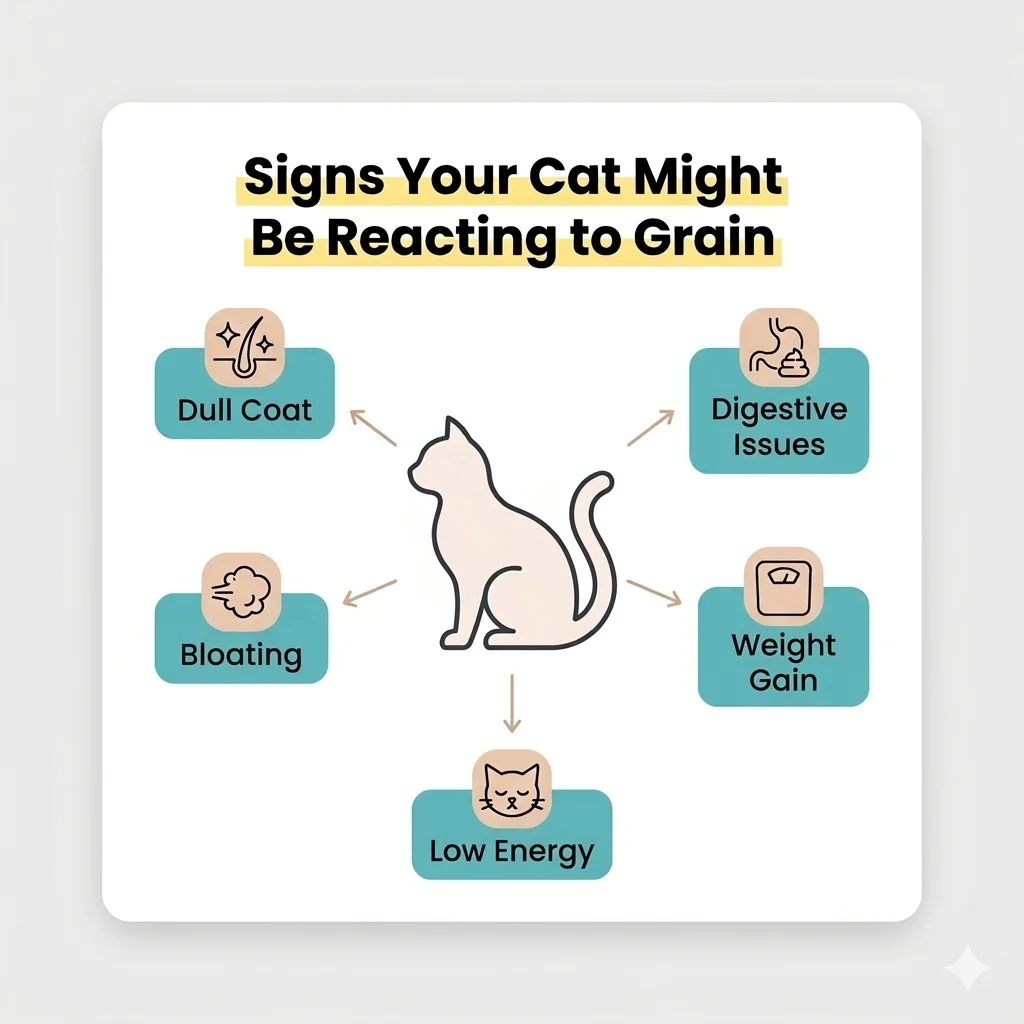
There’s nothing immediately toxic about this for most cats. But a significant portion of what your cat eats every day is something their body isn’t built to process well. Over years, that can show up as weight gain, digestive sensitivity, loose stools, or a dull coat. These aren’t dramatic symptoms. They’re easy to put down to the cat “just being that way.” Often, they’re not.
The Health Benefits Of Cat Food Without Grains
Switching to grain-free dry cat food doesn’t automatically solve everything. A badly formulated grain-free food is still a badly formulated food. But a well-made grain-free kibble, one where the first ingredients are named animal proteins rather than unspecified by-products, tends to offer some real advantages.
Cats on higher-protein, lower-carbohydrate diets tend to maintain a healthier weight. Their blood glucose response is lower, which means more consistent energy rather than spikes and dips tied to carb-heavy meals. Coat condition often improves when the diet is richer in animal fats and essential amino acids. Digestive issues like loose stools, excess wind, or food sensitivities frequently reduce when grain is removed, particularly wheat, which some cats react to.
None of this means grain-free is a cure-all. If your cat has specific health conditions, your vet’s guidance comes first. But for a healthy adult cat, a quality grain-free dry food is closer to what their body was designed to run on.
Grain-Free Vs Regular Cat Food: How To Actually Read The Difference
The best way to compare grain-free vs regular cat food is to skip the front of the bag entirely and go straight to the ingredients list.
The phrase “meat and animal derivatives” is also worth pausing on. It can mean almost anything: beaks, feathers, offal from multiple species. It’s not necessarily harmful, but it tells you very little about what your cat is actually eating.
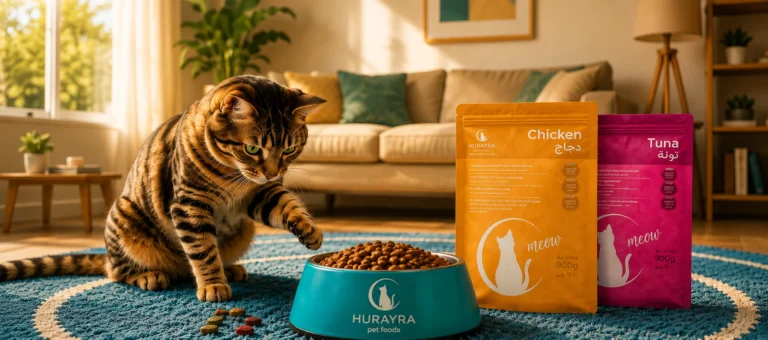
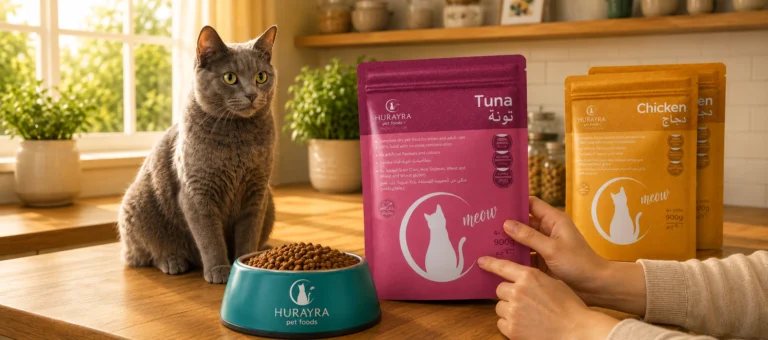
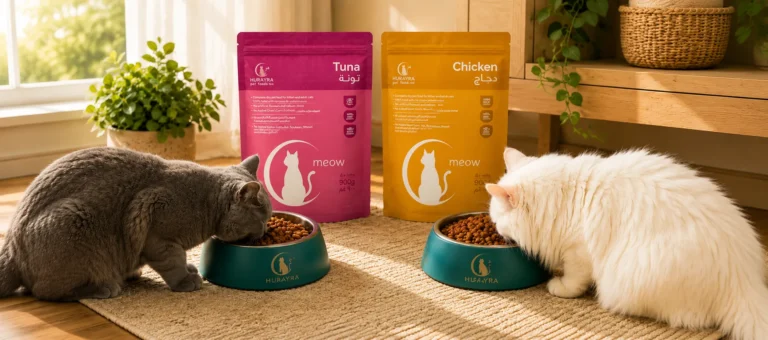
Hurayra uses 35% protein as its base: real named meat per recipe rather than unspecified derivatives. That matters if your cat has sensitivities, and it matters if you simply want to know what’s going in the bowl.
What To Look For When Choosing Grain-Free Cat Food In The UK
Grain-free is a growing category in the UK, which means the quality varies a lot. A few things worth checking before you buy:
The protein source should be named. “Chicken” is better than “poultry.” “Fresh salmon” is more transparent than “fish derivatives.” Protein with clear sources is easier on digestion and simpler to track if sensitivities come up.
The first ingredient should be meat. If peas or sweet potatoes appear before any animal protein, the food is heavier in plant matter than you want for a carnivore.
Check the crude protein percentage. For adult cats, 26% or above in dry cat food is a reasonable benchmark. Higher is generally better, within reason.
Look for taurine in the ingredients or guaranteed analysis. It’s an essential amino acid cats can’t make themselves, and it must be added to any complete cat food. If it’s not listed, the food isn’t complete.
Dry Chicken Cat Food
Pack of 2
Why Sourcing Matters, And Why Halal Grain-Free Cat Food Is Harder To Find Than It Should Be
For Muslim pet owners in the UK, food choices for a pet carry the same ethical weight as food choices for the family. That means more than avoiding pork derivatives. It means the entire supply chain (how animals are raised, transported, and slaughtered) follows Islamic principles.
This is genuinely rare in the UK pet food market. Most brands that happen to be grain-free aren’t halal. Many halal-labelled pet foods contain grain. Finding both together, with proper certification and transparent sourcing, takes real effort.
Hurayra is halal-certified and ethically sourced, with supplier validation through Morrisons as an additional layer of independent oversight. That’s not a marketing claim. It’s a traceable commitment to how the food is made. For Muslim families who care about what their cat eats in the same way they care about what the family eats, this matters.
Islamic ethics around animal care are clear: animals in our care deserve to be treated with kindness, fed well, and not subjected to unnecessary harm. Choosing food that is nutritionally sound and ethically produced is part of that responsibility.
A Balanced View: Is Grain-Free Right For Every Cat?
It’s worth being honest here. The conversation around grain-free diets became complicated a few years ago when the US Food and Drug Administration began investigating a potential link between grain-free diets and dilated cardiomyopathy (DCM) in dogs. Some UK cat owners noticed the headlines and got worried.
The key detail: that concern was dog-specific and linked to legume-heavy formulations, not cats and not all grain-free foods. The research hasn’t been replicated in cats, and feline nutritionists note that cats have meaningfully different metabolic needs to dogs. Low-grain and grain-free diets are widely considered appropriate for feline biology.
If your cat is elderly, has kidney disease, or is under specialist veterinary care, follow your vet’s advice. For healthy adult cats, grain-free kibble for cats is a well-supported option, not a fringe one.
Choosing food you can feel good about
Cats don’t need much. Clean protein, the right nutrients, food that agrees with their digestion. What they can’t do is read an ingredients label or ask where their food comes from. That part is yours.
If you care about what you’re feeding, whether for your cat’s health, your values, or both, it’s worth choosing a brand that takes those things seriously too. Hurayra is grain-free cat food made with halal-certified, ethically sourced 35% protein recipes, packed with essential nutrients and designed to give cats what they actually need, without the fillers, vague sourcing, or unnecessary complexity that fills most pet food aisles.
No drama. Just clean, honest food for cats who deserve better than the default.
Tuna and Chicken Combo
Pack of 2
Frequently Asked Questions
1 Is grain-free cat food better for cats?
For most healthy adult cats, yes, provided the food is well-formulated. Cats are obligate carnivores and don’t need grain. A grain-free food with high animal protein and named meat sources better matches their biological needs than cereal-heavy kibble. That said, “grain-free” alone doesn’t guarantee quality. The ingredients list tells you more than the front of the bag.
2 What is the difference between grain-free and regular cat food?
Regular kibble uses wheat, maize, or rice as a base ingredient to bulk out the recipe. Grain-free cat food replaces these with alternatives like sweet potato or lentils, but more importantly, it usually contains a higher proportion of animal protein. The practical difference for your cat is less carbohydrate, more meat-based nutrition, and often better digestibility.
3 Is grain-free cat food safe for cats in the UK?
Yes. The DCM concern that made headlines a few years ago was specific to dogs and to particular legume-heavy recipes. It hasn’t been found in cats. Grain-free dry cat food, properly formulated with adequate taurine and named protein sources, is considered safe and appropriate for cats. If you have specific health concerns about your cat, your vet is the right person to consult.
For most healthy adult cats, yes, provided the food is well-formulated. Cats are obligate carnivores and don’t need grain. A grain-free food with high animal protein and named meat sources better matches their biological needs than cereal-heavy kibble. That said, “grain-free” alone doesn’t guarantee quality. The ingredients list tells you more than the front of the bag.
Regular kibble uses wheat, maize, or rice as a base ingredient to bulk out the recipe. Grain-free cat food replaces these with alternatives like sweet potato or lentils, but more importantly, it usually contains a higher proportion of animal protein. The practical difference for your cat is less carbohydrate, more meat-based nutrition, and often better digestibility.
Yes. The DCM concern that made headlines a few years ago was specific to dogs and to particular legume-heavy recipes. It hasn’t been found in cats. Grain-free dry cat food, properly formulated with adequate taurine and named protein sources, is considered safe and appropriate for cats. If you have specific health concerns about your cat, your vet is the right person to consult.