Written by Uzma Aslam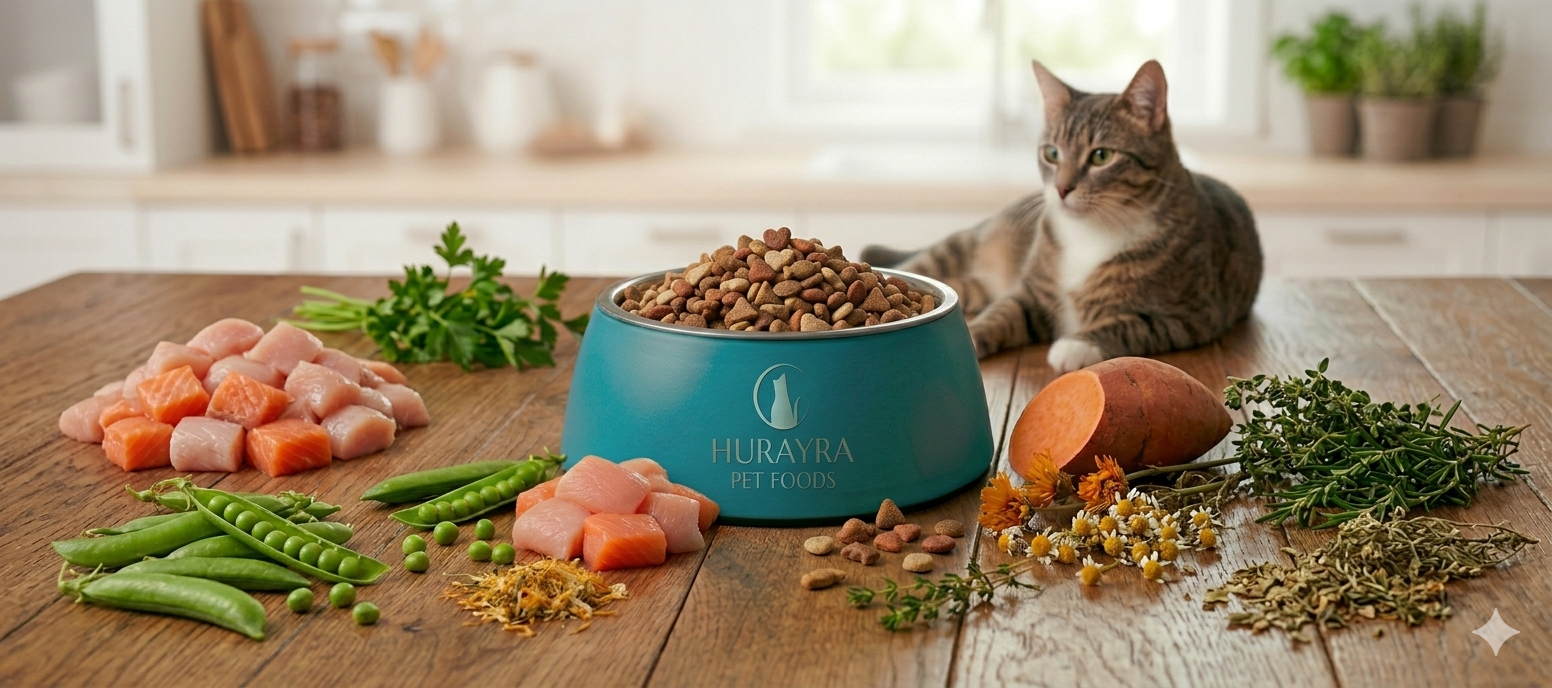
TL;DR
Cats can’t efficiently process grains. For sensitive stomachs, a grain-free diet built around named single-source protein reduces digestive upset and aligns with feline biology. Check the first three ingredients, transition gradually over 10 days, and maintain consistency. Hurayra’s HMC-certified, grain-free range is available at Morrisons and via subscription.
Grain-Free Cat Food for Sensitive Stomachs: A Complete Guide
Most cat owners notice the signs before they have a name for them. Loose stools after meals. A cat who eats well but never quite settles. Intermittent vomiting that the vet attributes to “dietary sensitivity” without much further direction. These are not dramatic symptoms, which is partly why they get managed rather than solved.
What changes the picture, for many owners, is looking more carefully at ingredients. Specifically, whether grain belongs in the bowl at all.
This guide is for cat owners who are working through that question seriously. It covers the biology behind feline digestion, what the evidence says about grains and sensitivity, how to evaluate grain-free cat food for sensitive stomachs with some rigour, and where Hurayra’s formulation sits within that picture.
Why Cats and Grains Have a Complicated Relationship
Cats are obligate carnivores. That classification has practical consequences for how their digestive systems are built.
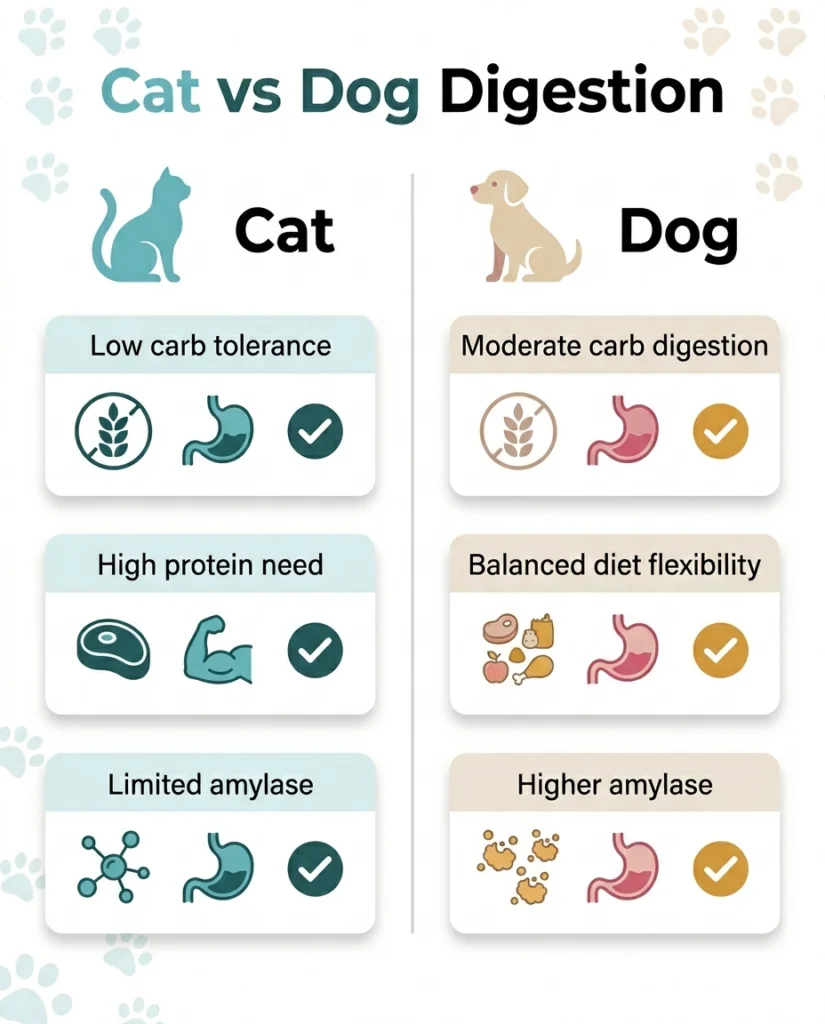
Unlike dogs, which have multiple copies of the amylase gene and reasonable capacity to digest starchy carbohydrates, cats have very limited amylase activity in their saliva and intestinal tract. Their metabolism is designed around protein and fat as primary energy sources. Carbohydrates, including grains, are not a natural part of their nutritional architecture.
This does not mean all cats react badly to grains. Many tolerate them without obvious issue. But for cats with sensitive stomachs, the cat’s reduced ability to efficiently process grain-based carbohydrates can be a contributing factor to digestive instability. Wheat, maize, and rice are common ingredients in standard commercial cat food, partly because they are cheap binders and caloric fillers. They serve a manufacturing purpose more than a nutritional one.
Grain intolerance in cats is distinct from a true grain allergy, though both can produce overlapping symptoms: loose stools, flatulence, skin irritation, and inconsistent appetite. A food sensitivity is an adverse digestive response; an allergy involves an immune reaction. Both are reasons to consider what is actually in the food and whether it is appropriate for that individual animal.
Grain-free instead of grain-inclusive does not automatically mean low-carbohydrate, and it does not automatically mean better. It means the formulation excludes grains; wheat, corn, rice, barley, oats, as ingredients.
Some grain-free foods replace grains with potato, pea, or tapioca. These still contribute carbohydrates. A cat with a sensitive stomach caused by overall carbohydrate load may not benefit significantly from that swap. The meaningful question is not only whether the food is grain-free but whether the protein content is high, the carbohydrate content is low, and whether the protein source is named and digestible.
FEDIAF, the European trade body for pet food manufacturers, publishes nutritional guidelines used across the UK industry. Those guidelines establish minimum protein requirements for cats, but they also inform how manufacturers calculate digestibility and biological value. A grain-free wet food formulated to FEDIAF standards, with a named protein in the first ingredient position, is a different product from a grain-free dry food built around legume starch. Reading ingredient lists with this in mind matters.
A reasonable benchmark: look for wet cat food with a minimum of 60–70% moisture (which supports urinary health alongside digestion), and dry matter protein content of at least 40%. Anything substantially below that should prompt questions.
Grain-Free Cat Food for Sensitive Stomachs: What to Look For
When evaluating grain-free cat food for sensitive stomachs, the first three ingredients carry most of the diagnostic weight.
If the first ingredient is a named protein source; chicken, salmon, duck, lamb, the food is built around animal nutrition. If the first ingredient is a meal derivative, a “meat and animal derivatives” catch-all, or a carbohydrate filler, the protein content is likely lower and the biological value less predictable.
source protein formulas are particularly useful for cats with known or suspected sensitivities. When a food contains multiple protein sources, identifying which one is causing a reaction becomes difficult. A protein formula, maintained consistently over several weeks, allows genuine elimination feeding. If symptoms improve, you have useful information. If they do not, you can rule out that protein and test another.
Digestibility is harder to assess from a label alone, but certain ingredients are reliable markers. Hydrolysed proteins are pre-digested and tend to be gentler on the gut. Probiotics or prebiotics (often listed as MOS, FOS, or specific strains) support microbiome stability. High moisture content in wet food reduces digestive workload compared to dry kibble.
Body condition should be monitored throughout any dietary transition. The standard 1–9 body condition scoring scale, where 1 is severely underweight and 9 is obese, with 4–5 being optimal, is a practical tool. Significant digestive sensitivity in cats can suppress appetite and gradually compromise body condition. If a cat’s BCS drops below 4 during a dietary trial, that warrants veterinary attention rather than continued independent management.
Halal Certification and Ingredient Traceability
For Muslim cat owners, halal certification is a consideration. For all cat owners, what sits behind that certification is worth understanding regardless of religious context.
HMC (Halal Monitoring Committee) certification, applied to pet food, involves third-party verification of the slaughter process and supply chain documentation. What that means in practice is full traceability: the meat source can be verified, the processing chain is audited, and the ingredient origin is documented. That level of supply chain accountability is not standard across the pet food industry.
Halal certification does not make cat food nutritionally superior. A halal-certified food built around poor-quality derivatives and grain fillers is still a poor-quality food. The nutrition must stand independently. What the certification adds is supply chain transparency and, for many owners, confidence in the sourcing of animal protein which, in a sensitive-stomach context, matters because protein quality and digestibility are directly affected by how the animal was raised, slaughtered, and processed.
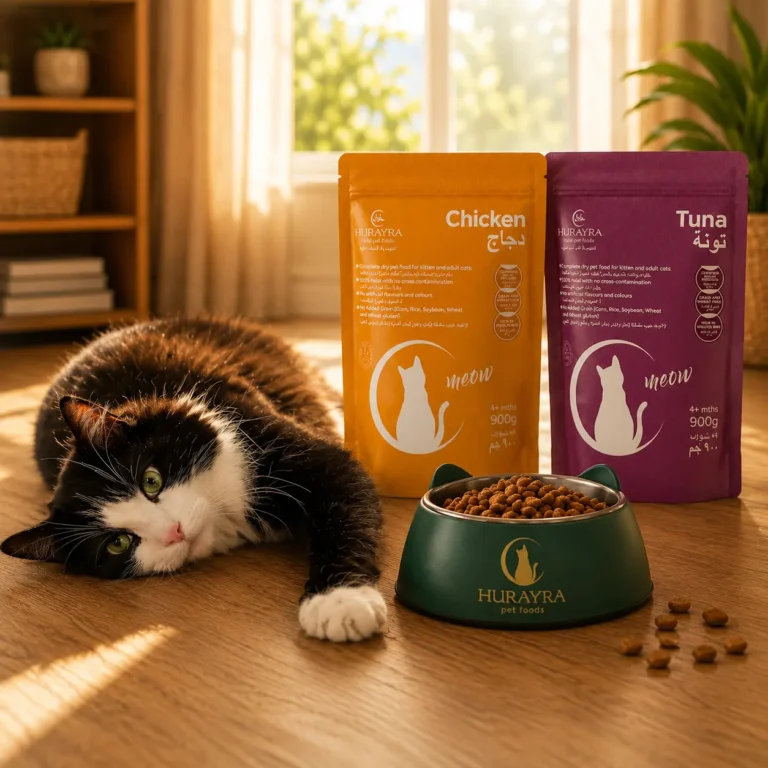
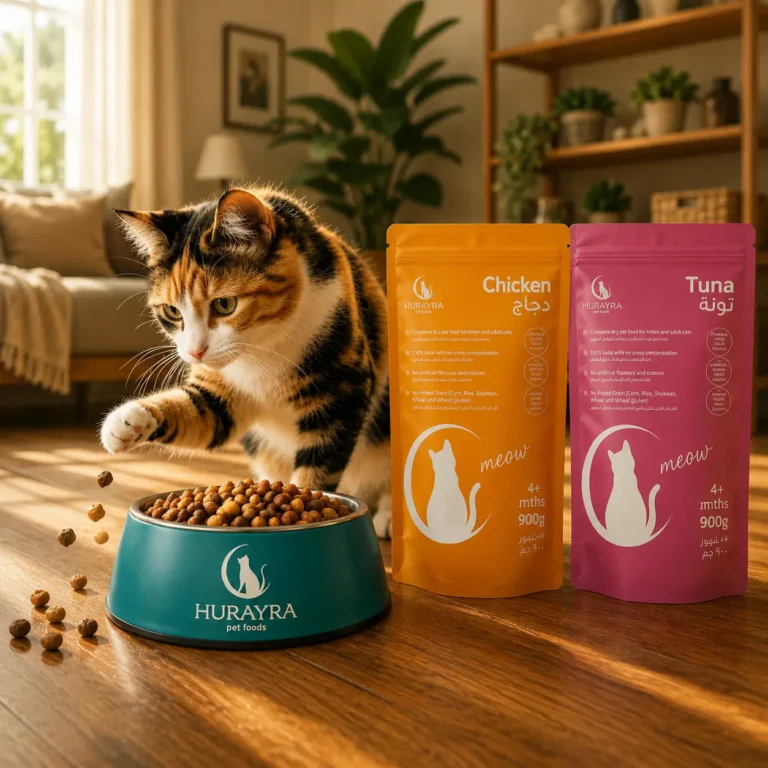
Hurayra includes clean and nutrition enriched ingredients in dry cat food formulation that is HMC-certified. The relevance for owners not motivated by religious considerations is that the sourcing accountability behind that certification aligns with a broader transparency standard. It is not a marketing claim about health. It is a verifiable audit trail.
Chicken Cat Food
Pack of 2
A Note on Mixing Wet and Dry Food
Wet food and dry food serve different functions. Wet food contributes moisture, which is relevant to urinary tract health and reduces the digestive workload. Dry food contributes to dental wear and tends to be more calorie-dense per gram. Feeding both is a reasonable approach, but the combined nutritional profile needs to be coherent.
If grain-free cat food for a sensitive stomach is the goal, both the wet and dry components should align with that aim. A high-quality grain-free wet food paired with a standard grain-inclusive dry food is a partial solution at best.
How Hurayra Approaches Formulation
Hurayra grain-free cat food is built around a source named protein, with no wheat, corn, or rice in the formulation. The range is HMC-certified, with full supply chain traceability on all animal protein sources. The wet food range meets FEDIAF minimum nutritional standards for adult cats.
Hurayra is stocked at Morrisons, which positions it as a mainstream retail product rather than a specialist-only option. That accessibility matters: consistent, appropriate nutrition does not require sourcing food from specialist online channels.
The formulation is designed for long-term feeding, not short-term elimination trials alone. Cats with chronic digestive sensitivity benefit from a stable, high-protein, grain-free diet maintained consistently, not rotated frequently between different brands and formulations. Subscription availability supports that consistency.
What to Do Next
If your cat has a sensitive stomach and you have not yet looked carefully at the grain content of their current food, start there. Check the first three ingredients. If wheat, corn, or rice appears in the top three, and your cat shows consistent digestive symptoms, a controlled trial on a grain-free protein formula is a reasonable next step.
Monitor body condition using the 1–9 BCS scale during any transition. Transition gradually. Give the new diet at least four weeks before drawing conclusions.
If symptoms are severe, persistent, or accompanied by weight loss, involve a vet before making dietary changes independently. Digestive sensitivity and food intolerance are real, manageable conditions. They are also sometimes symptoms of something else.
Hurayra’s grain-free range is designed for cat owners who want to feed well without complexity. Explore the range, consider the subscription option if consistency is the goal, and use this guide as a reference point rather than a purchase prompt.
Good nutrition is not complicated. But it does reward attention.
Tuna and Chicken Combo
Pack of 2
Frequently Asked Questions
1 Does my cat need grain-free food?
Not necessarily. Many cats live healthy lives on food that contains grain. The case for grain-free food becomes stronger when a cat shows consistent digestive symptoms, when a named food sensitivity has been identified, or when the owner wants to feed in closer alignment with feline biology. It is a suitability question, not a universal recommendation.
2 Can I mix grain-free wet food with standard dry food?
Yes, but be cautious. The benefits of a grain-free wet food can be partially offset if the accompanying dry food is grain-heavy. If digestive sensitivity is the reason for the dietary change, consistency matters: feeding one controlled diet for at least four to six weeks gives cleaner data on whether the change is helping.
3 Is grain-free more expensive?
Higher-quality protein grain-free formulas typically cost more per serving than standard commercial food. The more useful calculation is cost per nutritional unit, a dense, high-protein food fed at lower volume may cost less per day than it appears at shelf price. Subscription purchasing generally reduces per-unit cost and supports feeding consistency, which itself contributes to digestive stability.
4 How long before I see improvement on a new diet?
Most digestive responses to a dietary change; positive or negative, become apparent within two to four weeks. Full stabilisation of the gut microbiome after a transition to dry cat food can take six to eight weeks. Transition gradually: mix increasing proportions of new food with the old over seven to ten days to reduce the risk of transition-related upset.
Not necessarily. Many cats live healthy lives on food that contains grain. The case for grain-free food becomes stronger when a cat shows consistent digestive symptoms, when a named food sensitivity has been identified, or when the owner wants to feed in closer alignment with feline biology. It is a suitability question, not a universal recommendation.
Yes, but be cautious. The benefits of a grain-free wet food can be partially offset if the accompanying dry food is grain-heavy. If digestive sensitivity is the reason for the dietary change, consistency matters: feeding one controlled diet for at least four to six weeks gives cleaner data on whether the change is helping.
Higher-quality protein grain-free formulas typically cost more per serving than standard commercial food. The more useful calculation is cost per nutritional unit, a dense, high-protein food fed at lower volume may cost less per day than it appears at shelf price. Subscription purchasing generally reduces per-unit cost and supports feeding consistency, which itself contributes to digestive stability.
Most digestive responses to a dietary change; positive or negative, become apparent within two to four weeks. Full stabilisation of the gut microbiome after a transition to dry cat food can take six to eight weeks. Transition gradually: mix increasing proportions of new food with the old over seven to ten days to reduce the risk of transition-related upset.