Written by Uzma Aslam
TL;DR
Cats cannot convert plant-based beta-carotene into vitamin A. They need preformed retinol from animal sources like chicken, liver, and tuna. A deficiency affects vision, immunity, and skin. Feed a complete diet with named animal proteins and consistent formulation to maintain adequate levels.
Vitamin A for Cats: Why It’s Essential and the Best Food Sources
Most cat owners think about protein first. Vitamin A for cats rarely makes it onto the checklist, and yet a deficiency in this single nutrient can affect vision, immune response, skin condition, and reproductive health simultaneously. It is not a minor gap to overlook.
This article explains what vitamin A does in the feline body, why cats acquire it differently from humans and dogs, what a shortfall looks like in practice, and how to identify cat foods that actually deliver adequate amounts through the right sources.
There are no broad recommendations to eat more vegetables here. Cats do not work that way, and any nutrition advice that ignores feline biology is worth treating with scepticism.
What Vitamin A Actually Does Inside a Cat’s Body
Vitamin A is a fat-soluble nutrient, which means the body stores it in liver tissue rather than excreting daily surpluses the way it handles water-soluble vitamins. In cats, it serves four distinct and well-documented functions.
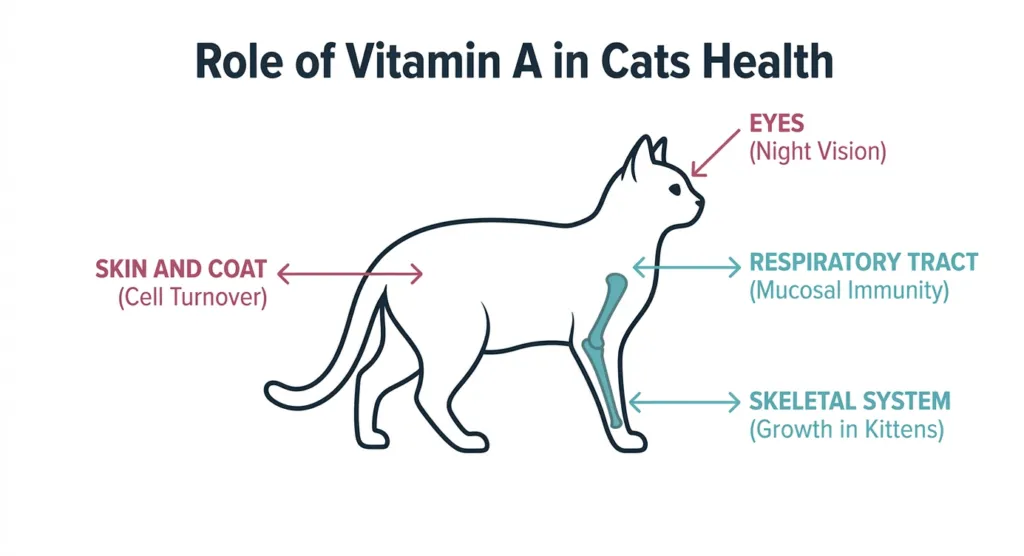
Vision in low light. Retinol, the active form of vitamin A, is a structural component of rhodopsin, the pigment that allows photoreceptor cells to detect light. Cats evolved as crepuscular hunters, most active at dawn and dusk. Their eyes depend on functional rhodopsin to operate in conditions that would leave most mammals effectively blind. A cat with chronically low vitamin A will show reduced night vision before any other symptom appears.
Immune competence. Vitamin A maintains the integrity of mucosal surfaces, the internal linings of the respiratory tract, gut, and urinary system. These surfaces are the body’s first physical barrier against pathogens. When vitamin A is insufficient, mucosal tissue degrades and infection rates rise. Research in feline immunology consistently identifies retinol as a regulator of lymphocyte function, the white blood cell activity that directs immune response.
Skin and coat condition. Epidermal cell turnover depends on adequate retinol. Cats deficient in vitamin A develop dry, scaly skin, a dull coat, and in prolonged cases, seborrhoea. This is often misattributed to dietary fat or grooming issues before the nutritional cause is identified.
Growth and reproduction. In younger cats and breeding animals, vitamin A supports skeletal development and foetal tissue formation. Deficiency in pregnant queens has been associated with birth defects including cleft palate and skeletal abnormalities in kittens.
Why Cats Cannot Use Plant Sources of Vitamin A
This is the biological fact that separates feline nutrition from human nutrition most clearly. Humans and most omnivores convert beta-carotene (found in vegetables, fruits, and leafy greens) into retinol using the enzyme beta-carotene 15,15′-monooxygenase. Cats lack meaningful activity of this enzyme. They cannot perform the conversion.
This is not a deficiency unique to domestic cats. It reflects the evolutionary biology of obligate carnivores. In the wild, cats obtain preformed retinol directly from the liver and tissues of prey animals. The dietary chain does the conversion work. The cat simply absorbs retinol at the point of digestion.
The practical consequence for cat owners is significant. A food that relies on vegetable-sourced carotenoids as its vitamin A contribution is nutritionally inadequate for cats, regardless of how prominently the ingredient is marketed. The label may list carrots, sweet potato, or spinach in the formulation. None of it translates into usable vitamin A for a cat.
Preformed retinol must come from animal tissue, specifically liver, fish liver oil, or formally supplemented retinol derived from animal sources. This is why understanding what ingredients your cat’s food actually contains matters more than any front-of-pack claim.
What Vitamin A Deficiency Looks Like in Cats
Clinical deficiency is less common in cats fed complete commercial diets than it once was, but subclinical insufficiency, where levels are technically above zero but insufficient for optimal function, is harder to detect and more common than most owners realise.
Documented signs of vitamin A deficiency in cats include:
- Reduced ability to see in dim light, sometimes observed as hesitation on stairs at night or bumping into furniture in low-lit rooms
- Recurring respiratory infections or eye discharge, particularly in cats that should otherwise be healthy
- Dry, flaking skin and a coat that loses its natural sheen despite adequate grooming
- Poor wound healing
- In younger or breeding cats, stunted growth and reproductive failure
The challenge with fat-soluble deficiency is that it develops slowly. Because the body stores retinol in the liver, depletion takes time. By the time visible signs appear, the shortfall has typically been ongoing for weeks or months.
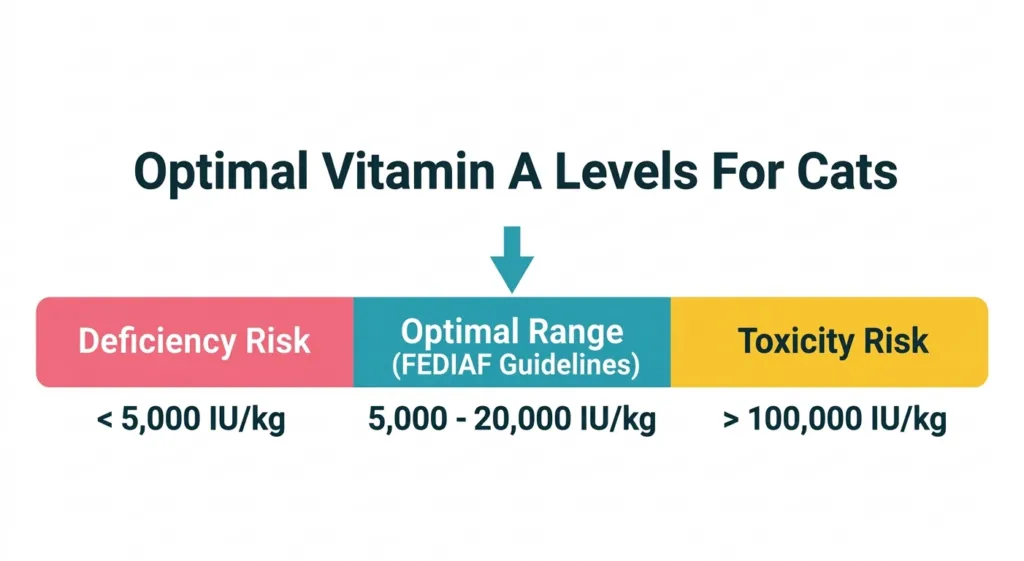
Equally, it is worth noting that vitamin A toxicity is possible, since excess retinol accumulates in liver tissue rather than being excreted. Hypervitaminosis A in cats presents as skeletal pain, reduced mobility, and cervical vertebral changes, usually associated with diets containing excessive raw liver. A complete commercial diet formulated to FEDIAF guidelines (the European Pet Food Industry standards body) will contain vitamin A within the established safe range of 1,000 to 100,000 IU per kilogram of food on a dry matter basis. This is a known, testable range, not an approximation.
The Best Food Sources of Vitamin A for Cats
The most bioavailable sources of vitamin A for cats are all animal-derived.
Liver. Chicken liver, beef liver, and fish liver are among the richest natural sources of preformed retinol available. Liver from a single serving can meet a cat’s daily requirement several times over, which is why raw liver-only diets carry toxicity risk, but also why liver is a useful ingredient in balanced commercial food at appropriate inclusion rates.
Fish and fish oils. Tuna and other oily fish contain retinol in their tissue and, in the case of cod and similar species, concentrated amounts in their liver oil. Fish-based cat foods that use whole fish or named fish meal as the primary protein source provide a meaningful contribution to vitamin A intake. Tuna as a named protein source in a balanced formulation, not tuna flavouring, delivers both retinol and the omega-3 fatty acids that work alongside fat-soluble vitamins to support absorption.
Chicken. While chicken muscle meat contains less retinol than liver, quality chicken-based foods formulated with whole protein still contribute to overall vitamin A status when supplemented correctly. Chicken as a primary protein also delivers the amino acid profile cats require as obligate carnivores, making it a logical foundation for any complete diet.
Formally supplemented retinol. Responsible commercial manufacturers supplement vitamin A directly in the form of retinyl acetate or retinyl palmitate. This is standard practice and appropriate when the base ingredients do not supply sufficient retinol on their own. What matters is that supplementation is transparent and falls within established safety guidelines.
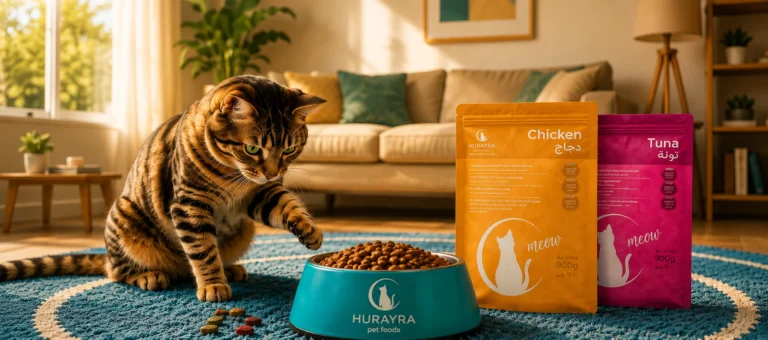
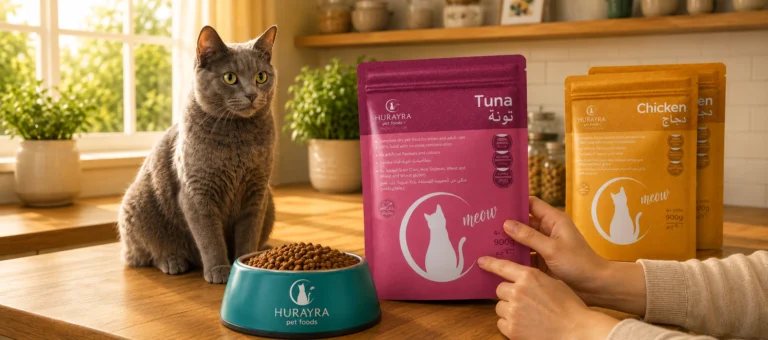
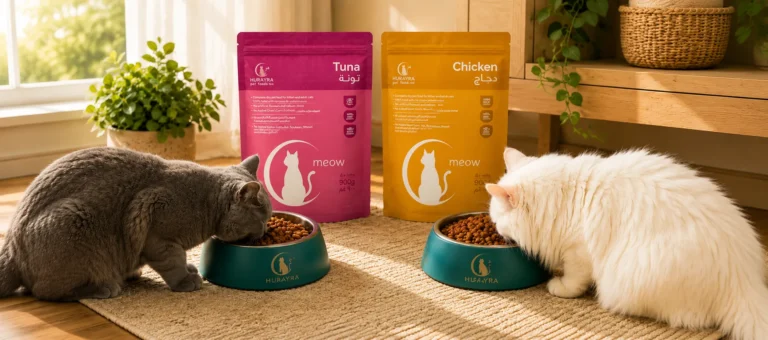
Hurayra’s formulations include vitamins A, D, and E as part of a complete nutritional profile. The inclusion is deliberate rather than incidental, supporting vision and immune function alongside the 35% minimum protein content that forms the dietary foundation of each recipe.
Chicken Cat Food
Subscribe & Save 25%
Reading a Cat Food Label for Vitamin A
Label literacy is one of the most practical skills a cat owner can develop. When assessing cat food for vitamin A content, three things warrant attention.
Check the analytical constituents. Vitamin A should be listed in IU/kg. A complete adult cat food meeting FEDIAF guidelines will typically list vitamin A in the range of 5,000 to 20,000 IU/kg. If the label is absent this information or vague, that itself is informative.
Look at the protein source, not just the protein percentage. A food with 40% protein derived primarily from plant sources will provide far less bioavailable retinol than a food with 35% protein from named chicken or tuna. The source matters as much as the percentage. This is one reason protein-rich, animal-based formulations are not simply a premium marketing position; they reflect how cat nutrition actually works.
Identify named versus unnamed ingredients. “Meat and animal derivatives” tells you nothing about which animal contributed to the formula, or whether the original material was handled to any traceable standard. Named ingredients, chicken, tuna, salmon, are preferable because they are specific. Traceability is not just an ethical consideration; it is a quality indicator.
What This Means for Everyday Feeding Decisions
Vitamin A is not complicated to get right, but it does require feeding a food that sources it correctly. The practical steps are straightforward.
Read the first three ingredients on any food you are considering. If they are animal-based, you have a reasonable starting point. If cereals, soy, or plant derivatives appear before any animal protein, the food is unlikely to provide adequate preformed retinol through its base ingredients, regardless of what is added at the supplement stage.
Feed consistently. Fat-soluble vitamins require regularity to maintain stable tissue levels. Frequent food switches, particularly between foods with different nutritional profiles, create variation in intake that works against stable vitamin status. A subscription model that ensures the same formulation arrives without interruption is not just a convenience; it removes one of the more underappreciated variables in long-term feline nutrition.
When switching foods, do so gradually. A transition over 7 to 10 days reduces digestive disruption and gives you reliable information about how your cat tolerates the new formula. Hurayra’s transition guide outlines this process clearly for owners moving to a new diet for the first time.
Conclusion
A cat fed a nutritionally complete diet over its lifetime will rarely present with vitamin A deficiency. That outcome is not accidental. It is the result of formulations built around feline biology rather than human assumptions about what constitutes healthy food. Cats are not small dogs and they are not omnivores. Their requirements for preformed retinol from animal tissue are non-negotiable.
The question worth asking of any food is not whether it claims to contain vitamins, but whether those vitamins come from sources a cat can actually use, at levels a cat actually requires, delivered in a formula designed around how cats digest and absorb nutrients.
Hurayra’s range of dry cat food, available online and at Morrisons, is formulated with vitamins A, D, and E alongside 35% protein from named animal sources. It is a starting point worth examining if you are reassessing what your cat’s food is actually providing.
Tuna and Chicken Combo
Subscribe & Save 25%
Frequently Asked Questions
1 Does halal certification affect the vitamin A content of cat food?
No. Halal certification addresses the sourcing and slaughter method of animal ingredients, not the nutritional profile of the food. A halal-certified food can be nutritionally complete or nutritionally poor, just as any other certified or uncertified food can be. The two considerations are independent. Hurayra’s HMC-certified halal credentials speak to traceability and ethical sourcing, not to a claim of nutritional superiority over non-halal alternatives. Both matter, for different reasons.
2 Is grain-free food higher in vitamin A?
Not automatically. Grain-free formulations exclude cereals and fillers that could displace animal protein in the recipe, which indirectly supports better delivery of animal-sourced nutrients including retinol. But the decisive factor is always whether the named animal ingredients and supplementation are adequate. A grain-free food built on low-quality protein sources is not a nutritional upgrade simply because it omits grain. Evaluate the full formula, not a single attribute.
3 Can I supplement vitamin A separately?
This requires veterinary guidance. Because vitamin A is fat-soluble and accumulates in tissue, over-supplementation carries genuine risk. If you suspect deficiency, a blood retinol test and veterinary assessment is the appropriate route before adding any supplement. A well-formulated complete diet fed consistently is the safer and more reliable approach for most cats.
4 Does my cat need wet food to get enough vitamin A?
No. Dry food formulated to complete nutritional standards delivers vitamin A in the same way wet food does. The vitamin’s availability does not depend on water content; it depends on the form of retinol used and the fat content that facilitates absorption. Given that vitamin A is fat-soluble, a high-protein, appropriately fat-containing dry food is a reasonable delivery vehicle.
5 How does vitamin A interact with other nutrients?
Fat-soluble vitamin absorption requires dietary fat. A diet extremely low in fat will impair retinol uptake regardless of how much is present in the formula. Vitamin A also works alongside vitamin D and zinc in immune regulation, which is why vitamins are better understood as part of a complete nutritional picture rather than isolated additions.
No. Halal certification addresses the sourcing and slaughter method of animal ingredients, not the nutritional profile of the food. A halal-certified food can be nutritionally complete or nutritionally poor, just as any other certified or uncertified food can be. The two considerations are independent. Hurayra’s HMC-certified halal credentials speak to traceability and ethical sourcing, not to a claim of nutritional superiority over non-halal alternatives. Both matter, for different reasons.
Not automatically. Grain-free formulations exclude cereals and fillers that could displace animal protein in the recipe, which indirectly supports better delivery of animal-sourced nutrients including retinol. But the decisive factor is always whether the named animal ingredients and supplementation are adequate. A grain-free food built on low-quality protein sources is not a nutritional upgrade simply because it omits grain. Evaluate the full formula, not a single attribute.
This requires veterinary guidance. Because vitamin A is fat-soluble and accumulates in tissue, over-supplementation carries genuine risk. If you suspect deficiency, a blood retinol test and veterinary assessment is the appropriate route before adding any supplement. A well-formulated complete diet fed consistently is the safer and more reliable approach for most cats.
No. Dry food formulated to complete nutritional standards delivers vitamin A in the same way wet food does. The vitamin’s availability does not depend on water content; it depends on the form of retinol used and the fat content that facilitates absorption. Given that vitamin A is fat-soluble, a high-protein, appropriately fat-containing dry food is a reasonable delivery vehicle.
Fat-soluble vitamin absorption requires dietary fat. A diet extremely low in fat will impair retinol uptake regardless of how much is present in the formula. Vitamin A also works alongside vitamin D and zinc in immune regulation, which is why vitamins are better understood as part of a complete nutritional picture rather than isolated additions.