Written by Maria Manshad
That soulful stare. The silent judgement. The paw slowly creeping towards your plate. If you have a cat, you’ve probably wondered whether that tiny piece of chicken, cheese or fruit is actually safe to share.
The answer is: sometimes.
Some human foods are safe for cats as occasional treats, while others can cause digestive problems or become genuinely dangerous. And because cats are obligate carnivores, even foods that are technically safe shouldn’t replace a well-composed cat food.
So, what human food can cats eat?
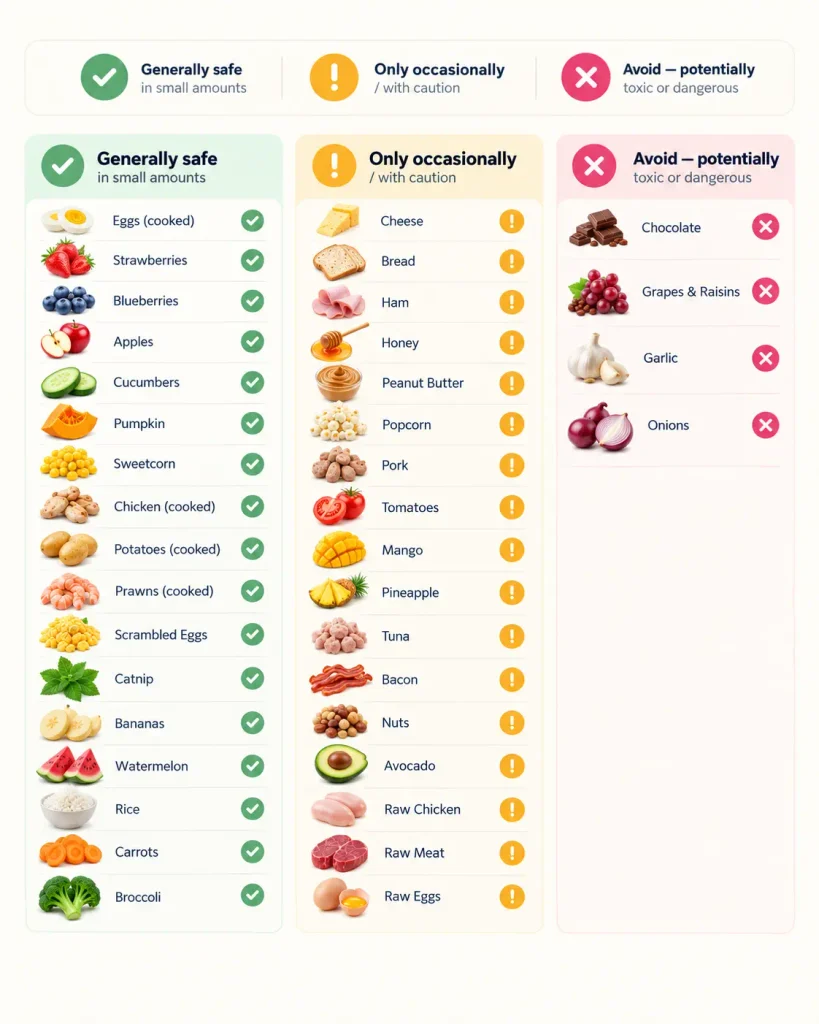
Here’s a straightforward guide to 38 common human foods, divided into three categories:
- Safe
- Moderation
- Dangerous.
The Quick Answer
Yes, cats can eat some human foods in small amounts. Plain cooked chicken, cooked eggs and certain fruits and vegetables can be safe occasional treats.
However, foods such as chocolate, onions, garlic, grapes and raisins should be avoided because they can cause serious health problems.
The safest approach is simple: keep human food plain, keep portions small and make sure your cat’s main diet comes from nutritionally complete cat food.
Whatever you share from your plate, your cat’s main meal should be complete and balanced. Explore Hurayra’s halal dry cat food →
Quick guide
Safe Human Foods for Cats
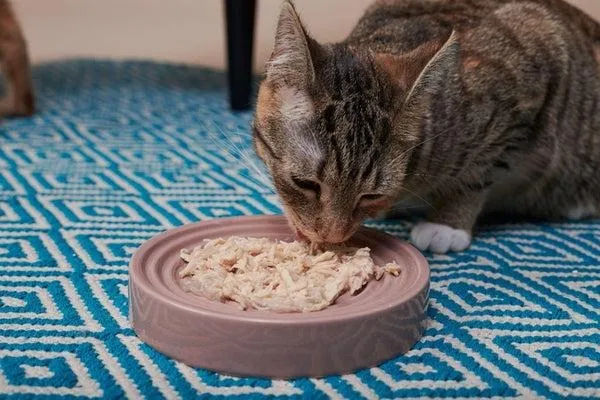
“Safe” doesn’t mean your cat should eat unlimited amounts.
These foods can generally be offered as small, occasional treats, provided they are plain and prepared appropriately.
Eggs (Cooked)
Cooked eggs are packed with protein and amino acids your cat actually needs. Skip the salt, butter, and seasoning, your cat wants protein, not a brunch menu.
Bananas
Bananas aren’t toxic, but they’re mostly sugar and fibre — nothing a carnivore’s gut is built for. A pea-sized piece now and then is plenty.
Strawberries
Strawberries are non-toxic and packed with vitamin C, but cats can’t actually taste sweetness so don’t expect enthusiasm. A small piece occasionally is fine.
Watermelon
Watermelon flesh is safe and hydrating in hot weather. Just remove the seeds and rind first both can cause digestive upset or blockages.
Blueberries
Blueberries are safe in small amounts, though they add little nutritional value for an obligate carnivore. Treat them as a novelty, not a staple.
Rice
Plain cooked rice is often used to settle a cat’s digestive upset. It’s not exciting nutrition, and cats aren’t built to digest grains well, but it’s harmless in small amounts.
Apples
Apple flesh is safe, but the seeds contain trace cyanide compounds and the core is a choking hazard. Slice it, deseed it, done.
Carrots
Carrots are genuinely healthy in small amounts — just cut pieces small so they’re not a choking risk, especially raw.
Cucumbers
Cucumbers are safe and hydrating with almost zero calories. (We won’t get into the viral “cats scared of cucumbers” videos here — that’s a startle response, not a food issue.)
Pumpkin
Plain pumpkin, with no spices or added sugar, is a great source of fibre and is often recommended by vets for mild constipation or diarrhoea.
Sweetcorn
Loose kernels in small amounts are safe. The cob itself is a serious blockage risk, so always serve kernels only, never the whole cob.
Chicken (Cooked, Plain)
Cooked, unseasoned chicken is an excellent protein source and one of the safest human foods you can share. If you’d like to know why it works so well as a staple, read our guide to why chicken is the best protein for your cat.
Want that real-chicken protein in a complete meal? Try
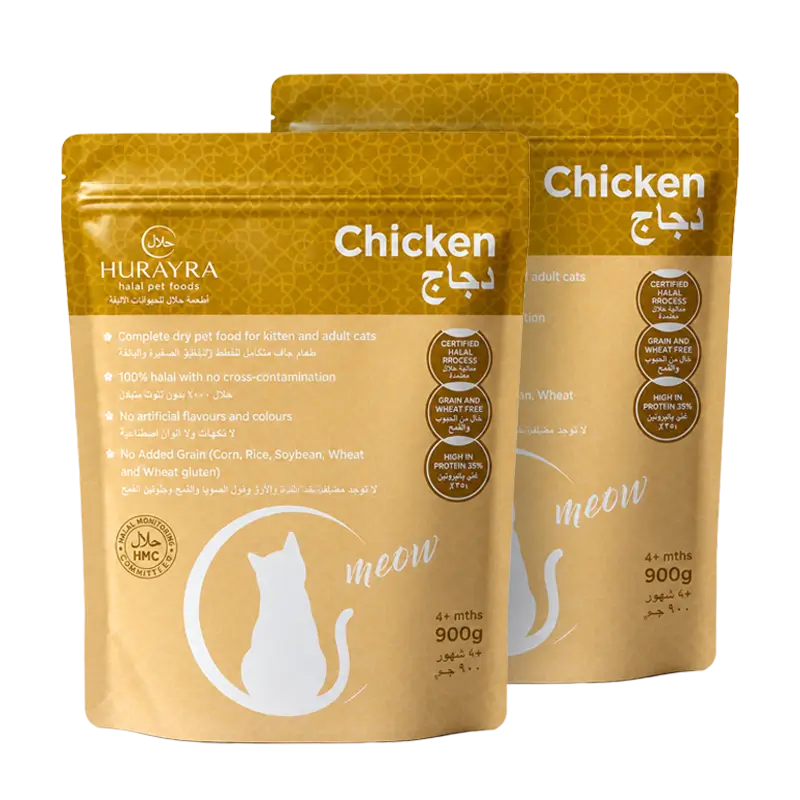
Dry Chicken Cat Food
Subscribe & Save 25%
Potatoes (Cooked)
Cooked potato flesh, with no skin or butter, is safe in small amounts. Raw potatoes contain solanine, which is toxic, so always cook them through.
Prawns (Cooked)
Cooked, plain prawns with the shell and tail removed make a safe, protein-rich treat, and seafood is one source of omega 3 for cats.
Scrambled Eggs
Plain scrambled egg with no seasoning is a gentle, protein-rich option. Cook it through and leave out the extras.
Catnip
Catnip isn’t food at all, but it made the list because it’s completely safe and, for roughly two-thirds of cats, an instant party.
Broccoli
Small amounts of cooked or raw broccoli are fine and add fibre. Too much can cause gas and stomach upset, so keep portions tiny.
Human Foods Cats Can Eat in Moderation
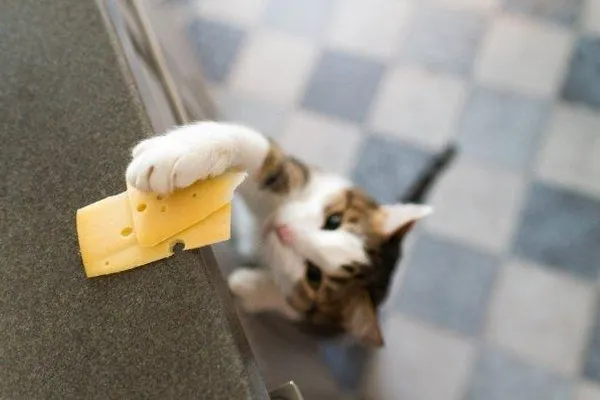
These aren’t necessarily toxic in small amounts, but there are good reasons not to make them regular treats.
Cheese
Cats generally lose the ability to digest lactose after kittenhood, so cheese often means an upset stomach. A tiny sliver of hard cheese occasionally won’t hurt, but it’s not a bonding ritual.
Bread
Plain baked bread won’t harm your cat, but it offers zero nutritional value. Raw, unbaked dough is genuinely dangerous, the yeast can expand and ferment in the stomach, so keep it well out of reach.
Honey
Honey isn’t toxic, but it’s pure sugar with zero benefit for an obligate carnivore, and it can add unwanted calories or spike blood sugar over time.
Peanut Butter
Plain peanut butter in tiny amounts is generally safe, but some “lite” or sugar-free brands contain xylitol, which is toxic to pets. Always check the label first.
Popcorn
Plain, air-popped popcorn with no butter, salt, or seasoning is a low-risk occasional nibble. Buttered popcorn and un-popped kernels are the real problem.
Pork
Plain, thoroughly cooked pork is an occasional option, but raw pork can carry a virus that is mainly passed to cats through eating raw pork, and bacon or sausage is too salty and fatty.
Cats also do not become ritually impure by eating pork.
Prefer to keep pork away from your cat entirely? Hurayra’s dry cat food is 100% halal certified →
Tomatoes
Ripe tomato flesh in small amounts is generally safe. The green stems, leaves, and unripe fruit contain solanine, which can cause digestive upset.
Mango
Mango flesh is non-toxic and fine in small amounts, but it’s high in sugar, so keep portions minimal and always remove the pit, which is a choking hazard.
Pineapple
Fresh pineapple in small pieces is fine occasionally. Tinned pineapple in syrup adds unnecessary sugar, so stick to fresh.
Tuna
A small amount of cooked or tinned tuna in water (not oil) is a fine occasional treat, but regular tuna feeding can lead to mercury buildup and an unbalanced diet over time. A complete tuna cat food is a better choice.
Bacon
Bacon’s salt and fat content make it a poor regular snack. An occasional small taste won’t cause harm, but it shouldn’t be a habit.
Nuts
Most nuts aren’t a great fit for cats, high fat content can trigger digestive upset, and small nuts pose choking risks. Macadamia nuts specifically are toxic and should never be given.
Avocado
Avocado flesh contains persin, which is more dangerous for birds but can still cause mild GI upset in cats, on top of a fat content that’s heavy for their digestion. Better to skip it.
Raw Chicken
Raw chicken can carry salmonella and campylobacter, which cause vomiting and diarrhoea in cats just as they do in humans. Cook it through before sharing.
Raw Meat
Raw meat carries the same bacterial risks as raw chicken. Some owners do raw diets carefully under vet supervision, but casually sharing raw scraps is a needless gamble.
Raw Eggs
Raw eggs carry salmonella risk and contain avidin, an enzyme that blocks biotin absorption. Cooking the egg removes both problems.
Human Foods That Are Dangerous or Toxic to Cats
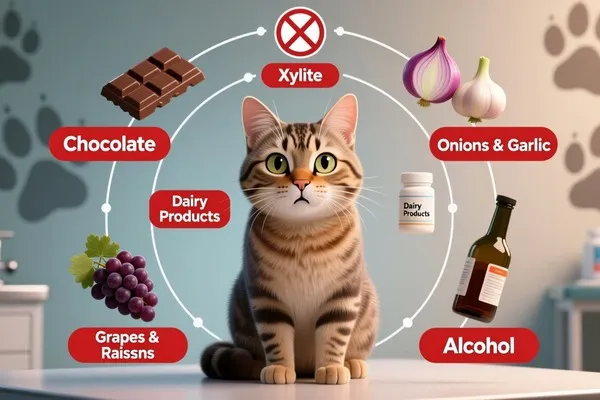
These foods deserve a completely different level of caution.
If your cat has eaten one of these foods, don’t wait for symptoms before contacting a vet.
Chocolate
Chocolate contains theobromine and caffeine, both of which cats process far more slowly than humans. Even small amounts can cause vomiting, tremors, and in serious cases, seizures. Dark and baking chocolate are the most dangerous.
Grapes & Raisins
Grapes and raisins are linked to acute kidney failure in cats and dogs, even in small quantities, and the exact toxic mechanism still isn’t fully understood. There’s no known “safe amount” — avoid entirely.
Garlic
Garlic, like the rest of the allium family, damages red blood cells and can cause anemia in cats. It’s actually more concentrated than onion, so even tiny amounts are risky.
Onions
Onions destroy red blood cells and can cause anemia in cats, and cooking doesn’t neutralize the toxin. Watch for onion powder hiding in sauces, baby food, and seasoned leftovers too.
What To Do If Your Cat Eats Something Toxic
If you think your cat has eaten a potentially toxic food, don’t wait to see whether they develop symptoms.
Follow these steps:
- Remove the food from your cat’s reach.
- Work out what was eaten, if possible.
- Estimate how much was eaten and when.
- Keep the packaging or ingredient list if the food was processed.
- Contact your vet or an appropriate animal poison service immediately.
- Don’t induce vomiting unless a veterinary professional specifically tells you to.
If your cat is showing severe symptoms such as seizures, difficulty breathing, collapse or extreme weakness, seek emergency veterinary care immediately.
How Much Human Food Can Cats Eat?
Even safe foods should remain occasional treats rather than becoming a major part of your cat’s diet.
A useful rule is to keep treats and extras limited so they don’t displace the complete and balanced nutrition your cat gets from their normal food.
Remember: safe doesn’t automatically mean necessary.
Your cat doesn’t need strawberries, bread or bananas to be healthy. They’re optional treats. A nutritionally complete cat food should remain the foundation of their diet. Our feeding guide explains how to switch foods gradually.
And if your cat has a medical condition, food allergy, sensitive digestion or a special dietary requirement, check with your vet before introducing new foods.
Hurayra’s dry food is grain-free, 35% protein and halal certified, with subscribe and save options →
The Bottom Line: Keep Treats Simple
Sharing a little of your dinner with your cat can be tempting, especially when they’re staring at you like you’ve personally offended them by not sharing.
But not everything on your plate belongs in their bowl.
Plain cooked chicken, eggs and a few fruits and vegetables can work as occasional treats. Salty, fatty and processed foods should be limited, while foods such as chocolate, onions and garlic should be kept completely out of reach.
When you’re unsure about a food, don’t guess. If your cat keeps ignoring their own bowl in favour of your plate, read why cats suddenly get fussy about food.
Your cat’s regular diet should provide the nutrition they need. Human food is simply an occasional extra and the safest treat is one that doesn’t put their health at risk.
Still wondering what else might be hiding in common cat food advice? Read our Top 10 Myths About Cat Food Every Owner Should Know to separate common cat-food misconceptions from the facts.
Human food is an occasional extra. Their bowl is what keeps them healthy.
Dry Food
Frequently Asked Questions
Yes. Some human foods can be given to cats in small amounts, particularly plain cooked meats and certain fruits and vegetables. However, human food should not replace a complete and balanced cat food.
Some generally safe options include plain cooked chicken, cooked eggs, small amounts of pumpkin, carrots, cucumber, blueberries and watermelon.
Always serve them plain and in small portions.
Cats can eat a tiny amount of plain cheese occasionally, but it is not an ideal treat for every cat. Many cats are lactose intolerant and may develop digestive problems such as diarrhoea or an upset stomach after eating dairy. If you offer cheese, keep the portion very small and avoid seasoned, flavoured or heavily processed varieties.
Yes, cats can eat small amounts of plain, fully cooked rice. Rice is not toxic to cats, but it does not provide the nutrients they need from their main diet. Avoid rice cooked with onions, garlic, spices, sauces, butter or excessive salt.
It is best not to feed cats raw chicken. Raw meat can carry harmful bacteria and may pose food-safety risks to both cats and people in the household. Plain, thoroughly cooked chicken is a safer occasional treat. Always remove bones and seasoning before serving.
Yes. Cats can eat plain, fully cooked eggs in small amounts as an occasional treat. Avoid raw eggs and eggs cooked with salt, butter, oil, sauces or seasoning. Eggs should complement your cat’s normal diet rather than replace it.
Yes, cats can eat a small amount of plain, thoroughly cooked prawns occasionally. Remove the shell and any sharp parts, and never serve prawns with garlic, onion, chilli, sauces, butter or heavy seasoning. Introduce them gradually because some cats may have sensitive stomachs.
Chocolate, onions and garlic are important foods to avoid. Grapes and raisins should also not be deliberately given to cats because of their association with serious kidney problems.
Kittens have different nutritional requirements from adult cats because they are growing rapidly. Their diet should be based on nutritionally complete kitten food.
It’s best to speak with your vet before introducing human foods to a young kitten.
Contact your vet or an appropriate animal poison service as soon as possible. Tell them what your cat ate, approximately how much, when it happened and your cat’s weight if known.
Don’t wait for symptoms and don’t induce vomiting unless instructed by a veterinary professional.