Written by Maria Manshad
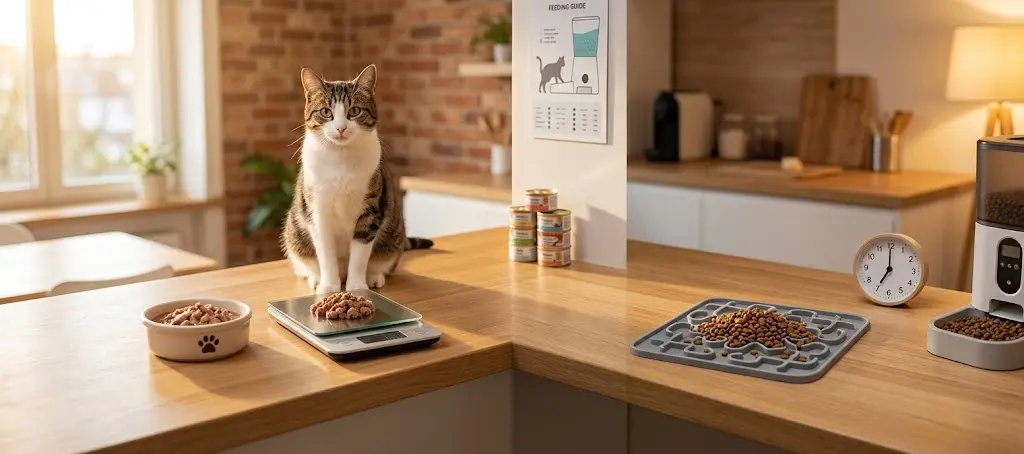
The Quick Answer
Most healthy adult cats should eat at least twice a day, about 8 to 12 hours apart. Most healthy adult cats should be fed at least two meals a day, roughly 8 to 12 hours apart.
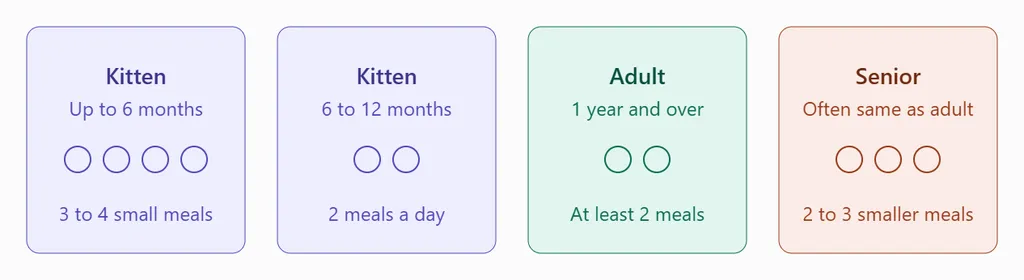
- Kittens up to 6 months: 3 to 4 small meals
- Kittens 6 to 12 months: 2 meals
- Adults: at least 2 meals
- Seniors: often the same as adults, though some do better with smaller portions
Consistency matters more than the exact hour.
Your Cat Is Watching the Clock
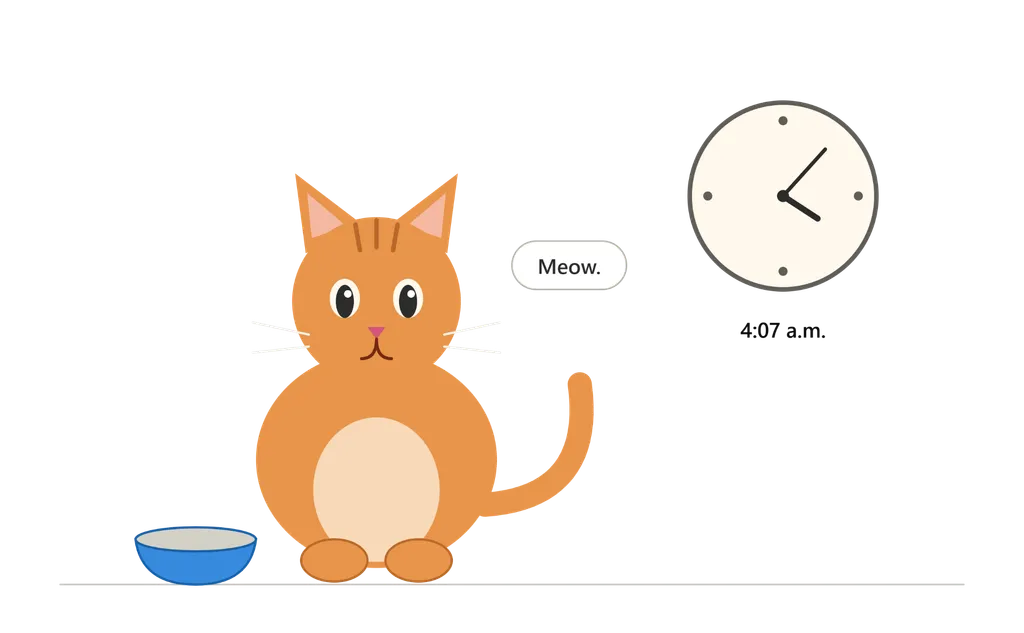
4:07 a.m. A paw taps your face. Then a louder tap. Then a meow aimed directly at your soul.
Your cat isn’t being dramatic. Their stomach has been sending hunger signals for hours.
Your Cat’s Stomach Runs on a Timer
Cats have a simple stomach. Once it’s full, it empties within a few hours, and after 8 to 10 hours an empty stomach starts sending hunger signals to the brain.
That’s the whole reason for the two-meal baseline. One meal a day leaves a long stretch with an empty stomach.
It’s also a safety issue. Feeding too little can lead to weight loss and risks such as hepatic lipidosis, a potentially life-threatening liver condition.
Feeding too much has its own cost: overweight cats are about four and a half times more likely to develop diabetes than cats at an ideal weight.
So the target is regular, measured meals, not “whenever.”
The Answer by Age
“Once or Twice?” Why Sources Disagree
You’ll see two answers online. Some veterinary sources say once or twice a day is appropriate for most adults, while others recommend at least two meals a day.
Here’s the practical way through it:
- Start with two meals. It fits the stomach timer and gives you a clearer view of appetite.
- Once a day only if your vet agrees. Some less food-motivated cats do fine on one meal.
- Some cats do better with three or four. More meals can help cats that beg between meals or eat only a little at a time.
Same Food, More Meals: The Maths
More meals don’t mean more food. You simply split the same daily amount.
For example, if your cat’s daily portion is 60g, you could divide it like this:
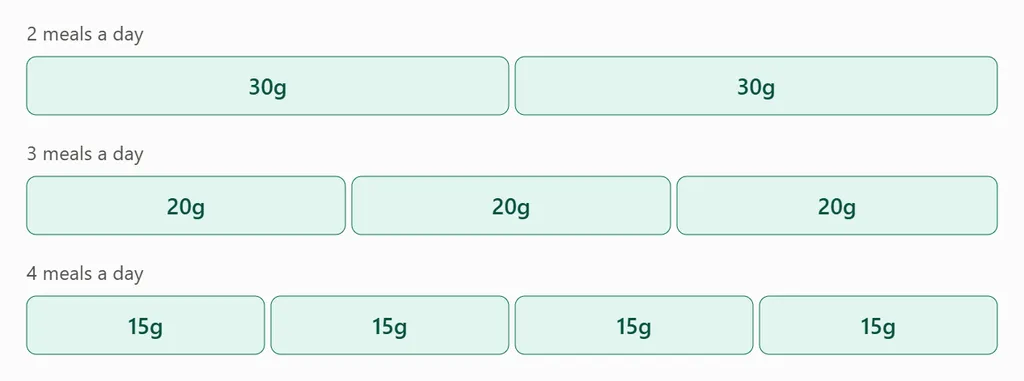
The same approach works for any recommended daily portion. Simply weigh out your cat’s total daily amount and divide it between the number of meals you plan to serve. How much your cat needs can vary depending on their weight, activity level and body condition, so adjust portions when needed.
Build a Schedule That Fits Your Life
Cats like routine. A regular schedule gives security, makes a food change easier, and helps you spot illness early, because leftover food stands out.
These are sample schedules. Adjust the times to your day and keep the spacing.
- Office worker (9 to 5): 7:00 a.m. and 7:00 p.m. That’s a clean 12-hour gap.
- Working from home: 7:00 a.m., 2:00 p.m. and 9:00 p.m. Three smaller meals suit cats that beg between meals.
- Shift worker: keep the 12-hour spacing, whatever the clock says. For a night shift, feed at 6:00 p.m. before you leave and use a timed feeder for 6:00 a.m.
- Early-riser cat: try moving the last meal later, to around 10:00 p.m.

Dry Food
The 4 A.M. Problem
If your cat wakes you before dawn, work through this:
- Check the gap. If the evening meal is early, the overnight stretch may simply be too long.
- Shift the last meal later, or use a timed feeder set before dawn. A programmable feeder can dispense a small portion before breakfast. Take it from the daily total, not on top of it.
- Don’t feed on demand. If a 4 a.m. meow gets food, your cat learns it works.
- Plan portions around meals. Once you know how much your cat needs each day, divide that amount between their meals. Our guide on how often you should feed your cat explains how to build a suitable feeding routine.
If the night-time hunger is new or sudden, or comes with weight change, talk to your vet.
When the Schedule Isn’t Working
| What you see | What to try |
| Begging between meals | Try 3 to 4 smaller meals, or a puzzle feeder, keeping the daily total the same |
| Eating extremely fast | Use a slow or puzzle feeder, and measure portions |
| Repeated vomiting | Talk to your vet, especially if it keeps happening |
| Gradual weight gain | Measure portions, cut free feeding, and check the daily amount |
| Unexplained weight loss | Talk to your vet |
| Leaving meals untouched | Leftover food is an important signal that something may be wrong. Book a vet visit |
Special Cases
- Kittens: Free-choice feeding isn’t recommended. It can cause juvenile obesity, binge-eating, orthopaedic problems and diabetes.
- Medical conditions: Some conditions, like diabetes, need meals at set times. Vets often time meals to insulin, roughly 12 hours apart. Follow your vet’s plan.
- Multi-cat homes: Feeding cats separately, or in different parts of the house, can help. Give each cat their own space and watch individual portions.
How to Change Your Cat’s Schedule
Go gradually. A one to two week transition works better than a sudden switch.
- Measure what your cat eats in a day.
- Split that total across the new meal times.
- Keep the total the same while they adjust.
- Weigh your cat regularly.
Expect some complaining in week one. It passes.
The Bottom Line
Start with two meals, 8 to 12 hours apart. Add meals for kittens, or if your cat does better with more. Split the same daily calories across them, and pick times you can keep.
Your cat is watching the clock. Make it a clock you can both live with.
Keep your cat’s routine simple.
Explore Hurayra’s cat food and find a feeding option that fits your cat’s routine.
Shop Hurayra
Frequently Asked Questions
Two meals is the safer starting point. Some cats cope with one, but a single meal leaves long stretches of hunger. Ask your vet first.
Dry food keeps better than wet, but leaving it out is free feeding, which can lead to overeating. A measured evening portion or a timed feeder gives you more control.
Not long. Sources vary, so follow your food’s label and your vet’s advice.
Kittens under six months do well on three to four small meals. From six to twelve months, most move to two.
Not necessarily. Many stay on two meals, though smaller portions may suit some seniors.
If your cat refuses food for around 24 hours, contact your vet, especially if they’re overweight or unwell.