Written by Maria Manshad
The Quick Answer
A single episode of vomiting in an otherwise bright, healthy cat may not be a cause for panic.
1. Eating too quickly or too much
2. Hairballs
3. A sudden change in food Eating something unusual
4. Food intolerance or allergies
5. Parasites or infections Toxins or poisonous substances
6. Swallowing a foreign object
7. Gastrointestinal problems
8. Conditions affecting organs such as the kidneys, liver or pancreas.
However, repeated vomiting, blood in the vomit, severe lethargy, pain, an inability to keep food or water down, or suspected poisoning or foreign-object ingestion needs veterinary attention.
You hear it before you see it.
That unmistakable hack, hack, hack coming from somewhere behind the sofa.
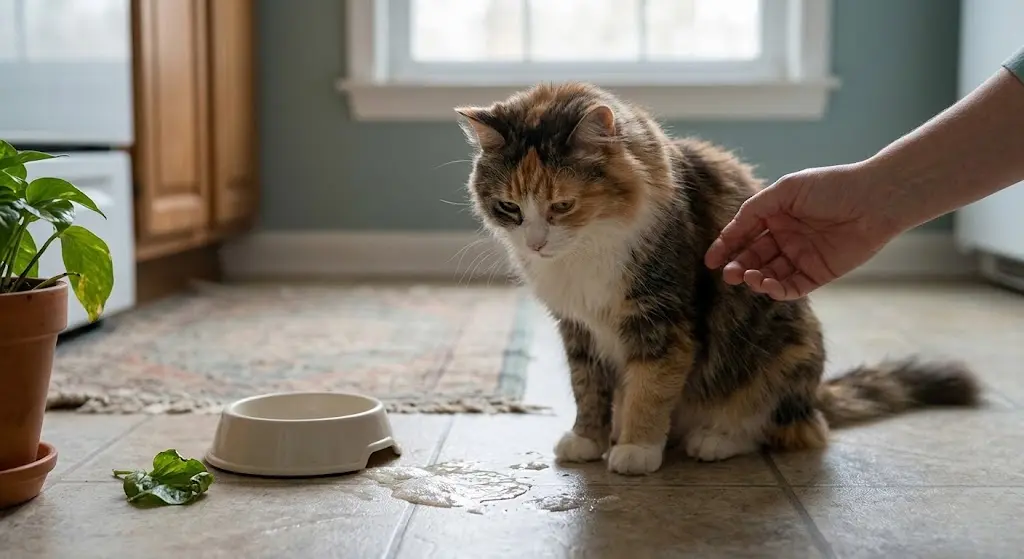
You rush over, hoping it is just a hairball. Instead, you find a mysterious puddle on the floor and a cat sitting nearby looking completely unbothered.
If this sounds familiar, you are definitely not alone.
Cats can vomit for plenty of reasons. Sometimes it is something relatively minor, such as eating too quickly or swallowing too much fur while grooming. But vomiting can also be a sign of an underlying health problem, particularly when it keeps happening or comes with other symptoms.
So before you reach for the kitchen roll, take a closer look.
What your cat brought up, how it happened, when it happened and how your cat behaves afterwards can all provide useful clues.
First: Is Your Cat Actually Vomiting?
It sounds like a strange question, but not every cat that appears to be “throwing up” is actually vomiting.
There are three behaviours that can easily be confused:
Vomiting
Vomiting is an active process. Your cat may look restless beforehand, lick their lips, swallow repeatedly or drool. You will usually see strong abdominal contractions as they bring up food, fluid or other stomach contents.
Regurgitation
Regurgitation is more passive. It often happens soon after eating, without the retching and abdominal effort associated with vomiting. The food may look largely undigested and can sometimes appear tube-shaped or covered in mucus.
A cat that repeatedly regurgitates should still be checked by a vet.
Coughing
Coughing can sometimes look like your cat is trying to bring something up. Cats may crouch, stretch their neck and hack up a little foam before swallowing it again.
If you are unsure what you are seeing, record a short video if you can. It can be surprisingly helpful when explaining the episode to your vet.
What Does Your Cat’s Vomit Look Like?
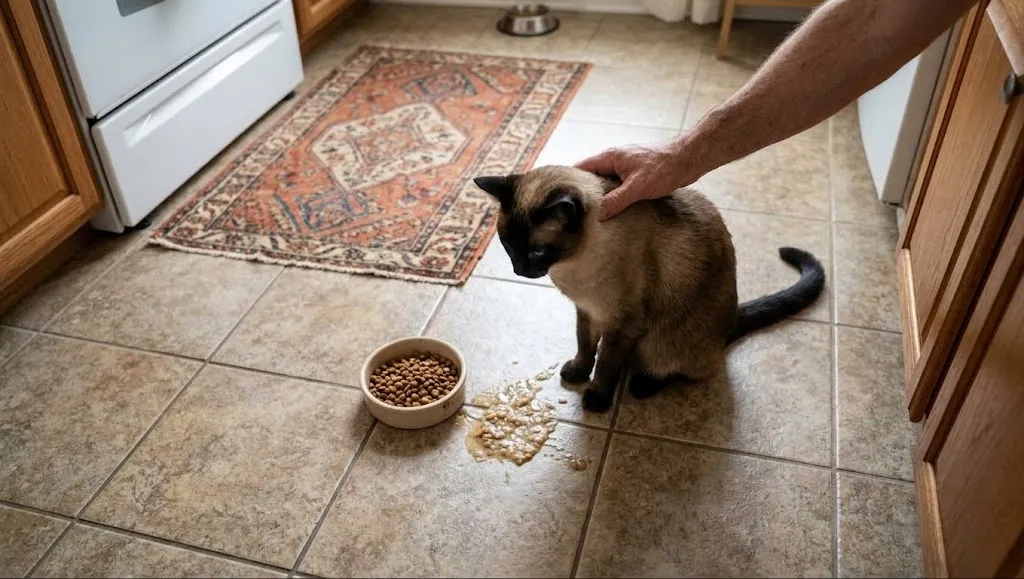
This is where you can become a little bit of a vomit detective.
Before cleaning up the evidence, have a quick look.
Mostly undigested food
If recognisable pieces of food come back up shortly after a meal, your cat may have eaten too quickly or may actually have regurgitated rather than vomited. Eating too quickly can sometimes be managed by offering smaller, regular meals or using a slow feeder.
Hair or a tube-shaped hairball
Hairballs happen because cats swallow fur while grooming. An occasional hairball can happen, particularly in cats that groom frequently or have longer coats. Regular brushing can help reduce the amount of loose fur they swallow. But do not automatically dismiss frequent vomiting as “just hairballs.”
White foam
White foam can be a mixture of stomach fluid and mucus and may occur when a cat vomits on an empty stomach. It is not possible to determine the cause from appearance alone, though, so pay attention to what happens afterwards and whether vomiting repeats.
Blood or dark material
Blood in vomit should not be ignored. Red blood or dark material that resembles coffee grounds can be a warning sign requiring veterinary attention.
Something that definitely should not be there
String. Thread. Elastic. Bits of a toy. If you think your cat has swallowed a foreign object, do not wait to see what happens. Some objects can cause intestinal blockages, which can become life-threatening. If you see a string hanging from your cat’s mouth, never pull it. Contact your vet immediately.
You can read more about when vomiting requires veterinary attention from PDSA.
10 Common Reasons Why Cats Vomit
1. Eating too quickly
Some cats treat mealtimes like a competitive sport. Gulping food too quickly can result in food coming back up soon afterwards. Slowing your cat down with smaller, regular meals or a suitable slow feeder may help.
2. Eating too much
An overly generous portion can sometimes upset the stomach. Feed an appropriate amount for your cat and follow the feeding guidance for their food.
3. Hairballs
Cats are enthusiastic groomers, and some of the fur they swallow eventually makes its way back out. Regular grooming can help reduce loose fur, particularly for long-haired cats. But repeated vomiting should not simply be blamed on hairballs.
4. A sudden change in diet
Cats can be creatures of habit. Changing their food suddenly can cause digestive upset. If you need to change your cat’s diet, a gradual transition can help reduce the chance of stomach problems.
5. Food intolerance or allergies
Some cats can react badly to particular ingredients. If vomiting keeps returning, particularly alongside digestive problems or changes in appetite and weight, speak to your vet rather than repeatedly changing foods yourself.
6. Eating something they should not
Cats are curious creatures. Plants, unsuitable human foods, household products and other substances can cause stomach upset or poisoning. Some substances can be extremely dangerous. If you know or suspect that your cat has eaten something toxic, contact a vet immediately rather than waiting for symptoms to appear.
7. Parasites or infections
Worms, other parasites and certain infections can cause vomiting. This is particularly important in kittens and cats that have not been appropriately treated for parasites.
8. A swallowed foreign object
String, thread, rubber bands, tinsel and pieces of toys can cause intestinal blockages. A blockage can be extremely serious and may require emergency treatment or surgery, so suspected ingestion should never be treated as a “wait and see” situation.
9. Gastrointestinal problems
Vomiting can sometimes be linked to conditions affecting the digestive system, including inflammatory bowel disease, constipation and other gastrointestinal disorders.
10. An underlying illness
Vomiting is not always a stomach problem. Conditions affecting the kidneys, liver, pancreas or thyroid can also cause vomiting. This is one reason recurrent vomiting deserves proper investigation rather than being repeatedly dismissed as an upset tummy.
My Cat Vomited Once. What Should I Do?
If your cat vomits once but is otherwise acting normally bright, comfortable, eating and drinking you may be able to monitor them closely rather than immediately panicking.
1. Keep an eye on them
Look at their behaviour, appetite, energy and general condition.
2. Make fresh water available
Your cat should have access to fresh drinking water. Persistent vomiting can increase the risk of dehydration.
3. Think about what happened beforehand
What did they eat? How long after eating did they vomit? Did they eat unusually quickly? Has their food recently changed? Could they have eaten a plant, human food or household product? Could they have swallowed part of a toy or piece of string? Learn more about intestinal blockages in cats and the signs to watch for.
4. Watch what happens next
One isolated episode is very different from repeated vomiting. If your cat vomits again, develops other symptoms or simply does not seem like themselves, contact your vet for advice.
If your cat also refuses food, don’t ignore it. Read our guide on how long a cat can go without eating to understand when a loss of appetite needs veterinary attention.
What NOT to Do When Your Cat Vomits
Do not give human medicines
Never give your cat medication unless your vet has specifically advised you to.
Do not try to make your cat vomit
If your cat has swallowed something poisonous or dangerous, do not try to make them sick yourself. Some substances and objects can cause even more damage when brought back up. A vet can decide whether inducing vomiting is appropriate and safe.
Do not assume it is “just a hairball”
If vomiting is happening repeatedly, there may be more going on.
Do not repeatedly switch foods
A sudden diet change can itself contribute to digestive upset. If your cat has ongoing digestive problems, speak to your vet before making major dietary changes.
Do not ignore other symptoms
Vomiting alongside lethargy, diarrhoea, pain, appetite changes or unusual thirst is more concerning than vomiting alone.
When Should You Worry About Cat Vomiting?
Contact your vet promptly if your cat:
- Vomits repeatedly
- Cannot keep food or water down
- Becomes very tired or weak
- Stops eating
- Has diarrhoea alongside vomiting
- Appears to have abdominal pain
- Has blood or dark material in their vomit
- Is drinking or urinating more than usual
- Is very young, elderly or already unwell
- Has been vomiting for an extended period
- May have swallowed a foreign object
- May have eaten something poisonous
Treat suspected poisoning or a swallowed object as urgent.
Do not wait for your cat to develop symptoms if you know they have eaten something potentially harmful. Some toxins and foreign objects can cause serious problems before obvious signs appear.
Is Vomiting Normal for Cats?
Occasional vomiting can happen, but frequent vomiting should not be considered normal.
Cats do sometimes bring up hairballs, and an isolated episode in an otherwise healthy cat may pass without a serious problem. But repeated or severe vomiting can point towards an underlying issue.
“My cat vomits sometimes” is not a diagnosis. It is a symptom worth paying attention to.
The more useful question is why is it happening and what else is going on?
How Can You Help Prevent Vomiting?
Feed consistently
Avoid unnecessary, sudden changes to your cat’s diet. When a diet change is needed, transition gradually.
Slow down speedy eaters
If your cat inhales food and then promptly brings it back up, smaller regular meals or a suitable slow feeder may help.
Groom regularly
Brushing can reduce the amount of loose fur your cat swallows while grooming.
Keep dangerous objects out of reach
Strings, thread, elastic bands, small toys and similar objects can become serious hazards if swallowed.
Keep toxic substances away
Certain plants, medicines, cleaning products, chemicals and human foods can be dangerous to cats.
Pay attention to patterns
If your cat repeatedly vomits after meals, after grooming or at particular times, take note. A pattern can give your vet useful information.
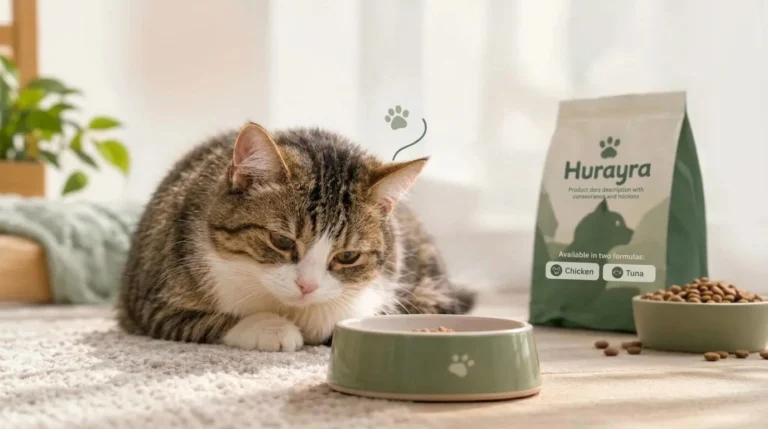
Looking for a dry food to add to your cat’s routine?
Explore Hurayra’s cat food and make measured, consistent meals part of your cat’s daily routine.

Products | Halal Cat Food
Become a Vomit Detective 🔎
Okay, perhaps “vomit detective” is not the most glamorous job title.
But if your cat keeps getting sick, these details can be genuinely useful.
- WHAT? What did the vomit look like?
- WHEN? How long after eating did it happen?
- HOW? Was there retching and abdominal movement, or did the food simply come back up?
- HOW OFTEN? Once? Twice? Several times?
- WHAT ELSE? Was your cat eating, drinking, playing and using the litter tray normally?
- WHAT CHANGED? New food? New treats? Medication? A new plant? A different environment? Access to something they could have swallowed?
If the problem continues, take these notes or even a video of the behaviour to your vet. Sometimes the little details are what help connect the dots.
Final Takeaway
A puddle of vomit on the floor can be alarming, but the puddle itself is not the whole story.
Look at the bigger picture: what came up, how your cat behaved beforehand, when it happened, whether it happens again and whether anything else seems unusual.
An occasional episode in an otherwise healthy cat may pass without a problem. But repeated vomiting, significant changes in behaviour or appetite, blood, pain, dehydration, or suspected poisoning or foreign-object ingestion should not be brushed aside.
When in doubt, speak to your vet. Your cat cannot tell you what is wrong—but their behaviour can give you clues.
And sometimes, being a good cat parent simply means knowing when to stop investigating the evidence yourself and call the professionals.
Once you’ve ruled out the bigger concerns, keep mealtimes simple.
Hurayra’s cat food can be part of a consistent feeding routine, with feeding guidance to help you portion your cat’s meals.
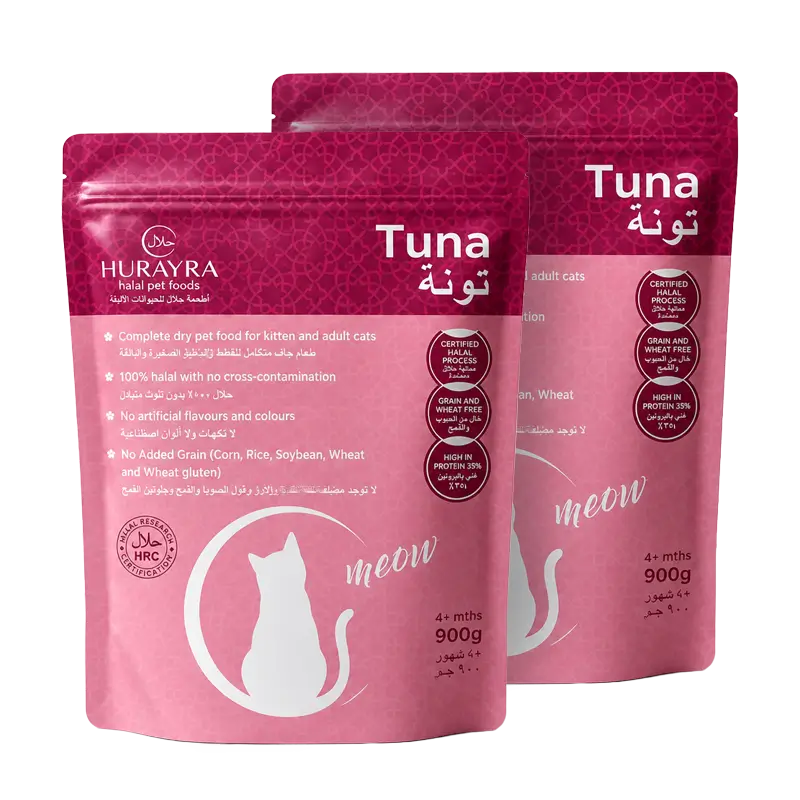
Dry Tuna Cat Food
Frequently Asked Questions
A single episode of vomiting in a cat that remains bright, active and otherwise well may not indicate a serious problem. However, monitor closely and contact your vet if vomiting happens again or other symptoms develop..
Eating too quickly, overeating, regurgitation and digestive upset can all result in food coming back up after a meal. If it happens regularly, your vet can help determine the underlying cause.
.
White foam can consist of stomach fluid and mucus and may occur when a cat vomits on an empty stomach. However, appearance alone cannot tell you why your cat is vomiting. If vomiting repeats or your cat seems unwell, contact your vet.
It can be. Cats swallow fur while grooming and may occasionally bring up a hairball. But frequent vomiting should not automatically be blamed on hairballs, particularly if other symptoms are present.
Do not automatically put your cat on a prolonged fast without veterinary advice. For an otherwise well cat after a single episode, monitor closely and follow your vet’s advice on feeding. If vomiting happens again or the cat becomes unwell, contact your vet.
Seek urgent veterinary advice if your cat repeatedly vomits, cannot keep food or water down, has blood in their vomit, appears severely unwell or painful, or may have swallowed something toxic or a foreign object.