Written by Maria Manshad
The Quick Answer
- One-off upset in a bright adult cat: a single vomit or soft stool can usually be watched at home for 24 hours, with fresh water and small, bland meals.
- Call your vet the same day if: the signs repeat or last longer than a day or two, vomiting and diarrhoea happen together, your cat is quiet or off their food, or your cat is a kitten or a senior.
- Emergency: go straight to a vet for blood in vomit or stool, black tarry stool, a swollen belly, retching with nothing coming up, inability to keep water down, or any suspected poison (lilies especially).
- Kittens: they dehydrate within hours, so never starve them and call the vet the same day. Vomiting plus diarrhoea in an unvaccinated kitten is an emergency.
- Never give: milk or human medicines, and never fast a cat for long.
Cat Vomiting and Diarrhoea: What’s Normal, What’s Not, and When to Call the Vet
It’s 3am, and you’ve just stepped on something warm and wet. Your cat is watching from the doorway, looking more sheepish than sick. Do you mop it up and go back to bed, or reach for the carrier?
Most cats vomit or pass a loose stool now and then and recover within a day. But the same signs can be the first warning of something serious, and cats hide illness well.
This guide shows you how to read the clues (what the vomit looks like, what’s in the litter tray, how your cat is acting) so you can decide whether to watch at home, call the vet or go straight in.
At a glance: should I be worried?
Use this as a first check. If you’re ever unsure, phone your vet and describe what you’re seeing.
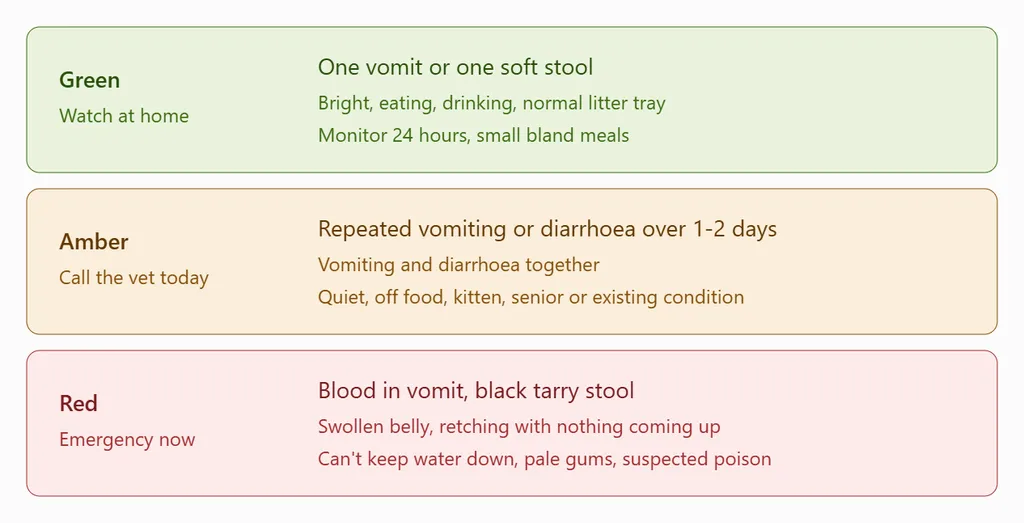
One rule worth remembering: a cat that hasn’t eaten for 24 hours needs veterinary advice. Cats that go without food for two to three days, especially overweight cats, can develop a serious liver condition called hepatic lipidosis (fatty liver disease).
First, is it vomiting, regurgitation or a hairball?
These get mixed up all the time, but they mean different things, and your vet will want to know which one you saw.
- Vomiting is active. Your cat looks nauseous (drooling, licking their lips, swallowing repeatedly), then heaves with visible effort from the belly. What comes up is usually partly digested and may be mixed with yellow bile or foam.
- Regurgitation is passive. There’s little or no warning and no belly effort; food or mucus simply comes back up, often soon after eating and often in a tube shape. It can point to eating too fast, or to a problem with the food pipe.
- A hairball is a sausage-shaped clump of hair, usually with some fluid, brought up after a bout of retching. Now and then is common; frequent hairballs, or repeated retching with no result, are worth a vet visit.
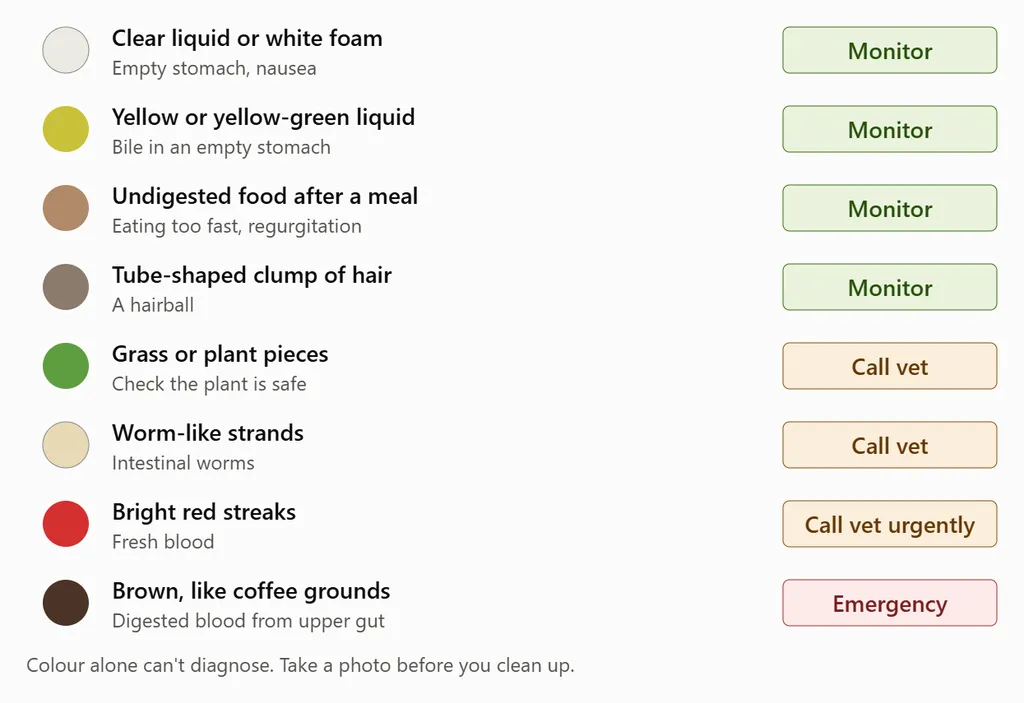
What your cat’s vomit is telling you
Colour alone can’t diagnose a problem, and the same cause can produce different colours. Still, it gives your vet useful clues, so take a photo before you clean up.
What your litter tray is telling you
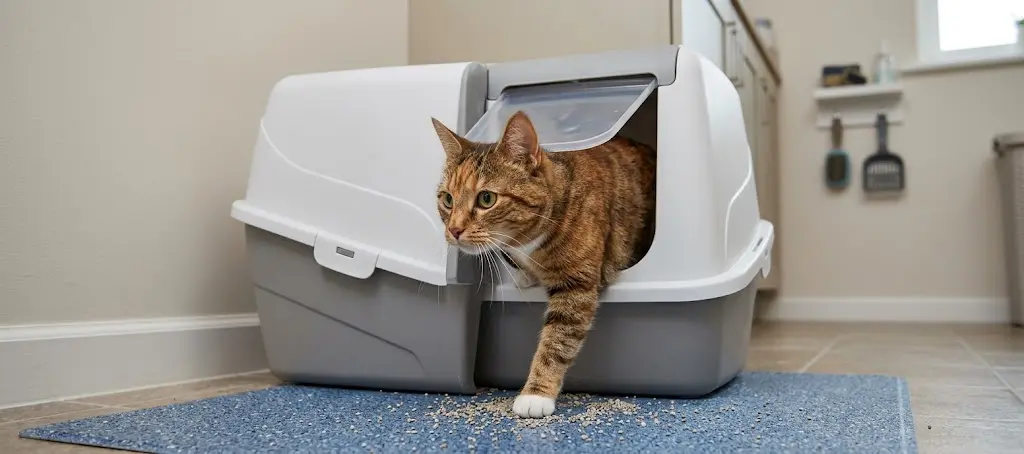
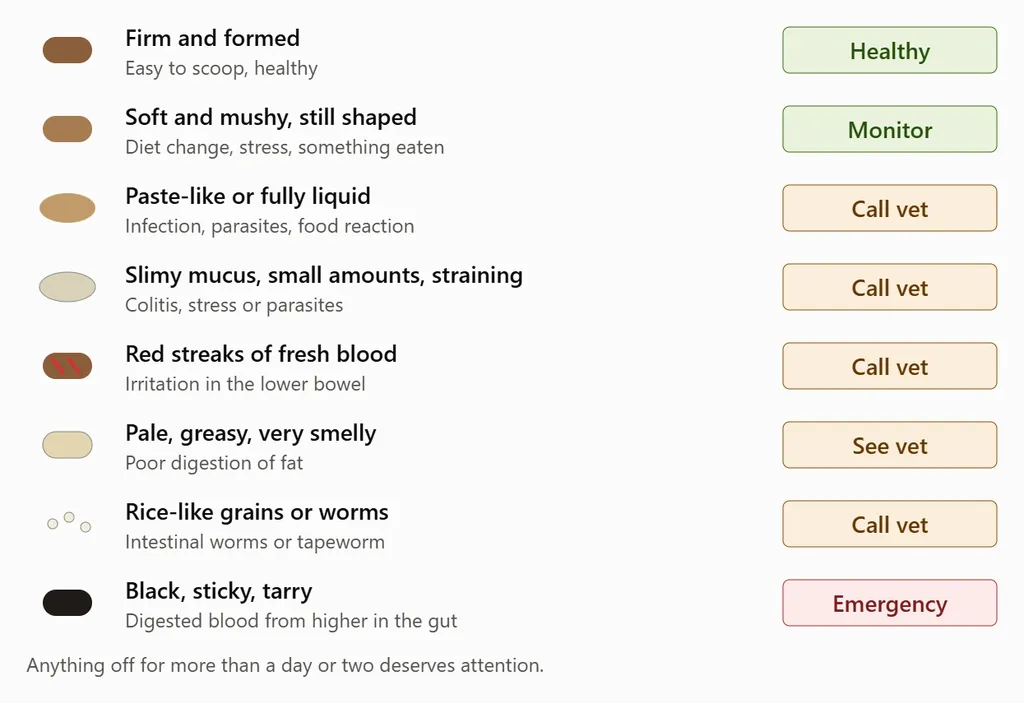
Think of the litter tray as a daily health report. A healthy stool is firm, formed and easy to scoop. Anything that departs from that for more than a day or two deserves attention.
When your cat has both: vomiting and diarrhoea
When vomiting and diarrhoea happen together, it usually means the whole digestive tract is irritated, a picture vets often call gastroenteritis. Your cat loses fluid from both ends, so dehydration comes on faster. Possible causes include infections, parasites, eating something they shouldn’t, toxins, pancreatitis and inflammatory bowel disease.
Treat the combination as at least an amber situation. Call your vet the same day, and treat it as an emergency if your cat is lethargic, won’t drink, has blood in either end, or is a kitten.
Common causes, from everyday to serious
Everyday triggers
- Eating too fast, or too much at once
- A sudden change of food (a gradual switch avoids this)
- Hairballs
- Table scraps, rich food or something raided from the bin
- Stress, such as a move, new pet, visitors or a car journey
- Medication side effects, including some antibiotics
Infections and parasites
- Intestinal worms and microscopic parasites such as Giardia
- Bacterial infections such as Salmonella and Campylobacter, more common in cats fed raw food
- Viral infections, including feline panleukopenia, which is serious in unvaccinated cats
Swallowed objects and toxins
- String, ribbon, hair ties, toys or other objects that can cause a blockage
- Poisonous plants, human medicines and chemicals (see the next section)
Underlying conditions
- Food allergy or intolerance
- Inflammatory bowel disease, pancreatitis, and liver or kidney disease
- An overactive thyroid (hyperthyroidism) and diabetes, especially in older cats
- Intestinal tumours such as lymphoma
Household dangers worth naming
“Toxin ingestion” is easy to skim past. These are the specific culprits vets see:
- Lilies. Every part of the plant, including pollen on fur and vase water, can cause kidney failure. This is an emergency.
- Human painkillers such as paracetamol and ibuprofen. Never give cats any human medication unless a vet instructs you to.
- Dog flea treatments containing permethrin, which are dangerous to cats.
- Antifreeze and some cleaning products.
- String, tinsel, ribbon and hair ties. These can cause a blockage, and the signs include repeated vomiting, a painful belly and loss of appetite.
If you suspect poisoning, don’t wait for symptoms to worsen and don’t try to make your cat sick. Call your vet or an emergency vet and take the packaging or a sample of the plant with you.
Does age change the picture?
- Adult cats with a one-off upset usually recover quickly. Recurring problems, even mild ones, are worth investigating, because vomiting that is common is still not normal for a healthy cat.
- Senior cats are more likely to have an underlying cause such as kidney disease, an overactive thyroid, inflammatory bowel disease or tumours. Weight loss, a big appetite or increased thirst alongside vomiting or loose stools is a reason to book a check-up soon.
- Kittens are different enough to deserve their own section, below.
Diarrhoea in kittens
A loose stool in a kitten isn’t automatically a crisis, but kittens can go downhill much faster than adult cats. They have tiny fluid reserves and very little energy stored, so diarrhoea can lead to dehydration and low blood sugar within hours.
When to call the vet
- Very young kittens: call your vet the same day for any diarrhoea, even if the kitten seems bright.
- Older kittens: call if diarrhoea doesn’t settle within about half a day, or straight away if you see any of the red flags below.
Red flags: go to the vet immediately
- Lethargy, floppiness, or a kitten that feels cold
- Refusing food, or vomiting as well as diarrhoea
- Blood or black stool
- A swollen belly
- Dry or sticky gums, sunken eyes
- Not vaccinated yet and having vomiting and diarrhoea together. Feline panleukopenia (feline parvovirus) is highly contagious and can be fatal, so this is an emergency.
Why kittens get diarrhoea
- Moving to a new home. The stress of rehoming and a change of food is one of the most common causes.
- Worms. Roundworms are common in kittens, who can pick them up from their mother.
- Protozoa such as Giardia and coccidia, which spread easily where many cats live together, such as shelters and breeders.
- Infections, including bacterial gut infections and panleukopenia in unvaccinated kittens.
- Diet mistakes. Cow’s milk, abrupt food changes, rich treats or overfeeding.
What you can do while you arrange a vet visit
- Don’t starve a kitten. Keep offering small, frequent meals of their usual kitten food.
- Keep them warm and make sure fresh water is easy to reach.
- No milk and no human medicines or home remedies unless your vet says so.
- Collect a fresh stool sample in a clean pot or bag. Vets often test for parasites.
- Protect everyone. Keep the kitten away from other cats, scoop the litter often and wash your hands well, because some parasites, including roundworm and Giardia, can pass to people.
- Check their vaccinations and worming. Ask your vet for the right schedule for your kitten’s age and weight.
How to help at home
Home care is for healthy adult cats with mild signs, not for kittens, seniors or cats who seem unwell.
Should I fast my cat? Why advice varies
You’ll find conflicting advice online, and it’s worth knowing why.
- For diarrhoea, UK vets and charities generally say not to starve your cat. Instead offer small, bland, frequent meals, because food helps the gut recover.
- For vomiting, advice differs. Some sources say to give nothing by mouth until you’ve spoken to a vet, while others suggest a short break of a few hours for the stomach to settle before offering small bland meals.
What everyone agrees on: never fast a cat for long, never fast a kitten, and phone your vet if your cat vomits water straight back up or if vomiting continues once you reintroduce food. When in doubt, ring your vet and ask.
A gentle bland diet
- Offer plain boiled skinless chicken or white fish (no bones, seasoning, onion or garlic), with a little plain rice, or a gastrointestinal diet prescribed by your vet.
- Serve a few spoonfuls at a time, four to six times a day, and increase gradually if it stays down.
- Continue for a day or two, then mix your cat’s normal food back in gradually over several days.
- Don’t keep a homemade bland diet going long-term. It isn’t nutritionally complete for a cat.
Ready to return to your cat’s normal food?
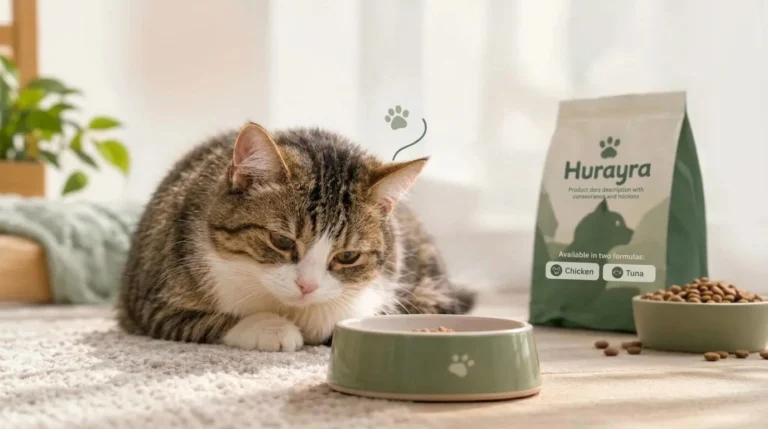
Once your cat has recovered and your vet has given the all-clear, you can gradually transition back to their regular diet. Explore Hurayra’s cat food for everyday feeding.
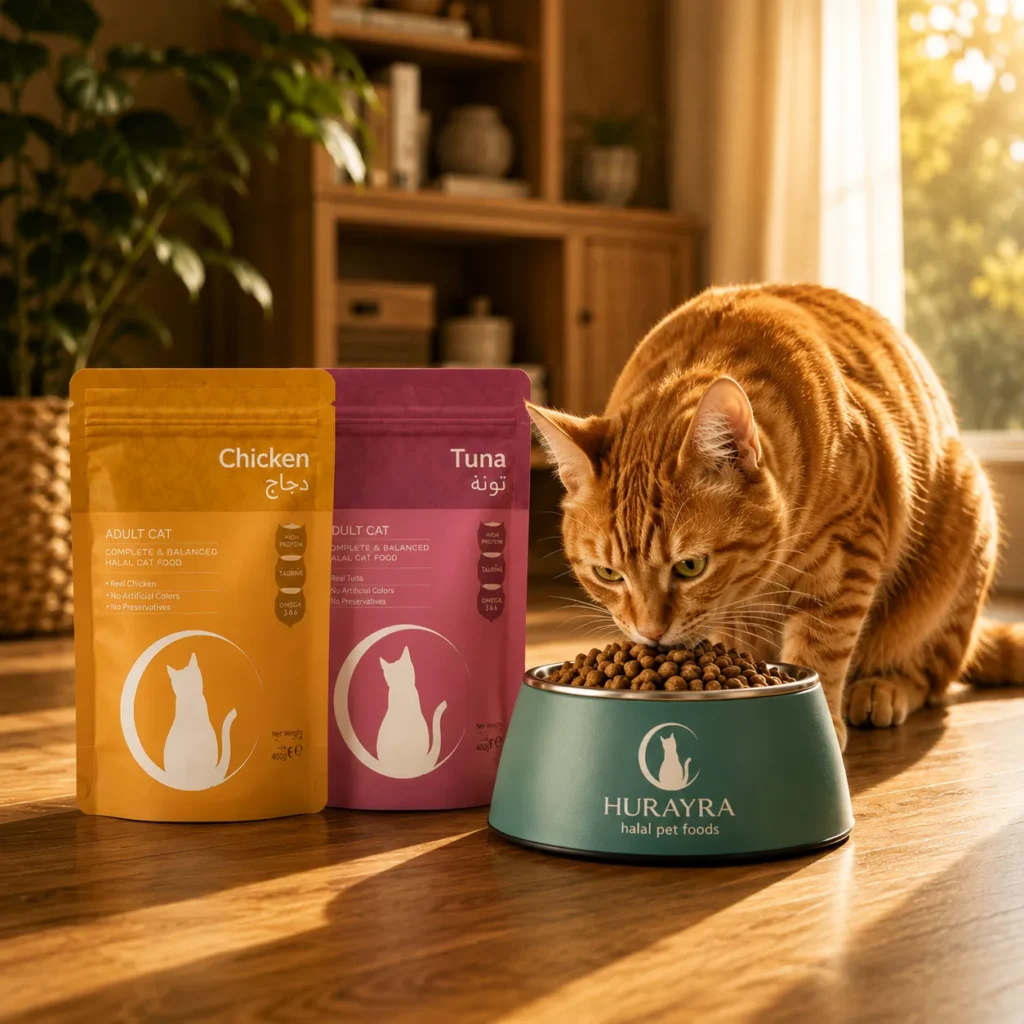
Products | Halal Cat Food
How to check for dehydration
- Gums: they should be pink and moist. Dry or sticky gums are a warning sign.
- Skin: gently lift the loose skin between the shoulder blades. It should spring back at once; slow return suggests dehydration (this is less reliable in thin or elderly cats).
- Other signs: sunken eyes, lethargy, and less urine in the tray.
Encourage drinking with a cat fountain, several bowls around the house, and a little water added to wet food. If you think your cat is dehydrated, don’t wait. Call your vet.
What not to do
- Don’t give milk. Most adult cats are lactose intolerant, and milk tends to make things worse.
- Don’t give human medicines. Paracetamol and ibuprofen are dangerous to cats, and many stomach remedies for people (including those containing salicylates) are not safe for them either.
- Over-the-counter probiotic or gut-support pastes for cats can help some cats with diarrhoea. Ask your vet or pharmacist which product suits your cat first.
Four myths worth busting
- “Milk will settle their tummy.” It usually does the opposite.
- “Hairballs are normal, so frequent vomiting is nothing to worry about.” An occasional hairball is common. Regular vomiting is not normal and is worth investigating.
- “If my cat is bright and eating, it can’t be serious.” Cats hide illness well, and conditions like kidney disease or an overactive thyroid can cause months of low-grade vomiting or loose stools before other signs appear.
- “I should starve them for 24 hours.” Long fasts are risky for cats, and especially dangerous for kittens.
What to tell your vet (and what to bring)
A clear history helps your vet narrow things down quickly. Before you go, note:
- When it started, how many times it has happened, and whether it’s getting better or worse
- What the vomit or stool looked like (a photo helps)
- Any change in food, treats, routine or environment, including new plants or products in the house
- Your cat’s appetite, thirst, energy and weight
- Worming, flea treatment and vaccination dates, and any medication your cat takes
Bring a fresh stool sample, the food packaging, and any suspect plant or product.
What happens at the vet
Your vet will examine your cat, check hydration and feel the belly, then decide which tests are needed. These can include blood tests, a stool test for parasites, and X-rays or an ultrasound if a blockage is suspected. Treatment might involve fluids, anti-sickness medication, wormers, a special diet, or antibiotics where an infection is involved. Costs vary widely. A simple consultation costs far less than a day-patient stay with fluids, tests and scans, which can reach several hundred pounds. If you have pet insurance, check your policy and call your insurer before major treatment where possible.
Preventing future episodes
- Slow down mealtimes: use puzzle feeders or slow-feeding bowls, and consider splitting the daily ration into several small meals.
- Change food gradually, mixing the new into the old over several days to a week or more.
- Groom regularly, especially long-haired cats, to cut down on hairballs.
- Keep up with worming, flea treatment and vaccinations.
- Cat-proof your home: put away string, ribbon and hair ties, keep medicines and chemicals locked up, and keep lilies out of the house.
- Keep life predictable: a steady routine, quiet hiding places and calming pheromone diffusers can help stress-prone cats.
- Book regular check-ups, especially for senior cats.
Looking for a cat food to fit into your everyday routine?
Discover Hurayra’s cat food and make consistent, measured feeding part of your cat’s daily routine.
Discover Hurayra
Key takeaways
- One-off vomiting or a single soft stool in an otherwise bright adult cat can usually be watched at home for 24 hours.
- Vomiting and diarrhoea together, repeated episodes, or a cat who is quiet or off their food need a call to the vet the same day.
- Blood, black stool, a swollen belly, retching with nothing coming up, or a suspected toxin means an emergency.
- Kittens go downhill fast. Call your vet the same day, never starve them, and treat vomiting plus diarrhoea in an unvaccinated kitten as an emergency.
- Take photos, note the timeline, and when in doubt, phone your vet.
Frequently Asked Questions
White foam is usually fluid from an empty stomach, which can follow nausea or a long gap between meals. A single episode in an otherwise bright cat can be watched at home. If it keeps happening, or your cat seems unwell, call your vet.
Advice varies. Some sources say to give nothing by mouth until you’ve spoken to a vet, while others suggest only a short break of a few hours. Everyone agrees that cats shouldn’t fast for long and kittens should never be fasted. Phone your vet if you’re unsure.
A healthy adult cat with mild diarrhoea who is eating, drinking and acting normally can usually be watched for a day or two. See a vet sooner if there’s blood, your cat seems unwell, or it’s a kitten or senior cat.
It usually means the whole digestive tract is irritated. Causes include infections, parasites, eating something unsuitable, toxins, pancreatitis and inflammatory bowel disease. Call your vet the same day, because dehydration builds up faster when fluid is lost from both ends.
Common causes include the stress of a new home, worms, parasites such as Giardia, a change of food, and infections like feline panleukopenia in unvaccinated kittens. Kittens dehydrate quickly, so call your vet the same day, and go straight away if your kitten is lethargic, vomiting, or has blood in the stool.