Written by Maria Manshad
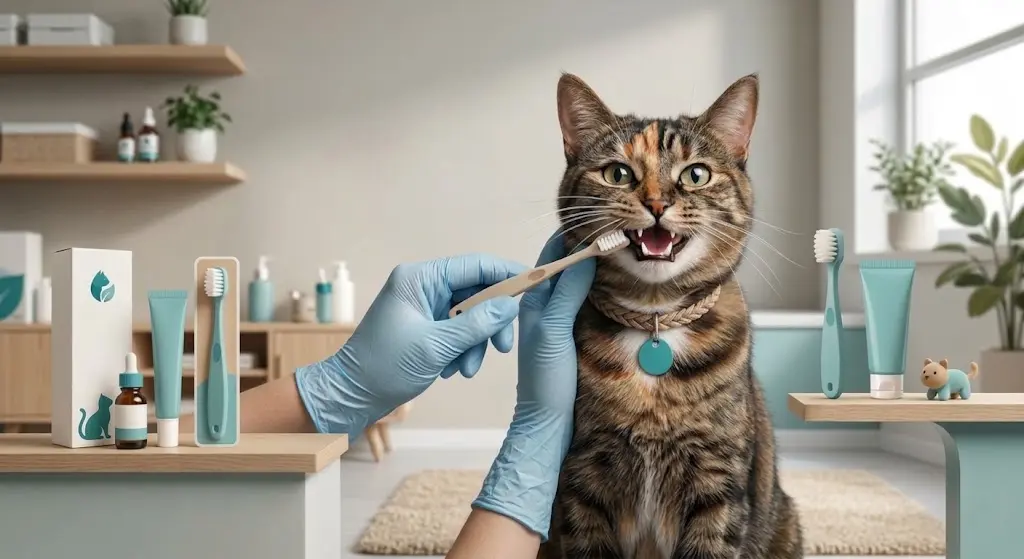
Your cat might forgive you for serving dinner late. A toothbrush? That’s another story.
Dental care is essential because plaque can harden into tartar, irritate the gums and lead to periodontal disease. The good news? A simple routine can help protect your cat’s teeth and gums.
Here’s how to brush safely, manage resistant cats and recognise when your cat needs a vet.
Why Is Dental Care Important for Cats?
Plaque and tartar can cause gum inflammation, dental disease and pain. Watch for these signs:
- Persistent bad breath.
- Red, swollen or bleeding gums.
- Yellow or brown deposits on teeth.
- Drooling or pawing at the mouth.
- Difficulty chewing or reduced appetite.
Cats often hide pain, so changes in eating or behaviour deserve attention. Regular home care and veterinary checks help keep dental problems in check.
How to Brush Your Cat’s Teeth Step by Step
Daily brushing is ideal for controlling plaque. Introduce it gradually to help your cat feel comfortable.
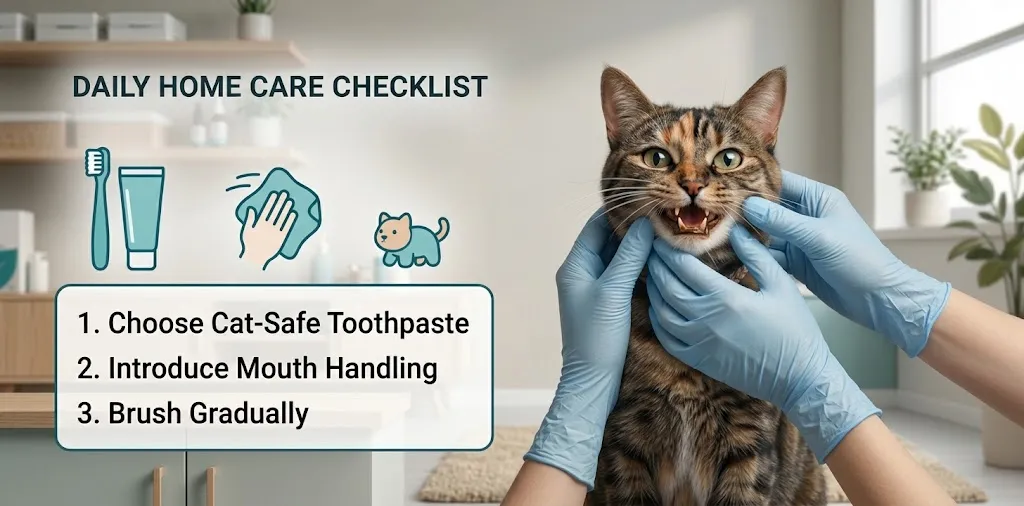
Step 1: Choose a Cat-Safe Toothbrush
Use a small, soft toothbrush and toothpaste made specifically for cats. Never use human toothpaste, which may contain harmful ingredients if swallowed.
Let your cat sniff the brush and taste a little toothpaste before starting.
Step 2: Introduce Mouth Handling
When your cat is relaxed, gently stroke their cheeks and lift their lip briefly. Reward calm behaviour and keep sessions short.
Never force their mouth open. If they resist, return to an easier step.
Step 3: Start Brushing Slowly
Gently brush a few teeth along the outer surfaces near the gumline. Use small movements and gradually increase the time as your cat adjusts.
Step 4: Make It a Habit
Brush at the same time each day and reward cooperation. If your cat becomes distressed, stop and try again later.
If their gums are sore or their teeth appear damaged, consult your vet before brushing.
What If Your Cat Refuses to Have Their Teeth Brushed?
Start slowly instead of forcing your cat to cooperate.
- Build familiarity: Begin with gentle cheek and lip touching.
- Keep it brief: Start with a few seconds.
- Reward progress: Use praise or a suitable treat.
- Try another brush: A smaller brush may feel more comfortable.
- Watch for pain: Sudden resistance can signal dental discomfort.
If brushing remains difficult, ask your vet about suitable alternatives.
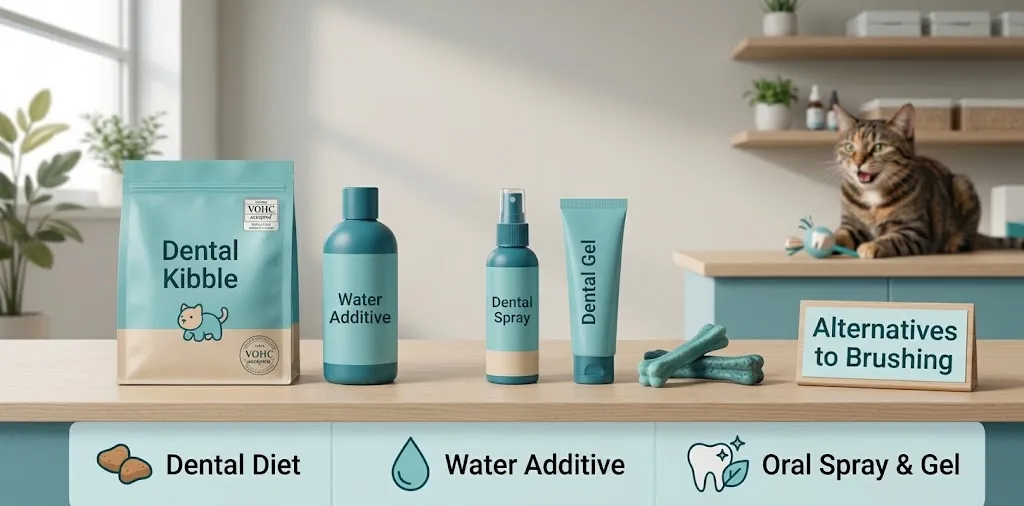
Can You Keep a Cat’s Teeth Clean Without Brushing?
Dental products may help manage plaque, but their effectiveness varies. They should not automatically be considered equivalent to brushing.
1. Dental Treats
Some treats help reduce plaque or tartar. Choose cat-specific products with evidence of effectiveness, such as those listed by the Veterinary Oral Health Council (VOHC).
2. Dental Gels and Water Additives
These may support oral hygiene when used as directed. Choose cat-safe products and ensure water additives do not discourage drinking.
3. Dental Diets
Specially formulated dental diets may help control plaque or tartar. Ordinary dry food does not necessarily clean teeth, so ask your vet whether a dental diet suits your cat.
4. Dental Toys
Some toys are designed to support oral care, but effectiveness varies. Avoid hard objects that could damage teeth.
Remember: These options do not replace veterinary treatment for existing dental disease.
How to Choose the Right Cat Dental-Care Products
Before buying, check that the product:
- Is specifically designed for cats.
- Has credible evidence supporting its claims.
- Includes clear usage instructions.
- Suits your cat’s age and health needs.
Look for independent assessments, such as the VOHC Seal of Acceptance where applicable. If your cat has visible tartar, inflamed gums or mouth pain, consult a vet rather than relying on products alone.
How to Build a Daily Dental-Care Routine
Keep your routine simple:
- Brush daily if your cat tolerates it.
- Check their teeth and gums periodically without forcing their mouth open.
- Provide fresh water and appropriate food portions.
- Use suitable dental products when needed.
- Arrange regular veterinary checks.
Consistent feeding habits also support everyday care. Read our guide onhow often you should feed your cat for practical scheduling advice.
Does Your Cat’s Food Matter?
A nutritionally appropriate diet supports your cat’s overall health, but ordinary food alone should not be relied on to control plaque.
If you feed your cat wet food, portion size still matters. Our guide onhow much wet food to feed a cat explains how to approach portions according to your cat’s needs.
Looking for food options for your cat? Explore Hurayra’s cat food range to discover our available products.
Specially formulated dental diets may help with plaque or tartar control, but they are different from standard complete cat food. Ask your vet before making a dietary change for dental reasons.
When Should You Take Your Cat to the Vet?
Contact your vet if you notice persistent bad breath, red gums, visible tartar, drooling or changes in chewing.
Seek prompt advice for mouth pain, significant swelling or bleeding. If your cat cannot eat or drink, contact a vet urgently.
Dental disease may require professional cleaning under general anaesthesia or, in some cases, tooth extraction. Never scrape tartar off your cat’s teeth at home.
Good Dental Care Starts With Everyday Habits
Regular brushing, appropriate nutrition and veterinary checks all contribute to your cat’s wellbeing. Start with small steps, stay consistent and seek professional advice when something seems wrong.
Explore Hurayra’s cat food range to learn more about our available food options.

Explore Hurayra
Frequently Asked Questions
Not necessarily. Ordinary kibble is not a substitute for brushing, although specially formulated dental diets may help control plaque or tartar.
Yes. Introduce brushing gradually and use rewards. If your cat has dental problems, consult your vet first.
No. Use toothpaste specifically formulated for cats because human toothpaste may contain harmful ingredients if swallowed.
No. Suitable dental treats may help manage plaque or tartar, but they do not replace brushing or veterinary treatment when needed.
It depends on your cat’s oral health, age and individual risk. Your vet can recommend an appropriate schedule.