Written by Maria Manshad
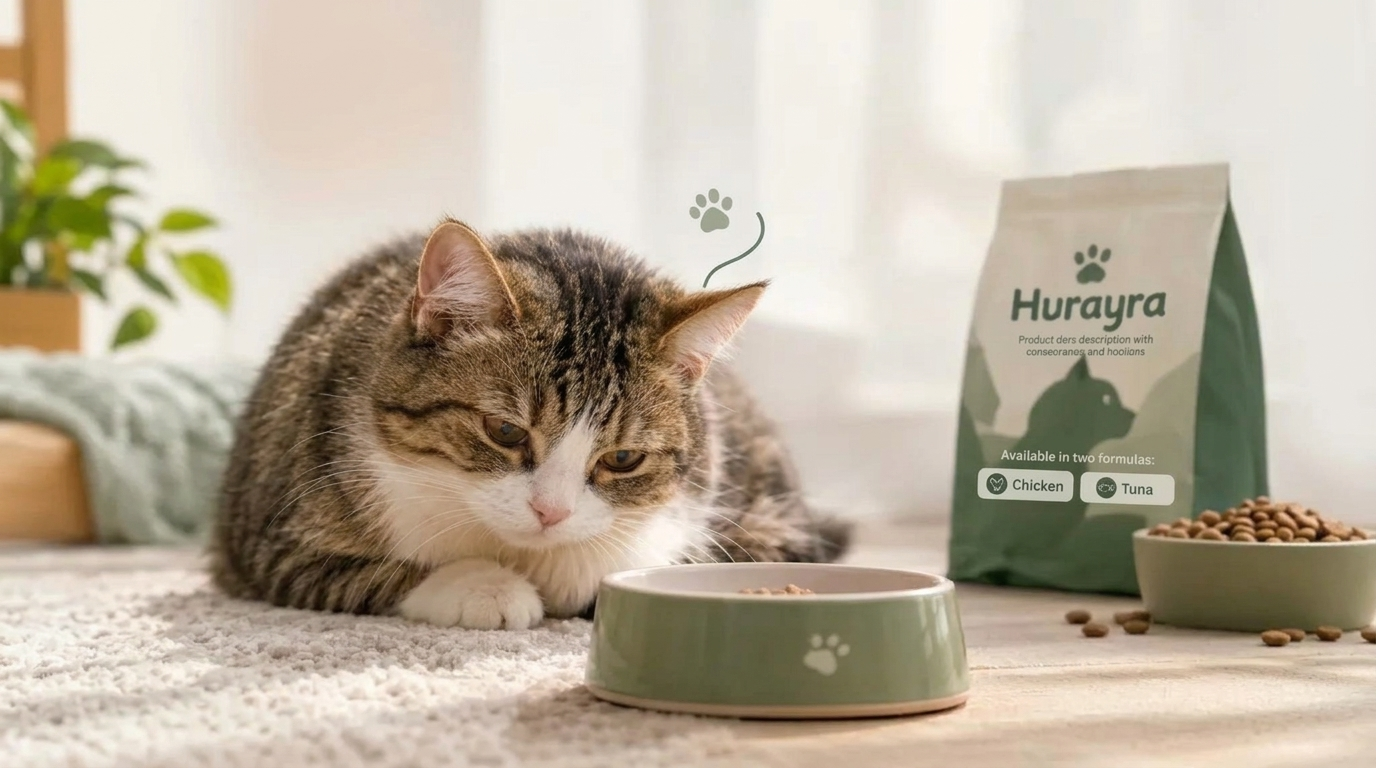
One minute, your cat is happily eating dinner. Next, you’re reaching for the kitchen roll and wondering how something so small can make such a mess.
The occasional hairball might not be unusual, but if your cat keeps being sick, it’s worth paying attention. Repeated vomiting can happen for several reasons, from eating too quickly to problems that need veterinary treatment.
The tricky part? Your cat might seem perfectly normal between episodes, making it difficult to tell whether something is wrong.
Here’s what might be causing your cat’s vomiting, what different symptoms can tell you and when it’s time to contact your vet.
Important: If your cat is vomiting repeatedly, cannot keep water down, has blood in their vomit, appears weak or painful, or may have swallowed something poisonous, contact a vet urgently. Don’t wait for the vomiting to stop on its own.
Why Does My Cat Keep Vomiting?
Vomiting happens when a cat forcefully brings stomach contents back up. It can be triggered by something relatively minor, but repeated episodes may indicate an underlying problem.
Here are some common possibilities.
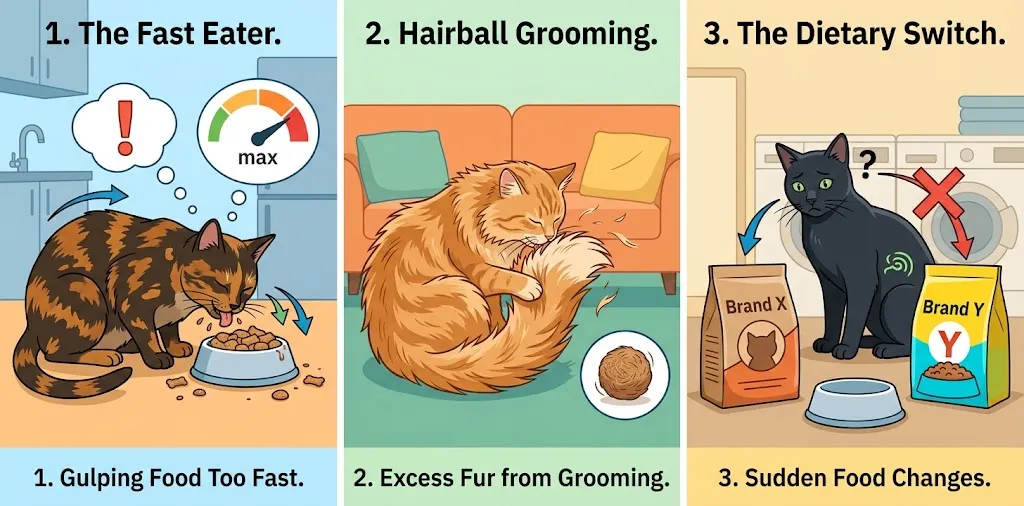
1. Hairballs
Cats spend a considerable amount of time grooming themselves. During grooming, they swallow loose fur, which can collect in the stomach and sometimes be brought back up as a hairball.
Long-haired cats and cats that shed heavily may be more prone to hairballs.
Occasional hairballs can happen, but frequent vomiting shouldn’t automatically be blamed on grooming. If your cat repeatedly retches without producing a hairball, seems uncomfortable or keeps vomiting, contact your vet.
Regular brushing can help remove loose fur before your cat swallows it.
2. Eating Too Quickly or Too Much
Some cats treat mealtimes like a race. Eating too quickly or consuming a large meal can trigger vomiting or regurgitation.
If your cat regularly brings up food shortly after eating, pay attention to what happens immediately beforehand. Does your cat retch and heave, or does the food come back up with little effort?
That distinction matters because vomiting and regurgitation have different causes.
If your cat eats too quickly, try offering smaller, more frequent portions or using a suitable slow-feeder bowl. If the problem continues, speak to your vet rather than assuming your cat is simply eating too fast.
3. Sudden Food Changes
Changed your cat’s food recently? A sudden dietary change can upset some cats’ digestive systems.
Switching between foods too quickly, eating unfamiliar food or getting into leftovers may contribute to vomiting.
Whenever you change your cat’s usual food, introduce the new diet gradually, following the manufacturer’s transition guidance or your vet’s advice.
At Hurayra, we recognise that feeding routines and food choices matter to cat owners. If you’re exploring a different diet, our guide to cat food composition and ingredients explains what goes into our dry food recipes.
Remember, though, that a food change isn’t necessarily the cause of repeated vomiting. If your cat keeps being sick, seek veterinary advice before trying another diet.

Dry Food
4. Food Intolerances or Allergies
Some cats react adversely to particular ingredients. Depending on the cause, food-related problems may be accompanied by diarrhoea, itching or skin irritation.
However, vomiting alone doesn’t establish that your cat has a food allergy or intolerance. Other digestive conditions can cause similar symptoms.
If you suspect your cat’s food is responsible, speak to your vet about whether a dietary trial is appropriate. Avoid repeatedly switching foods without guidance, as this can make it harder to identify the cause.
5. Parasites or Infections
Intestinal parasites and certain infections can cause vomiting. Your cat may also develop diarrhoea, lose their appetite or appear unusually tired.
Kittens and cats with other health problems may be particularly vulnerable to complications.
If vomiting occurs alongside other symptoms, contact your vet. They may recommend examining a stool sample or carrying out other tests to determine what’s happening.
6. Digestive Problems or Underlying Illness
Repeated vomiting can also be associated with conditions affecting the digestive system or other organs.
Possible causes include:
- Inflammatory bowel disease.
- Pancreatitis.
- Kidney or liver disease.
- Diabetes and other metabolic conditions.
- Gastrointestinal obstructions caused by swallowed objects.
- Poisoning or exposure to certain medications and plants.
These conditions cannot be reliably distinguished by looking at vomit alone. Your vet will consider your cat’s history, examination findings and any other symptoms before deciding whether tests are needed.
Never assume that frequent vomiting is normal just because your cat has always done it.
Why Does My Cat Keep Being Sick After Eating?
If your cat regularly vomits after meals, the timing can offer useful clues, but it doesn’t tell you the cause on its own.
Possible explanations include eating too quickly, a recent dietary change, food-related problems or an underlying digestive condition.
It’s also worth distinguishing vomiting from regurgitation.
Vomiting usually involves nausea, retching and visible abdominal contractions. The material may be partly digested and can contain fluid or bile.
Regurgitation tends to happen more passively, often soon after eating. The food may look relatively undigested and sometimes comes up in a tube-like shape.
The two can look similar, so a video of an episode may help your vet understand what you’re seeing.
If your cat repeatedly brings up meals, arrange a veterinary assessment. Don’t keep reducing portions or changing food in the hope that the problem will disappear.
What Does My Cat’s Vomit Look Like?
The appearance of vomit can provide clues, but it cannot confirm a diagnosis. Here’s what some common appearances may mean.
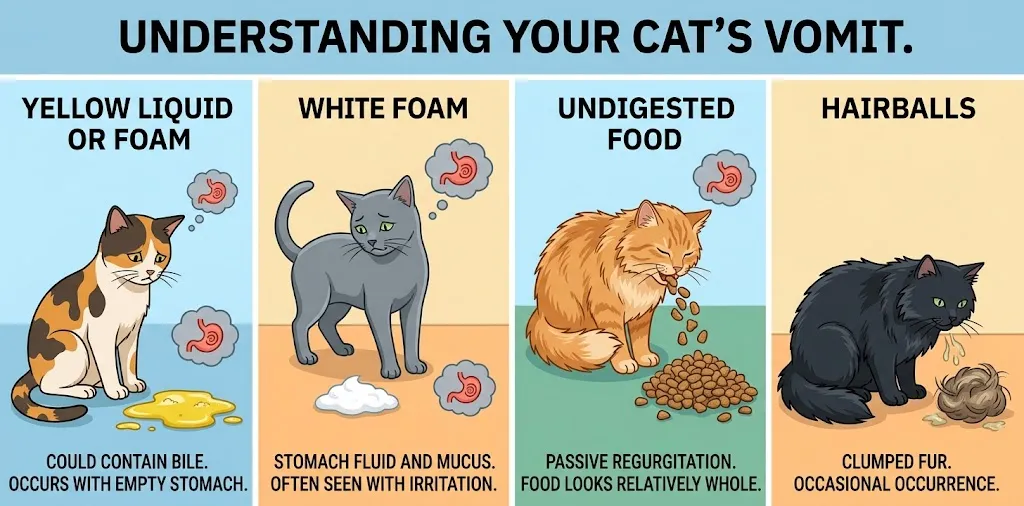
Yellow Liquid or Foam
Yellow or yellow-green fluid may contain bile. It can appear when the stomach is relatively empty, but there are other possible explanations.
If your cat repeatedly vomits yellow fluid, particularly alongside reduced appetite, diarrhoea or lethargy, contact your vet promptly.
White Foam
White foam may consist of stomach fluid and mucus. It can occur with an irritated or relatively empty stomach, but it isn’t a diagnosis in itself.
Repeated episodes need veterinary assessment, especially if your cat seems unwell.
Undigested Food
Food that comes back up shortly after a meal may indicate regurgitation, particularly if there’s little retching or abdominal effort.
If it happens repeatedly, your vet can help establish whether the problem involves eating behaviour, the oesophagus or another condition.
Hairballs
Hairballs often contain a clump of fur mixed with fluid. While an occasional hairball can happen, frequent episodes of retching or vomiting should be investigated.
Blood or Dark, Coffee-Ground-Like Material
Blood in vomit can indicate bleeding in the digestive tract. Dark material resembling coffee grounds can also be concerning.
Contact a vet urgently if you see blood or coffee-ground-like material. Don’t try to diagnose the cause from its appearance.
Why Does My Cat Keep Being Sick but Seems Fine?
It’s easy to feel reassured when your cat vomits and then goes straight back to playing, sleeping or asking for food.
However, cats may behave normally between episodes even when an underlying problem is developing.
Pay attention to the bigger picture:
- How often is your cat vomiting?
- Is it happening after meals or at different times of day?
- Has your cat’s appetite changed?
- Are they drinking more or less than usual?
- Have you noticed weight loss, diarrhoea or changes in behaviour?
A single episode in an otherwise healthy cat may have a relatively minor explanation. Repeated vomiting is different and deserves veterinary advice, even if your cat seems comfortable afterwards.
When Should I Worry About My Cat Being Sick?
The frequency of vomiting, your cat’s general condition and any accompanying symptoms all matter.
Contact a Vet Urgently If Your Cat:
- Vomits repeatedly or cannot keep water down.
- Has blood in their vomit.
- Seems weak, unusually sleepy or disorientated.
- Has pale gums or appears to be in pain.
- Vomits alongside significant diarrhoea or other signs of illness.
- May have swallowed string, ribbon, a foreign object or a poisonous substance.
Suspected poisoning or an obstruction requires prompt veterinary attention. Don’t pull on visible strings from your cat’s mouth or bottom, and don’t try to induce vomiting.
Kittens, older cats and cats with existing medical conditions may need earlier assessment because they can be more vulnerable to dehydration and other complications.
If vomiting recurs over several days, or your cat stops eating normally, contact your vet rather than waiting for more severe symptoms to develop.
If your cat keeps being sick, read our guide on why your cat keeps being sick to learn more about possible causes, warning signs and when to seek veterinary advice.
What Should I Do If My Cat Keeps Being Sick?
If your cat is vomiting repeatedly, contact your vet for advice. While arranging care, a few simple steps can help you provide useful information.
- Record what happens. Note when the vomiting started, how many episodes occurred and whether they followed meals.
- Photograph the vomit if possible. A clear picture may help your vet understand its appearance.
- Watch for other symptoms. Note changes in appetite, drinking, bowel movements, energy levels and behaviour.
- Check for possible triggers. Consider recent food changes, access to plants, human medicines, cleaning products or objects your cat might have swallowed. Don’t delay seeking care while investigating.
- Follow your vet’s feeding advice. Don’t force food or water, give human medicines or deliberately fast your cat without veterinary guidance. Kittens and cats with underlying health problems may be particularly vulnerable to going without food.
If your cat cannot keep water down or shows any urgent warning signs, seek veterinary help immediately.
How Will a Vet Find Out Why My Cat Keeps Vomiting?
Your vet will ask about the vomiting, your cat’s diet, recent changes, medical history and any other symptoms. They’ll also examine your cat and assess their hydration and general condition.
Depending on the findings, further investigations may include:
- Blood tests to assess organ function and look for other abnormalities.
- Urine tests.
- Stool tests for parasites or other problems.
- X-rays or ultrasound to investigate possible obstructions or abnormalities.
Treatment depends on the underlying cause. Some cats may need fluids or medication, while others may require specific treatment for an infection, digestive condition, poisoning or obstruction.
The sooner the cause is identified, the sooner your vet can recommend an appropriate treatment plan.
Can You Prevent Your Cat from Being Sick?
Not every cause of vomiting is preventable, but some practical measures can help reduce certain triggers.
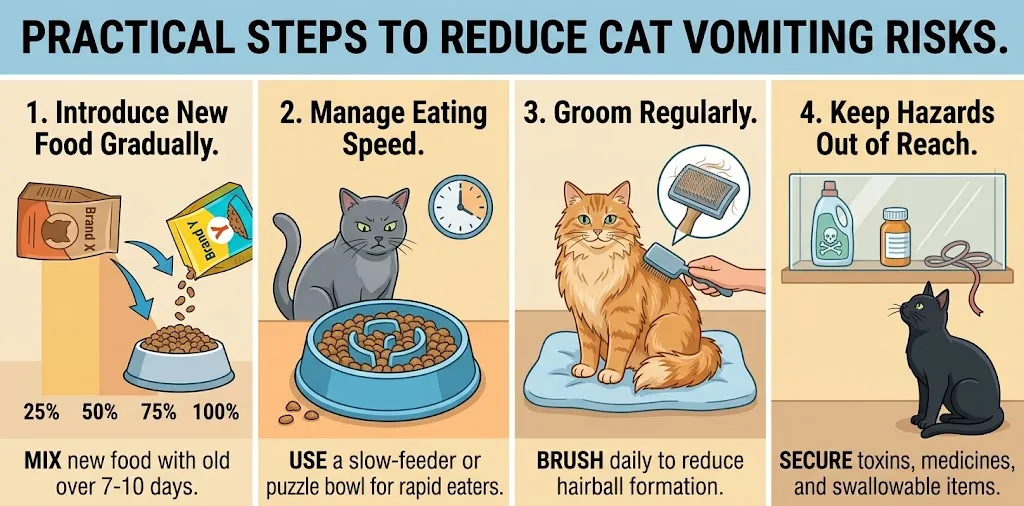
- Introduce new food gradually. Avoid abrupt changes to your cat’s usual diet.
- Manage eating speed. Consider smaller, appropriately measured meals or a slow feeder if your cat gulps food.
- Groom regularly. Brushing can help reduce the amount of loose fur your cat swallows.
- Keep hazards out of reach. Secure medicines, toxic plants, cleaning products, string and small objects.
- Monitor eating habits and weight. Changes may help you spot a problem earlier.
- Seek advice for recurring symptoms. Don’t rely on food changes or hairball remedies to manage persistent vomiting.
Choosing Food for Your Cat
A suitable, nutritionally complete diet is important for your cat’s everyday wellbeing. Hurayra’s dry cat food range includes chicken, tuna and a chicken-and-tuna combination, with recipes made without added grain, wheat or soy.
You can explore the Hurayra cat food range to learn more about the available recipes and their ingredients.
If your cat is repeatedly vomiting, however, don’t assume that switching to grain-free food or another recipe will resolve it. Food sensitivities are only one possible explanation, and your vet can advise whether a dietary change is appropriate.
Looking for everyday food for your feline friend? Discover Hurayra’s cat food range
Final Thoughts
An occasional vomiting episode can have a relatively simple explanation, but repeated vomiting deserves attention. The timing, appearance of the vomit and any changes in your cat’s behaviour can offer useful clues, but none can replace a veterinary assessment.
Keep an eye on your cat’s eating habits, introduce dietary changes gradually and seek advice when vomiting returns. And remember: finding the cause is more important than simply trying to stop the symptoms.
Frequently Asked Questions
Daily vomiting isn’t something to dismiss as normal. It may be associated with dietary issues, parasites, digestive disease or another underlying condition. Contact your vet for advice, particularly if your cat has other symptoms or is eating less than usual.
A normal appetite doesn’t rule out an underlying problem. If your cat repeatedly vomits despite eating normally, arrange a veterinary assessment rather than assuming the issue is harmless.
Possible explanations include eating too quickly, dietary changes, regurgitation or digestive problems. Note how soon it happens after meals and whether your cat retches before bringing food up. Repeated episodes need veterinary assessment.
Cats can occasionally bring up hairballs after grooming. However, frequent hairballs, repeated unproductive retching or vomiting alongside other symptoms should be discussed with your vet.
This depends on your cat’s condition and the cause of the vomiting. Ask your vet for feeding advice, particularly if the vomiting has happened more than once. Don’t force food or deliberately fast your cat without professional guidance.
Seek urgent veterinary advice if vomiting is repeated, your cat cannot keep water down, there’s blood in the vomit, your cat seems weak or painful, or poisoning or an obstruction is possible. Contact your vet promptly if vomiting recurs, even if your cat appears normal between episodes.