Written by Uzma Aslam
TL;DR
Soy is a common cat food filler with no benefit for obligate carnivores. It disrupts digestion, blocks mineral absorption, and may affect hormonal balance. Choose food where named animal protein leads the ingredient list and soy appears nowhere on it.
Soy-Free Cat Food: Why Soy Is a Problem and What to Feed Instead
Most cat owners read the front of the pack. Few read the back. That gap is where soy quietly enters the bowl.
Soy is one of the most common fillers in commercial cat food, and also one of the least discussed. It does not appear on the front of the bag. It does not feature in the marketing. But it sits in the ingredient list of thousands of mainstream products, contributing little nutritional value while posing real risks for cats with sensitivities.
This article explains why soy is used, what it actually does inside a cat’s body, how to identify soy free cat food worth buying, and what signals separate a well-formulated recipe from one that relies on cheap plant protein to pad out its numbers.
Why Manufacturers Add Soy to Cat Food
Soy is inexpensive and protein-rich on paper. From a manufacturing standpoint, it inflates the total protein percentage on a label without the cost of additional animal meat. That matters in a market where “high protein” is a selling point.
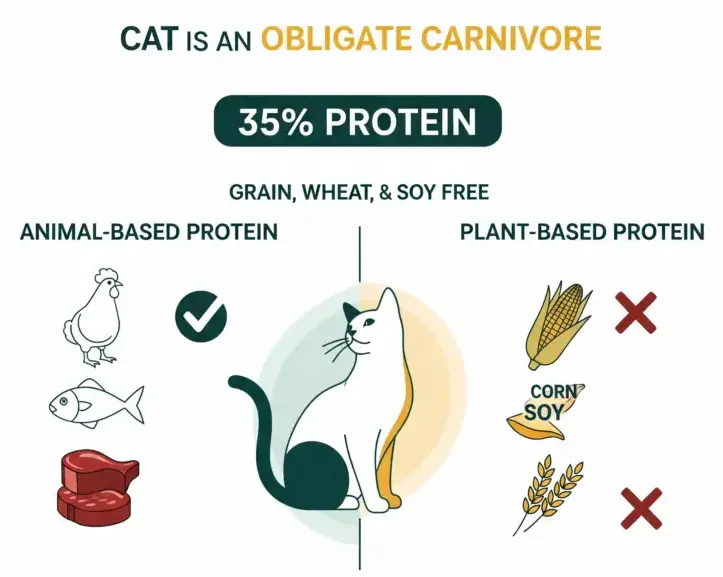
The problem is that feline protein requirements are not simply about quantity. They are about source and bioavailability. Cats are obligate carnivores. Their digestive systems are built around animal protein, with limited enzymatic capacity to process plant-based alternatives. A food that lists 32% protein, but draws a significant portion of that from soy, is not nutritionally equivalent to one delivering 32% from named meat or fish.
Soy also contains phytoestrogens, which are plant compounds that can interact with hormonal function. The long-term effects of dietary phytoestrogens in cats are not fully established, but the concern is legitimate enough that many veterinary nutritionists recommend avoiding soy in cat food, particularly for neutered animals.
What Soy Does Inside a Cat’s Digestive System
Cats have a shorter gastrointestinal tract than omnivores and a different enzymatic profile. They lack sufficient amylase in their saliva and produce comparatively low levels of intestinal amylase. This makes plant-based carbohydrates and proteins harder to process.
Soy specifically presents two difficulties. First, it contains oligosaccharides (notably raffinose and stachyose) that cats cannot fully digest. These ferment in the lower gut, producing gas and contributing to loose stools, bloating, and general digestive discomfort. Second, soy contains phytates, which bind to minerals like zinc, calcium, and iron, reducing their absorption. A food that appears mineral-rich on its label may deliver considerably less than stated if soy is a significant component.
For cats already dealing with soy intolerance, these effects are amplified. What presents as chronic loose stools, skin irritation, or repeated ear inflammation may, in some cases, trace back to a dietary ingredient the owner never considered.
Recognising Soy Intolerance in Cats
Soy intolerance in cats does not always present dramatically. There is rarely a single acute reaction that makes the cause obvious. More often, owners notice a pattern over weeks or months.
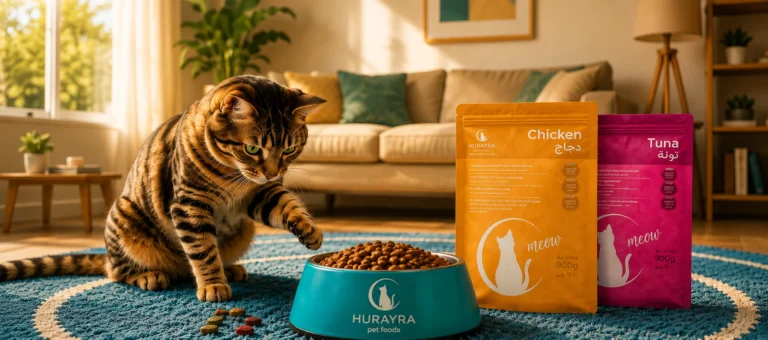
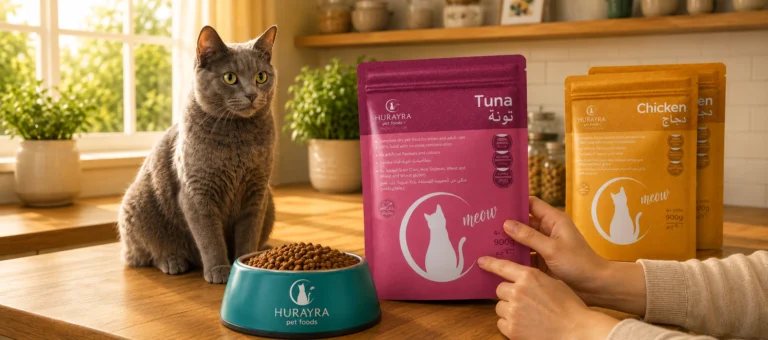
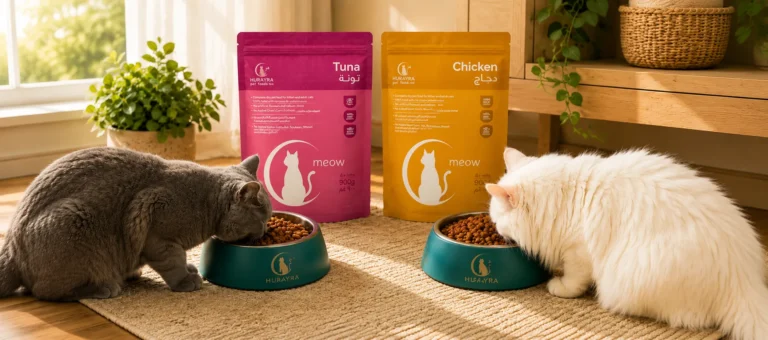
Tuna and Chicken Combo
Pack of 2
Common signs worth paying attention to include:
Digestive irregularity that persists despite a consistent feeding routine. Soft or poorly formed stools that do not resolve after transitioning away from a food believed to cause the issue. Coat condition that declines or becomes dull without an obvious explanation. Recurring skin issues, particularly around the face, ears, or base of the tail. Cats that eat but remain restless, circle their bowl, or show little enthusiasm over time.
None of these signs are definitive on their own. A cat with a dull coat might need more omega fatty acids. Loose stools can have several causes. But if these issues persist and the current food contains soy, removing it from the diet is a reasonable first step before pursuing veterinary investigation.
The most reliable approach is an elimination trial. Feed a named protein, soy-free diet for four to six weeks and monitor changes. If symptoms improve, soy is likely a contributing factor.
How to Read a Cat Food Label for Soy
Soy does not always appear as “soy” on an ingredient list. It can appear as soya, soybean meal, soy protein isolate, soy protein concentrate, or soy flour. Some formulations use hydrolysed soy protein, which is processed to reduce allergenicity but remains a soy derivative.
Ingredients are listed in descending order by weight. If soy or any soy derivative appears in the first five ingredients, it forms a substantial part of the recipe. If it appears further down the list, it may be present in smaller quantities but is still worth noting for cats with known sensitivities.
When assessing a soy free cat food, look for three things:
The first ingredient should be a named animal protein: chicken, turkey, salmon, tuna. Not “meat derivatives,” not “poultry meal” without specification, not “animal by-products.” A named source tells you what you are actually feeding.
The protein percentage should reflect animal origin. FEDIAF (the European Pet Food Industry Federation) guidelines recommend a minimum of 25% crude protein for adult cats on a dry matter basis. Premium formulations typically deliver 30% or more from animal sources. A product delivering 35% protein from named meat or fish is in a different category from one delivering 28% partly from soy.
The absence of common plant-protein fillers. Beyond soy, check for corn gluten meal, pea protein isolate, and wheat gluten, all of which serve a similar cost-reducing function.
Soy-Free Is Not the Same as Grain-Free
These two terms appear together often enough that cat owners sometimes treat them as synonymous. They are not.
A food can be grain-free but still contain soy. Conversely, a grain-inclusive food might contain no soy whatsoever. The two attributes address different things.
Grain-free refers to the absence of cereal grains: wheat, corn, rice, barley, oats. Grain-free formulations can benefit cats with specific grain sensitivities, but grain-free is not automatically superior for every cat. Some cats digest small amounts of whole grains without difficulty. The real question is whether the carbohydrate source, grain or otherwise, is doing useful nutritional work or simply filling volume.
Soy-free is a separate concern. It addresses a specific plant protein that can interfere with digestion, hormonal balance, and mineral absorption in ways that other ingredients do not.
For cats with food sensitivities, the ideal outcome is a recipe that is both soy-free and grain-free, with protein derived entirely from named animal sources. That combination removes the most common dietary triggers while aligning with what cats are biologically built to digest. You can read more about grain vs grain-free choices in a separate guide.
What Halal Certification Adds to This Conversation
Halal certification is sometimes treated as a religious label with no relevance to non-Muslim cat owners. That framing misses something important.
HMC (Halal Monitoring Committee) certification in the UK is, above all, a traceability standard. It requires documented chain-of-custody from farm to finished product, with clear identification of every animal protein source. It prohibits cross-contamination with prohibited substances and requires consistent third-party oversight.
For a cat owner concerned about what is actually in their pet’s food, that kind of supply chain transparency has practical value regardless of religious background. HMC certification means the protein source is not ambiguous. It means “chicken” is chicken, traceable to approved farms with documented processing conditions.
Halal certification does not make a food nutritionally superior. A halal product with poor macronutrient ratios or unnecessary fillers is still a poor product. But where it accompanies a genuinely well-formulated recipe, it adds a layer of sourcing accountability that most mainstream cat food brands cannot offer. More on what halal means in practical terms is worth reading if this is new territory.
Hurayra and What Soy-Free Looks Like in Practice
Hurayra produces dry cat food with 35% protein, sourced from named animal ingredients: chicken and tuna. The recipes are free from soy, grain, and wheat, with no artificial colours, additives, or preservatives. All products carry HMC certification, meaning every stage of the supply chain is independently monitored.
The protein figure is worth noting in context. FEDIAF guidelines set minimum thresholds; 35% from named animal sources in a dry food position Hurayra meaningfully above those minimums. The omega 3, 6, and 9 profile supports coat condition and cardiovascular health, two areas where soy-heavy foods often underdeliver due to phytate interference with mineral absorption.
Hurayra is available through Morrisons in the UK and directly via subscription, which delivers every four to eight weeks with a 25% saving. The subscription model also removes the inconsistency that disrupts elimination trials and dietary monitoring. You can explore the full product range and premium ingredients directly on the site.
A Practical Approach to Choosing Better Cat Food
Start at the ingredient list, not the front of the pack. The first three ingredients tell you most of what you need to know about where the protein is actually coming from.
If the first ingredient is a named animal protein and there is no soy in any form within the first five ingredients, you are already ahead of most mainstream options. If the food also carries a recognised quality or traceability standard, and delivers protein above 30% on a dry matter basis, the foundation is solid.
Consistency matters as much as quality. Cats adjust to routines, and their digestive systems respond to dietary stability. If you find a food that works, a subscription removes the risk of accidental substitutions or brands quietly reformulating without announcement.
The goal is not perfection. It is removing unnecessary risk from an area where the risk is avoidable.
Conclusion
Soy in cat food is not a recent controversy. The evidence against it has been building for years, and the shift toward soy free cat food in the premium segment reflects growing awareness among cat owners who read labels rather than just packaging.
The good news is that high-quality, soy-free options exist in the UK, and the ingredient transparency that comes with well-formulated, certified products makes it easier than ever to know exactly what your cat is eating. That information should be accessible to every cat owner, not just those already deep in the nutrition conversation.
If you are at the beginning of that process, start with the ingredient list on your current brand. Then decide whether what you find there reflects what you want to feed.
Subscribe to Hurayra’s range and take a step towards your cat’s optimal health.
Frequently Asked Questions
1 Does my cat definitely have a soy problem?
Not every cat reacts visibly to soy. Some tolerate it without obvious symptoms while still experiencing reduced nutrient absorption over time. The absence of dramatic symptoms is not confirmation that soy is harmless for a given cat.
2 Is no soy cat food in the UK more expensive?
It can be, in the short term. Replacing soy with a higher proportion of named animal protein costs more to manufacture. However, a food with better bioavailability often means better body condition, which can reduce veterinary costs over a cat’s lifetime. On a body condition scale of 1 to 9, most vets target a score of 4 to 5. Poor-quality protein consistently limits a cat’s ability to maintain lean muscle, which pushes the score lower or drives compensatory overeating.
3 Can I mix soy-free food with my current brand?
During a dietary transition, yes. The standard recommendation is a gradual switch over 7 to 10 days, increasing the proportion of the new food incrementally. If you are specifically investigating a soy sensitivity, mixing foods during the trial period complicates the results. A cleaner elimination trial uses one food only. The transition guide on the Hurayra website outlines a practical approach.
4 My cat has been fine on soy-containing food for years. Should I still switch?
That is your decision to make. The case for switching is not that your cat is in crisis. It is that soy provides no benefit; a well-formulated cat food cannot deliver through animal protein alone, and removing it carries no downside for cats without soy-specific benefits. If your cat is at a healthy body condition score, coat is good, digestion is consistent, and energy is normal, a transition is elective. If any of those markers are borderline, it is worth investigating.
Not every cat reacts visibly to soy. Some tolerate it without obvious symptoms while still experiencing reduced nutrient absorption over time. The absence of dramatic symptoms is not confirmation that soy is harmless for a given cat.
It can be, in the short term. Replacing soy with a higher proportion of named animal protein costs more to manufacture. However, a food with better bioavailability often means better body condition, which can reduce veterinary costs over a cat’s lifetime. On a body condition scale of 1 to 9, most vets target a score of 4 to 5. Poor-quality protein consistently limits a cat’s ability to maintain lean muscle, which pushes the score lower or drives compensatory overeating.
During a dietary transition, yes. The standard recommendation is a gradual switch over 7 to 10 days, increasing the proportion of the new food incrementally. If you are specifically investigating a soy sensitivity, mixing foods during the trial period complicates the results. A cleaner elimination trial uses one food only. The transition guide on the Hurayra website outlines a practical approach.
That is your decision to make. The case for switching is not that your cat is in crisis. It is that soy provides no benefit; a well-formulated cat food cannot deliver through animal protein alone, and removing it carries no downside for cats without soy-specific benefits. If your cat is at a healthy body condition score, coat is good, digestion is consistent, and energy is normal, a transition is elective. If any of those markers are borderline, it is worth investigating.