Written by Uzma Aslam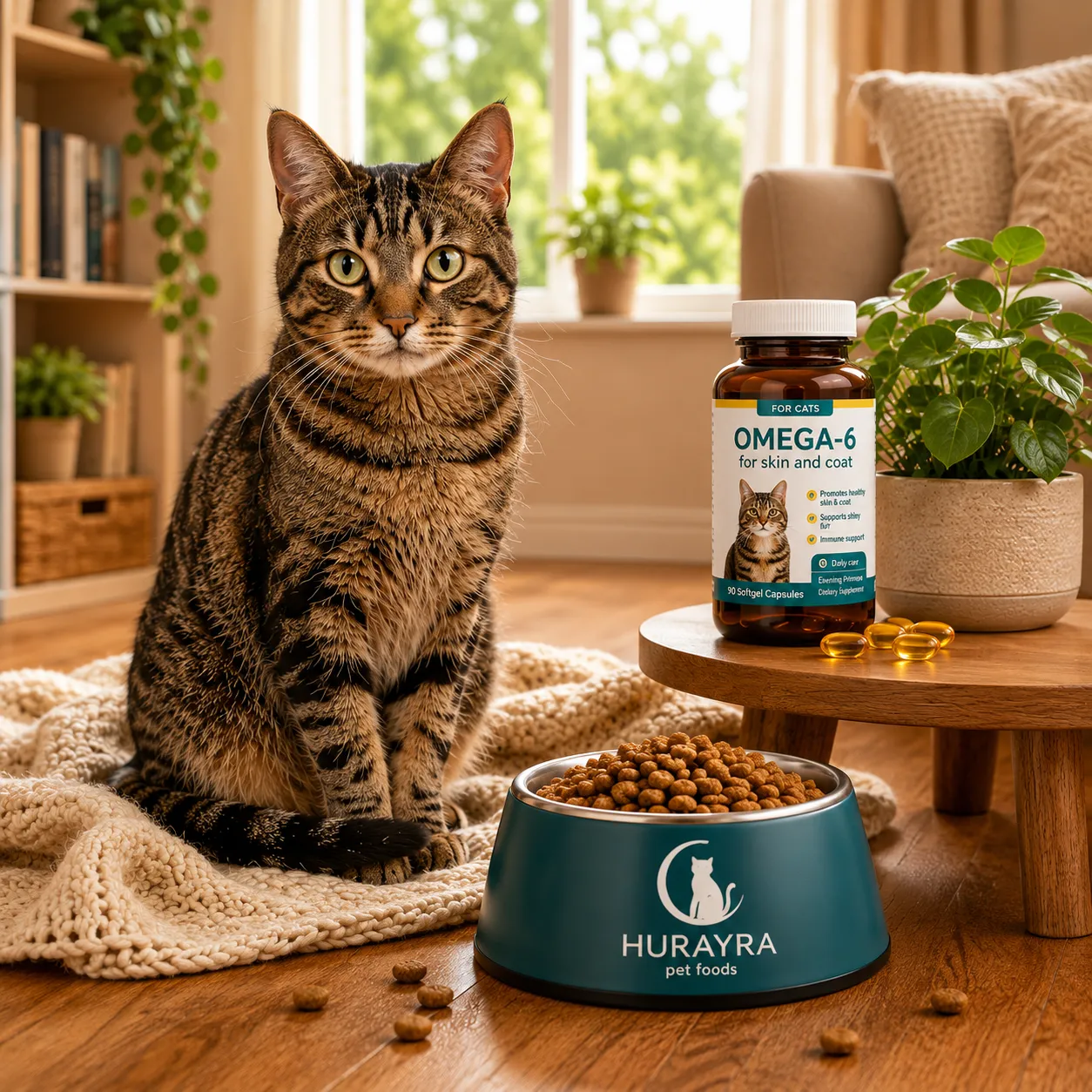
How Omega 6 Fatty Acids Keep Your Cat’s Coat Shiny and Skin Healthy
If your cat’s fur has lost its shine, or their skin looks flaky and irritated, their diet might be missing something important. Omega 6 fatty acids are one of the most overlooked nutrients in feline nutrition, yet they do a lot of quiet work every day. Here’s what they are, what they actually do, and how to make sure your cat is getting enough.
What Omega 6 Fatty Acids Actually Are
Omega fatty acids come in different families, omega 3, omega 6, omega 9. Each one has a different role in the body. For skin and coat health in cats, omega 6 is the one that matters most.
The key player within this group is linoleic acid. It sits at the core of how cats maintain a healthy skin barrier and produce strong, glossy fur. And here’s what most owners don’t realise: cats cannot make linoleic acid on their own. It has to come entirely from food. That makes it an essential fatty acid, not optional, not supplementary, but genuinely required for normal bodily function.
The quality and source of that fatty acid matters too. Hurayra’s dry cat food formulation includes essential fatty acids sourced from real, named ingredients, not vague processed fats that lose their value before they reach your cat’s bowl.
What Omega 6 Does For Your Cat
The Skin:
The skin is the body’s largest organ, even in cats. It regulates moisture, acts as a barrier against bacteria and allergens, and manages surface immune response. Omega 6 fatty acids help maintain the lipid layer, essentially the skin’s waterproofing.
When that layer degrades, moisture escapes too quickly. Skin dries out. Flaking follows. In some cats, it triggers persistent itching or irritation that owners often mistake for allergies.
Linoleic acid specifically supports water retention in skin cells, reduces surface-level inflammation, and helps skin recover from minor irritation faster. Cats with adequate intake tend to have more resilient skin. Those without enough scratch more, shed more, and develop visible dryness, often along the back and base of the tail.
The Coat:
A cat’s fur is a direct reflection of what’s happening beneath the surface. Dull, rough, or brittle fur is often the first visible sign of nutritional gaps, and omega 6 deficiency is one of the most common causes.
When skin cells are properly hydrated and the lipid barrier is intact, fur grows stronger. It reflects more light. That gloss you see on a healthy cat’s coat isn’t cosmetic, it’s biological. It’s the result of well-nourished follicles doing their job properly.
Excessive shedding is another signal. Beyond seasonal changes, cats who lose fur in larger amounts than expected may be lacking omega 6. Without adequate fatty acid support, more hairs enter the resting phase and fall out earlier than they should.
Diets heavy in grains, fillers, and soy often crowd out the ingredients that deliver these fatty acids. It’s one reason why grain-free, wheat-free formulas tend to support skin and coat health more consistently, there’s less filler competing for space with the nutrients that actually do something.
Signs Your Cat Might Not Be Getting Enough Omega 6
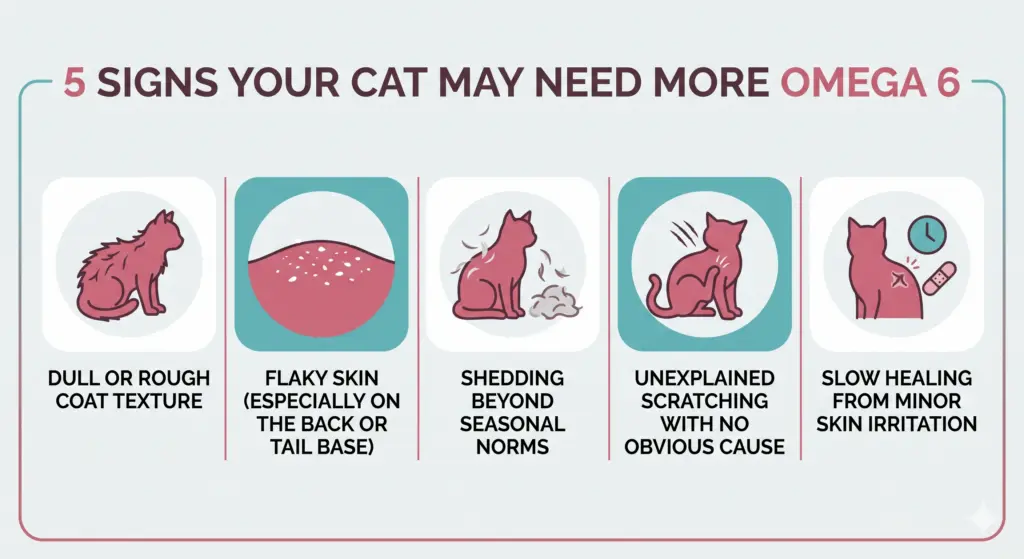
These signs tend to build slowly, which is why they get missed. A coat that gradually loses its shine doesn’t trigger alarm the way sudden illness does. But the accumulation of small signs, rough texture, flaking skin, extra shedding, often points to diet before anything else.
That said, these symptoms overlap with other conditions: dehydration, thyroid issues, and environmental allergies can all produce similar results. If symptoms are severe or worsening, a vet visit makes sense. But if the diet is low in quality animal-sourced fats, that’s often the most practical place to start.
If you’re unsure what to trust on cat food packaging, this guide to common cat food myths cuts through a lot of the noise.
Where Omega 6 Comes From In Cat Food
Omega 6 fatty acids in cat food come from animal fat and certain plant oils. Reliable sources include chicken fat and skin, sunflower oil, safflower oil, and, to a lesser extent, fish oil (which leans more towards omega 3).
But sourcing is only half of it. Processing matters too. Fats rendered at very high temperatures lose a significant portion of their fatty acid content before they even reach the bag. So a formula that lists a good fat source on paper may not deliver much of it in practice, depending on how it was manufactured.
This is why transparency around ingredients is worth looking for. Vague listings like “animal fat” don’t tell you where it came from, how it was processed, or what you’re actually feeding. Named sources do.
Hurayra’s chicken and tuna recipes use real, named protein and fat sources, no ambiguous fillers, no guesswork about what’s in the formula.
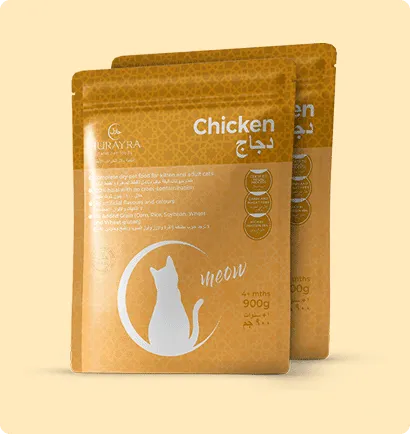
Chicken Cat Food
Subscribe & Save 25%
How To Support Omega 6 Intake Through Diet
The simplest way to ensure your cat gets enough omega 6 is through consistent, quality food. Supplements exist, but they’re rarely necessary if the base diet is solid.
When reviewing a cat food formula, a few things are worth checking:
- Named fat sources. “Chicken fat” tells you something specific. “Animal fat” tells you very little. The difference matters.
- Minimal fillers. Grains, wheat, and soy don’t contribute to omega 6 intake. They fill the bag and the bowl, but not the nutrient gap. A cleaner ingredient list tends to mean more space for the fats cats actually need.
- Complete and balanced labelling. In the UK, this indicates the food meets minimum nutritional standards, including essential fatty acids. It’s a floor, not a ceiling, but it’s a meaningful starting point.
- If you’re switching foods, take your time. A slow transition over 7–10 days lets your cat’s digestive system adjust without disruption, and gives the new formula a fair chance to show results.
Wrapping Up
Omega 6 fatty acids don’t get talked about as much as protein or taurine, but they’re doing important daily work, maintaining the skin barrier, supporting follicle health, and reducing surface inflammation. A dull coat or dry skin often isn’t a mystery. It’s a sign that something in the diet isn’t quite right.
The fix usually isn’t complicated. It starts with reading the ingredient list more carefully and looking for food that lists real, named fat sources rather than relying on vague catch-all terms.
Hurayra includes essential fatty acids from quality, traceable sources as part of their grain-free formula, with no hidden fillers or artificial additives. If you’d like to understand exactly what goes into each recipe, the ingredients page lays it all out clearly. And if you want to understand more about the people behind the brand, the Hurayra story is worth a read.
Your cat’s coat tells you a lot. It’s worth listening to it.
Tuna and Chicken Combo
Subscribe & Save 25%
Frequently Asked Questions
In a properly formulated complete cat food, yes. The mercury concern that gets attached to tuna is largely about plain, unfortified canned tuna fed as a cat’s only food. A complete tuna cat food is a different product: it’s formulated by nutritionists, blended to meet feline nutritional standards, and includes the vitamins and minerals that plain tuna lacks. Always check for ‘complete’ on the label.
Omega-3 fatty acids, primarily. Salmon delivers significantly more EPA and DHA per serving than tuna does. These support coat condition, skin health, joint mobility and immune function. If your cat eats tuna regularly and you want to add the omega-3 benefits of salmon, rotating one or two salmon meals per week into the mix is a practical approach.
Both tuna and salmon are highly digestible proteins. For cats with genuine sensitivities, the more useful factor is usually single-protein recipes rather than which fish specifically. A single-protein tuna or salmon recipe is easier to troubleshoot than a multi-protein blend, because you can actually tell what the cat is reacting to.
It’s rare. Most mainstream brands, including premium ones, don’t carry halal certification even when the underlying ingredients could qualify. Specialist halal pet food brands do exist in the UK and specifically address this gap, but you won’t find them in most high street pet shops. Online and selected supermarkets are the main routes.
Tuna as the first ingredient, a meat percentage of 40% or above, the word ‘complete’ on the label, taurine listed as an additive, and no animal derivatives or added sugars. Those five things together give you a strong indication that the food is worth buying.